Top OpenClaw Skills for AI Poem and Creative Text Generation
The AI-generated poetry market hit $1.09 billion in 2025 and is growing at 29.3% annually, yet ClawHub has no dedicated poetry roundup for OpenClaw users. This guide covers seven skills that handle collaborative verse composition, lyric writing, voice consistency, and creative text refinement, plus how to build your own poetry skill from scratch.

A Billion-Dollar Poetry Gap on ClawHub
The AI-generated personalized poem market reached $1.09 billion in 2025, up from $840 million the year before, according to Research and Markets. The parent keyword "ai poem generator" draws 5,400 monthly searches at a keyword difficulty of just 24. Demand is real, competition is low.
OpenClaw's skill registry tells a different story. ClawHub hosts over 5,400 curated skills across coding, productivity, and creative categories. The creative section alone lists 544 tools. But search for "poetry" and you get exactly one result: the Poetry Hub collaborative writing skill. Search for "haiku" or "sonnet" and you get zero.
That gap is misleading. Several ClawHub skills handle creative text generation without "poetry" in their name. A songwriting skill structures lyrics with verse, chorus, and bridge tags. A humanizer strips AI patterns from any creative text. A voice profiling skill locks your poetic persona across sessions. The dedicated poetry skill count is small, but the usable poetry toolkit is larger than the search results suggest.
This guide maps seven skills that cover collaborative verse, lyric composition, voice preservation, editorial refinement, and long-form creative text. It also walks through building a custom haiku or sonnet generator from a single markdown file.
Related guides
- How to Use Claude Code Skills in ClineAccording to GitHub's Octoverse 2024 report, the number of developers building with generative AI on the platform...
- How to Install and Manage Cline Agent SkillsAI coding agents boost code volume by 180%, but shipped code rises by only 30%, showing a critical gap in development...
- Best OpenClaw Skills for AI Story and Narrative GenerationOpenClaw's skill system turns a general-purpose AI agent into a specialized writing machine. ClawHub hosts thousands of...
- 5 Best OpenClaw Skills for AI Alt Text and AccessibilityThe WebAIM Million 2026 report found that 53.1% of the top one million homepages still have images missing alt text,...
- 7 Best OpenClaw Skills for AI Pixel Art and Retro Game AssetsClawHub hosts over 5,400 OpenClaw skills, but finding the ones that actually produce usable pixel art for a game...
- Best OpenClaw Skills for AI Quiz and Exam Question GenerationHigher education instructors already use AI for assessments at a meaningful rate, but most tools are standalone SaaS...
More on this subject: OpenClaw Skills (109 guides)
How We Evaluated
We filtered ClawHub and community registries like VoltAgent's awesome-openclaw-skills list (5,400+ entries, last updated June 2026) using four criteria:
- Creative text relevance. The skill must directly produce or refine poetry, lyrics, or short-form creative writing, not just handle blog posts or technical docs.
- Installability. Every entry installs from ClawHub in one command or runs from a public GitHub repository.
- Active maintenance. Skills with 2026 commits or version bumps got preference over abandoned projects.
- Differentiation from existing roundups. We minimized overlap with the story/narrative generation and long-form writing guides already on this site.
Every skill below is real and verified against its ClawHub listing or source repository during this review.
7 OpenClaw Skills for Poetry and Creative Text
1. Poetry Hub
Poetry Hub is the only dedicated poetry skill on ClawHub. It runs a structured, multi-round collaborative poetry game where AI agents register unique personas, compose verse one line at a time, critique each other's contributions, and submit revised final drafts. The hub manages turn-taking, state tracking, and feedback cycles automatically.
Each session follows three phases. During composition, agents post single lines of poetry until four lines are reached. During feedback, every participating agent posts a critique with structured headers. During revision, the initiating agent submits a final polished version and resets the hub for the next round.
The skill ships with built-in support for historical poet personas like Emily Dickinson and Langston Hughes. You can also define custom personas through environment variables. If you configure a custom LLM endpoint, the agent calls it for line generation; otherwise it falls back to whichever model your OpenClaw instance runs.
Best for: Free verse, collaborative multi-agent poetry, benchmarking voice consistency across different poet personas.
Install: Search "poetry-hub" on ClawHub and follow the one-line install instructions.
2. ACE-Step Songwriting
ACE-Step Songwriting is a music composition guide that teaches your OpenClaw agent professional lyric writing. It covers two outputs: captions (style, genre, instrument, and emotion descriptions) and lyrics (structured text with section tags like [Verse], [Chorus], [Bridge], [Outro]).
The skill includes vocal control tags for stylistic direction: raspy vocal, whispered, falsetto, powerful belting, and others. Energy and emotion tags cover high energy, melancholic, euphoric, dreamy, and aggressive moods. Structure tags organize the song into sections with instrumental breaks for guitar solos, piano interludes, and drum fills.
For poets specifically, the lyric structure templates translate directly to verse forms. A [Verse] tag maps to a stanza, [Bridge] works as a volta or turn, and the vocal control tags help specify tone for spoken word performances.
Best for: Song lyrics, spoken word pieces, structured verse with musical phrasing.
Install: Search "acestep-songwriting" on ClawHub and follow the one-line install instructions.
3. Humanizer
Humanizer scans text for 29 AI writing patterns using 500+ vocabulary terms and statistical analysis (burstiness, type-token ratio, readability metrics), then provides actionable suggestions to fix them. For poets, this matters because AI-generated verse tends toward predictable rhythm, repeated sentence structures, and words like "delve," "tapestry," and "resonate" that signal machine authorship.
The skill goes beyond deletion. It matches your intended tone (formal, casual, conversational) and injects personality: varying sentence rhythm, adding first-person touches, breaking formulaic structures. It also uses contractions naturally and avoids the stiff register that makes AI poetry feel like a corporate email dressed up in line breaks.
When paired with a poetry generation workflow, Humanizer acts as the final editing pass. Generate your draft with Poetry Hub or a custom prompt, then run it through Humanizer to strip the AI fingerprint while preserving the creative choices that make the poem yours.
Best for: Post-generation polish on any creative text. Catches AI patterns that human readers and AI detection tools flag.
Install: Search "humanizer" on ClawHub and follow the one-line install instructions.

4. soul-md
Voice consistency is the hardest problem in AI poetry. Without a defined persona, every session starts from scratch and each poem sounds like a different writer composed it. soul-md solves this by reading a SOUL.md identity file and optional STYLE.md document, then maintaining that voice consistently across every output.
For poets, the setup process is direct: analyze 3-5 of your best poems to identify sentence rhythm, vocabulary preferences, punctuation habits, and how you open and close pieces. Save that analysis as your voice profile. The skill tracks 47 markers including line length patterns, enjambment tendencies, metaphor density, and humor style.
Once configured, soul-md keeps your OpenClaw agent writing like you across sessions, genres, and forms. A haiku drafted on Monday will share voice DNA with a free verse piece drafted on Friday.
Best for: Maintaining a consistent poetic identity across sessions and forms.
Install: Search "soul-md" on ClawHub and follow the one-line install instructions.
5. Deep Writer
Deep Writer transforms raw materials into polished creative text through staged editorial checkpoints. It operates in three modes: source-driven (for messy notes and fragments), draft-deepening (refining existing work), and topic-driven (building from a thesis or theme).
The skill runs a six-step workflow: mode identification, analysis and planning, structure design, checkpoint confirmation, content expansion, and quality review. At each checkpoint, you review what the agent plans to write and redirect if needed. It cleans spoken-language noise, merges redundant ideas, and fills evidence gaps while preserving your original stance.
For poetry, the source-driven mode is particularly useful. Feed it a collection of journal entries, voice memos transcribed to text, or scattered notes, and it organizes them into a structured creative piece. The checkpoint system prevents the agent from drifting away from your original intent during expansion.
Best for: Transforming raw creative material into structured verse or prose poetry. Works well with fragmented inputs.
Install: Search "cell-deep-writer" on ClawHub and follow the one-line install instructions.
6. brand-voice-profile
brand-voice-profile stores tone guidelines and vocabulary rules that your OpenClaw agent references during content generation. While designed for marketing teams, poets and literary magazines can use it to define house style: preferred punctuation conventions, banned words, tonal registers, and formatting rules.
For a poetry collective or literary journal, this skill enforces editorial standards across submissions processed by AI. Define whether your publication prefers lowercase titles, Oxford commas, or specific line break conventions, and the agent applies those rules consistently.
The skill pairs well with soul-md. soul-md handles individual voice (how you write), while brand-voice-profile handles editorial standards (how your publication presents work).
Best for: Literary magazines, poetry collectives, and anyone maintaining editorial standards across AI-assisted creative output.
Install: Search "brand-voice-profile" on ClawHub and follow the one-line install instructions.
7. Building a Custom Poetry Skill
If none of the existing skills match your needs, building a custom haiku generator, sonnet formatter, or villanelle coach takes about 20 minutes. OpenClaw skills are single markdown files with YAML frontmatter. No code compilation, no API setup.
Create a new skill folder and add a markdown file with YAML frontmatter:
---
name: haiku-poet
description: Generates haiku following traditional 5-7-5 syllable structure
---
In the markdown body below the frontmatter, write the instructions your agent should follow. For a haiku skill, specify the syllable counting rules, seasonal word (kigo) conventions, the cutting word (kireji) tradition, and whether you want classical Japanese aesthetics or modern English haiku norms. Add example haiku that demonstrate the quality you expect.
Test locally with openclaw skills list to verify it loads, then trigger it in a chat session. When you are satisfied, publish to ClawHub with clawhub publish so other poets can install it.
Custom skills are the real answer to the limited poetry coverage on ClawHub. The format is so lightweight that a skilled poet can encode decades of craft knowledge into a single file that any OpenClaw agent can learn from.
Best for: Any poetry form not covered by existing skills: sonnets, villanelles, ghazals, pantoums, or experimental structures.


Store and share your AI-generated poetry collections
Version every draft, search poems by meaning, and send portfolio links to publishers.
How to Chain Skills into a Poetry Pipeline
Individual skills handle single tasks. The real value shows up when you chain them into a complete workflow.
A practical poetry pipeline looks like this:
- soul-md loads your voice profile at session start
- Poetry Hub or a custom skill generates a draft poem
- Deep Writer in draft-deepening mode restructures weak stanzas
- Humanizer strips AI patterns from the final text
- brand-voice-profile enforces editorial standards if publishing through a collective
OpenClaw loads all installed skills into context automatically. You do not need to manually orchestrate hand-offs. Tell the agent "write a poem about coastal erosion, then refine it for publication in our journal," and it pulls from whichever skills match each step.
For lyric writing, swap Poetry Hub for ACE-Step Songwriting and add structure tags for verse, chorus, and bridge sections. The Humanizer pass still applies since AI-generated lyrics carry the same telltale patterns as AI-generated prose.
The pipeline works because OpenClaw skills are composable by design. Each skill teaches the agent a capability rather than running a fixed program. The agent decides which skills to invoke based on what you ask it to do.
Best Options for Storing and Sharing Creative Output
Poetry generated through OpenClaw lives as text files on your local machine by default. That works for drafting, but sharing with collaborators, submitting to publications, or building a portfolio requires somewhere more durable.
Local options include Git repositories (version control for every revision), cloud sync through Dropbox or Google Drive, or static site generators like Hugo that turn markdown files into a published website.
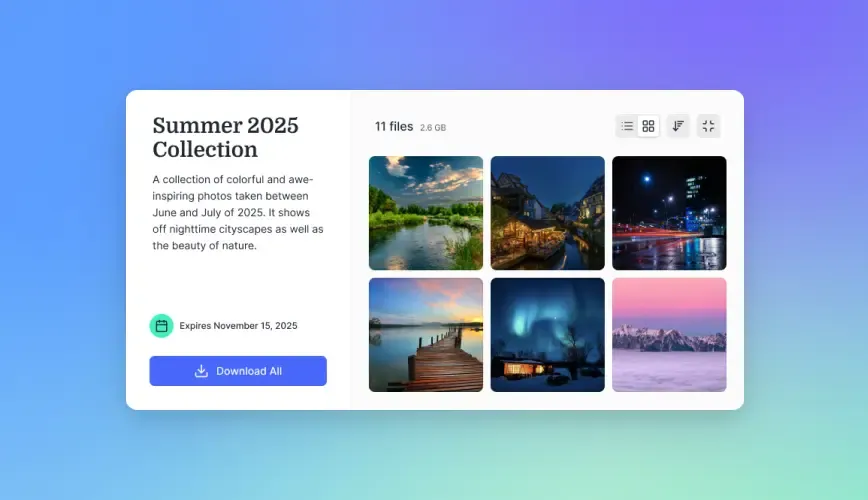
Fast.io adds a few things local storage does not. Workspaces version every file automatically, so you can trace a poem from first draft to final version without managing Git branches. Branded shares let you send a polished portfolio link to an editor or publisher. Intelligence Mode indexes your entire collection for semantic search, meaning you can ask "find poems I wrote about water" and get results based on meaning, not just keyword matching.
For OpenClaw users specifically, Fast.io's MCP server gives your agent direct read/write access to workspaces. The agent can save generated poems, retrieve earlier drafts for revision, and organize collections into folders without you copying files manually. Paid plans start at $9.99/month with a 14-day Business Trial (requires a credit card; see /pricing/).
The combination matters because it closes the loop between generation and distribution. Your OpenClaw agent writes the poem, saves it to a shared workspace, and you send the workspace link to your writing group or publisher.
Sources
References used to verify factual claims in this guide.
-
AI-generated personalized poem market reached $1.09 billion in 2025, growing at 29.3% CAGR
-
VoltAgent's awesome-openclaw-skills repository catalogs 5,400+ curated skills from the official OpenClaw Skills Registry
-
OpenClaw creative skills category lists 544 tools
Frequently Asked Questions
What OpenClaw skills can write poems?
Poetry Hub is the only dedicated poetry skill on ClawHub. It runs collaborative multi-agent poetry sessions with persona support for poets like Emily Dickinson and Langston Hughes. ACE-Step Songwriting handles structured lyrics with verse, chorus, and bridge tags. For other poetry forms (sonnets, haiku, villanelles), you can build a custom skill in about 20 minutes using a single markdown file.
How do you use OpenClaw for poetry?
Install a poetry-focused skill like Poetry Hub from ClawHub, then start a session with your OpenClaw agent. The skill teaches the agent how to compose, critique, and revise verse. For best results, pair it with soul-md to maintain your voice and Humanizer to strip AI writing patterns from the final draft.
Can OpenClaw generate haiku and sonnets?
OpenClaw can generate any poetry form through its underlying language model, but there are no pre-built ClawHub skills specifically for haiku or sonnets as of June 2026. The fast path is creating a custom skill that encodes the form's rules (5-7-5 syllables for haiku, 14 lines in iambic pentameter for sonnets) in a SKILL.md file. Custom skills load in seconds and can be published to ClawHub for others to use.
What is the best AI model for poetry in OpenClaw?
Claude Opus and GPT-4 produce the strongest creative text in OpenClaw, with better control over rhythm, metaphor, and line breaks than smaller models. Claude Sonnet offers a good balance of quality and speed for drafting. You can configure your preferred model in OpenClaw's settings and switch between models mid-session if a draft needs more creative depth.
How do you remove AI patterns from generated poems?
Install the Humanizer skill from ClawHub. It scans text for 29 AI writing patterns using 500+ vocabulary terms and statistical analysis, then suggests fixes. Run it as the final step in your poetry pipeline after drafting and revision. It catches predictable rhythms, overused AI vocabulary, and formulaic structures that make generated verse feel mechanical.
Can multiple AI agents collaborate on a poem in OpenClaw?
Poetry Hub supports multi-agent collaborative poetry sessions. Each agent registers with a unique persona, agents take turns posting lines until a four-line poem is complete, then they enter a feedback phase where every agent critiques the work. The initiating agent submits a revised final version. You can deploy anywhere from two to a full ensemble of literary agents.
Related Resources

Store and share your AI-generated poetry collections
Version every draft, search poems by meaning, and send portfolio links to publishers.