Top OpenClaw Skills for AI Interview Preparation and Mock Coaching
A quarter of job seekers already use AI-powered interview prep tools, yet most standalone apps reset after every session. OpenClaw skills take a different approach, running as persistent agents that remember your target role, track weak spots across sessions, and generate questions matched to your actual experience level. This guide ranks the best OpenClaw interview coaching skills by practical usefulness and shows how to pair them with shared workspaces for organized, reviewable practice.


Why Interview Coaching Moved to AI Agents
A 2026 report from CareerTrainer.ai found that 25% of job seekers have used AI-powered interview preparation tools, yet only 65% of those users rated the feedback as helpful. The gap points to a real problem: most interview prep apps treat every session as a blank slate. You answer ten questions, get a generic score, and start over tomorrow with no memory of what you struggled with yesterday.
OpenClaw skills work differently because they run inside an agent that maintains context. The agent remembers your target company, the role you are preparing for, and which question types gave you trouble last session. That persistence is the core advantage over standalone web apps like Final Round AI, Himalayas, or InterviewBuddy. Those tools are polished and useful, but they are stateless by design.
The OpenClaw skills registry on ClawHub now hosts over 13,000 community-built skills, and a growing subset focuses specifically on interview preparation, resume review, and career coaching. The five skills below cover mock interviews, behavioral coaching, technical question generation, resume optimization, and pitch rehearsal. Each one is free, open source, and installable in a single command.

Related guides
- How to Use Claude Code Skills in ClineAccording to GitHub's Octoverse 2024 report, the number of developers building with generative AI on the platform...
- How to Install and Manage Cline Agent SkillsAI coding agents boost code volume by 180%, but shipped code rises by only 30%, showing a critical gap in development...
- Best OpenClaw Skills for Web ResearchWeb research skills let OpenClaw agents find and read information on the live web. Without them, your AI is stuck with...
- Top 7 OpenClaw Skills for Growth HackersThese top OpenClaw skills help growth hackers automate experimentation and analytics. They scale campaigns faster. Real...
- How to Automate Infrastructure: Top OpenClaw Skills for Network EngineersNetwork automation used to require writing complex Python scripts or wrestling with Ansible playbooks. Today, OpenClaw...
- Top OpenClaw Skills for Video ProductionOpenClaw skills automate video production tasks like editing, asset management, and reviews with MCP tools. Video teams...
More on this subject: OpenClaw Skills (109 guides)
1. Interview Coach: Full-Spectrum Mock Sessions
The interview-coach skill on ClawHub transforms OpenClaw into a professional interview coach that runs realistic practice sessions with structured feedback. It covers behavioral, technical, HR, and case-study question formats, adjusting difficulty based on the role level you specify.
The skill follows a proven coaching pattern: it asks one question at a time, waits for your full answer, delivers specific feedback on what worked and what did not, then asks a targeted follow-up before moving on. That single-question cadence matters because real interviews do not fire ten questions at once.
Key Features:
- Role-specific mock sessions for software engineering, product management, consulting, and leadership positions
- STAR-method coaching for behavioral questions, with explicit feedback on situation framing and result quantification
- Curated question libraries covering algorithms, system design, behavioral prompts, and business case problems
- Personalized improvement plans generated after each session, tracking weak areas across multiple runs
Limitations:
- Feedback quality depends on the underlying LLM. Expect stronger technical feedback with Claude or GPT-4 class models
- No video or audio analysis. The skill works through text only, so body language and vocal delivery are not covered
- The skill does not simulate panel interviews with multiple interviewers
Best For: Candidates preparing for multi-round interview loops who want consistent practice with memory across sessions.
Source: ClawHub Skills Marketplace
2. Interview Coach AI: Behavioral and Technical Deep Dives
The interview-coach-ai skill overlaps with the interview-coach skill above, but focuses more heavily on two specific domains: behavioral questions using proven methodologies and technical interview preparation with coding-adjacent prompts.
Where the interview-coach skill covers breadth across question types, interview-coach-ai goes deeper on behavioral responses. It coaches you through structuring answers with evidence, quantifying impact, and handling follow-up questions that probe inconsistencies in your story. For technical roles, it generates system design scenarios and algorithm questions calibrated to junior, mid, and senior levels.
Key Features:
- Behavioral question coaching with structured answer frameworks
- Technical interview preparation for system design and algorithm discussions
- Follow-up question generation that tests the depth of your initial answer
- Session summaries with scored performance across communication clarity, technical accuracy, and answer completeness
Limitations:
- Significant feature overlap with interview-coach. Running both simultaneously adds cost without proportional value
- Technical questions lean toward software engineering. Coverage for data science, DevOps, or infrastructure roles is thinner
Best For: Software engineers and technical PMs who want focused behavioral and system design practice rather than broad coverage.
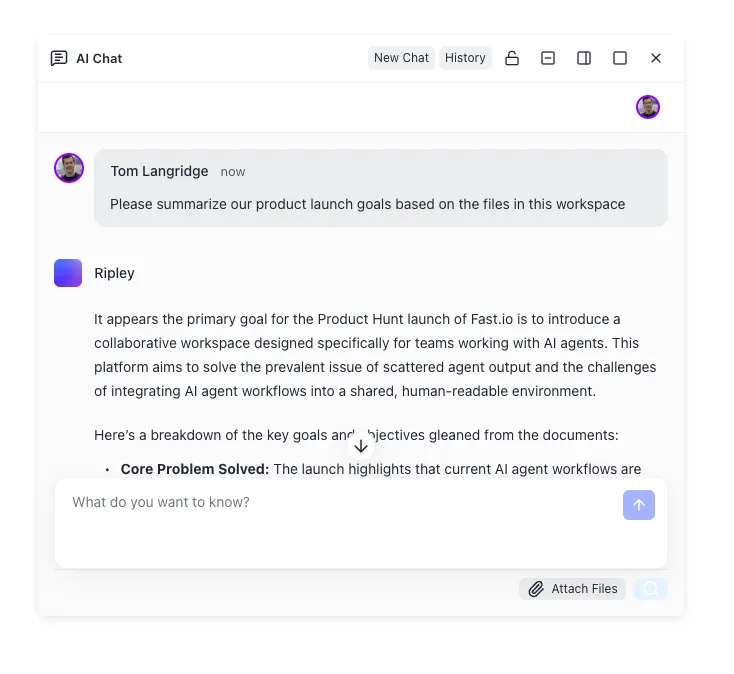


Keep every practice session searchable and shareable
Persistent workspace with built-in AI search once Intelligence is enabled. Store interview transcripts, resume versions, and coaching notes in one place.
3. Interview Gen: Codebase-Aware Technical Questions
The interview-gen skill takes a different approach from the coaching skills above. Instead of generating generic questions, it scans your actual codebase to identify the technologies, frameworks, and architectural patterns you work with, then generates interview questions matched to that stack.
This is useful in two directions. If you are a hiring manager, it generates relevant technical questions for candidates who will work on your codebase. If you are a candidate, you can point it at the tech stack of your target company (if the repo is public) and get questions that reflect what you will actually be asked about.
The skill supports three seniority tiers: junior questions focus on syntax and basic patterns, mid-level questions cover architecture decisions and tradeoffs, and senior questions probe system design, scalability, and operational concerns.
Key Features:
- Codebase scanning to detect languages, frameworks, and complexity patterns
- Seniority-calibrated questions at junior, mid, and senior levels
- Suggested follow-ups for each generated question
- Markdown export for sharing question sets with interview panels
Install: Available through the standard OpenClaw skill installation flow on ClawHub. Search for "interview-gen" in the skills registry and follow the on-screen setup steps.
Limitations:
- Requires Node.js 18+ and an OpenAI API key
- Questions are generated, not curated. Expect some that miss the mark or are too broad
- No built-in answer evaluation. Pair with interview-coach for practice sessions using the generated questions
Best For: Engineering teams building structured interview question banks, or candidates reverse-engineering the technical focus of a target role.
Source: Playbooks Skills Registry
4. Resume Reviewer: ATS-Aware Feedback Before You Apply
Interview preparation does not start with the interview itself. The resume-reviewer skill acts as a recruiter-minded coach that evaluates your resume before you send it, catching the problems that get applications filtered out before a human ever reads them.
The skill checks for ATS compatibility (no tables, no graphics, no special characters that break parsers), keyword alignment with the target job description, and the strength of your achievement bullets. Weak or vague statements get flagged with specific rewrite suggestions that add quantifiable metrics and action verbs.
Key Features:
- ATS risk identification for formatting that breaks applicant tracking parsers
- Role-fit scoring that compares your resume against a specific job description
- Bullet-by-bullet feedback with rewritten alternatives using quantified achievements
- Technical-skill alignment checking for keyword gaps between your resume and the job listing
Limitations:
- Optimized for data and analytics roles. Feedback for creative, legal, or healthcare resumes may miss industry-specific conventions
- Does not generate full resumes from scratch. Use alongside a resume builder skill for complete document creation
- Rewrite suggestions sometimes over-optimize for keywords at the expense of natural readability
Best For: Candidates who already have a resume draft and want targeted, recruiter-perspective feedback before submitting.
Source: LobeHub Skills Marketplace
5. Startup Pitch Coach: Investor-Style Pressure Testing
The startup-pitch-coach skill is not a traditional interview prep tool, but founders preparing for investor meetings, accelerator interviews, or board presentations face the same challenge as job candidates: high-stakes conversations where preparation determines outcomes.
This skill stress-tests your pitch by asking the questions investors will actually ask and pushing back on weak answers. It does not validate your idea. It pokes holes in it, challenges your market sizing, questions your unit economics, and forces you to articulate why your team is the right one to build this. That adversarial approach builds the kind of pressure tolerance that transfers directly to any high-stakes conversation.
Key Features:
- Adversarial questioning that mimics skeptical investor behavior
- Follow-up probes on market size, competitive positioning, revenue model, and team composition
- Feedback on answer clarity, confidence signals, and persuasion structure
- Multiple rounds of increasing difficulty as your pitch improves
Limitations:
- Focused exclusively on startup and investment contexts. Not useful for standard job interviews
- The adversarial tone can feel discouraging for founders early in ideation. Better suited for teams with a formed pitch deck
- No financial modeling or market data validation. The skill challenges your claims but does not fact-check them
Best For: Founders preparing for Y Combinator interviews, Series A pitches, or any high-stakes presentation where pushback is guaranteed.
Source: OpenClaw Best Skills 2026
How to Store and Review Practice Sessions Across Coaching Rounds
Running interview practice through OpenClaw generates a lot of output: session transcripts, improvement plans, scored rubrics, and tailored question banks. Without a persistent storage layer, those files scatter across terminal sessions and local directories.
You can store practice materials locally, push them to GitHub, or use a cloud drive. Each works, but none of those options are designed for the pattern of "agent generates, human reviews." GitHub adds unnecessary version control overhead for coaching notes. Google Drive and Dropbox store files fine but do not index them for search by content.
Fast.io workspaces handle this pattern well because files uploaded by an OpenClaw agent are automatically indexed for semantic search when Intelligence Mode is enabled. That means you can ask questions like "What behavioral questions did I struggle with last week?" and get answers drawn from your actual practice transcripts, not generic advice.
Fast.io offers a 14-day Business Trial (card required; see /pricing/). For interview prep specifically, a single workspace can hold all your practice transcripts, resume versions, and question banks in one searchable location. The Fast.io MCP server gives OpenClaw direct read and write access to that workspace through a consolidated toolset.
If you are working with a career coach or accountability partner, Fast.io's branded sharing lets you create a private link where your coach can review transcripts and leave comments without needing their own account.
Sources
References used to verify factual claims in this guide.
-
25% of job seekers have used AI-powered interview preparation tools 65% of users found AI-driven interview feedback somewhat or very helpful 15% increase in confidence for candidates using AI practice platforms
-
92% of U.S. adults report job interview anxiety
-
ClawHub registry hosts over 13,000 community-built skills
Frequently Asked Questions
Does OpenClaw have an interview coaching skill?
Yes. The interview-coach skill on ClawHub provides structured mock interviews with behavioral, technical, HR, and case-study question formats. It delivers feedback after each answer and generates improvement plans that track your progress across sessions. A second skill, interview-coach-ai, offers deeper coverage of behavioral and technical interview preparation specifically.
Can OpenClaw simulate mock interviews?
OpenClaw can simulate realistic mock interviews through several skills. The interview-coach and interview-coach-ai skills run single-question practice sessions where the agent asks a question, waits for your response, gives feedback, and follows up. The interview-gen skill generates role-specific technical questions by analyzing a codebase, which you can then use with a coaching skill for practice.
What is the best AI tool for interview preparation?
It depends on what you need. Standalone tools like Final Round AI and Exponent offer polished interfaces with video practice. OpenClaw skills offer more flexibility because the agent maintains context across sessions and you can combine multiple skills (coaching, resume review, question generation) in one workflow. For technical roles, interview-gen creates questions matched to a specific tech stack, which standalone apps cannot do.
How do I set up an interview coach agent with OpenClaw?
Install the interview-coach skill from ClawHub using the standard skill installation process. Once installed, start a session by telling the agent your target role, company, and experience level. The agent will begin with calibration questions to gauge your current level, then move into structured practice sessions. You can configure the focus area (behavioral, technical, or mixed) at the start of each session.
Are OpenClaw interview skills free to use?
The skills themselves are free and open source, available on ClawHub and community registries. However, running them requires an LLM API key (OpenAI, Anthropic, or another provider), and each practice session consumes tokens. A typical 30-minute mock interview session costs roughly $0.50 to $2.00 in API fees depending on the model and response length.
Can AI interview coaching reduce interview anxiety?
Research from CareerTrainer.ai shows a 15% increase in candidate confidence among users of AI practice platforms. The primary mechanism is repetition and familiarity. Practicing with an agent that asks realistic questions in a low-stakes environment reduces the novelty and unpredictability of real interviews. The effect is stronger when practice includes targeted feedback on specific weak areas rather than generic question-and-answer drills.
Related Resources

Keep every practice session searchable and shareable
Persistent workspace with built-in AI search once Intelligence is enabled. Store interview transcripts, resume versions, and coaching notes in one place.