Top 8 OpenClaw Integrations for Voice Agents and Conversational AI
ClawHub lists 46 speech and transcription skills for OpenClaw, but no existing guide ranks them by what matters most: latency, setup complexity, and platform fit. This article evaluates the top 8 voice integrations, from telephony platforms like Vapi and ClawdTalk to STT/TTS providers like ElevenLabs and Deepgram, with honest trade-offs for each.

How We Evaluated These OpenClaw Voice Integrations
The conversational AI market is projected to reach $17.97 billion in 2026, growing at 21% annually according to Fortune Business Insights. That growth has pushed a wave of voice integrations into the OpenClaw ecosystem. ClawHub now lists 46 speech and transcription skills, ranging from simple TTS wrappers to full telephony platforms that let your agent make and receive phone calls.
OpenClaw voice agent integrations connect speech recognition, LLM reasoning, and text-to-speech synthesis so your personal AI assistant can hold real-time spoken conversations across platforms. The basic flow works like this: a user speaks, STT converts audio to text, OpenClaw processes it through your configured LLM, and TTS converts the response back to speech.
We evaluated each integration across four criteria:
- Setup complexity: How many steps from install to first voice interaction
- Latency: Response time for real-time conversations. Sub-500ms is the baseline for natural-sounding speech
- Platform compatibility: Which STT, TTS, and telephony providers each integration supports
- Cost: Free tiers, per-minute pricing, and self-hosted options
Here are the eight integrations covered in this guide:
- Vapi Skills, phone call platform with outbound campaigns and call squads
- OpenClaw Voice Call Plugin, native telephony with Twilio, Telnyx, and Plivo
- ClawdTalk by Telnyx, persistent voice calling with sub-200ms latency
- ElevenLabs TTS Skills, premium text-to-speech with voice cloning
- DeepClaw by Deepgram, phone agent with Flux STT and Aura-2 TTS
- AssemblyAI, enterprise STT with PII redaction and speaker attribution
- OpenClaw Voice, free self-hosted voice chat via browser
- sachaabot/openclaw-voice-agent, Raspberry Pi voice assistant with wake word detection

Related guides
- Top Integrations for Microsoft Copilot StudioMicrosoft Copilot Studio lets businesses build custom AI agents, but its real power comes from connecting to external...
- Configuring Voice Mode File Uploads in Hermes AgentConfiguring voice mode file uploads in Hermes Agent enables developers to receive voice inputs and return dynamic media...
- Top 8 OpenClaw Integrations for Creative AgenciesCreative agencies choose OpenClaw integrations to speed up client handoffs and file deliveries. These tools handle...
- 5 Best OpenClaw Integrations for Motion DesignersMotion designers often lose hours to file management and render setups instead of actually animating. OpenClaw...
- Top OpenClaw Integrations for Remote TeamsOpenClaw integrations for remote teams allow autonomous agents to operate directly within shared Slack channels, Notion...
- Top OpenClaw Integrations for Enterprise AI AssistantsOpenClaw shipped without enterprise security controls, and researchers found over 30,000 instances exposed to the...
More on this subject: OpenClaw Workflows and Integrations (69 guides)
Phone Call and Telephony Integrations
These three integrations give your OpenClaw agent a phone number and the ability to make or receive voice calls. Each handles the telephony infrastructure differently, so your choice depends on how much control you need and whether you can expose a public endpoint.
1. Vapi Skills
Vapi is a developer platform for building voice AI agents. It manages telephony, real-time transcription, and TTS, so you can focus on assistant behavior instead of infrastructure. The OpenClaw integration ships as eight skills you install directly from GitHub.
The skill set covers the full call lifecycle: create-assistant builds voice agents with custom personalities, create-call handles outbound dialing and campaigns, create-squad routes calls across multiple assistants, and setup-automation hooks configures real-time event streaming. Vapi reports sub-500ms response times during live phone calls, and your agent can perform real work mid-conversation, checking calendars, looking up orders, or posting to Slack.
Phone number provisioning works through Vapi's own infrastructure or through Twilio, Vonage, and Telnyx. The main constraint is that your machine needs a publicly reachable automation hooks URL to receive call events.
Best for: Teams building outbound call campaigns, appointment booking agents, or multi-assistant call routing.
Install: npx skills add VapiAI/skills
2. OpenClaw Voice Call Plugin
The native Voice Call Plugin adds telephony to OpenClaw without routing through a third-party voice platform. It connects to standard telephony providers for both inbound and outbound calling, and lets you choose your own STT and TTS engines independently.
The main advantage over Vapi and ClawdTalk is flexibility: you control every layer of the voice pipeline, from which carrier handles calls to which models process speech. The trade-off is more configuration, since you wire each provider separately and need a publicly reachable endpoint for call events.
Best for: Developers who want full control over their telephony stack and voice processing pipeline.
3. ClawdTalk by Telnyx
ClawdTalk connects your existing OpenClaw agent to the phone network without changing its logic, memory, or tools. The key difference from other telephony options: your agent initiates the connection outward to Telnyx, so it works in network environments where exposing a public endpoint is impractical.
Built on Telnyx AI Assistants, ClawdTalk reports sub-200ms conversational latency. Both call directions work: call your bot from your phone, or tell your bot to call you. The agent handles calls independently and reaches back to OpenClaw when it needs memory or tool access.
A free tier is available with limited calling, and paid plans unlock dedicated phone numbers and broader outbound access.
Best for: Solo developers or small teams who want phone calling without exposing a public endpoint.


Store and share voice agent transcripts across sessions
A shared workspace for call recordings, transcripts, and conversation logs. Connect your OpenClaw agent through the MCP server. Starts with a 14-day Business Trial (card required; see /pricing/).
Speech Recognition and Text-to-Speech Providers
Telephony platforms handle the call, but STT and TTS providers determine how well your agent listens and speaks. These three cover the spectrum from premium voice quality to enterprise compliance.
4. ElevenLabs TTS Skills
ElevenLabs provides high-quality voice synthesis for OpenClaw agents. Several ClawHub skills connect ElevenLabs to your agent for text-to-speech, voice selection, and bidirectional voice interaction with multilingual support.
Language coverage spans dozens of languages. Streaming mode sends audio chunks as they generate rather than waiting for the full response, which reduces perceived latency. Voice cloning lets you create custom voices that match a brand or character.
Pricing scales with usage, so high-volume voice output can add up. For cost-sensitive projects, consider pairing ElevenLabs for TTS with a separate, cheaper STT provider.
Best for: Applications where voice quality matters most, like customer-facing agents, content creation, or branded voice experiences.
5. DeepClaw by Deepgram
DeepClaw is Deepgram's open-source integration that gives your OpenClaw agent both a voice and a phone number in one package. It pairs Deepgram's speech-to-text and text-to-speech models with intelligent turn-taking so conversations feel natural rather than walkie-talkie style.
Deepgram's speech recognition models deliver high accuracy across accents and noisy environments, and the platform supports real-time streaming for low-latency voice interactions. A guided onboarding flow assigns each user a dedicated phone number and persistent memory.
Best for: Developers who want a single provider handling STT, TTS, and phone connectivity without stitching together multiple services.
6. AssemblyAI
AssemblyAI works alongside OpenClaw through a custom transcription handler that routes audio to AssemblyAI's speech recognition models. There is no official ClawHub skill yet, so the integration requires a small amount of custom code.
Where AssemblyAI stands out is compliance-oriented features: PII redaction, speaker attribution for multi-party conversations, and accurate transcription across accents and audio quality levels. These capabilities make it a strong fit for healthcare, legal, and financial voice workflows.
The trade-off is setup effort compared to drop-in ClawHub skills. You write a handler script and wire it into your OpenClaw setup rather than installing a pre-built skill.
Best for: Enterprise teams that need accurate transcription with built-in PII redaction and speaker attribution.

What Are the Best Open-Source Voice Options for OpenClaw
Not every voice project needs telephony. These two open-source frameworks handle voice conversations through browsers and dedicated hardware, with options to keep all processing local.
7. OpenClaw Voice
OpenClaw Voice is a free, MIT-licensed voice chat system that runs entirely on your own hardware. It uses faster-whisper for local speech-to-text, keeping all voice data on-device. For TTS, it connects to ElevenLabs (premium quality) or Chatterbox (a self-hosted alternative that trades some voice quality for complete privacy).
The browser-based interface works on desktop and mobile without installing anything. WebSocket-based audio streaming keeps latency low enough for real-time conversations. Under the hood, it runs on Python with FastAPI.
Voice quality depends heavily on your TTS choice. ElevenLabs produces natural-sounding speech but requires an API key and internet access. Chatterbox keeps everything local but sounds noticeably more synthetic. For STT, faster-whisper runs well on modern hardware, though transcription speed varies with your CPU or GPU.
Best for: Privacy-conscious users who want voice conversations without sending audio to third-party APIs.
8. sachaabot/openclaw-voice-agent
This open-source project builds a complete voice assistant on Raspberry Pi CM5 hardware (the PamirAI Distiller device). It chains four components into a single always-on pipeline: Picovoice Porcupine for wake word detection, OpenAI Whisper for transcription, OpenClaw for LLM processing, and configurable TTS output.
Three TTS engines are available: Google TTS (free, requires internet), ElevenLabs (premium quality), and Piper (fully offline). The wake word engine supports both pre-trained keywords and custom wake word models. An LED feedback system shows device status, and the whole stack runs as a systemd service for persistent background operation.
The project targets a specific hardware platform, so it is not a general-purpose voice framework. But for makers building a dedicated physical voice assistant, it provides a complete reference implementation with every component wired together.
Best for: Makers and hobbyists building a dedicated physical voice assistant on Raspberry Pi hardware.
How to Store Call Recordings and Transcripts Long-Term
Voice agents generate data that needs to outlive individual conversations: call recordings, transcripts, conversation logs, and handoff documents. Without persistent storage, your agent starts every session from scratch.
Local file storage works for single-machine setups but breaks down when you run agents across multiple devices or need to share outputs with a team. S3 handles raw file storage at scale, though it does not index content or provide search beyond filenames. Google Drive and Dropbox add sharing but lack the agent-native tooling that makes programmatic access straightforward.
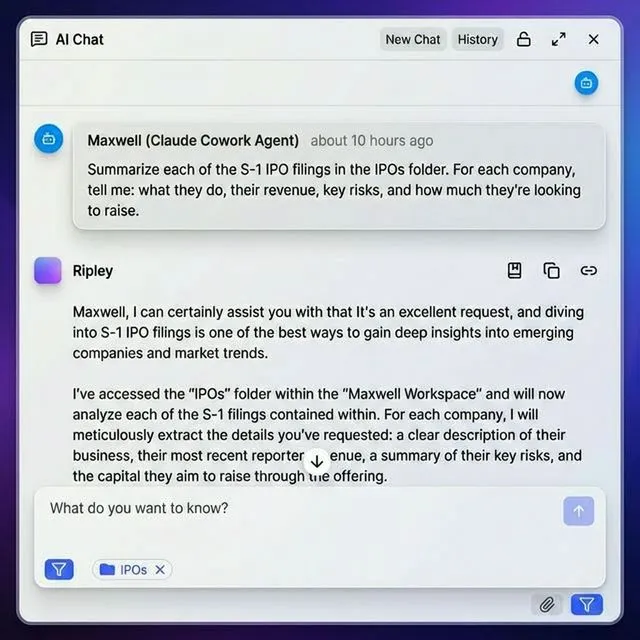
Fast.io fills this gap as a workspace layer for voice agent workflows. When your agent saves a transcript or recording to a Fastio workspace, Intelligence Mode auto-indexes the file for semantic search and AI-powered Q&A, no vector database setup required. The MCP server exposes a consolidated toolset that lets agents read, write, query, and share workspace files programmatically.
Monthly plans start with a Business Trial of up to 14 days (card required; see /pricing/). Agents can store call logs, share transcripts with human reviewers through branded shares, and use ownership transfer to hand agent-built workspaces to clients. For teams running multiple voice agents, advisory file locks let agents signal active writes while version history and granular permissions manage changes when agents work in the same workspace.
Which OpenClaw Voice Integration Should You Choose
The right stack depends on your use case. Here is how to narrow it down.
For phone calls and telephony, start with ClawdTalk if you want the fast setup, since it needs no public endpoint. Move to Vapi for outbound campaigns and multi-assistant routing with call squads. Use the native Voice Call Plugin when you need full control over call flows, session scoping, and provider choice.
For speech recognition, Deepgram's Nova models offer the best balance of speed and accuracy for real-time use. AssemblyAI wins on compliance features like PII redaction and speaker attribution. OpenAI Whisper via faster-whisper is the standard for local, private transcription.
For text-to-speech, ElevenLabs delivers the widest language support and most natural-sounding voices. Deepgram's Aura-2 works well as part of the DeepClaw package when you want one provider for everything. Piper and Chatterbox are solid free alternatives when you want to keep TTS on-device.
For a complete self-hosted stack, combine OpenClaw Voice (browser chat) or sachaabot/openclaw-voice-agent (dedicated hardware) with local faster-whisper and Chatterbox TTS. No API keys are needed beyond your LLM provider.
Most production deployments mix providers: Deepgram for STT, ElevenLabs for TTS, and Vapi or ClawdTalk for telephony. Start with the simplest integration that solves your immediate need, then add layers as your requirements grow. Store your recordings, transcripts, and conversation logs in a persistent workspace like Fast.io so nothing gets lost between sessions.
Sources
References used to verify factual claims in this guide.
-
The conversational AI market is projected to reach $17.97 billion in 2026, growing at 21% annually
-
46 speech and transcription skills on ClawHub
-
Vapi reports sub-500ms response time during live phone calls
-
ClawdTalk achieves sub-200ms conversational latency
Frequently Asked Questions
How do I add voice to my OpenClaw agent?
The fast path is installing a voice skill from ClawHub or GitHub. For browser-based voice chat, deploy OpenClaw Voice, which handles STT and TTS through a web interface. For phone calls, install the Vapi skills with `npx skills add VapiAI/skills` or set up ClawdTalk for WebSocket-based calling. Each option takes 10 to 30 minutes depending on how much configuration you need.
What speech-to-text engines work with OpenClaw?
OpenClaw supports multiple STT providers. OpenAI Whisper (cloud API or local via faster-whisper) is the most common. Deepgram offers Nova-2 and Nova-3 models with real-time WebSocket streaming. AssemblyAI provides Universal-3 Pro with PII redaction and speaker attribution. Google Speech-to-Text is another option, especially through the sachaabot voice agent project. Your choice depends on whether you prioritize accuracy, privacy (local processing), or compliance features.
Can OpenClaw make phone calls?
Yes. Three integrations support phone calls: the native Voice Call Plugin (works with Twilio, Telnyx, and Plivo), Vapi Skills (outbound campaigns and multi-assistant squads), and ClawdTalk by Telnyx (persistent WebSocket calling with sub-200ms latency). DeepClaw by Deepgram also assigns your agent a dedicated phone number. Both inbound and outbound calls are supported across these options.
What is the best voice agent platform for OpenClaw?
It depends on your priorities. Vapi is best for teams building call campaigns with multiple assistants. ClawdTalk is the easiest to set up because it needs no public endpoint. The native Voice Call Plugin gives you the most control over telephony providers and call flows. For voice chat without phone calls, OpenClaw Voice provides a free, self-hosted browser interface. Most production setups combine a telephony platform with separate STT and TTS providers.
How do I store voice agent transcripts and recordings?
Local storage works for single-machine setups but does not scale to multi-device deployments or team access. Fast.io provides persistent workspaces where agents can save call recordings and transcripts through the MCP server. Intelligence Mode auto-indexes saved files for semantic search, so you can query past conversations by meaning rather than filename. Monthly plans start with a Business Trial of up to 14 days (card required; see /pricing/).
What is the latency for OpenClaw voice conversations?
Latency varies by provider and setup. ClawdTalk by Telnyx reports sub-200ms conversational latency. Vapi targets sub-500ms response times during live calls. Local setups using faster-whisper and a self-hosted TTS engine depend on your hardware, with M-series Macs and modern GPUs delivering the fast transcription. Network latency to cloud STT and TTS APIs adds 50 to 200ms per round trip.
Related Resources

Store and share voice agent transcripts across sessions
A shared workspace for call recordings, transcripts, and conversation logs. Connect your OpenClaw agent through the MCP server. Starts with a 14-day Business Trial (card required; see /pricing/).