Paperclip AI Review 2026: Features, Real Costs, and Verdict
Paperclip AI is the fastest-growing open-source platform for managing teams of AI agents, with over 71,000 GitHub stars in under four months. This review covers what it does well, where it falls short, and whether the zero-human company pitch holds up in practice.


What Paperclip AI Is and Why It Matters
The AI-powered software development agent market hit $10.4 billion in 2025 and is on track to reach $20.2 billion by 2027, according to MarketIntelo. As the number of agents per team grows, coordination becomes the bottleneck, not capability. That is the problem Paperclip AI was built to solve.
Paperclip is an open-source, self-hosted platform that treats AI agents like employees in a company. You define an org chart with roles and reporting lines. Agents wake up on scheduled heartbeats, check their task lists, do work, and go back to sleep. The platform handles task routing and cost tracking while you bring whatever agents you want: Claude Code, OpenAI Codex, Gemini, Cursor, OpenClaw, or others.
Created by a developer known as @dotta and launched on March 2, 2026, Paperclip hit 30,000 GitHub stars in its first three weeks. As of late June 2026, it sits at over 71,000 stars and 13,400 forks, making it one of the fastest-growing open-source projects of the year. The MIT license means you can run it without paying Paperclip anything.
The pitch is ambitious: build zero-human companies where AI agents handle everything from product development to marketing. The reality is more nuanced. Paperclip is best understood as a coordination layer that makes multi-agent setups manageable, not a magic button for autonomous businesses.
Related guides
- DeepSeek AI Review 2026: Models, Pricing, and Developer VerdictDeepSeek AI ships open-weight models that match frontier benchmarks at a fraction of the cost, but the tradeoffs around...
- Top 10 Open Source AI Agents You Can Run Locally in 2026Open source AI agents are autonomous software programs that run LLMs locally, with full source code available to...
- Best Free AI Agent Tools 2026: Top 12 Platforms ComparedBuilding autonomous agents doesn't have to be expensive. The free AI agent ecosystem now offers professional frameworks...
- Top 5 Tools Every LangGraph Developer NeedsLangGraph lets you build stateful, cyclic AI agents, but the framework alone isn't enough. You need tools for...
- Best AI Agent Development Platforms for Building Production AgentsAI agent development platforms give you the frameworks, infrastructure, and tooling to build, test, and deploy...
- 7 Best Computer-Use AI Agents in 2026Computer-use AI agents can see your screen, move the mouse, type, and click, automating workflows that API-only agents...
More on this subject: AI Tool Directories and Comparisons (231 guides)
Six Features That Set Paperclip Apart
Paperclip's feature set centers on treating multi-agent coordination as an operations problem, not a coding problem. Here are the six capabilities that define the platform.
1. Organizational Modeling
Each agent gets a role, title, and reporting line. A CTO agent can delegate tasks to backend engineer and QA agents, who report back up the chain. This hierarchy determines task routing: when a new goal comes in, the CEO agent decomposes it into projects and delegates to the right team members based on their defined capabilities.
2. Heartbeat Scheduling
Instead of running agents continuously (expensive and unpredictable), Paperclip uses a heartbeat pattern. Each agent wakes up at configurable intervals, typically between 15 minutes and several hours. During each beat, the agent checks for assigned tasks, works through its queue, and goes dormant. Event-based triggers can also wake agents immediately when they are @-mentioned or assigned a task directly.
3. Per-Agent Budget Controls
Every agent gets a monthly spending cap. The system triggers warnings at 80% utilization and auto-pauses the agent at 100%. Board-level overrides are available for urgent situations. Without budget controls, a runaway agent loop can burn through hundreds of dollars in API calls before anyone notices.
4. Governance and Approval Gates
Structural changes, like adding a new agent or modifying the company strategy, require board approval. You configure which actions need human sign-off and which can proceed autonomously. Versioned configurations with rollback capability provide an additional safety layer.
5. Bring-Your-Own-Agent Architecture
Paperclip does not ship its own AI. It connects to whatever agents you already use through adapters. Supported runtimes include Claude Code, OpenAI Codex, Google Gemini CLI, Cursor, OpenClaw, Nous Research Hermes (via the hermes-paperclip-adapter), Pi, and OpenCode. Any agent that can receive a heartbeat signal works. You can even use plain bash scripts or HTTP webhooks as agents.
6. Immutable Audit Trail
Every tool call, decision, and task handoff is logged in an append-only audit trail. Full conversation transcripts are preserved for each agent interaction. When an agent produces a bad output (and they will), you can trace exactly what happened and where the reasoning went wrong. This accountability layer is what separates Paperclip from running a bunch of cron jobs.

Getting Started with Paperclip
Setting up Paperclip requires Node.js 20+ and pnpm 9.15+. The quickest path is a single command:
npx paperclipai onboard --yes
The interactive wizard handles database setup (embedded PostgreSQL for local development), authentication configuration, and creating your first company. From zero to a running dashboard takes about five minutes on a modern machine.
For production deployments, clone the repo, configure an external PostgreSQL instance, and set up your preferred authentication provider. The codebase is 97.8% TypeScript with a React frontend, so customization is straightforward for teams already working in that stack.
Your first real decision is designing your agent org chart. Start small: a CEO agent, one or two specialist agents, and a QA reviewer. Most tutorials recommend beginning with three to five agents and expanding once you understand heartbeat timing and task handoff patterns.
You will also need API keys for whichever LLM providers your agents use. Claude Code is the most common pairing, but the adapter system means you are not locked in. Set conservative budget limits initially until you understand the per-agent cost profile.
Paperclip has no managed cloud offering as of mid-2026. You are responsible for your own infrastructure, monitoring, and uptime. If your server goes down, your agents stop working. For teams used to SaaS products, this self-hosted model requires a mindset shift.


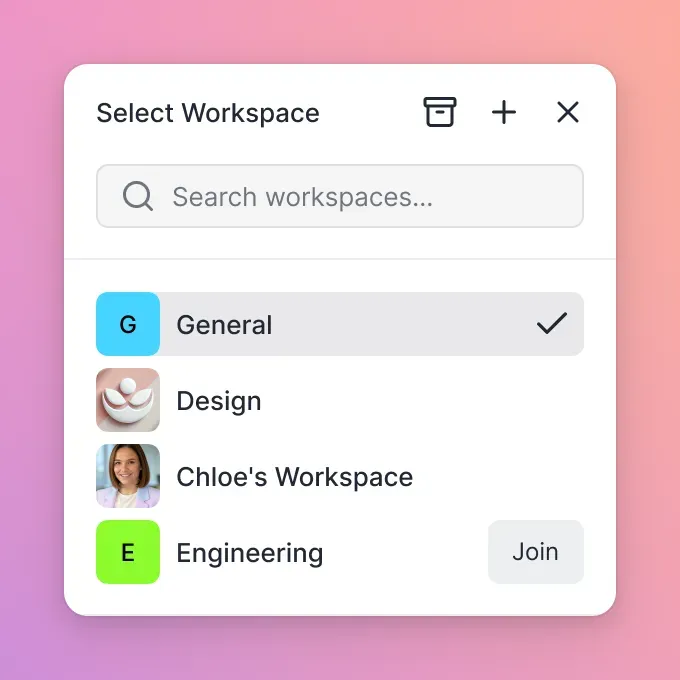
Give your agents a shared workspace
Shared storage with MCP server access. Agents and humans read, write, and search files in one place. Monthly plans start with a trial of up to 14 days (credit card required).
Real-World Performance: What Delivers and What Doesn't
Reviews from developers who tested Paperclip throughout 2026 tell a consistent story: the orchestration works, but the autonomous business promise does not hold up yet.
What works well
Task decomposition is Paperclip's strongest showing. The CEO agent does a reasonable job of breaking goals into projects, assigning them to the right agent based on role descriptions, and tracking progress through completion. Developer Kunal Ganglani tested this by building a consulting firm called ShipRight Consulting and found the multi-agent coordination visible and functional in the dashboard.
Cold email generation was described as "surprisingly useful" in testing, with appropriate tone and specific subject lines. The drafts worked as starting points that a human could refine.
The dashboard gives real-time visibility into what each agent is doing, how much it is spending, and where tasks sit in the pipeline. For teams already running multiple AI tools without central coordination, this alone could justify the setup time.
What doesn't work
Code quality from Paperclip-orchestrated agents remains unreliable. Website output in testing showed broken layouts and inconsistent styling. Marketing copy read like recycled startup buzzwords. Agents produced hallucinated data presented confidently as fact, including fabricated statistics in business materials with no sources.
The deeper problem is the absence of a built-in quality gate. Agents complete tasks and mark them done without verifying output accuracy. When an agent generates a marketing strategy with made-up numbers, Paperclip's governance system does not catch it because the issue is not structural (the agent had permission to do the work) but qualitative (the work is wrong).
The consensus from multiple reviewers: Paperclip is a brainstorming and scaffolding tool that compresses blank-page thinking into rough drafts. Production-quality output still requires human review at every step.
The Real Cost of Running Paperclip
Paperclip itself is free. MIT license, no subscription tiers, no usage fees. But "free" can be misleading if you do not account for the actual costs of running a multi-agent system.
Infrastructure
You need a server running Node.js and PostgreSQL. For local development, your laptop works fine. For production, expect to provision a VM or container. A basic cloud VM costs $20-50/month depending on your provider and the number of agents running concurrently.
LLM API costs
This is where the real spending happens. Each agent consumes API tokens every time it wakes up on a heartbeat. A Claude Code agent running on 30-minute heartbeats processes dozens of requests per day. At standard API pricing, a single active agent can cost $50-200/month depending on task complexity.
Claude Code Max subscriptions at $200/month per seat give you unlimited usage, which is the most common pairing in the Paperclip community. Running five agents on Claude Code Max means $1,000/month in API costs alone. Alternative providers like Gemini or local models can reduce per-agent costs, but you trade off capability.
Operational overhead
Self-hosted software needs updates, monitoring, and someone to debug issues when things break at 2 AM. Budget for two to four hours per week of maintenance if you are running Paperclip in any serious capacity.
Managing agent output
One practical concern is where agent deliverables end up. Without a shared workspace, outputs scatter across local filesystems and chat logs. S3 buckets or Google Drive can work, but lack agent-native access patterns and semantic search. Fast.io offers persistent storage with MCP server access and auto-indexing through Intelligence Mode, giving both agents and humans a single place to read, write, and search project files without managing a separate vector database. Monthly plans start with a trial of up to 14 days (credit card required); annual plans have no trial.
How Paperclip Compares to Other Agent Orchestrators
Paperclip occupies a unique niche, but it is not the only option for multi-agent coordination.
CrewAI is the closest comparison in philosophy. Both use role-based agent definitions and task delegation. CrewAI is Python-native with over 30,000 GitHub stars and the lowest learning curve of any multi-agent framework. You can define agents, tasks, and a crew in under 20 lines of code. The tradeoff: CrewAI focuses on workflow execution, not organizational governance. It has no budget controls, no org charts, and no approval gates.
AutoGen (AG2) from Microsoft Research takes a conversation-first approach. Agents communicate through a message-passing interface, including group chats where multiple agents discuss a problem. The v0.4 rewrite added an event-driven core and better coordination patterns. AutoGen is strongest for research and academic use cases but requires more setup for production deployments.
LangGraph has the largest production footprint for enterprise multi-agent systems. It models agent coordination as a directed graph with conditional edges, built-in checkpointing, and time-travel debugging. LangGraph offers the most control but demands the steepest learning curve on this list.
The key distinction: CrewAI, AutoGen, and LangGraph are agent frameworks that help you build and wire agents together. Paperclip is an operations layer that assumes you already have agents and provides management infrastructure around them. You could run CrewAI-built agents inside a Paperclip organization.
For a quick comparison:
- Paperclip works best as a multi-agent operations layer with built-in governance. Free software, you pay for infrastructure.
- CrewAI is the fastest path to a working multi-agent prototype. Python-native with no governance features.
- AutoGen suits research and experimental multi-agent conversations. Strongest in academic settings.
- LangGraph is the production choice for enterprise teams that need fine-grained state control.
For teams that need both orchestration and persistent file storage, combining Paperclip with a shared workspace like Fast.io simplifies handoff between agents and humans. The MCP server lets agents read and write to the same workspace humans use, with Intelligence Mode auto-indexing uploaded files for search.
Sources
References used to verify factual claims in this guide.
-
AI-powered software development agent market hit $10.4 billion in 2025 and is projected to reach $20.2 billion by 2027
-
Over 71,000 GitHub stars and 13,400 forks as of late June 2026
-
Paperclip hit 30,000 GitHub stars in its first three weeks after March 2, 2026 launch
-
Website output showed broken layouts and inconsistent styling in testing
Frequently Asked Questions
Is Paperclip AI free?
Paperclip is MIT-licensed open-source software with no licensing fees or subscription tiers. The real costs come from infrastructure (a server running Node.js and PostgreSQL) and LLM API usage for the agents you connect. Most users pair Paperclip with Claude Code Max at $200/month per agent seat. A typical three-to-five agent setup costs $600-1,000/month in API fees plus $20-50/month for hosting.
How does Paperclip AI compare to Cursor?
Paperclip and Cursor solve different problems. Cursor is an AI-enhanced code editor that helps individual developers write code faster. Paperclip is an orchestration platform that coordinates teams of AI agents with org charts, budgets, and governance. You can use Cursor as one of the agents inside a Paperclip organization. Think of Cursor as a single developer's tool and Paperclip as the company's project management system for agents.
What can Paperclip AI do?
Paperclip orchestrates multiple AI agents through an organizational model with roles, reporting lines, budgets, and governance. It handles task decomposition, heartbeat-based scheduling, per-agent cost controls, approval gates for structural changes, and full audit logging. Supported agents include Claude Code, OpenAI Codex, Gemini, Cursor, OpenClaw, and Nous Research Hermes. The platform coordinates agents for product development, content operations, and other workflows that benefit from multi-agent collaboration.
Is Paperclip AI worth it for developers?
Paperclip is worth exploring if you are already running multiple AI agents and struggling with coordination, cost visibility, or accountability. It adds genuine value as an operations layer for agent teams. It is not the right tool if you want a single AI coding assistant (use Claude Code or Cursor instead) or if you need a managed cloud service with zero operational overhead. Expect to invest time in setup and ongoing maintenance.
What LLM providers does Paperclip support?
Paperclip supports any agent that can receive a heartbeat signal. Built-in adapters exist for Claude Code, OpenAI Codex, Google Gemini CLI, Cursor, OpenClaw, Nous Research Hermes (via the hermes-paperclip-adapter), Pi, and OpenCode. You can also connect custom agents through bash scripts or HTTP webhooks.
Related Resources

Give your agents a shared workspace
Shared storage with MCP server access. Agents and humans read, write, and search files in one place. Monthly plans start with a trial of up to 14 days (credit card required).