7 Best Computer-Use AI Agents in 2026
Computer-use AI agents can see your screen, move the mouse, type, and click, automating workflows that API-only agents cannot handle. This guide ranks the 7 best options available in 2026, from commercial products like Claude Cowork and Manus to open-source tools like UI-TARS and Browser Use, with honest trade-offs on pricing, OS support, and what happens to your files after the session ends.

What Computer-Use Agents Actually Do
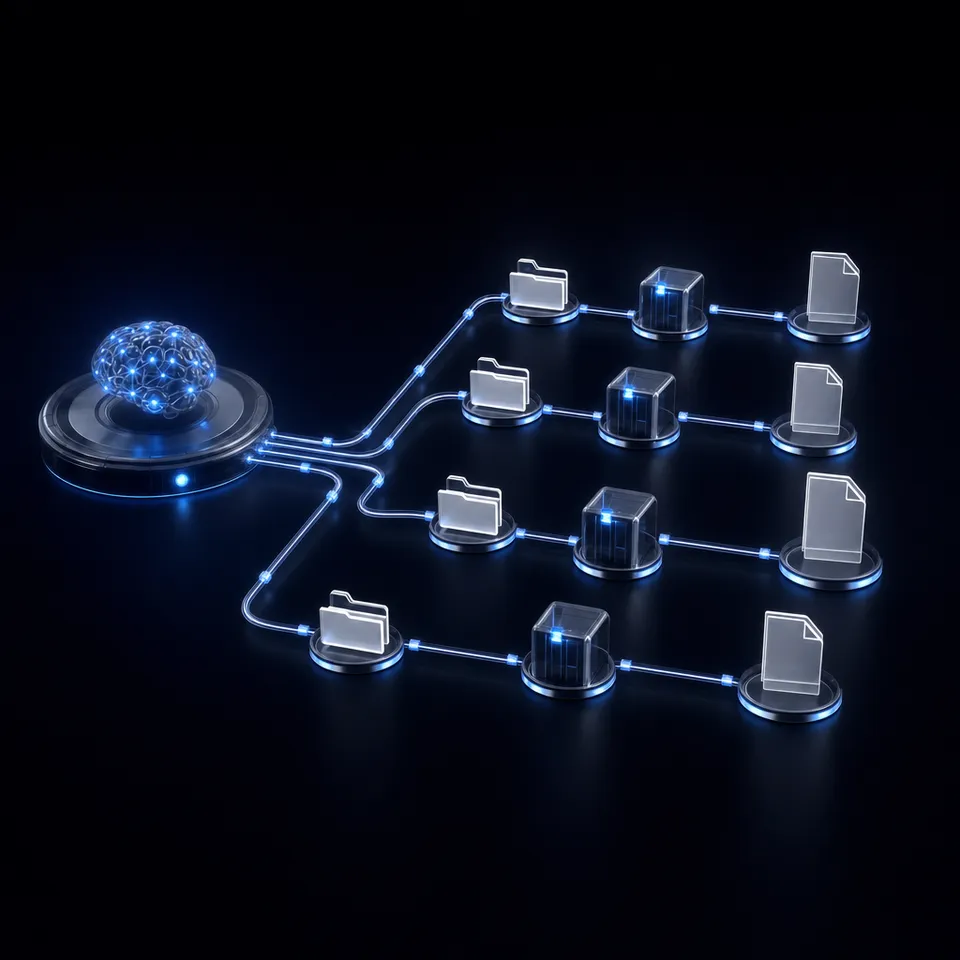
A computer-use AI agent can see your screen, move the mouse, type, and click. That makes it fundamentally different from API-only agents that work through structured tool calls and text responses. When a workflow involves a web app with no API, a legacy desktop application, or a multi-step process spanning several programs, computer-use agents handle what text-based agents cannot.
Anthropic launched Claude Computer Use in October 2024 as the first major commercial implementation. By mid-2026, at least five major platforms offer some form of screen-based agent interaction, and several open-source projects let you self-host the same capability on your own hardware.
This guide ranks the 7 strongest options available right now. We cover the usual dimensions (pricing, accuracy, OS support) but also dig into the one area most roundups skip: what happens to screenshots, downloads, spreadsheets, and other files the agent creates after the session ends. For teams that need agent output to outlive the agent itself, file persistence turns out to be the deciding factor.
Related guides
- Top 10 Open Source AI Agents You Can Run Locally in 2026Open source AI agents are autonomous software programs that run LLMs locally, with full source code available to...
- Best Free AI Agent Tools 2026: Top 12 Platforms ComparedBuilding autonomous agents doesn't have to be expensive. The free AI agent ecosystem now offers professional frameworks...
- DeepSeek AI Review 2026: Models, Pricing, and Developer VerdictDeepSeek AI ships open-weight models that match frontier benchmarks at a fraction of the cost, but the tradeoffs around...
- Paperclip AI Review 2026: Features, Real Costs, and VerdictPaperclip AI is the fastest-growing open-source platform for managing teams of AI agents, with over 71,000 GitHub stars...
- Perplexity Personal Computer vs Google NotebookLM for ResearchPerplexity Personal Computer is an always-on AI agent that merges local files with cloud search. Google NotebookLM is a...
- Top AI Agent Marketplaces to Buy and Sell Agents in 2026AI agent marketplaces connect developers who build specialized agents with users who need specific automation. This...
More on this subject: AI Tool Directories and Comparisons (231 guides)
The 7 Best Computer-Use Agents, Ranked
We tested and researched these agents across five criteria: accuracy on standard benchmarks (OSWorld, WebVoyager), breadth of desktop vs. browser support, pricing transparency, open-source availability, and file output handling. Here is the quick-reference ranking before the detailed breakdown:
- Claude Computer Use (Anthropic): Best for document-heavy desktop work with native Office integration
- OpenAI Operator: Best for accessible web task automation within the ChatGPT ecosystem
- Manus: Best for autonomous, long-running research and multi-site data collection
- Browser Use: Best open-source framework for building custom browser automation agents
- UI-TARS (ByteDance): Best self-hosted GUI agent with a purpose-built vision model
- ByteBot: Best for full desktop automation in isolated, persistent Docker containers
- Open Interpreter: Best hybrid approach combining code execution with GUI control

1. Claude Computer Use (Anthropic)
Anthropic's computer-use capability comes in two forms. Claude Cowork is the consumer product: a desktop application that runs a local virtual machine, giving Claude direct access to a folder you designate on your machine. It opens, edits, and creates Microsoft Office documents, browses the web, and executes multi-step workflows autonomously. For developers, the Computer Use API tool lets you build custom agents that take screenshots, move the cursor, click, and type within your own infrastructure.
Cowork stands out for document-heavy work. It handles complex Word formatting, Excel formulas, and PowerPoint layouts better than any competitor, because it operates on the actual applications rather than interpreting screenshots of them. Claude Sonnet 4.6 scores 72.5% on the OSWorld benchmark for full desktop tasks.
Key strengths:
- Best-in-class Microsoft Office document handling through native application access
- Strong reasoning and self-correction from Claude's underlying model
- Developer API enables custom computer-use agents on your own infrastructure
Limitations:
- Web browsing relies on a Chrome extension that is noticeably slower than competitors with built-in headless browsers
- Cowork requires a paid plan with no free tier
- Desktop app must remain running for scheduled or long-running tasks
File handling: Cowork writes directly to a local folder you designate. Files persist as long as the desktop app is active. The API sandbox is ephemeral by default.
Best for: Teams with document-heavy workflows involving Word, Excel, or PowerPoint.
Pricing: Claude Pro at $20/month (limited usage). Claude Max starts at $100/month for heavier use. API pricing: $3/$15 per million tokens (Sonnet 4.6), $5/$25 (Opus 4.6).
2. OpenAI Operator
OpenAI's Operator, now integrated into ChatGPT as "agent mode," is powered by the Computer-Using Agent (CUA) model. CUA combines GPT-4o's vision with reinforcement learning to interact with graphical interfaces through screenshots and simulated mouse and keyboard input. It achieves 38.1% on OSWorld for full computer-use tasks and 87% on WebVoyager for web navigation.
Operator runs in a cloud-hosted browser sandbox. Point it at a web task (filling out forms, comparing prices across sites, booking reservations) and it works through the steps autonomously. When it gets stuck, it hands control back to you rather than guessing. The ChatGPT desktop app adds "Work with Apps" for IDE and terminal access, but direct local file interaction is limited compared to Cowork or Manus.
Key strengths:
- Familiar ChatGPT interface makes it accessible to non-technical users
- Strong self-correction: recognizes mistakes and retries with an adjusted approach
- Desktop app provides IDE and terminal interaction through "Work with Apps"
Limitations:
- No persistent file storage in the cloud sandbox. Download outputs manually before closing the session
- Full access requires ChatGPT Pro at $200/month
- No public API for building custom computer-use agents as of early 2026
File handling: Cloud sandbox only. Files created during a session disappear when the session ends unless you download them manually.
Best for: Cross-site web tasks like form filling, price comparison, and booking workflows.
Pricing: ChatGPT Plus at $20/month with limited agent access. ChatGPT Pro at $200/month for full, unlimited usage.
3. Manus
Manus runs a hybrid architecture: cloud-based AI processing paired with a native desktop application for local file access. Hand it a complex research task (collecting pricing data from 50 competitor websites, for example) and it breaks the work into sub-tasks, executes them in parallel using a cloud sandbox, and compiles results into a final deliverable.
The desktop app grants Manus permission-based access to specific local folders, so it can read and write files directly on your machine. Manus tends to shine on long-running, multi-step research and data collection tasks where it works autonomously for 10-15 minutes at a stretch.
Key strengths:
- Autonomous task decomposition breaks complex jobs into parallel sub-tasks
- Native desktop app provides secure, permissioned local file access on macOS and Windows
- Strong at multi-step research and data compilation workflows
Limitations:
- Credit-based pricing is unpredictable. Complex tasks consume 500-900 credits per run
- No pre-execution cost estimates, so you don't know the bill until the task finishes
- Requires the desktop app running continuously for persistent local file access
File handling: Cloud files are tied to session history. Local files persist through the desktop app, but only while it is running on a dedicated machine.
Best for: Long-running research and data collection tasks spanning multiple websites and sources.
Pricing: Free tier with 300 daily credits. Standard at $20/month (4,000 credits). Extended at $200/month (40,000 credits).
4. Browser Use
Browser Use is the leading open-source framework for building browser automation agents. It is a Python library, not a hosted product, which means you build your own agents on top of it. The trade-off is maximum flexibility: pick your LLM (Claude, GPT, Gemini, or local models through Ollama), define the task logic, and control the entire pipeline.
Browser Use achieves an 89.1% success rate on the WebVoyager benchmark across 586 web tasks. Version 2.0, released in January 2026, brought a 12% accuracy improvement over v1. For teams that need managed infrastructure, Browser Use Cloud provides stealth browsers with anti-detection, CAPTCHA solving, and proxies in 195+ countries.
Key strengths:
- Model-agnostic: works with any LLM provider or local model through Ollama
- 89.1% WebVoyager success rate, among the highest in browser automation
- MIT license with 52,000+ GitHub stars and active community
Limitations:
- Browser-only. Cannot interact with desktop applications like Office suites or IDEs
- Requires Python development skills to set up and configure
- No built-in file persistence. You manage output storage yourself
File handling: Developer-managed. The framework provides no default storage. You configure where outputs go (local disk, S3, database, or a workspace like Fastio).
Best for: Developers building custom browser automation at scale who want full control over the agent stack.
Pricing: Free and open source (MIT). Browser Use Cloud starts with $10 in free credits, then pay-as-you-go.
5. UI-TARS (ByteDance)
UI-TARS is ByteDance's open-source vision-language model built specifically for GUI interaction. Unlike frameworks that send screenshots to a general-purpose LLM for interpretation, UI-TARS is an end-to-end trained model that directly perceives and acts on user interfaces. It ships in 7B and 72B parameter versions, trained on approximately 50 billion tokens of GUI interaction data.
On desktop automation benchmarks, UI-TARS outperforms GPT-4o and Claude on GUI-specific tasks. The Desktop application (v0.2.0+) added remote computer and browser operation, and MCP support lets you integrate it into broader agent workflows alongside other tools.
Key strengths:
- Purpose-built vision model achieves state-of-the-art scores on 10+ GUI benchmarks
- Runs entirely locally with no API costs when using the 7B model
- MCP support enables integration with external tool servers and workspace platforms
Limitations:
- The 72B model requires a capable GPU (24GB+ VRAM) for reasonable performance
- More complex setup than commercial alternatives
- Smaller community compared to Browser Use or Open Interpreter
File handling: Local file system access on whatever machine runs the agent. You manage persistence and sharing yourself.
Best for: Teams with GPU resources who want a specialized, self-hosted GUI agent with no per-query API costs.
Pricing: Free and open source (Apache 2.0). No API costs when running locally.
6. ByteBot
ByteBot takes a different approach: it gives your AI agent an entire Linux desktop inside a Docker container. The agent can open any application (browsers, email clients, office suites, IDEs), log into websites using password manager extensions like 1Password or Bitwarden, and work across multiple programs in a single session.
The containerized design means each agent instance runs in full isolation. Files persist within the container's file system between sessions, and authentication state carries over, so the agent does not need to re-login each time. You bring your own LLM provider (Anthropic Claude is recommended for visual understanding, but OpenAI and Google models work too).
Key strengths:
- Full desktop environment: any Linux application, not just browsers
- Persistent file system and authentication state across sessions
- Self-hosted with Docker isolation. Your data stays on your infrastructure
Limitations:
- Linux containers only. Cannot automate macOS-native or Windows-native applications
- Requires managing your own infrastructure (Docker, compute, networking)
- No hosted or managed option. You handle deployment and maintenance
File handling: Persistent within the Docker container. Files survive between sessions. For sharing outputs with a team, you mount external volumes or push files to a storage service.
Best for: Teams that need full desktop automation at scale with persistent state and complete infrastructure control.
Pricing: Free and open source. Your costs are infrastructure (compute, storage) and LLM API usage.
7. Open Interpreter
Open Interpreter is a hybrid: it combines direct code execution with GUI-level computer control. Give it a task and it decides whether to write and run code, interact with GUI elements through screenshots and clicks, or mix both approaches. This flexibility makes it effective for tasks that cross the boundary between scripted automation and visual interaction.
With 57,000+ GitHub stars, it has one of the largest communities in the open-source agent space. It supports local models through Ollama, so you can run it entirely offline for sensitive workflows.
Key strengths:
- Hybrid code + GUI approach handles a wider range of tasks than pure screenshot agents
- Large, active community with extensive documentation and examples
- Works with local models for fully offline, private operation
Limitations:
- AGPL-3.0 license requires source disclosure for commercial derivative works
- GUI interaction is less reliable than specialized tools like UI-TARS for complex visual tasks
- Executes arbitrary code on your machine, which demands careful permission management
File handling: Direct access to your local file system. Files persist naturally since the agent runs on your machine. No sandboxing by default, which is both a strength (full access) and a risk (full access).
Best for: Developers who need a versatile agent that can switch between writing code and controlling GUI elements within a single workflow.
Pricing: Free and open source (AGPL-3.0). API costs depend on your chosen LLM provider.
Where Your Files Go After the Session Ends
Most roundups compare computer-use agents on speed, accuracy, and pricing. Almost none address what happens to the files an agent creates during a session.
Consider a typical workflow: an agent researches 30 industry reports, extracts key statistics, compiles them into a spreadsheet, and writes a summary document. That is four distinct file outputs. Where do they land?
Commercial agents handle this differently:
- OpenAI Operator runs in a cloud sandbox. Files exist only during the session. Download them manually before closing, or they disappear.
- Claude Cowork writes to a designated local folder, but only while the desktop app is running. Stop the app, and the agent loses access.
- Manus stores session files in its cloud, but finding them later means navigating through session history.
Open-source agents (ByteBot, UI-TARS, Open Interpreter) keep files wherever you configure them: local disk, mounted Docker volumes, or cloud storage you set up yourself.
For individual use, manual file downloads are fine. For teams running multiple agents, or handing off agent output to stakeholders who never interact with the agent directly, the gap becomes a real workflow problem. You need a shared destination where files land automatically and stay accessible to the people who need them.
Local disk works for single-machine setups but falls apart when multiple agents or team members need access to the same outputs.
S3 or cloud object storage provides durability at scale but requires custom integration, and it offers no built-in search, sharing, or access controls designed for agent-to-human handoff.
Fastio approaches this as a workspace layer between agents and teams. Agents connect through the MCP server (Streamable HTTP at /mcp) or the REST API to upload files, organize them in shared workspaces, and transfer ownership to humans. Intelligence Mode auto-indexes uploaded files for semantic search and RAG, so a team member can ask questions about agent-generated documents without opening each file individually.
Fastio offers a 14-day Business Trial (credit card required; see pricing). For agents that produce recurring reports, research outputs, or compiled datasets, a persistent and searchable destination changes the workflow from "download and forward" to "the results are already where the team can find them."


Stop Losing Agent Output After Every Session
Fastio gives AI agents persistent, searchable workspace storage with MCP access and built-in RAG.
Computer Use vs. Browser Use
This distinction comes up often, especially since "browser use" and "computer use" appear as separate product categories. The difference is scope.
Browser-use agents operate exclusively inside a web browser. They navigate pages, fill forms, click buttons, and extract data from websites. They typically work through a combination of DOM inspection (reading the page's HTML structure) and screenshots. They cannot open Photoshop, edit a local spreadsheet, or interact with your operating system outside the browser window.
Computer-use agents control the entire desktop. They see the screen the same way you do and can interact with any visible application: browsers, office suites, terminals, creative tools, system preferences. Browser interaction is a subset of what they do, not the whole picture.
In practice, the distinction matters less than it sounds for many workflows. The majority of agent tasks today are browser-based (CRM updates, web research, form submissions, data scraping). If your work lives entirely in the browser, a dedicated browser-use tool like Browser Use is faster and more reliable than a general computer-use agent. Browser Use's DOM awareness lets it read page structure directly rather than interpreting screenshots, which reduces errors and speeds up execution.
If you need to move files between desktop applications, interact with software that has no web version, or coordinate work across multiple local programs, you need a full computer-use agent. Claude Cowork and Manus are strongest here for commercial use, while ByteBot and UI-TARS cover the open-source side.
How to Pick the Right Agent
The best agent depends on what you actually need it to do. Here are concrete recommendations by workflow type:
- Document-heavy Office work: Claude Cowork. Nothing else handles Word, Excel, and PowerPoint formatting as well.
- Web research and data collection: Manus for non-technical users who want autonomous operation. Browser Use for developers who want full control over the pipeline.
- Web task automation (forms, bookings, CRM updates): OpenAI Operator if you already pay for ChatGPT Pro. Browser Use Cloud for lower per-task costs at scale.
- Full desktop automation in production: ByteBot for containerized, self-hosted deployments with persistent state. UI-TARS for teams with GPU resources who want to avoid API costs entirely.
- Hybrid code and GUI tasks: Open Interpreter for developers comfortable managing execution permissions on their own machine.
- Team handoff and file persistence: Pair any agent above with a workspace layer like Fastio to give agent outputs a permanent, searchable home that both agents and humans can access.
Six months ago, only Anthropic offered a production computer-use capability. Now every major AI company has one, and open-source alternatives match or exceed commercial options on benchmarks. The constraint has shifted from "can an agent use my computer?" to "where do the results go when the agent is done, and who can find them?"
Sources
References used to verify factual claims in this guide.
-
Anthropic launched Claude Computer Use in October 2024 as the first major commercial implementation
-
Browser Use achieves an 89.1% success rate on the WebVoyager benchmark across 586 web tasks
-
UI-TARS ships in 7B and 72B parameter versions, trained on approximately 50 billion tokens
-
CUA achieves 38.1% on OSWorld and 87% on WebVoyager
-
Claude Sonnet 4.6 scores 72.5% on the OSWorld benchmark
Frequently Asked Questions
What is the best AI agent that can use a computer?
It depends on the workflow. For document-heavy desktop tasks involving Microsoft Office, Claude Cowork leads with native application access. For web-based automation, OpenAI Operator offers the most accessible experience through ChatGPT. For developers who want full control, Browser Use (browser-only, MIT license) and UI-TARS (full desktop, Apache 2.0) are open-source options that match or exceed commercial alternatives on standard benchmarks.
Can AI agents control my desktop?
Yes. Several agents can see your screen, move the mouse, type, and click on desktop applications. Claude Cowork and Manus offer commercial products with native macOS and Windows desktop apps. Open-source options like UI-TARS, ByteBot, and Open Interpreter provide the same capability with more setup required. These agents work by taking screenshots, interpreting what is on screen, and sending input events, similar to operating a computer through a remote desktop connection.
What is the difference between computer use and browser use agents?
Browser-use agents operate exclusively inside a web browser, navigating pages, filling forms, and extracting data from websites. They cannot open desktop applications. Computer-use agents control the entire desktop, including browsers, office suites, terminals, and any other visible application. If your tasks are entirely web-based, browser-use agents are typically faster and more reliable. If you need to work across multiple desktop applications or interact with software that has no web version, you need a full computer-use agent.
Are computer-use AI agents safe?
Computer-use agents require access to your screen and input controls, so you should treat permissions carefully. Commercial agents like Claude Cowork and Manus use sandboxed environments or permission-based folder access to limit what the agent can touch. Open-source agents running on your own machine should be reviewed for the permissions they request. ByteBot runs in Docker containers for isolation. As a general rule, never grant any agent access to password managers, banking applications, or confidential business folders.
Do I need a GPU to run a computer-use agent?
Not for commercial agents. Claude Cowork, OpenAI Operator, and Manus run their AI models in the cloud, so your local hardware requirements are minimal. For open-source agents, it depends. Browser Use sends screenshots to cloud APIs by default, so no GPU is needed. UI-TARS can run its 7B model on a consumer GPU with 8GB+ VRAM, while the 72B model needs 24GB+ VRAM. ByteBot and Open Interpreter connect to cloud APIs by default but support local models through Ollama if you have the hardware.
Related Resources

Stop Losing Agent Output After Every Session
Fastio gives AI agents persistent, searchable workspace storage with MCP access and built-in RAG.