OpenClaw vs Devin: Open-Source Agent vs Autonomous Coder Compared
OpenClaw is a free, open-source AI agent you host yourself for collaborative coding with human-in-the-loop review. Devin is a closed-source autonomous coder that works independently in a cloud sandbox. This guide compares their pricing, autonomy levels, deployment models, reliability, and best use cases, then covers how persistent workspaces bridge agent output to team handoff.


What OpenClaw and Devin Actually Do
OpenClaw is an open-source, self-hosted AI assistant with over 369,000 GitHub stars and more than 1,000 contributors. You install it on your own machine, connect it to the LLM of your choice (Claude, GPT-4o, DeepSeek, Gemini, or a local model through Ollama), and interact through 50+ messaging platforms including Slack, Discord, Telegram, and WhatsApp. It handles general-purpose tasks like scheduling, research, and email, but it also writes and reviews code. The key distinction: OpenClaw works collaboratively. You review changes before they land.
Devin is a closed-source autonomous coding agent built by Cognition AI. It runs in a sandboxed cloud VM with its own browser, code editor, and terminal. You describe a task, and Devin plans multi-step execution, writes code, installs dependencies, runs tests, debugs failures, and opens pull requests. It works independently. You check results after Devin finishes, not during.
The choice between them reflects a fundamental question about how you want AI to write code. OpenClaw keeps a human in the loop at every step, catching errors in real time. Devin operates autonomously, trading oversight for speed on well-defined tasks.
OpenClaw launched under the name "Clawdbot" in late 2025 and rebranded to OpenClaw in January 2026. It is MIT-licensed and free to use. Devin launched as the "first AI software engineer" and has evolved through Devin 2.0, which introduced parallel sessions and a significant price reduction from $500 to $20 per month at the entry tier.

Related guides
- Cline vs Trae: Open-Source Coding Agent vs ByteDance AI IDE ComparedCline and ByteDance's Trae represent two divergent philosophies for agentic software engineering. Cline embeds a...
- What Is Cline? Open-Source AI Coding Agent ExplainedCline reports 8.0M+ installs across platforms and ships as Apache 2.0 open source, which is why developers keep asking...
- Hermes Agent vs OpenClaw: Which Open-Source AI Agent Should You ChooseNous Research Hermes Agent and OpenClaw are the two dominant open-source AI agent frameworks in 2026. They share the...
- OpenClaw vs n8n: Agent AI vs Workflow Automation ComparedOpenClaw is an autonomous AI agent that decides what to do next. n8n is a workflow automation tool that runs the steps...
- OpenClaw vs Windsurf (Now Devin Desktop): AI Agent vs AI IDE in 2026Seventy percent of developers now run two to four AI coding tools at once, but most comparisons still frame each option...
- OpenClaw vs LangChain: Choosing the Right Agent Framework for 2026Choosing between OpenClaw and LangChain comes down to autonomy versus building blocks. LangChain provides broad tools...
More on this subject: OpenClaw Setup and Guides (199 guides)
Side-by-Side Comparison
This table covers the dimensions where OpenClaw and Devin differ most.
An ACU (Agent Compute Unit) represents roughly 15 minutes of active Devin work. Real-world ACU consumption often runs 2-3x higher than Cognition's example scenarios, so budget accordingly for complex tasks.
The pricing difference is significant at scale. A team using OpenClaw with Claude API calls might spend $15-50/month in API costs per developer. The same team on Devin's Team plan starts at $500/month before additional ACU charges. OpenClaw's cost is predictable because you control the model and usage directly.


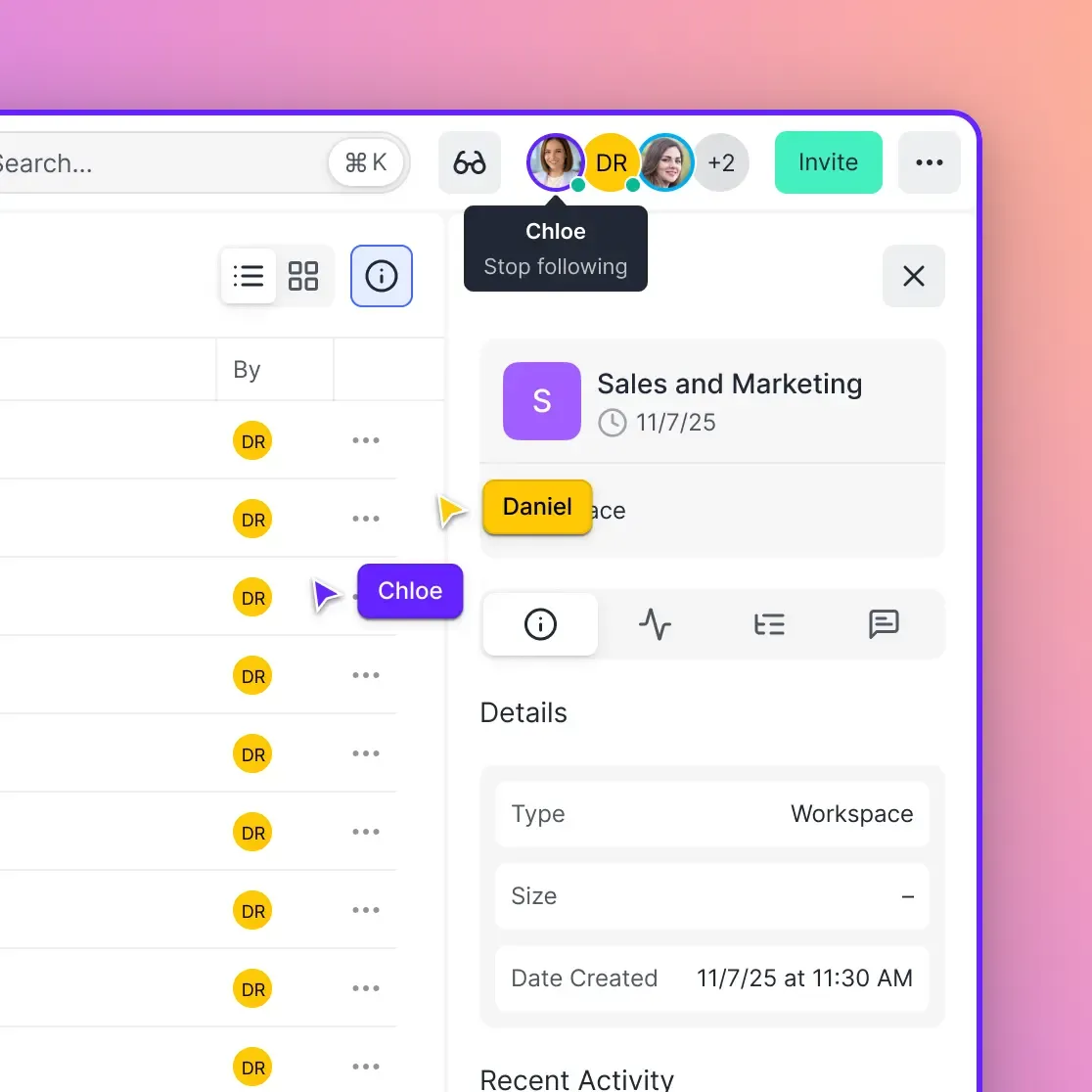
Persistent storage for your AI coding agents
Generous storage workspace with semantic search, file versioning, and MCP access. Upload agent output, search by meaning, and hand off to your team.
Where OpenClaw Wins
OpenClaw's strengths come from transparency, flexibility, and the human-in-the-loop model.
Cost control
The software is free. Your only costs are LLM API tokens, which you buy directly from providers at their published rates. Light users spend $5-20/month. Heavy users rarely exceed $100/month. There are no surprise compute charges because you control the model, the context window, and the prompt volume. Devin's ACU model makes costs harder to predict. A task that looks simple might burn through ACUs if Devin hits a debugging loop.
Model choice
Point OpenClaw at whichever LLM works best for your codebase. If your organization already pays for GPT-4o through Azure, use that. If you need on-premise inference for compliance, run Ollama with a local model. Swap models per task if you want. Devin runs on Cognition's own models with no option to substitute.
Reliability through oversight
According to testing data cited by Idlen.io, Devin achieves a 78% success rate on bug fixes with clear specifications, dropping to 35% on vaguely defined bugs and 15% on new architecture tasks. Those gaps matter less with OpenClaw because you catch problems as they happen. The human-in-the-loop model means you review code before it lands, correct misunderstandings mid-task, and apply team-specific conventions through the ClawHub skills system.
Community and extensibility
With 369,000+ GitHub stars and over 1,000 contributors, OpenClaw has one of the largest open-source communities in AI tooling. The ClawHub marketplace offers thousands of skills for everything from email automation to code review pipelines. You can build custom skills that encode your team's standards and share them across projects.
Why Devin Wins for Autonomous Tasks
Devin's autonomous model is genuinely useful in the right contexts. Writing it off because of its limitations misses the scenarios where it outperforms collaborative agents.
Autonomous execution
Some tasks are better handed off entirely. Framework migrations, boilerplate scaffolding, dependency upgrades, and converting documentation between formats are tedious but well-defined. Devin plans these end-to-end, executes without human prompting, and opens a pull request when done. For a team with a backlog of routine engineering tickets, that frees developers to focus on the work that needs human judgment.
Sandboxed environment
Devin runs in its own cloud VM with a full development environment: browser, editor, terminal, and network access. It can search documentation, install packages, and run test suites without touching your local machine. That isolation means Devin cannot accidentally modify your production environment or break a local dev setup, a genuine concern with self-hosted agents that have broad system access.
Zero setup
Sign up, describe a task, and Devin starts working. No server provisioning, no Docker configuration, no model selection. For teams that want an AI coder without managing infrastructure, Devin's cloud-only model removes the ops burden. OpenClaw's self-hosted approach gives you more control but requires more setup time, typically 30-60 minutes for a basic installation.
Pull request workflow
Devin creates pull requests with detailed descriptions of what it changed and why. It responds to code review comments from human reviewers. For teams that already work through pull requests, Devin fits cleanly into the existing review cycle. OpenClaw can also interact with git, but the workflow integration is not as polished for autonomous PR creation.
How to Get Agent Output Into Team Workflows
Both OpenClaw and Devin produce files, code, reports, and artifacts that need to go somewhere after the agent finishes. The gap between "agent generated this" and "team can use this" is where most workflows break down.
The handoff problem
OpenClaw writes files to whatever storage you configure on your host machine. Local directories work for solo developers but create problems when multiple agents or team members need access. Devin's sandbox isolates outputs inside the VM. You get the results through pull requests and Slack notifications, but larger artifacts like datasets, documentation bundles, or generated media need a separate handoff path.
Neither tool ships with a built-in answer for persistent, shared storage with granular permissions. Most teams cobble together Google Drive, S3 buckets, or Slack threads. That works until you need audit trails, version history, or semantic search across what agents have produced.
Using Fastio for agent-to-team handoff
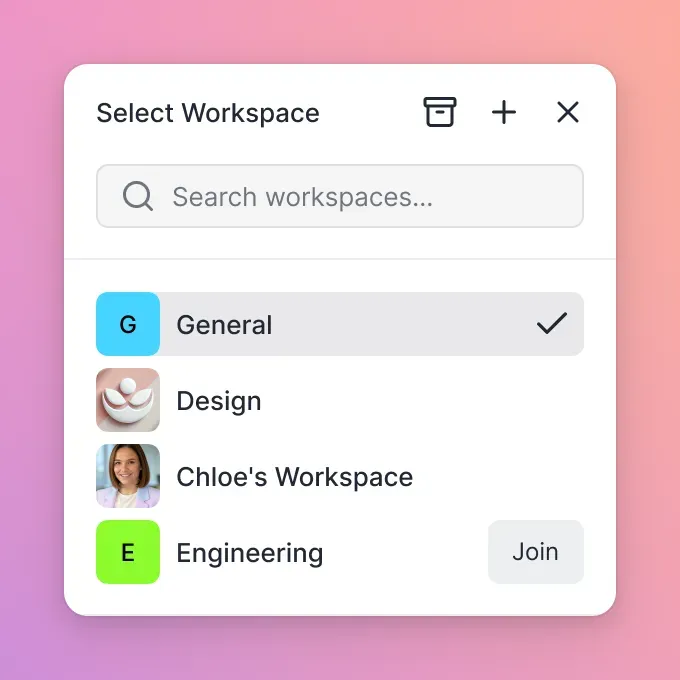
Fastio provides workspaces where agents and humans share the same files, permissions, and intelligence layer. Agents use the MCP server or API to upload outputs, and humans access the same workspace through the browser UI.
The specific advantages for agent output management: Intelligence Mode auto-indexes uploaded files for semantic search and RAG chat, so you can ask "what did the agent generate about authentication?" instead of digging through folders. File versioning tracks every change. Granular permissions let you control who sees what at the org, workspace, folder, or file level. Ownership transfer lets an agent build a complete project workspace and hand it to a human when the work is done.
Alternatives include S3 with a custom permission layer, Google Drive with shared folders, or Dropbox with team plans. S3 gives you raw storage at low cost but no built-in preview, search, or collaboration features. Google Drive and Dropbox handle team sharing well but lack agent-native APIs and semantic search over file contents.
Fastio's Business Trial runs with Business-plan capabilities for 14 days and requires a credit card. Teams can use it to evaluate OpenClaw or Devin workflows before choosing a plan.
Which Agent Should You Choose?
The decision depends on three factors: how much oversight you want, what kind of tasks you run, and how you manage cost.
Pick OpenClaw if:
- You want to review code before it lands, not after
- Your team already uses Slack, Discord, or another messaging platform as a primary communication channel
- You need to run a specific LLM provider for cost, compliance, or performance reasons
- You prefer open-source tools with community support and full source access
- Budget predictability matters more than hands-off automation
Pick Devin if:
- You have a backlog of well-defined, self-contained engineering tasks
- Framework migrations, scaffolding, or dependency upgrades consume developer time
- You want zero infrastructure setup and management
- Your team already works through pull requests and code review
- Autonomous execution speed outweighs the cost of occasional rework
Use both if:
Many teams run OpenClaw for interactive daily coding and Devin for batch processing of routine tickets. That is a valid setup. OpenClaw handles the tasks that benefit from human context and real-time feedback. Devin handles the tasks where autonomy saves time and the specs are clear enough that post-hoc review is sufficient.
Whichever agent you choose, persistent shared storage solves the handoff problem. Agent output needs to reach teammates, clients, or downstream systems in a form that is searchable, versioned, and access-controlled. Local files and sandbox VMs are not that. A workspace layer like Fastio or a well-configured S3 setup bridges the gap between agent work and team delivery.
Collaborative review and fire-and-forget autonomy aren't the only two models out there. Our OpenClaw alternatives guide rounds up seven other agent frameworks for a broader comparison.
Sources
References used to verify factual claims in this guide.
-
OpenClaw has over 369,000 GitHub stars
-
Devin Core plan costs $20/month plus $2.25 per ACU
-
Devin 78% success rate on clearly defined bug fixes, 35% on vague bugs, 15% on new architecture OpenClaw surpassed 330,000 GitHub stars with 1,000+ contributors and 64,303 forks by March 2026
-
Devin 2.0 completes 83% more junior-level development tasks per ACU compared to Devin 1.x
Frequently Asked Questions
Is OpenClaw better than Devin?
It depends on your workflow. OpenClaw is better for interactive coding with human review, multi-model flexibility, and cost control. Devin is better for autonomous execution of well-defined tasks like migrations and scaffolding. OpenClaw is free and open-source while Devin starts at $20/month plus per-task compute charges.
What is the difference between OpenClaw and Devin?
OpenClaw is a free, open-source, self-hosted AI agent that works collaboratively with human-in-the-loop oversight. Devin is a closed-source, cloud-based autonomous coder that plans and executes tasks independently. OpenClaw supports multiple LLM providers and 50+ messaging platforms. Devin runs in a sandboxed VM and opens pull requests when finished.
Is OpenClaw free to use?
The OpenClaw software is free and MIT-licensed. Your only ongoing costs are LLM API tokens from your chosen provider. Light users typically spend $5-20 per month on API calls. Managed hosting options like Blink Claw start around $45 per month if you prefer not to self-host.
Can Devin replace a developer?
Not for most work. Devin handles routine, well-specified tasks effectively, with a reported 78% success rate on defined bug fixes. That rate drops to 35% for vaguely defined bugs and 15% for new architecture design. It works best as a force multiplier for developers handling routine backlogs, not as a replacement for human engineering judgment.
How much does Devin cost per month?
Devin's Core plan costs $20 per month plus $2.25 per ACU (Agent Compute Unit), where each ACU represents about 15 minutes of active work. The Team plan costs $500 per month with 250 ACUs included. Enterprise pricing is available on request. Real-world ACU consumption often exceeds initial estimates for complex tasks.
Can OpenClaw and Devin work together?
Yes. Some teams use OpenClaw for interactive daily coding tasks that benefit from human oversight and Devin for batch processing well-defined tickets like migrations or scaffolding. Agent output from either tool can be routed to shared workspaces like Fastio for team access, versioning, and semantic search.
Related Resources

Persistent storage for your AI coding agents
Generous storage workspace with semantic search, file versioning, and MCP access. Upload agent output, search by meaning, and hand off to your team.