OpenClaw Review 2026: Honest Assessment for AI Agent Builders
OpenClaw is the most-starred project in GitHub history, but star count alone does not make a tool production-ready. This review covers what OpenClaw actually delivers for AI agent builders: remarkable extensibility through 5,700+ community skills, genuine privacy through local execution, and serious security concerns including CVE-2026-25253 and hundreds of malicious ClawHub packages. If you are evaluating OpenClaw for agent workflows, this is the balanced assessment most reviews skip.


What OpenClaw Actually Is
OpenClaw is a free, open-source AI assistant framework that runs locally on your hardware and connects large language models to messaging platforms. You self-host a Gateway daemon (a single TypeScript process running on your machine), connect it to your preferred LLM (Claude, GPT-4, Gemini, DeepSeek, or local models like Llama 3), and interact through WhatsApp, Telegram, Discord, Slack, Signal, iMessage, or any of 50+ supported channels.
The project launched in November 2025 under the name "Clawdbot," was renamed twice in January 2026 after trademark disputes, and settled on OpenClaw. Within five months it accumulated over 353,000 GitHub stars, surpassing React to become the most-starred non-aggregator software project on the platform.
The architecture is straightforward. The Gateway handles all session management, channel routing, and tool execution. Clients connect via WebSocket with JSON payloads. Skills (plugins) register tools as JSON-schema functions exposed to the model. The system supports three connection types: control-plane clients (CLI, web UI, automations), nodes (macOS/iOS/Android providing device capabilities like camera and screen recording), and static WebChat for browser access.
OpenClaw's core value proposition is local-first AI agency: your data stays on your machine, you choose your model provider, and you extend functionality through community-built skills rather than vendor lock-in.
Related guides
- Hermes Agent Review 2026: Features, Performance, and Honest AssessmentNous Research Hermes Agent is the fastest-growing open-source AI agent framework of 2026, crossing 95,000 GitHub stars...
- Claude Cowork Review 2026: Honest Assessment After Real UseA Growth Unhinged survey found that 32% of GTM operators now use Cowork as their primary Claude product, matching Chat...
- How to Build a Human-in-the-Loop Review Workflow in OpenClawA human-in-the-loop (HITL) review workflow in OpenClaw lets an agent create an artifact, persist it to durable storage,...
- How to Set Up OpenClaw with Google Gemini ModelsOpenClaw's Gemini integration connects your agent to Google's full model family, including Gemini 3.1 Pro for chat,...
- How to Set Up ClawHub for OpenClawClawHub is the public skill registry for OpenClaw, with over 13,000 community skills available. This guide walks...
- How to Set Up an RAG Knowledge Base in OpenClawConnect your agents to your proprietary data with automated indexing and semantic retrieval. Enable Intelligence Mode...
More on this subject: OpenClaw Setup and Guides (199 guides)
The Genuine Strengths
OpenClaw earned its popularity for real reasons. Here is what works well.
Cost at scale is unbeatable. The software is free. Infrastructure costs run $40-80/month for a VPS that handles 10+ concurrent users. One Hackceleration review documented annual savings of $25,000-40,000 for a 10-person team compared to commercial alternatives. If you already run servers, the marginal cost is near zero.
Model flexibility matters. You are not locked to a single provider. Swap between Claude, GPT-4, Gemini, DeepSeek, or fully local models (Llama 3, Mistral, Phi) without changing your workflow. This protects you from provider outages, price changes, and capability shifts.
Persistent memory across sessions. Unlike most chat interfaces that reset context between conversations, OpenClaw maintains memory about your preferences, projects, and ongoing work. After a few weeks of use, the assistant understands your specific context without repeated explanation.
The skill ecosystem is genuinely large. ClawHub hosts over 5,700 community-built skills covering coding assistance, DevOps automation, web research, content generation, and smart home control. The best skills feel like having a specialized assistant that already knows the tool you need help.
Privacy through local execution. Conversations, API keys, and data stay on your hardware. Nothing passes through third-party relay servers. For teams handling sensitive data, this eliminates an entire category of compliance concerns.

The Security Problems Are Real
OpenClaw's security posture is the single biggest factor working against it for production use. These are not theoretical concerns.
CVE-2026-25253 was catastrophic. Disclosed in February 2026, this critical remote code execution vulnerability (CVSS 8.8) allowed attackers to fully compromise a user's machine through a single click. The flaw exploited the Control UI's blind trust of a URL parameter, leaking authentication tokens to attackers. SecurityScorecard's STRIKE team identified 135,000+ exposed instances across 82 countries before the patch landed.
ClawHub's skill supply chain is compromised. Koi Security audited all skills on ClawHub and found 341 malicious entries in their initial scan. A subsequent audit pushed that number past 824. The primary campaign, dubbed "ClawHavoc," distributed Atomic Stealer malware through professional-looking skills with names like "solana-wallet-tracker" and "youtube-summarize-pro." The skill registry lacked adequate vetting to prevent these submissions.
The vulnerability surface is structural, not incidental. Since OpenClaw executes shell commands, manages filesystems, and automates browsers by design, any skill with malicious intent has access to powerful primitives. The project has accumulated over 245 CVEs in the GitHub Advisory Database as of early 2026. Chinese authorities restricted OpenClaw on government computers. Microsoft's CEO called it a "virus-like security risk" before the company quietly began testing their own OpenClaw-based tool internally.
Remediation exists but requires diligence. The project ships security configuration guides, supports challenge-nonce signing on connections, and community tools like Clawdex (a skill that checks other skills against a malicious database) provide some protection. But the burden falls entirely on the user to configure sandboxing, network isolation, and skill vetting correctly.


Persistent storage for your OpenClaw agent outputs
Generous storage workspace with audit trails, MCP access, and agent-to-human handoff.
Setup and Daily Use
The setup experience is the most common complaint in user reviews, and the most common reason people abandon the tool.
Realistic setup times. Hackceleration's testing found 25 minutes on macOS and 35 minutes on Ubuntu Linux (including a dependency conflict). Less experienced users report 1-2 hours. This assumes you already have Node.js 22+, understand CLI tooling, and can troubleshoot environment issues. The DataCamp comparison notes that Claude Code installs in roughly 30 seconds by contrast.
No graphical configuration. Everything happens through config files and CLI commands. There is no setup wizard, no drag-and-drop interface, no guided onboarding. You edit YAML, manage Docker containers (if you want sandboxing), and configure model connections manually.
Daily use is smooth once configured. Response times average 2-3 seconds on an M2 Mac with 32GB RAM. The messaging interface feels natural because you interact through apps you already use. Persistent memory means less repeated context-setting over time.
Where it breaks down. Autonomy sometimes becomes over-autonomy. The agent may loop through unnecessary reasoning chains, invoke tools repeatedly, or reinterpret objectives mid-task. Vision tasks (browser automation, screenshot analysis) spike token costs . Community support averages 8 hours to 3 days for responses, with no SLA.
The honest assessment on difficulty. If you run your own servers, manage Docker deployments, and enjoy tinkering with configuration, OpenClaw's setup is a manageable afternoon project. If you want something that works immediately, this is the wrong tool.
How OpenClaw Compares to Commercial Alternatives
OpenClaw occupies a unique position: maximum flexibility and privacy at the cost of setup complexity and security responsibility.
vs. Claude Code. Claude Code is a purpose-built coding agent that installs in seconds and understands your entire codebase immediately. OpenClaw is a general-purpose life assistant. They serve different use cases. Claude Code wins on developer experience for coding tasks. OpenClaw wins on breadth (50+ messaging platforms, smart home control, calendar management, and custom automation across any domain).
vs. Commercial AI assistants (ChatGPT, Gemini, Perplexity). These offer zero setup, polished interfaces, and professional support. They lose on privacy (your data hits their servers), customization (limited to what they expose), and cost at scale (per-seat pricing adds up quickly for teams).
vs. Other self-hosted options. Tools like LibreChat or Jan.ai offer simpler self-hosted experiences but with narrower integration ecosystems. OpenClaw's 50+ channel support and deep skill system are genuinely unmatched in the open-source space.
The right choice depends on your constraints. For a solo developer who wants a private AI assistant across all their communication channels and enjoys configuration: OpenClaw is strong. For a team that needs managed security, instant setup, and coding-specific capabilities: commercial tools serve you better.
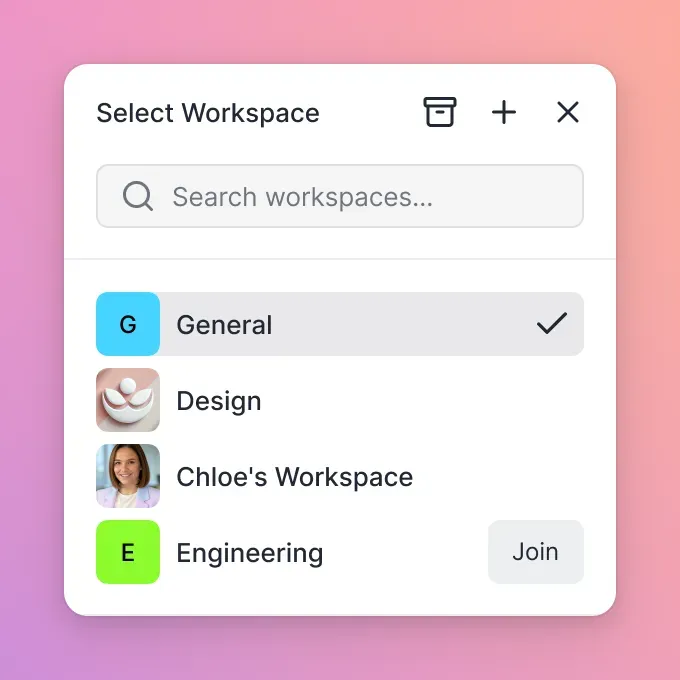
For teams that want local privacy for sensitive operations but need managed infrastructure for collaboration and handoff, a hybrid approach works well. Run OpenClaw for local AI processing, then use a workspace platform like Fastio for persistent file storage, audit trails, and agent-to-human handoff. Fastio's MCP server gives your OpenClaw instance structured access to shared workspaces, with paid plans starting at $9.99/mo and a 14-day Business Trial at pricing.
Who Should and Should Not Use OpenClaw
After reviewing the security landscape, setup requirements, and daily experience, here is a direct recommendation.
OpenClaw is a good fit if you:
- Run your own infrastructure and understand network security
- Want AI assistance across messaging platforms (not just a terminal or browser)
- Need model flexibility and refuse vendor lock-in
- Have the patience to vet skills manually or restrict to trusted sources
- Value privacy enough to accept maintenance overhead
OpenClaw is a poor fit if you:
- Need production-ready security without significant DevOps investment
- Want to install something and start working in minutes
- Work in a regulated environment where 245+ CVEs creates compliance risk
- Cannot commit to ongoing security monitoring and patching
- Need guaranteed support SLAs
The middle ground. Many developers run OpenClaw for personal automation (home control, messaging, scheduling) while using purpose-built commercial tools for professional work. This hybrid approach captures the privacy and flexibility benefits without exposing sensitive business data to OpenClaw's still-maturing security posture.
For the professional side of agent workflows, where outputs need to be stored securely, shared with teammates, and handed off to human reviewers, platforms designed for that purpose handle the collaboration layer. Fastio's workspace model provides the persistence, permissions, and audit trail that OpenClaw lacks natively, while OpenClaw handles the local AI processing and messaging integration that cloud platforms cannot replicate.
Sources
References used to verify factual claims in this guide.
-
CVE-2026-25253 is a critical remote code execution vulnerability with CVSS score 8.8 affecting OpenClaw
-
135,000+ exposed OpenClaw instances identified across 82 countries
-
341 malicious ClawHub skills identified stealing data from OpenClaw users
-
OpenClaw surpassed React to become the most-starred non-aggregator software project on GitHub
-
Setup time of 25 minutes on macOS, 35 minutes on Ubuntu Linux in controlled testing Annual savings of $25,000-40,000 for 10-person teams versus commercial alternatives
Frequently Asked Questions
Is OpenClaw safe to use?
OpenClaw's safety depends entirely on your configuration. The core software has had over 245 CVEs documented in 2026, including CVE-2026-25253 which exposed 135,000+ instances to remote code execution. ClawHub's skill marketplace contained 341+ confirmed malicious packages. If you restrict skills to trusted sources, configure network sandboxing, keep the software updated, and avoid exposing the Gateway to the public internet, OpenClaw can be operated safely. Most security incidents stem from default configurations left exposed.
Is OpenClaw worth setting up?
For technical users who value privacy, model flexibility, and multi-platform messaging integration, yes. The 20-35 minute setup (longer for beginners) pays off through $0 ongoing software costs and complete control over your AI stack. For users who primarily need a coding assistant or want instant setup, commercial alternatives like Claude Code deliver faster time-to-value with less maintenance.
What are the downsides of OpenClaw?
The main downsides are security burden (you manage all patching and skill vetting), setup complexity (no GUI configuration, CLI-only), unpredictable agent autonomy (reasoning loops and objective drift), high token costs for vision tasks, and community-only support with no guaranteed response times. The skill ecosystem, while large, requires careful vetting after the ClawHavoc malware campaign compromised hundreds of packages.
How does OpenClaw compare to commercial alternatives?
OpenClaw wins on privacy (fully local), cost at scale ($40-80/month infrastructure vs. per-seat pricing), model flexibility (any LLM provider), and integration breadth (50+ messaging platforms). Commercial alternatives win on setup speed (seconds vs. 30+ minutes), managed security, professional support, and polish. Most developers who try both end up running OpenClaw for personal automation alongside commercial tools for professional work.
Can OpenClaw replace paid AI assistants?
For personal use and small-team automation, yes. Teams report $25,000-40,000 in annual savings compared to commercial alternatives. However, you trade that savings for DevOps overhead, security responsibility, and community-only support. OpenClaw cannot replicate the managed security, compliance features, or instant onboarding of paid services.
Related Resources

Persistent storage for your OpenClaw agent outputs
Generous storage workspace with audit trails, MCP access, and agent-to-human handoff.