How to Build an Oscilloscope Signal Measurement Agent with OpenClaw on Raspberry Pi
A Raspberry Pi with an analog-to-digital converter can capture electrical signals for a fraction of what a bench oscilloscope costs. Adding OpenClaw as an analysis layer turns raw waveform data into plain-language signal reports, automated anomaly alerts, and frequency breakdowns that would otherwise require manual interpretation.

Why an AI Agent Changes What a Pi Oscilloscope Can Do
A Raspberry Pi oscilloscope uses an analog-to-digital converter (ADC) to capture and display electrical signals, providing a low-cost alternative to bench oscilloscopes for hobbyist electronics work. Existing guides cover the hardware build well. They show you how to wire an ADS1115 to a Pi, read samples with Python, and plot waveforms with matplotlib. What they stop short of is doing anything intelligent with the data.
That gap matters because the hard part of signal measurement is not capturing the waveform. It is interpreting what the waveform means. Is the ripple on your 5V rail normal? Is the PWM duty cycle drifting over time? Is that noise floor consistent with your PCB layout, or does it indicate a grounding problem? Answering these questions requires experience that most hobbyists are still building.
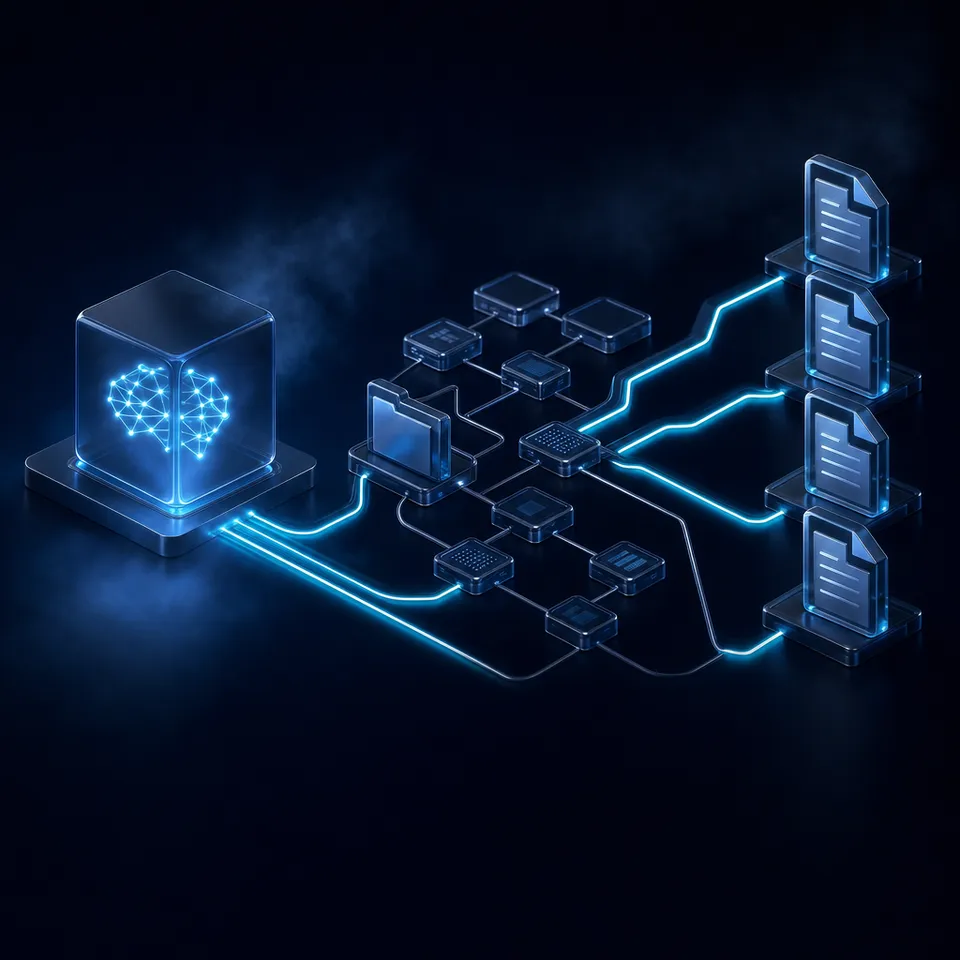
OpenClaw is an open-source AI agent framework that runs directly on a Raspberry Pi 5 or Pi 4 with 8GB RAM. It reads data from local scripts, sends it to an LLM for reasoning, and acts on the results. For an oscilloscope application, the agent can analyze captured waveforms, compare readings against expected values you define, flag anomalies in continuous measurements, and explain what it found in plain language.
Entry-level bench oscilloscopes from Rigol, Siglent, and Hanmatek start at $300 to $450. A Pi-based oscilloscope built around the ADS1115 ADC costs $50 to $80 in components on top of the Pi you already have. The tradeoff is bandwidth and sample rate: you get 860 samples per second instead of millions. For DC power analysis, slow-changing sensor outputs, audio-frequency signals, and environmental monitoring, that is enough. For RF work or fast digital logic, it is not.
This guide covers the hardware options, the software pipeline, how OpenClaw fits into the measurement workflow, and the practical limits you should know before building.
Related guides
- How to Build a Hermes Agent Signal Bot With End-to-End EncryptionSignal is the only major messaging platform where every message between you and your AI agent stays end-to-end...
- How to Build a Hermes Agent AI Code CheckerThe proportion of copy-pasted code in repositories rose from 8% in 2020 to 12% in 2024, representing a 48% relative...
- How to Build a Wireless Sensor Decoder Agent with RTL-433 and OpenClaw on Raspberry Pirtl_433 decodes signals from over 320 wireless device protocols using a cheap USB radio dongle. Pairing it with an...
- How to Build a Pool Water Quality Monitor with OpenClaw on Raspberry PiCommercial pool monitors display readings on a screen. They tell you the pH is 7.1 but not what to do about it. This...
- How to Build an Earthquake Detection Agent with OpenClaw on Raspberry PiA geophone on a Raspberry Pi produces continuous seismic data, but most of what it records is foot traffic, trucks, and...
- How to Build Edge AI Agents with OpenClaw on Raspberry PiEdge AI with OpenClaw on Raspberry Pi processes sensor data locally through an AI agent that makes decisions and takes...
More on this subject: OpenClaw on Raspberry Pi (192 guides)
ADC Hardware Options for Pi-Based Oscilloscopes
The Raspberry Pi has no built-in analog inputs. Every Pi oscilloscope project starts with an external ADC that converts analog voltages into digital values the Pi can read. Three ADCs dominate hobby projects, each with different tradeoffs.
ADS1115: High Resolution, Low Speed
The Texas Instruments ADS1115 is a 16-bit ADC with four single-ended channels (or two differential channels) communicating over I2C. It provides 16-bit resolution at programmable sample rates from 8 to 860 samples per second. The programmable gain amplifier (PGA) lets you measure input ranges from plus or minus 256 mV up to plus or minus 6.144 V without external amplification.
For slow-changing signals (DC power rails, battery voltage, temperature sensors, solar panel output), the ADS1115 is the best choice. The 16-bit resolution means you can distinguish voltage changes as small as 0.1 mV on the most sensitive PGA setting. Breakout boards from Adafruit, HiLetgo, and others cost $3 to $15.
Wiring is four connections: VDD to 3.3V, GND to GND, SDA to GPIO2, SCL to GPIO3. The Adafruit CircuitPython ADS1x15 library handles communication. A basic read loop in Python pulls continuous samples that your visualization or analysis layer consumes.
MCP3008: More Channels, Lower Resolution
The Microchip MCP3008 is a 10-bit ADC with eight channels over SPI. It samples at up to 200,000 samples per second, roughly 230 times faster than the ADS1115, but at 10-bit resolution you get 1024 discrete voltage levels instead of 65,536. For applications where speed matters more than precision (audio waveforms, fast-changing sensor outputs), the MCP3008 makes more sense.
MCP3008 breakout boards cost $2 to $8. SPI wiring requires more GPIO pins than the ADS1115's I2C, but setup is well documented in the Adafruit MCP3008 guide.
Scoppy with Raspberry Pi Pico
Scoppy is an open-source project that turns a Raspberry Pi Pico (the $4 microcontroller, not the full Pi) into a 500 kS/s oscilloscope and 25 MS/s logic analyzer. The Pico captures samples using its built-in ADC, and an Android phone or tablet displays the waveforms. The free version provides one oscilloscope channel; the paid version ($3) adds a second channel.
Scoppy gets you into genuine oscilloscope territory for signal analysis. The 500 kS/s sample rate handles audio signals, PWM waveforms, and basic serial communication analysis. The limitation is that it runs on the Pico, not the full Raspberry Pi, so integrating it with OpenClaw requires the full Pi to run the agent separately and consume data from the Pico over USB serial.
Which ADC to choose
For an OpenClaw-integrated measurement agent focused on continuous monitoring and automated analysis, the ADS1115 is the practical choice. Its I2C interface, high resolution, and programmable gain match the use case: measuring voltages precisely, logging trends over time, and feeding structured data to an AI agent. The MCP3008 fits better if you need faster sampling for audio-range work. Scoppy suits interactive probing where you need a real-time waveform display.

How OpenClaw Processes Signal Measurements
OpenClaw on Raspberry Pi follows a consistent pattern for sensor integration. A Python script handles hardware access (reading the ADC), and the agent invokes that script when it needs data. The agent never touches I2C registers directly. It delegates hardware communication to purpose-built scripts and focuses on reasoning about what the measurements mean.
Data acquisition layer
A Python script using the Adafruit CircuitPython ADS1x15 library reads from the ADS1115 in a continuous loop. Each read returns a voltage and timestamp. The script stores samples in a rolling buffer (configurable from 10 seconds to several minutes of data) and computes summary statistics: mean voltage, standard deviation, min/max, dominant frequency via FFT, and RMS ripple.
The script writes two outputs: a continuously updated JSON file with the latest statistics, and a CSV log of raw samples for post-capture analysis. The JSON file acts as the interface between hardware and agent.
Agent-driven analysis
The OpenClaw agent monitors the JSON summary file. You configure what the agent should watch for by describing expected signal behavior in plain language. For example: "The 5V rail should read between 4.9V and 5.1V. Alert me if ripple exceeds 50mV peak-to-peak or if the average voltage drifts outside this range for more than 30 seconds."
When the agent detects a condition worth reporting, it reads the full buffer data and sends it to the LLM with context about what you are measuring and what is expected. The LLM analyzes the waveform characteristics and returns a structured assessment.
What the agent can tell you
Unlike a traditional oscilloscope that shows you a waveform and leaves interpretation to you, the OpenClaw agent provides analysis in plain language:
- "The 5V rail is reading 4.82V average with 120mV peak-to-peak ripple at 100 kHz. This is outside your specified tolerance. The ripple frequency matches the switching frequency of common buck converters, suggesting the output filter capacitor may be undersized or degraded."
- "Channel 2 shows a 3.3V signal with periodic 200ms dropouts to 0V. This pattern is consistent with a loose connection or intermittent short rather than a firmware issue."
- "The PWM signal on channel 3 is running at 976 Hz with 48.2% duty cycle, which is within 2% of the expected 50%. No anomalies detected over the last hour."
This analysis layer is the part no existing Raspberry Pi oscilloscope guide covers. The hardware and software for capturing signals are well documented. Automated interpretation of those signals using an AI reasoning layer is the gap this project fills.


Persist and search your signal measurement data from anywhere
Cloud workspace with auto-indexing. Your OpenClaw agent uploads measurement logs, and you query them later with natural language.
Comparison with Entry-Level Bench Oscilloscopes
Before committing to a Pi-based build, understand exactly where it fits relative to dedicated test equipment.
Cost
A Raspberry Pi 5 (8GB) costs $80. An ADS1115 breakout board costs $3 to $15. Jumper wires, a breadboard, and test leads add another $10. Total: $93 to $105 if you are buying everything new. If you already have a Pi, add $13 to $25 for the ADC and accessories.
The Rigol DS1054Z, a popular entry-level bench scope, costs $349. The Siglent SDS1202X-E runs about $400. The Hanmatek DOS1102 sits around $280. These are capable instruments with 50 to 200 MHz bandwidth, 1 GS/s sample rates, and triggering features that no Pi build can match.
Sample rate and bandwidth
The ADS1115 maxes out at 860 samples per second. By the Nyquist theorem, this means you can accurately capture signals up to 430 Hz. A bench oscilloscope at 1 GS/s captures signals up to 500 MHz (with appropriate bandwidth).
That 430 Hz ceiling eliminates fast digital logic, RF circuits, and even most audio work above the bass range. Where the Pi oscilloscope works: DC voltage monitoring, slow-changing analog sensors, battery discharge curves, solar panel output tracking, thermocouple readings, and any measurement where the signal changes over seconds or minutes rather than microseconds.
Resolution
The ADS1115's 16-bit resolution actually exceeds most bench oscilloscopes, which typically use 8-bit ADCs (256 levels). On a 5V range, 16-bit resolution gives you 0.076 mV per step. An 8-bit scope on the same range gives you 19.5 mV per step. For slowly varying signals where you need to detect small voltage changes, the Pi setup provides more precision.
Triggering and real-time display
Bench oscilloscopes excel at triggering on specific signal conditions (rising edge, falling edge, pulse width, protocol decoding) and displaying stable waveforms in real time. The Pi build has no hardware triggering. The OpenClaw agent substitutes software-defined triggers that work for slow signals but cannot catch fast transients.
Portability and always-on monitoring
A Pi oscilloscope draws 5 to 15 watts, runs headless, and fits in a pocket. Leave it powered on a bench measuring a power rail for weeks. A bench scope draws 30 to 50 watts and occupies significant desk space. For long-term unattended monitoring, the Pi wins decisively.
Bottom line
If you need to debug SPI communication, measure rise times on digital signals, or analyze an RF filter response, buy a bench oscilloscope. If you want continuous monitoring of slow analog signals with AI-powered interpretation and logging, the Pi and OpenClaw combination does something a bench scope cannot.
Logging and Sharing Measurement Data
An oscilloscope session on a bench scope is ephemeral. You look at the screen, adjust the timebase, take a screenshot if you remember, and the data is gone when you power off. A Pi-based measurement agent logs everything by default, and the data can go anywhere.
Local logging
The acquisition script writes raw samples to CSV files, one per measurement session. The OpenClaw agent's analysis reports go to JSON files with timestamps, channel readings, statistical summaries, and the agent's plain-language assessment. For a typical monitoring setup sampling at 100 SPS across two channels, raw data accumulates at roughly 15 MB per day.
Raspberry Pi SD cards handle this volume for months, but flash wear becomes a concern for always-on deployments. An external USB SSD ($25 to $40) eliminates that risk.
Cloud backup with Fastio
For measurement data you want to preserve, search, or share, Fastio provides cloud workspaces that agents can write to directly. The OpenClaw agent uploads session summaries and flagged anomaly reports to a Fastio workspace using the MCP server. Intelligence Mode auto-indexes uploaded files, so you can later search your measurement history with natural language: "find all sessions where the 5V rail ripple exceeded 100mV" returns cited results from your own data.
Fastio offers a 14-day Business Trial (card required; see pricing), and paid tiers provide generous storage and AI credits for years of measurement logging.
Sharing with collaborators
If you are working on a group hardware project or teaching an electronics class, Fastio's branded sharing lets you publish measurement reports as read-only links. A student can share their power supply characterization data with an instructor for review without emailing CSV files. The audit log tracks every upload, and ownership transfer lets you hand a fully populated workspace to someone else when a project changes hands.
For teams running multiple Pi measurement stations (monitoring different test points on a larger system), each station's OpenClaw agent uploads to the same workspace. The team gets a unified view of all measurements with AI-powered search across the complete dataset.
Practical Limits and What This Setup Cannot Do
Know the boundaries before you build.
Voltage input protection
The ADS1115 accepts inputs up to plus or minus 6.144V on its lowest gain setting. Feeding it higher voltages will damage the chip. If you are measuring anything above 6V, you need a resistor voltage divider to scale the signal down. For AC mains or automotive 12V systems, add appropriate attenuation and isolation. Unlike a bench oscilloscope with rated input protection, a bare ADC has no safety margin.
No AC coupling
Bench oscilloscopes have AC coupling that removes the DC offset from a signal, letting you zoom into small AC variations riding on a large DC level. The ADS1115 reads absolute voltage. To measure 50mV of ripple on a 12V rail, you need to either use a differential measurement (connect both sides of the capacitor you are measuring across) or add an external AC coupling capacitor in your input circuit.
LLM latency
The OpenClaw agent sends measurement data to a cloud LLM for analysis. That round trip adds 2 to 10 seconds. For continuous monitoring where you want alerts, this latency is fine. For interactive probing where you are moving a test lead around a circuit and want instant feedback, it is too slow. Use the real-time matplotlib display for interactive work and the agent for automated monitoring and reporting.
Calibration
The ADS1115's internal voltage reference has a typical accuracy of plus or minus 0.01%. That is good enough for most hobbyist measurements. But if you need traceable calibration (for regulatory compliance or precision analog design), a Pi oscilloscope is not a substitute for calibrated test equipment. For relative measurements (does this signal change over time? is ripple getting worse?) the accuracy is excellent.
Cost summary
- Raspberry Pi 5 (8GB): $80
- ADS1115 breakout board: $3 to $15
- Breadboard, jumper wires, test leads: $10
- USB SSD for long-term logging: $25 to $40
- Total: $118 to $145
Compare to the Rigol DS1054Z at $349 or the Siglent SDS1202X-E at $400. You save $200 to $280 and gain AI analysis and always-on logging. You lose bandwidth, real-time triggering, and the ability to measure anything faster than 430 Hz.
All local software (OpenClaw, Python ADC libraries, matplotlib) is free and open source. Fastio offers a 14-day Business Trial (card required; see /pricing/) for cloud storage.
Sources
References used to verify factual claims in this guide.
-
ADS1115 provides 16-bit resolution at up to 860 samples per second
-
ADS1115 programmable gain amplifier offers input ranges from plus or minus 256mV to plus or minus 6.144V
-
MCP3008 is a 10-bit ADC with 8 channels achieving up to 200 kSPS
-
Scoppy provides 500 kS/s oscilloscope and 25 MS/s logic analyzer using Raspberry Pi Pico
-
Rigol DS1054Z entry-level oscilloscope costs approximately $349
-
OpenClaw can be installed on Raspberry Pi 5 or Pi 4 with 8GB RAM
Frequently Asked Questions
Can a Raspberry Pi be used as an oscilloscope?
Yes, with an external analog-to-digital converter. The Raspberry Pi has no built-in analog inputs, so you add an ADC like the ADS1115 (16-bit, 860 SPS over I2C) or MCP3008 (10-bit, 200 kSPS over SPI). Python reads the ADC and matplotlib or a custom UI displays the waveform. The practical ceiling is around 430 Hz for the ADS1115 or 100 kHz for the MCP3008, which suits DC monitoring, slow sensor signals, and audio-frequency work but not RF or fast digital logic.
What ADC do I need for a Raspberry Pi oscilloscope?
For precision DC and slow-signal monitoring, the ADS1115 gives you 16-bit resolution with a programmable gain amplifier for $3 to $15. For faster signals up to audio range, the MCP3008 provides 10-bit resolution at 200,000 samples per second for $2 to $8. For real oscilloscope-grade sampling, the Scoppy project pairs a Raspberry Pi Pico ($4) with an Android phone for 500 kS/s capture with real-time waveform display.
How accurate is a Raspberry Pi oscilloscope?
The ADS1115's voltage reference is accurate to plus or minus 0.01% typically, and 16-bit resolution provides finer voltage steps than most 8-bit bench oscilloscopes. On a 5V range, you can distinguish changes of 0.076 mV. The limitation is not accuracy but bandwidth. At 860 samples per second maximum, you can only faithfully capture signals below 430 Hz. For slowly changing voltages (power rails, battery discharge, temperature sensors), accuracy is excellent.
What is the cheapest way to measure electrical signals?
The cheapest functional path is a Raspberry Pi Pico ($4) running Scoppy with a free Android phone as the display, giving you a basic oscilloscope for under $10 in new components. For higher precision at low frequencies, add an ADS1115 breakout ($3 to $15) to any Raspberry Pi you already own. A full Pi 5 plus ADS1115 build costs $93 to $105 and provides 16-bit precision, automated logging, and AI-powered analysis through OpenClaw.
What can OpenClaw add to a Raspberry Pi oscilloscope?
OpenClaw adds an analysis layer that interprets measurements in plain language. Instead of staring at a waveform and trying to identify problems, the agent tells you what it found, why it matters, and what might cause it. It monitors signals continuously against thresholds you define, flags anomalies, computes frequency content via FFT, and logs everything with structured reports. It turns a basic voltage logger into an unattended measurement station that explains its findings.
Related Resources

Persist and search your signal measurement data from anywhere
Cloud workspace with auto-indexing. Your OpenClaw agent uploads measurement logs, and you query them later with natural language.