OpenClaw Open Source: Licensing, Self-Hosting, and Contributing
OpenClaw surpassed React to become GitHub's most-starred software project in early 2026, reaching 374,000+ stars under an MIT license. This guide covers what that license permits for commercial use, what self-hosting actually costs compared to managed alternatives, and how to navigate the contribution workflow from first issue to merged pull request.

Why OpenClaw's MIT License Matters
OpenClaw crossed 250,000 GitHub stars three months after Peter Steinberger published the first commit in November 2025, surpassing React's lifetime count to become the most-starred software project on GitHub. By May 2026, the repository had passed 374,000 stars. That kind of growth draws developers, startups, and enterprises who all need answers to the same questions: can I use this commercially? What does self-hosting cost in practice? How do I contribute back?
Most OpenClaw tutorials walk through installation and stop there. They skip licensing implications, skip the real costs of running your own instance, and skip the contribution workflow. Those gaps matter because the answers determine whether you fork the project, pay for managed hosting, or invest engineering time in upstream contributions.
OpenClaw ships under the MIT license, one of the most permissive open-source licenses available. The full text fits in a single paragraph. You can use, copy, modify, merge, publish, distribute, sublicense, and sell copies of the software. The only requirement is that you include the original copyright notice and license text in any copies or substantial portions of the code.
For commercial use, this means you can embed OpenClaw in a product you sell without paying royalties. You can modify the source code without releasing your changes. You can run OpenClaw as a hosted service for paying customers. You can combine it with proprietary code in the same deployment. There is no contributor license agreement (CLA) to sign. No "open core" arrangement where critical features sit behind a proprietary license. The entire codebase, including the Gateway, companion apps, and skills framework, ships under identical MIT terms.
Compare this to projects using AGPL, which requires you to release modifications if you serve users over a network, or BSL, which restricts commercial use for a set period. OpenClaw imposes neither of these restrictions. If you include the LICENSE file in your distribution, you are compliant.
The project's governance shifted in February 2026 when Steinberger announced he was joining OpenAI. A non-profit foundation now stewards the project, which adds institutional continuity but does not change the license. MIT is MIT regardless of who maintains the repository.

Related guides
- Is Claude Code Open Source? Source Code, Licensing, and AlternativesClaude Code is proprietary software governed by Anthropic's Commercial Terms of Service, not an open source project. A...
- What Is Cline? Open-Source AI Coding Agent ExplainedCline reports 8.0M+ installs across platforms and ships as Apache 2.0 open source, which is why developers keep asking...
- Hermes Agent vs OpenClaw: Which Open-Source AI Agent Should You ChooseNous Research Hermes Agent and OpenClaw are the two dominant open-source AI agent frameworks in 2026. They share the...
- How to Deploy OpenClaw on Coolify for Self-Hosted Agent InfrastructureCoolify gives you a managed deployment experience for OpenClaw without surrendering control to a cloud vendor. This...
- How Open Source Maintainers Use OpenClaw for GitHub AutomationOpen source maintainers spend a disproportionate share of their time on issue triage, stale ticket cleanup, and PR...
- OpenClaw Hosting: Best Options for Self-Hosted and Managed DeploymentOpenClaw runs on your own infrastructure, which means you need to pick a server. Self-hosted VPS plans start around...
More on this subject: OpenClaw Setup and Guides (199 guides)
Self-Hosting OpenClaw: Infrastructure, Costs, and Security
OpenClaw runs on your own hardware. The Gateway, a single Node.js process, bridges messaging platforms to AI models without routing your data through a third-party service. No cloud dependency for the core runtime.
Hardware requirements are modest. You need Node 24 (recommended) or Node 22.19+ and a machine with enough RAM to handle your message volume. The project ships Docker and docker-compose files for containerized deployment, plus configuration for Fly.io and Render if you prefer managed infrastructure without managing a server directly.
Installation follows a single global npm install, then an onboarding wizard that configures a background daemon (systemd on Linux, launchd on macOS) to start the Gateway automatically and survive reboots. The project's official docs walk through each step, including the web dashboard for monitoring and configuration. Check the docs for the current recommended install path, since exact flags and toolchain versions change between releases.
The real cost of self-hosting is not the software. It is the infrastructure and LLM API fees. A basic personal setup runs $6 to $13 per month: a $5 VPS from DigitalOcean or Hetzner plus $1 to $8 in API tokens from a budget model provider like DeepSeek. Small business deployments with mixed model routing land between $25 and $50 per month. Heavy automation with premium models can exceed $200 monthly.
These numbers assume you already handle Linux administration, TLS certificates, firewall rules, and backups. Factor in the engineering time to maintain a production instance and managed hosting starts looking reasonable for teams without dedicated infrastructure staff.
Security is the other hidden cost. OpenClaw has nine disclosed CVEs as of May 2026, including a CVSS 8.8 one-click remote code execution vulnerability. Docker's default networking bypasses host firewall rules through the DOCKER-USER iptables chain, which many self-hosters forget to configure. Tool permission allowlists and non-root container users are not set up by default. You configure them yourself, or you leave your instance exposed.
Self-hosting gives you full control over your data, your LLM provider choices, and your deployment topology. But "control" also means "responsibility." If you are running OpenClaw for a business, budget for security patching, uptime monitoring, and log review alongside the base infrastructure costs.
Supported Platforms and Channels
OpenClaw connects to over 20 messaging platforms through its Gateway architecture. Current integrations include WhatsApp, Telegram, Slack, Discord, Microsoft Teams, Signal, iMessage, Google Chat, IRC, Matrix, LINE, Mattermost, Nextcloud Talk, Twitch, and several regional services like WeChat, QQ, and Zalo. Companion apps run natively on macOS, iOS, and Android.
Each channel connects through the same Gateway process, so adding a new messaging platform does not require a separate deployment or additional infrastructure. A single JSON configuration file controls allowlists, group mention rules, and per-channel behavior. The skills framework lets you extend the agent's capabilities through directories containing metadata files, and the community has published hundreds of skills for tasks ranging from web scraping to calendar management.
Contributing to the OpenClaw Codebase
OpenClaw accepts community contributions through standard GitHub pull requests. The project maintains a CONTRIBUTING.md with expectations that differ from many open-source projects, so read it before writing code.
First, decide whether your change needs a discussion. Bug fixes and small improvements can go straight to a pull request. New features and architectural changes should start as a GitHub issue or a thread in the #clawtributors channel on Discord.
The development workflow looks like this:
- Fork the repository and clone your fork locally
- Install dependencies with pnpm (the project uses pnpm, not npm or yarn, for development builds)
- Create a focused branch for your change
- Run the full check suite before opening a PR:
pnpm build && pnpm check && pnpm test - Open a pull request with a clear description of what changed and why
Every external pull request must include a "Real behavior proof" section. This means screenshots, screen recordings, or log output showing your change works in a running OpenClaw instance. The project does not accept changes validated only by automated tests. This requirement filters out speculative refactors and ensures contributors have actually run the software.
Several rules catch new contributors off guard:
- Do not edit CHANGELOG.md. Maintainers or the ClawSweeper bot add changelog entries when landing user-facing changes.
- Do not submit refactor-only pull requests unless a maintainer explicitly requested that specific refactor.
- Do not fix CI failures already red on the main branch. Those PRs get closed automatically.
- Use American English in code, comments, docs, and UI strings.
- Maximum 20 open pull requests per author. The bot enforces this with an
r: too-many-prslabel.
Review happens in two stages. An automated bot reviews first, checking formatting, test coverage, and common issues. Address all bot conversations before requesting a human maintainer review. When a reviewer leaves feedback, resolve the conversation yourself if your code addresses it. Only leave a conversation open when you genuinely need a judgment call.
There is no contributor license agreement. Your contributions stay under the MIT license, and you retain copyright over your code. Good starting points are issues labeled "good first issue" on GitHub. The Discord community, especially #help and #users-helping-users, is responsive when you get stuck on something project-specific.



Persistent storage for your OpenClaw agents
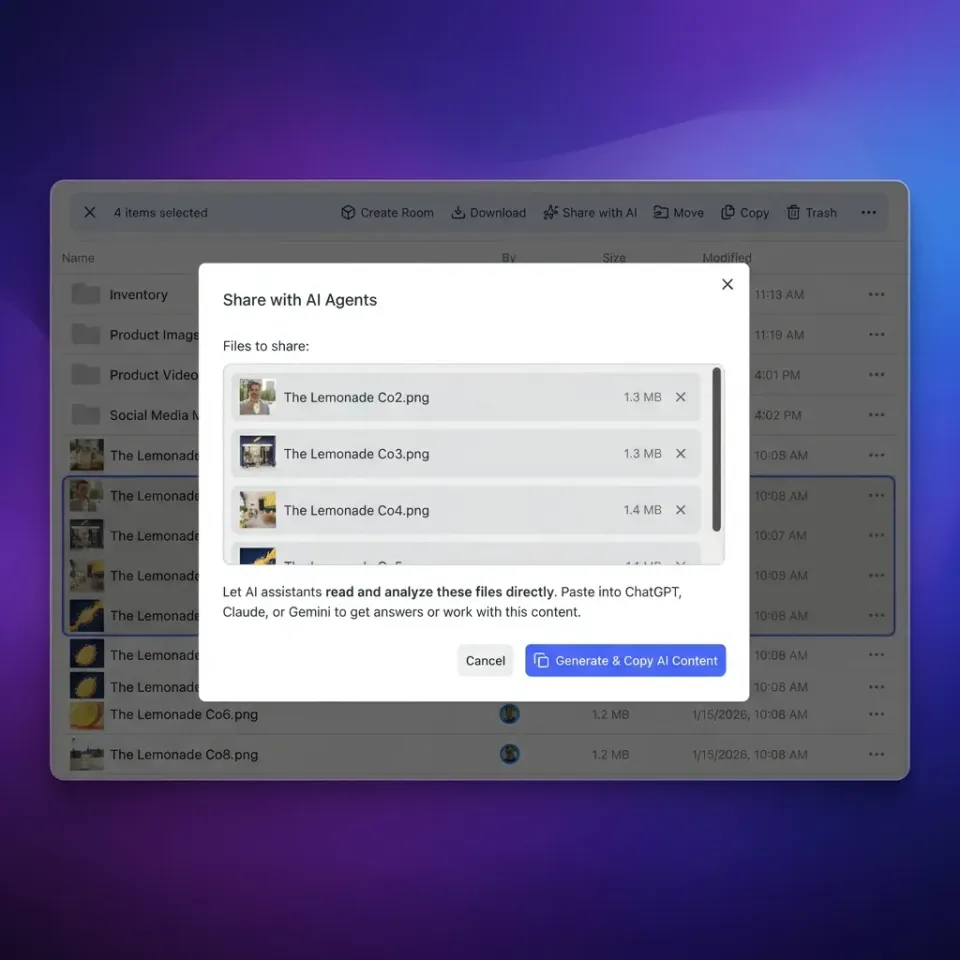
Generous storage workspace with built-in AI indexing and semantic search. Your agent writes files, your team reviews them in the browser.
Persistent Storage for OpenClaw Agent Output
OpenClaw agents generate files constantly: reports, scraped data, processed images, conversation exports, skill outputs. By default, these live on whatever machine runs the Gateway. If that machine goes down, gets redeployed, or runs out of disk space, the files disappear with it.
The standard workaround is mounting a network volume or syncing to cloud storage. S3 works if you are comfortable managing buckets, IAM policies, and lifecycle rules. Google Drive and Dropbox handle personal use but lack the granular permissions and audit trails that teams need when multiple agents and humans access the same files.
Fastio approaches the problem differently. Instead of bolting storage onto your agent after the fact, you give the agent a workspace where files, permissions, and AI indexing are built in from the start. Fastio offers a 14-day Business Trial (card required), and paid plans start at $9.99/mo with usage-based credits at /pricing/.
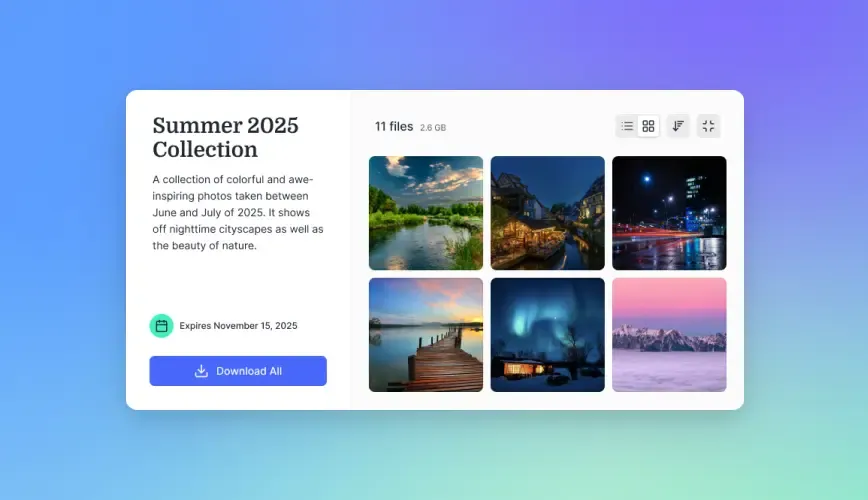
Here is what that looks like in practice: your OpenClaw agent writes a research report to a Fastio workspace. Once Intelligence is enabled for the workspace, the file is automatically indexed for semantic search and citation-backed chat. A human teammate opens the same workspace in their browser and finds the report alongside their own files. They can ask questions about it, or share it with a client through a branded portal with granular permissions. No syncing steps, no shared drive configuration, no permission inheritance headaches.
Fastio exposes a MCP server with Streamable HTTP at /mcp and legacy SSE at /sse. Agents interact with workspaces, storage, uploads, and AI queries through the same protocol used by Claude, GPT-4, and other LLM providers. The ownership transfer feature lets an agent build an entire org, populate it with files and shares, then hand control to a human when the project is complete. The agent keeps admin access for ongoing maintenance.
For teams running OpenClaw agents that produce deliverables, whether client reports, data extracts, or creative assets, the workspace model solves two problems at once: the agent gets persistent, structured storage that survives redeployments, and the humans get a clean interface to review, comment on, and distribute the output without ever touching the command line.
Self-Hosted vs Managed: When Each Makes Sense
The choice between self-hosting OpenClaw and using a managed provider comes down to three factors: data control, total cost, and maintenance capacity.
Self-hosting makes sense when you need full control over where your data lives, want to run local LLMs through Ollama or a similar runtime, or operate under policies that prevent sending conversation data to third-party servers. It also fits teams that already maintain Linux infrastructure and have someone available to handle security patches, certificate renewals, and container updates.
Managed hosting fits teams that lack infrastructure expertise, need guaranteed uptime without building it themselves, or find that the total cost of self-hosting (infrastructure plus the engineering hours for maintenance) exceeds what a hosting provider charges. Several providers now offer one-click OpenClaw deployment, including DigitalOcean's marketplace, Fly.io, Render, and specialized platforms like ClawHost.
A rough monthly cost comparison for a small team with moderate usage:
Self-hosted:
- VPS: $10 to $20/month
- LLM API tokens: $30 to $100/month
- Engineering maintenance: 2 to 4 hours/month
- Total: $40 to $120/month plus labor
Managed provider:
- Hosting fee: $15 to $50/month
- LLM API tokens: $30 to $100/month (same regardless of hosting model)
- Infrastructure maintenance: handled by provider
- Total: $45 to $150/month, no additional labor
The raw numbers are close enough that the deciding factor is usually team capacity. A solo developer comfortable with Docker and systemd will save money self-hosting. A product team where every hour on infrastructure displaces an hour on the core product will recoup a managed hosting fee quickly.
One factor that stays constant across both approaches: your OpenClaw agents still need somewhere to store and share their output with humans. A workspace platform like Fastio works identically with self-hosted and managed deployments because the storage layer is independent of where the Gateway process runs. Upload from a $5 VPS or a managed Fly.io instance, and the workspace, permissions, and AI indexing work the same way.
The MIT license means you are never locked in. Start with managed hosting to ship faster, migrate to self-hosted when your infrastructure team is ready, or run both in parallel for different use cases. The code is the same either way.
Sources
References used to verify factual claims in this guide.
-
OpenClaw surpassed 250,000 GitHub stars and became the most-starred software project on GitHub
-
374,000+ GitHub stars as of May 2026 MIT license for commercial and personal use
-
9 disclosed CVEs including a CVSS 8.8 one-click remote code execution vulnerability
-
Initially released as Clawdbot in November 2025, renamed to OpenClaw in January 2026 Peter Steinberger announced joining OpenAI in February 2026; foundation established for project stewardship
Frequently Asked Questions
Is OpenClaw free to use?
OpenClaw is free and open source under the MIT license. There is no licensing fee for personal or commercial use. Your costs come from the infrastructure to run it (a VPS typically costs $5 to $20 per month) and LLM API tokens ($1 to over $100 per month depending on provider and usage volume). The software itself costs nothing.
What license does OpenClaw use?
OpenClaw uses the MIT license, one of the most permissive open-source licenses available. You can use, modify, distribute, and sell copies of the software. The only requirement is including the original copyright notice and license text in any distribution. There is no copyleft obligation, no contributor license agreement, and no restriction on commercial use.
How do I contribute to OpenClaw?
Fork the repository, install dependencies with pnpm, make your changes, and run the test suite with pnpm build, pnpm check, and pnpm test. Open a pull request that includes screenshots or logs proving the change works in a running instance. Bug fixes can go directly to a PR. New features should start as a GitHub issue or a discussion in the #clawtributors Discord channel.
Can I self-host OpenClaw for my business?
Yes. The MIT license explicitly permits commercial use with no royalties or disclosure requirements. Install globally with npm, configure your LLM provider API keys, and run the onboarding wizard. For production deployments, use the included Docker files and configure firewall rules, TLS certificates, and tool permission allowlists. Budget for ongoing security maintenance since OpenClaw has had nine disclosed CVEs as of May 2026.
What are the minimum requirements to self-host OpenClaw?
You need Node 24 (recommended) or Node 22.19+, a server with enough RAM for your expected message volume, and an API key from your chosen LLM provider. The project includes Docker and docker-compose files for containerized deployment. Most VPS plans in the $5 to $10 per month range meet these requirements for personal or light team use.
How does OpenClaw compare to other open-source AI agents?
OpenClaw stands out for its messaging-first architecture, connecting to over 20 platforms including WhatsApp, Slack, Discord, and Teams through a single Gateway process. Most competing agent frameworks prioritize API-first or CLI-first interfaces. The MIT license is more permissive than the AGPL or BSL licenses used by some alternatives, which matters for commercial deployments where you modify the source code.
Related Resources

Persistent storage for your OpenClaw agents
Generous storage workspace with built-in AI indexing and semantic search. Your agent writes files, your team reviews them in the browser.