How to Build an OpenClaw Google Sheets Agent for Automated Reporting
Google Sheets API traffic exceeds 900 million monthly hits, yet most OpenClaw integration guides stop at "read a cell, write a cell." This guide covers the full agent workflow: authenticating via a service account, configuring skills for batch reads and writes, setting validation rules so your agent does not silently corrupt data, scheduling overnight report runs, and persisting output in a shared workspace where teammates can actually find it.

Why Most OpenClaw Spreadsheet Setups Stall After the Demo
Google Sheets API usage crossed 900 million monthly requests as of 2025, according to ElectroIQ's analysis of Workspace adoption data. That number reflects how deeply spreadsheets are embedded in business operations, from weekly KPI dashboards to client-facing deliverables that get emailed every Monday morning.
OpenClaw can automate the tedious parts of this work. The problem is that most integration guides cover the first five minutes: install a skill, read a cell, write a cell, done. Production reporting needs more. You need authentication that does not break when tokens expire, batch operations that respect Google's 300-requests-per-minute quota, validation that catches bad data before it reaches the spreadsheet, and a reliable place to store finished reports.
This guide walks through building an OpenClaw Google Sheets agent that handles the full cycle. By the end, you will have an agent that authenticates with a service account, pulls data from upstream sources, validates and transforms it, writes formatted reports to Google Sheets, and stores versioned copies in a shared workspace.
Related guides
- How to Build an Automated AI Detection Checker Pipeline with Hermes AgentAn AI detection checker pipeline in Hermes Agent automates text validation across multiple detection models using MCP...
- How to Build an Automated Image Combiner Pipeline in ClayBuilding an automated image combiner pipeline in Clay allows growth teams to overlay variable dynamic graphics onto...
- How to Build a Web Scraping Agent with OpenClawOpenClaw's browsing skill turns your AI agent into a web scraper that can navigate pages, handle JavaScript rendering,...
- Best OpenClaw Projects to Build: Beginner to Advanced Ideas for 2026OpenClaw crossed 250,000 GitHub stars faster than any software project in history, but most developers stall after the...
- How to Use OpenClaw for Finance Automation and ReportingFinance teams spend roughly 70% of their time preparing reports and only 30% analyzing them. OpenClaw, an open-source...
- How to Integrate OpenClaw with Jira for Automated Project ManagementOpenClaw connects to Jira's REST API v3 for natural language ticket creation, sprint tracking, and backlog triage. This...
More on this subject: OpenClaw Setup and Guides (199 guides)
How to Set Up Authentication for Your OpenClaw Agent
Before your OpenClaw agent can touch a Google Sheet, you need a Google Cloud service account. OAuth tokens work for interactive use, but service accounts are better for scheduled automation because they do not require a browser login or token refresh dance every few hours.
Here is what you need before starting:
- OpenClaw installed and running (local or server)
- A Google Cloud project with the Google Sheets API and Google Drive API enabled
- A service account with a downloaded JSON key file
Creating the Service Account
Go to Google Cloud Console, navigate to APIs & Services, then Credentials. Create a service account and download the JSON key file. Store the key where your agent can access it and point your integration configuration to the file path.
The critical step that most guides bury in a footnote: you must share each target Google Sheet with the service account's email address. Open the JSON key file, find the email address it contains, then share the spreadsheet with that address using Editor permissions. Without this, every API call returns a permissions error with no useful detail about what went wrong.
Choosing Your Integration Path
OpenClaw offers two main routes to Google Sheets:
ClawHub Google Sheets Skill. The LobeHub skills marketplace hosts a dedicated Google Sheets skill that exposes read, write, append, and format operations as natural language commands. Install it from the ClawHub registry and configure it with your service account credentials.
Composio Middleware. Composio provides a Google Sheets toolkit with 50+ actions, including batch updates, chart generation, and data validation. It manages OAuth and token refresh automatically through its MCP server. The tradeoff is an extra dependency and a separate API key.
For automated reporting, either path works. The ClawHub skill is simpler for single-spreadsheet workflows. Composio is stronger when you need cross-app data pipelines, since it connects to 850+ data sources beyond just Google Sheets.
Configuring the Agent for Batch Reporting
Once authentication is working, the next step is configuring your OpenClaw agent to handle real reporting workloads. Single-cell reads and writes are fine for demos, but production reports involve pulling hundreds or thousands of rows, transforming them, and writing formatted output.
Skill Installation and Configuration
Install the Google Sheets skill from the ClawHub marketplace and configure it with your service account credentials and the ID of your target spreadsheet. The skill documentation on ClawHub walks through each configuration field.
Once configured, the skill exposes core actions for reading ranges, writing ranges, appending rows, creating sheets, and formatting cells. For reporting, you will mostly use range reads to pull source data and range writes to push formatted output.
Batch Operations and Quota Management
Google Sheets API enforces a quota of 300 requests per minute per project. If your report involves multiple reads, writes, and formatting passes, you can hit the limit faster than you expect.
Two practical strategies:
- Specify exact ranges. Request only the rows and columns you need rather than reading an entire sheet and filtering client-side. Smaller, targeted reads consume fewer API calls.
- Batch your writes. Instead of writing one row at a time, collect all output rows and write them in a single batch operation. This keeps you well within the per-minute quota even for large reports.
The Composio toolkit handles some of this automatically through its batch update action, which bundles multiple cell updates into a single API request. If you are using the ClawHub skill directly, you will need to structure your prompts to request batch operations explicitly.


Store and share your automated reports from one workspace
Fastio gives you persistent cloud storage, Intelligence Mode for searching past reports by meaning, and branded shares for client delivery.
Validation Rules That Prevent Silent Data Corruption
The worst outcome for an automated reporting agent is not a crash. It is writing bad data that looks correct. A misplaced decimal, a date in the wrong format, or a formula reference pointing at an empty column can quietly corrupt downstream decisions for weeks before someone notices.
Input Validation
Before your agent writes anything to Google Sheets, validate the source data. Build these checks into your agent's workflow:
- Type checking. If a column should contain numbers, verify that every value is numeric before writing. OpenClaw can handle this in its pre-write step by scanning each row and flagging non-numeric entries.
- Range checking. Revenue figures should not be negative. Percentages should fall between 0 and 100. Date values should not be in the future if you are reporting on historical data.
- Completeness checking. If your report has 12 monthly columns, confirm that all 12 are populated before writing. A report with three blank months is worse than no report at all.
Google Sheets Data Validation
The Google Sheets API supports native data validation rules, and your agent can set them programmatically. Through the Composio toolkit or ClawHub skill, you can create dropdown lists, restrict cells to specific value ranges, or reject entries that do not match a pattern.
This matters for reports that other people will edit after your agent writes them. If a stakeholder manually changes a cell value, the validation rule will flag entries that fall outside the expected range. Your agent sets the guardrails; humans stay within them.
Post-Write Verification
After writing a report, have your agent read it back and compare the output to the input. This catches a class of bugs that validation alone misses: encoding issues that mangle special characters, formula cells that return #REF! because a named range does not exist in the target sheet, or truncated rows where the API silently dropped data beyond the cell limit.
Google Sheets has a hard maximum of 10 million cells per spreadsheet. If your reporting data is large, your agent should check available cell capacity before writing and alert you when a sheet is approaching the limit.
How to Schedule Overnight Report Runs
A reporting agent that only runs when you remember to prompt it is not much better than doing the work manually. The real value comes from scheduling: your agent runs at 7 AM, and by the time you open your laptop, the KPI dashboard is already updated.
Cron-Based Scheduling
OpenClaw supports scheduled automation through its configuration. You define a schedule entry that specifies what the agent should do, when it should run, and where to write the results. The cron syntax follows the standard five-field format (minute, hour, day, month, weekday). For daily KPI updates, schedule a morning run before your team starts work. For weekly summaries, target Monday mornings. For month-end reports, schedule the first day of each month. Check the OpenClaw scheduling documentation for exact configuration syntax and supported options.
Error Handling for Unattended Runs
Scheduled runs need error handling that interactive sessions do not. When your agent fails at 3 AM, nobody is watching the terminal. Build these safeguards into your workflow:
- Retry logic. If the Google Sheets API returns a transient error (quota exceeded, network timeout), retry after a brief delay rather than failing the entire run.
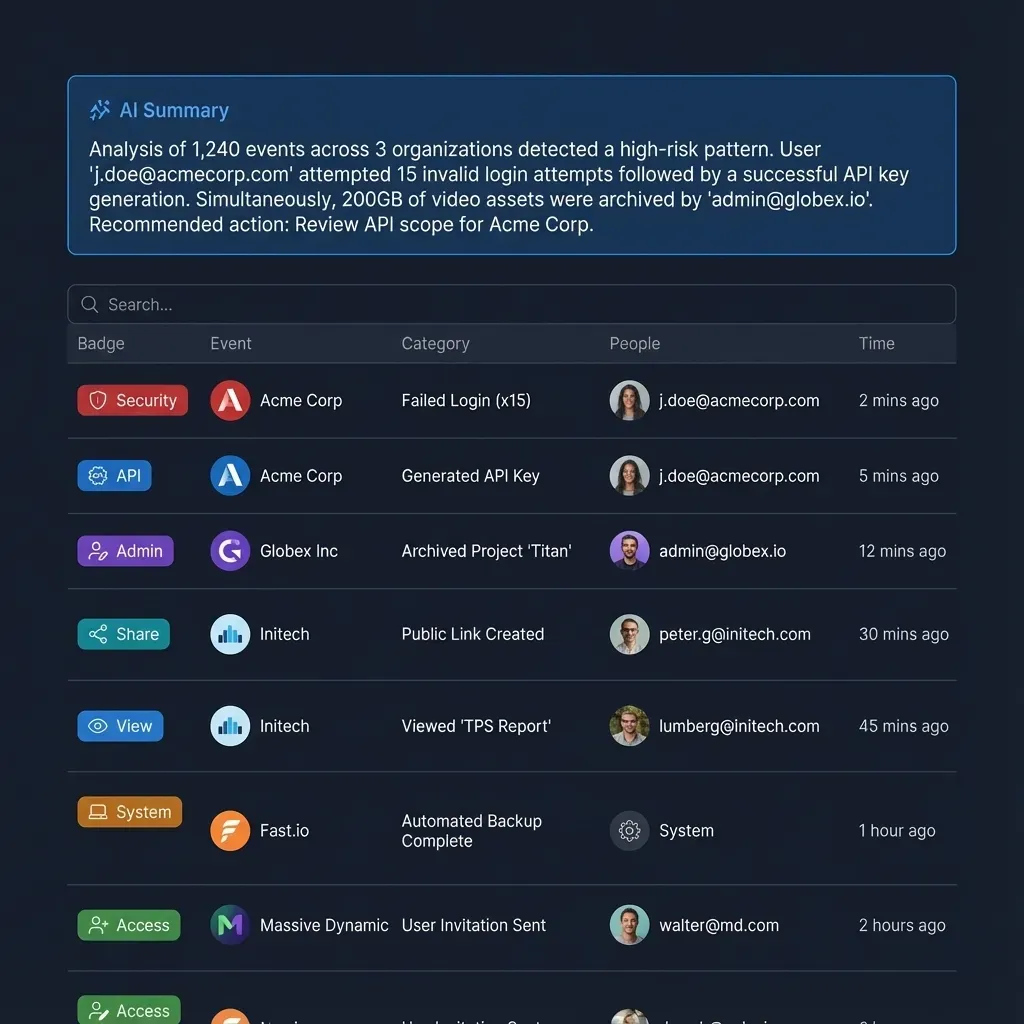
- Failure notifications. Configure your agent to send a Slack message or email when a scheduled run fails. An error that sits in a log file for three days defeats the purpose of automation.
- Stale data detection. If your agent pulls from an upstream API that has not updated since the last run, flag it rather than writing duplicate data to the sheet.
Concurrent Edit Conflicts
Google Sheets uses a "last write wins" approach. If a teammate is editing the same sheet while your agent writes to it, the agent's writes will overwrite any overlapping cells without warning. Two ways to handle this:
- Dedicate a sheet tab. Keep your agent's output on a separate tab from manually-edited data. Use cross-sheet references (
=Sheet1!A1) to pull agent data into human-facing views. - Schedule around work hours. Run your agent early morning or late evening when human edits are unlikely.
Persisting Reports in a Shared Workspace
Google Sheets works well as a live dashboard, but it is a poor archive. Sheets get edited, formulas break, and there is no clean way to say "this is the version we sent to the client on May 15." For reports that need to persist as a record, you need a separate storage layer.
Local storage (your agent's filesystem) is the simplest option, but it only works if one person needs access. Amazon S3 gives you durability and versioning, but not much in the way of searchability or access control for non-technical teammates. Google Drive keeps files close to Sheets but lacks built-in intelligence features.
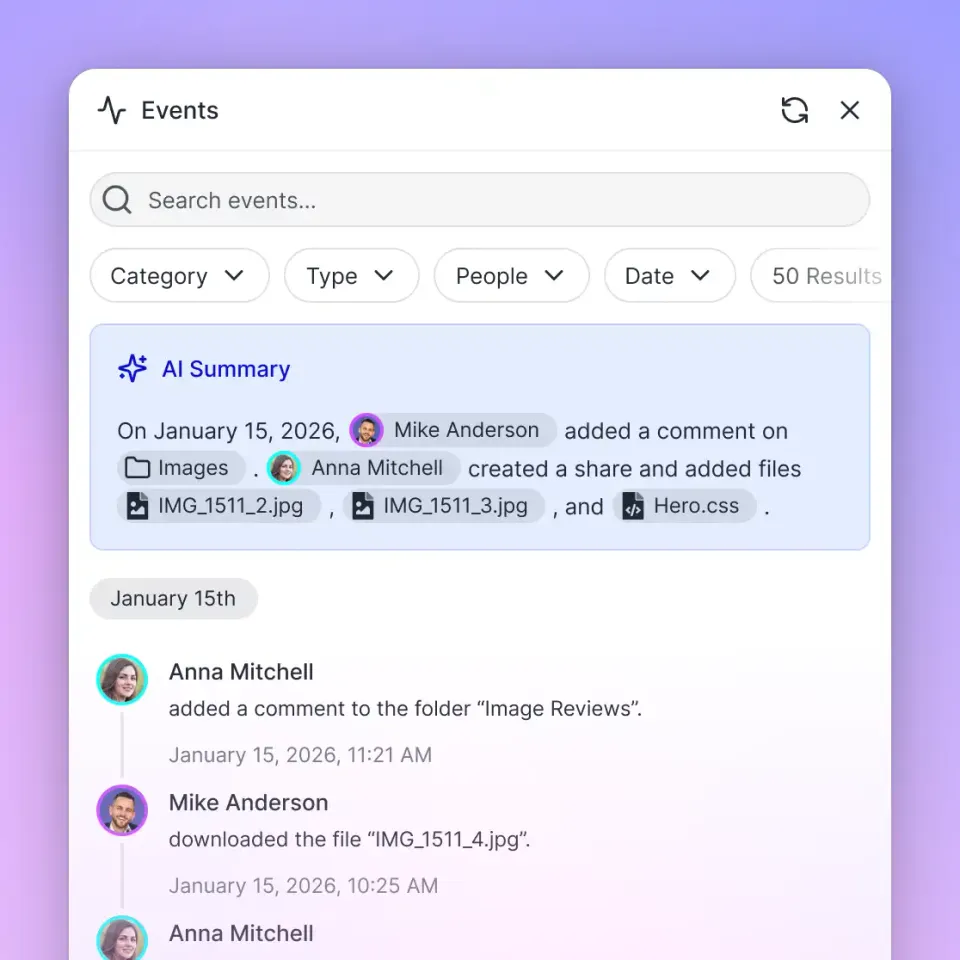
Fastio handles this differently. When your agent finishes generating a report, it can upload the output to a Fastio workspace using the MCP server or API. The workspace stores each version, indexes it automatically through Intelligence Mode for semantic search and chat, and lets you share specific reports with clients through branded shares.
The practical workflow looks like this:
- Your OpenClaw agent generates the report and writes it to Google Sheets (the live, editable version).
- The agent exports a snapshot (CSV, XLSX, or PDF) and uploads it to a Fastio workspace (the archived, versioned record).
- Teammates find past reports through semantic search ("show me the Q1 revenue report for Acme Corp") instead of scrolling through Drive folders.
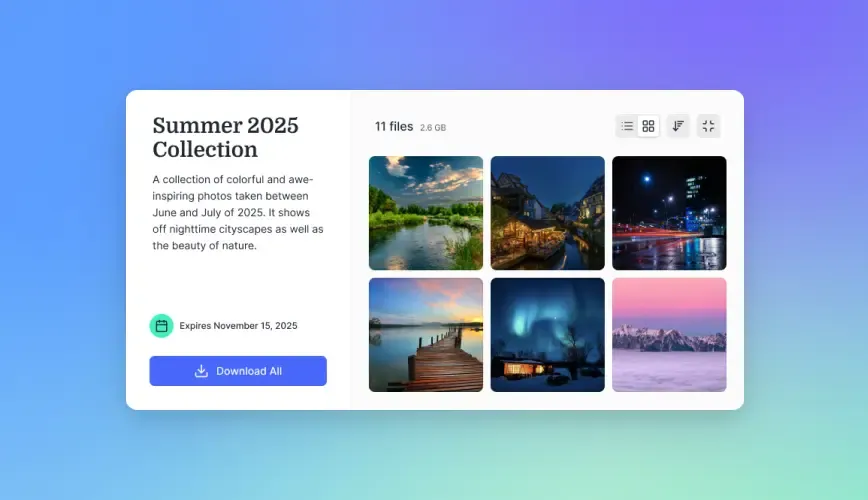
- When a report needs to go to a client, the agent creates a branded share with download tracking and expiration controls.
Fastio offers an official 14-day Business Trial (credit card required), and plans start at $9.99/mo for Starter with 250 GB of storage and 100,000 credits per month. For reporting pipelines that generate spreadsheets and exports, Starter provides ample capacity. The remote MCP server exposes workspace, storage, and AI operations as tools your agent can call directly.
The combination solves a problem that neither Google Sheets nor local storage handles alone: live dashboards that update automatically, plus versioned archives that are searchable and shareable.
Putting the Full Pipeline Together
Here is the complete workflow, from data source to shared report, broken into the steps your agent executes:
- Authenticate. Load the service account credentials and verify access to the target spreadsheet.
- Pull source data. Query your upstream data source (API, database, or another spreadsheet).
- Validate. Check data types, ranges, and completeness before writing anything.
- Write to Google Sheets. Use batch operations to populate the target sheet, then apply formatting (headers, number formats, conditional highlighting).
- Verify. Read back the written data and compare it to the source to catch silent failures.
- Archive. Export a snapshot and upload it to persistent storage (a Fastio workspace, S3, or local disk).
- Notify. Send a confirmation message to Slack, email, or your project management tool.
Wrap this sequence in a cron schedule, and your reporting pipeline runs unattended. When something breaks, the agent retries transient errors and sends failure alerts for anything it cannot fix.
Troubleshooting Common Issues
Permission denied on first run. You forgot to share the Google Sheet with the service account email. Open the sheet, click Share, paste the email address from your service account JSON key, and set it to Editor.
Quota exceeded during batch writes. You are making too many individual API calls. Consolidate writes into larger ranges. If you are still hitting limits, request a quota increase in Google Cloud Console or add a short delay between batches.
Formula cells returning errors. When your agent writes data that formulas depend on, the formulas may not recalculate immediately. Add a brief pause after writing before reading formula results back.
Stale data in scheduled runs. Your upstream data source has not refreshed since the last run. Add a freshness check: compare the latest data timestamp against your last run, and skip the write if nothing has changed.
Concurrent edit conflicts. Another user edited the sheet while your agent was writing. Dedicate a separate tab for agent output and use cross-sheet references in human-facing views.
Sources
References used to verify factual claims in this guide.
-
Google Sheets API usage exceeded 900 million monthly hits
-
Google Sheets API enforces a quota of 300 requests per minute per project Google Sheets has a hard maximum of 10 million cells per spreadsheet
-
Composio provides 850+ data source connectors
Frequently Asked Questions
How do I connect OpenClaw to Google Sheets?
Create a Google Cloud service account with the Sheets API and Drive API enabled, download the JSON key file, and configure your OpenClaw agent with the key path. You can use the ClawHub Google Sheets skill for direct integration or the Composio toolkit for broader multi-app workflows. The critical step is sharing each target spreadsheet with the service account's email address using Editor permissions.
Can OpenClaw automate Google Sheets reporting?
Yes. OpenClaw can read data from upstream sources, transform it, write formatted reports to Google Sheets, and run on a cron schedule without manual intervention. The agent handles batch reads and writes, applies cell formatting and charts, and can send notifications when reports are ready or when errors occur.
What is the best OpenClaw Google Sheets skill?
The ClawHub Google Sheets skill provides direct API access for read, write, append, format, and chart operations. For cross-app workflows that combine Google Sheets with other data sources, the Composio toolkit offers 50+ Sheets actions plus connections to 850+ other services. Most production setups start with the ClawHub skill and add Composio when they need multi-source data pipelines.
How do I schedule OpenClaw to update spreadsheets?
Configure a scheduled automation in OpenClaw with a cron expression and an action description. For a daily KPI update, set the schedule to run each morning before your team starts work. The agent executes the described action, writes results to the specified spreadsheet, and handles retries for transient API errors. See the OpenClaw scheduling documentation for exact configuration syntax.
What are the limits of Google Sheets API automation?
Google Sheets enforces a quota of 300 API requests per minute per project and a hard maximum of 10 million cells per spreadsheet. Concurrent edits follow a "last write wins" model with no merge conflict handling. For large datasets, specify exact cell ranges rather than reading entire sheets, and use batch operations to stay within quota limits.
Related Resources

Store and share your automated reports from one workspace
Fastio gives you persistent cloud storage, Intelligence Mode for searching past reports by meaning, and branded shares for client delivery.