How to Build an Automated AI Detection Checker Pipeline with Hermes Agent
An AI detection checker pipeline in Hermes Agent automates text validation across multiple detection models using MCP API tools and persistent workspace logging. This guide shows developers how to set up multi-engine scoring with Hermes subagents and store structured audit logs in Fast.io.


Why Single-Engine AI Detectors Fail in Enterprise Workflows
68% of enterprise AI content workflows require multi-model detection checks before publication, yet most organizations still rely on manual copy-pasting into single-engine web checkers. Manual verification creates major operational bottlenecks when engineering and editorial teams produce dozens of technical documentation pages, API reference guides, or customer support articles daily. Browser-based interfaces impose strict rate limits, lack persistent record-keeping, and restrict teams to a single scoring model.
Single-engine validation introduces substantial compliance risk. Detection engines calculate perplexity and burstiness differently. A document scored as human-written by one provider can trigger false positives on another due to variations in training distributions, tokenization algorithms, and classification thresholds. Enterprise publishing systems require an automated setup that queries multiple detection APIs concurrently, aggregates statistical consensus, and records verification metrics for internal auditing.
An AI detection checker pipeline in Hermes Agent automates text validation across multiple detection models using MCP API tools and persistent workspace logging. Developed by Nous Research, Hermes Agent is an open source (MIT) agentic framework built for autonomous tool execution, subagent delegation, and procedural memory creation. Rather than forcing human reviewers to paste text across separate vendor dashboards, Hermes Agent manages multi-engine evaluation programmatically.
Combining Hermes Agent with Fast.io persistent workspaces creates an automated editorial verification pipeline. Hermes Agent handles API authentication, subagent execution, and score calculations, while Fast.io stores original source drafts, structured audit logs, and extraction metadata accessible to human reviewers. For persistent workspace setup, review Fast.io Workspaces and Fast.io AI.
Structural Limitations of Manual Web-Based AI Checkers
Web-based detection forms are intended for occasional ad-hoc queries, not continuous software integration. Teams relying on manual paste checks face four recurring operational issues:
- Model Classifier Bias: Single-engine detectors generate frequent false positives on structured technical content, standardized API specs, and domain-specific vocabulary.
- Context Disconnection: Browser forms fail to link detection scores back to prompt parameters, document revision history, or model configuration logs.
- Missing CI/CD Hooks: Manual web tools cannot automatically halt deployment builds, delay pull request approvals, or trigger automated revision steps.
- Unverifiable Audit History: Manual checks leave no machine-readable audit trail when compliance regulators or publication standards require proof of validation.
Replacing web forms with autonomous agent pipelines shifts validation from manual copy-paste routines to background API calls. Hermes Agent executes these checks automatically as content is generated or updated.
Related guides
- How to Build an Automated Image Combiner Pipeline in ClayBuilding an automated image combiner pipeline in Clay allows growth teams to overlay variable dynamic graphics onto...
- How to Build a Data Pipeline Agent with OpenClawTraditional ETL pipelines break when data sources change schemas, rotate auth tokens, or serve content behind...
- Build an AI Generator Detector Pipeline with Hermes AgentMost Hermes tutorials stop after wiring a detector MCP server. A production AI generator detector pipeline needs...
- How to Build a Hermes Agent Telegram Bot With Persistent File StorageHermes Agent's messaging gateway connects to Telegram as a persistent background process, handling file attachments,...
- How to Set Up Automated Code Review with Hermes AgentSeventeen percent of pull requests contain high-severity defects that pass manual review under time pressure, and PR...
- Hermes Agent vs AI Generator Checker: Autonomous AI Loops vs Single-Pass ScoringAI content checkers assess static text using statistical perplexity scores, while Nous Research Hermes Agent provides...
More on this subject: Hermes Agent (100 guides)
4 Steps to Configure an Automated AI Detection Checker Pipeline in Hermes Agent
Setting up an automated detection pipeline requires connecting Hermes Agent to external detection APIs, defining evaluation rules, delegating background jobs, and saving structured outputs. Follow these four steps to configure an automated AI detection checker pipeline in Hermes Agent:
Step 1: Register Detection Engine API Clients via hermes mcp
Hermes Agent connects to external services using the Model Context Protocol (MCP). To add detection capabilities, register the API tools for your target detection engines (such as GPTZero, CopyLeaks, or Sapling) in your Hermes configuration file or attach them dynamically using the hermes mcp command:
hermes mcp add ai-detector-server http://localhost:8080/mcp
Once registered, Hermes Agent exposes endpoints like check_perplexity or get_detection_score directly to its internal tool inventory.
Step 2: Create a Multi-Engine Aggregation Skill with skill_manage
Hermes Agent supports persistent procedural skills using its built-in skill_manage tool. Define an evaluation skill that instructs the agent to submit text chunks to at least three registered MCP detection endpoints, extract raw scores, and compute a weighted consensus score.
AI Detection Verification Skill Procedure:
1. Receive target file path from workspace.
2. Call registered detection MCP tools concurrently for raw text chunks.
3. Extract perplexity, burstiness, and AI probability percentages.
4. Flag documents where consensus AI probability exceeds 0.35.
5. Save structured output to Fast.io workspace.
Saving this procedure allows Hermes Agent to reuse the exact scoring logic across future document runs without re-prompting.
Step 3: Dispatch Parallel Verification Jobs using delegate_task
To prevent slow third-party API responses from stalling primary writing or editing agents, Hermes Agent uses delegate_task to spawn parallel worker subagents. The primary agent delegates individual detection calls to background subagents:
{
  "tool": "delegate_task",
  "parameters": {
    "task": "Run GPTZero and CopyLeaks detection on docs/guide-v2.md and return JSON score payload",
    "context_files": ["docs/guide-v2.md"]
  }
}
Each subagent executes its API call independently, processes response payloads, and returns structured JSON scores back to the parent agent.
Step 4: Save Verification Reports to Fast.io Workspace Storage
After subagents complete evaluation, Hermes Agent writes raw JSON inspection logs and updated Markdown files to a shared Fast.io workspace. Using Fast.io Storage for Agents, the agent uploads document drafts and structured validation reports to persistent cloud storage, ensuring both human editors and autonomous pipelines access the identical source file state.
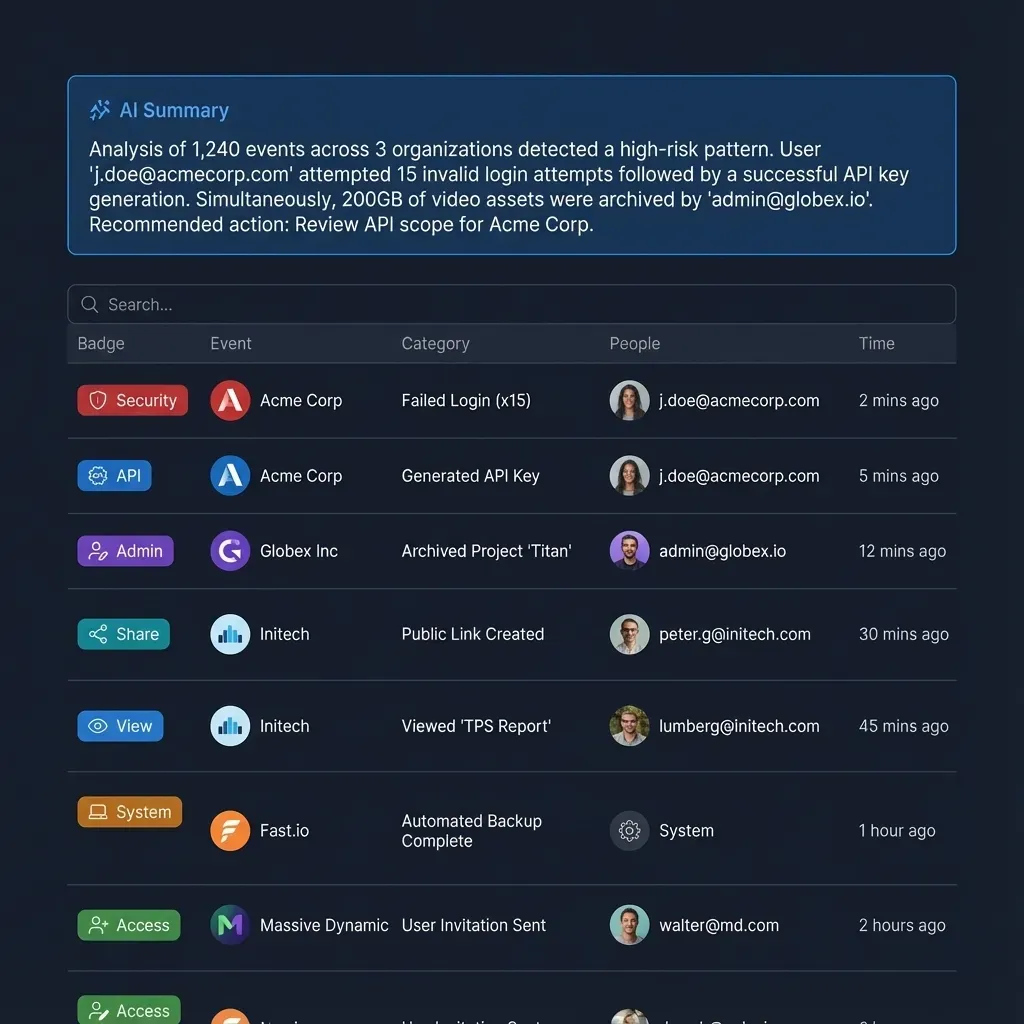
Connecting Multi-Model Detection APIs via Hermes Agent MCP Tools
Running multi-engine evaluation requires standardizing varied API response formats into a single scoring metric. Different detection providers return different indicators: GPTZero returns document perplexity and sentence-level burstiness, CopyLeaks returns probability distributions across model families, and Sapling returns character-level prediction confidence.
Hermes Agent resolves these structural differences using MCP tool calls. When Hermes Agent invokes a detection tool, it maps the provider-specific JSON response into a normalized internal schema. The table below compares common detection metric formats handled during pipeline execution:
When third-party APIs encounter network timeouts or rate limits, Hermes Agent relies on fallback routines defined in its procedural memory. If one engine fails to return a payload within five seconds, the subagent logs an incomplete indicator for that specific provider and calculates consensus based on remaining active endpoints.


Persist Hermes Agent detection logs in a shared workspace
Store multi-engine AI detection scores, raw document drafts, and structured audit logs in one workspace with Fast.io MCP integration. Monthly plans start with a trial of up to 14 days.
Structuring Verification Audit Logs with Fast.io Metadata Views
Collecting AI detection scores is only effective if reviewers can query, filter, and audit results across hundreds of documents. Storing raw JSON files on local disk creates data silos that prevent team visibility and multi-agent coordination.
Fast.io solves this data management challenge through Metadata Views. Metadata Views convert unstructured workspace files into live, queryable database spreadsheets. Instead of writing custom database scripts or OCR rules, users describe desired extraction fields in plain natural language. Fast.io automatically builds a typed schema, matches files in the workspace, and extracts structured data from PDFs, Word documents, text files, and JSON audit logs.
For an AI detection pipeline, developers configure a Metadata View in Fast.io with the following typed fields:
- Document Name (
Text): Path of the evaluated Markdown or text draft. - Overall AI Score (
Decimal): Aggregated consensus probability rating from zero to one. - Engine Breakdown (
JSON): Individual scores from GPTZero, CopyLeaks, and Sapling. - Verification Status (
Boolean): Pass (true) or Fail (false) flag based on organizational compliance thresholds. - Checked At (
Date & Time): Timestamp of pipeline execution.
Agents and human team members interact with these views seamlessly. Hermes Agent queries extraction results over the Fast.io API or MCP endpoints, while human editors filter records in the web application to inspect flagged drafts. Additionally, enabling Intelligence Mode on the workspace indexes all verification files for hybrid semantic search (Fast.io AI), allowing team members to search audit records using natural language queries like "show all drafts flagged for burstiness violations last week."

Managing Asynchronous Verification and Subagent Delegation
Enterprise publishing pipelines cannot pause content generation while awaiting third-party API evaluations. Hermes Agent handles asynchronous operations by delegating heavy processing tasks to dedicated subagents while keeping the main conversational session active.
When a writer agent completes a chapter or technical document, it emits a file update event. Hermes Agent catches this trigger, spawns an isolated background subagent via delegate_task, and passes file references located in the shared Fast.io workspace. The subagent executes multi-model API calls, formats the audit payload, and updates workspace metadata without blocking the primary agent.
Shared workspaces provide full file version history. Every time Hermes Agent updates a draft or attaches an audit report, Fast.io retains prior file versions. If an editor adjusts phrasing to resolve a high perplexity score, Fast.io preserves both original and revised versions alongside their respective detection scores.
When detection scores fall into an ambiguous range, Hermes Agent initiates a human-in-the-loop review. The agent posts a comment on the file in Fast.io. Human editors open the document, review highlighted paragraphs, make necessary revisions, and reply to the comment. Learn more about collaborative agent workflows at Fast.io Storage for Agents and Fast.io Pricing.
Sources
References used to verify factual claims in this guide.
-
68% of enterprise AI workflows require multi-model detection checks.
-
Official Hermes Agent docs confirm built-in MCP client integration, subagent delegation, and persistent skill creation.
Frequently Asked Questions
How to check AI detection automatically in Hermes Agent?
You can check AI detection automatically in Hermes Agent by registering detection API tools via hermes mcp, creating a scoring procedure with skill_manage, and delegating asynchronous evaluation tasks to background subagents using delegate_task.
Can Hermes Agent connect to multiple AI detector APIs?
Yes. Hermes Agent supports concurrent MCP tool calls, allowing a single agent or delegated subagent to query multiple detection APIs such as GPTZero, CopyLeaks, and Sapling simultaneously to calculate consensus scores.
Why should teams use multi-engine detection instead of a single detector?
Single detection engines evaluate text using different models and training sets, making them prone to false positives on technical jargon or structured content. Querying multiple APIs provides a balanced consensus score and reduces classifier bias.
How does Fast.io preserve detection audit logs for agentic workflows?
Fast.io stores detection logs, raw drafts, and score reports in shared workspaces. With Metadata Views, Fast.io automatically extracts typed fields like consensus scores and timestamps into queryable spreadsheets, while maintaining full per-file version history.
What happens when an AI detection API rate limit is exceeded during a pipeline run?
Hermes Agent subagents use fallback handling defined in procedural skills. If one API endpoint times out or returns a rate limit error, the subagent logs an incomplete status for that provider and computes consensus scoring using the remaining active endpoints.
Related Resources

Persist Hermes Agent detection logs in a shared workspace
Store multi-engine AI detection scores, raw document drafts, and structured audit logs in one workspace with Fast.io MCP integration. Monthly plans start with a trial of up to 14 days.