How to Automate DevOps Workflows with OpenClaw
73% of organizations still run CI/CD pipelines without any AI involvement, even as AI tools saturate upstream development work. OpenClaw closes that gap with event-driven automation, community DevOps skills, and a durable Task Flow engine that handles multi-step deployments end to end. This guide covers pipeline generation, infrastructure scaffolding, deployment automation, and how to pair OpenClaw with persistent artifact storage on Fastio.

Why Most CI/CD Pipelines Still Run Without AI
A January 2026 JetBrains AI Pulse survey found that 73% of organizations do not use AI in their CI/CD pipelines. That number stands in sharp contrast to general development, where AI tool usage exceeds 90% of professional developers. The disconnect is not about capability. It is about unclear use cases, trust gaps, and the challenge of handing control to an autonomous agent inside production-critical infrastructure.
OpenClaw addresses this directly. Rather than bolting a chatbot onto your pipeline dashboard, OpenClaw operates as a persistent agent that receives automation hooks events, analyzes build logs, categorizes failures, and takes corrective action through its tool system. It runs locally via Docker or as a managed instance through KiloClaw, and it retains memory across sessions so it learns your codebase's failure patterns over time.
The platform's DevOps capabilities break into three layers. First, OpenClaw's core automation primitives (scheduled tasks, hooks, and Task Flow) provide the orchestration substrate. Second, community skills on ClawHub deliver specialized DevOps tooling like pipeline generators and Terraform scaffolders. Third, external storage services like Fastio provide the persistent artifact layer where deployment configs, audit logs, and infrastructure state live beyond the agent's local filesystem.
This guide walks through each layer with concrete workflows: generating CI configs, scaffolding infrastructure, managing deployments with rollback, and storing everything in a shared workspace where both agents and humans can review the results.

Related guides
- How to Automate Video Review Workflows with Manus AIWhile AI-driven automation can slash initial video editing and rough-cut assembly times by up to 80%, creative teams...
- How to Automate Workflows with GitHub Actions and CopilotGitHub Actions workflows can run the Copilot CLI in programmatic mode to automate code reviews, generate pull request...
- How to Automate CI/CD Pipelines with OpenClaw and GitHub ActionsOpenClaw adds an intelligent automation layer on top of GitHub Actions. Instead of writing brittle if-then rules for...
- How to Automate Email Workflows with OpenClaw AgentsOpenClaw agents can monitor inboxes, classify messages, extract data from attachments, and route actions through...
- How to Automate OpenClaw Workflows with Zapier MCPOpenClaw agents are good at reasoning, but they need a way to act on that reasoning across your existing tools. Zapier...
- OpenClaw vs Power Automate: When AI Agents Beat Traditional AutomationGartner projects that 40% of enterprise apps will embed task-specific AI agents by end of 2026, up from under 5% in...
More on this subject: OpenClaw Setup and Guides (199 guides)
OpenClaw Automation Primitives for DevOps
OpenClaw provides six automation mechanisms, but three matter most for DevOps work: scheduled tasks, hooks, and Task Flow.
Scheduled tasks use cron expressions for precise, isolated execution. A nightly infrastructure drift check, a weekly dependency audit, or a recurring compliance scan all fit this pattern. Each creates a persistent task record you can inspect later. Set one up to poll your staging environment health endpoint every 30 minutes, and the agent produces a timestamped log of every check.
Hooks trigger on lifecycle events and tool calls. When a deployment completes, a hook can fire to run smoke tests, notify a Slack channel, or update a tracking ticket. Plugin hooks intercept tool calls in-process, which means you can enforce approval gates before any destructive action reaches production.
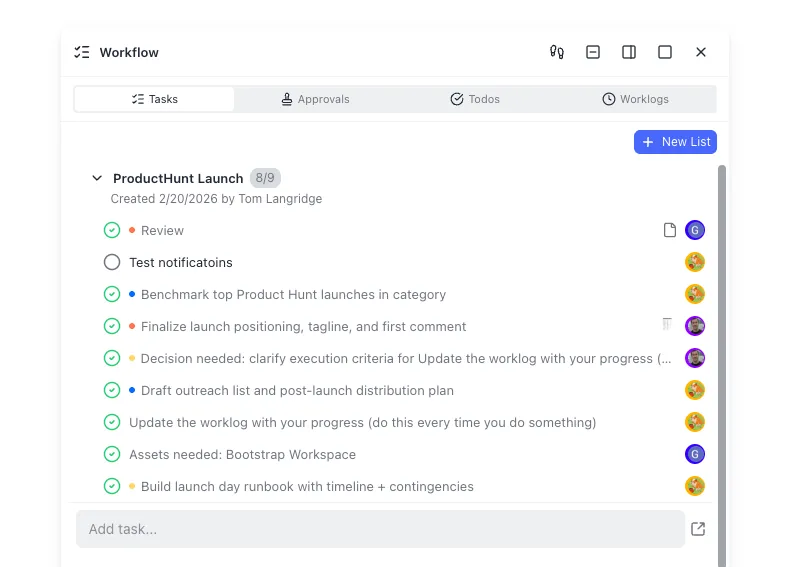
Task Flow sits above both. It is the orchestration layer for multi-step workflows that need durable state. A deployment pipeline that provisions infrastructure, runs integration tests, deploys containers, and then verifies health checks involves four or more sequential steps. If the agent restarts mid-flow, Task Flow picks up where it left off because it persists state to SQLite with write-ahead logging.
Task Flow operates in two modes. Managed mode creates and controls task lifecycles directly, driving each step to completion and advancing the flow state automatically. Mirrored mode observes externally created tasks, like those from cron jobs or CLI commands, without taking ownership, providing unified progress visibility across all your automation.
The recommended pattern for reliable DevOps workflows layers these primitives together: scheduled tasks handle timing, persistent sessions maintain context across runs, and Task Flow tracks the complete run including retries and restarts. Before executing workflow steps, the agent runs preflight checks to verify API credentials, network reachability, and enabled tools.
Task Flow exposes its state through the agent's standard tool interface, so you can list active flows, inspect a specific run's progress, or cancel a stuck pipeline without leaving the conversation. That visibility is what separates durable orchestration from fire-and-forget scripts.
Choosing Between Cron and Heartbeat
OpenClaw also offers a Heartbeat mechanism that runs periodic turns at roughly 30-minute intervals using the main session context. For DevOps, the distinction matters: use cron for anything that needs exact timing and an isolated execution record (nightly backups, scheduled deploys), and use Heartbeat for monitoring tasks that benefit from session awareness, like watching a canary deployment's error rate while maintaining context about what changed.
ClawHub DevOps Skills in Practice
ClawHub is OpenClaw's community skill registry, and the DevOps category includes specialized automation tools that extend what the base agent can do. The most comprehensive is the senior-devops skill by alirezarezvani, which bundles three targeted generators.
Pipeline Generator scaffolds CI/CD pipeline configurations for GitHub Actions and CircleCI. It produces stage definitions for build, test, security scan, and deploy, following platform-specific best practices for caching, artifact handling, and secret management. Instead of copying a starter template from a blog post and trimming what you do not need, the generator builds a config tailored to your project's language, test framework, and deployment target.
Terraform Scaffolder generates, validates, and plans infrastructure-as-code modules for AWS, GCP, and Azure. It enforces consistent module structure and runs terraform validate plus terraform plan before any apply, catching misconfigurations before they reach your cloud account. The scaffolder handles the boilerplate that slows down new infrastructure projects: provider blocks, backend configuration, variable definitions, and output declarations.
Deployment Manager orchestrates container deployments with blue/green or rolling strategies, health-check gates, and automatic rollback on failure. It watches health endpoints after each deployment step and reverts if the new version fails checks within a configurable window.
Install the skill from ClawHub with a single command through the OpenClaw CLI, and it integrates directly into your agent's existing tool system.
Beyond this single skill, the broader ClawHub ecosystem includes over 5,400 community skills. For DevOps specifically, you will find tools for alert noise tuning, secret hygiene audits, environment drift detection, and vulnerability triage with SLA-based remediation. Each skill installs the same way and works alongside OpenClaw's existing tool system.

CI Failure Triage Workflow
One practical recipe combines webhooks with the agent's analysis capabilities. Configure your CI platform to send completion webhooks to your OpenClaw gateway. When a build fails, the agent retrieves the log, categorizes the failure (flaky test, code bug, infrastructure issue, or dependency problem), and posts a summary to your team's Slack channel with the error category, relevant log excerpt, and suggested fix.
Over time, the agent builds memory of recurring failure patterns. A flaky test that fails every third run gets flagged for quarantine rather than triggering the same investigation each time. Infrastructure failures route to the on-call DevOps engineer rather than the developer who pushed the commit.


Give your DevOps agents persistent artifact storage
Persistent workspace storage for deployment logs, Terraform plans, and pipeline configs, with an MCP-ready endpoint for OpenClaw.
Storing Deployment Artifacts and Infrastructure State
DevOps automation generates artifacts that need to live somewhere accessible to both agents and humans: Terraform state files, pipeline configurations, deployment logs, rollback snapshots, and audit trails. Local agent storage disappears on restart. S3 buckets work but lack built-in search, previews, and collaboration features. Google Drive and Dropbox were not designed for agent access patterns.
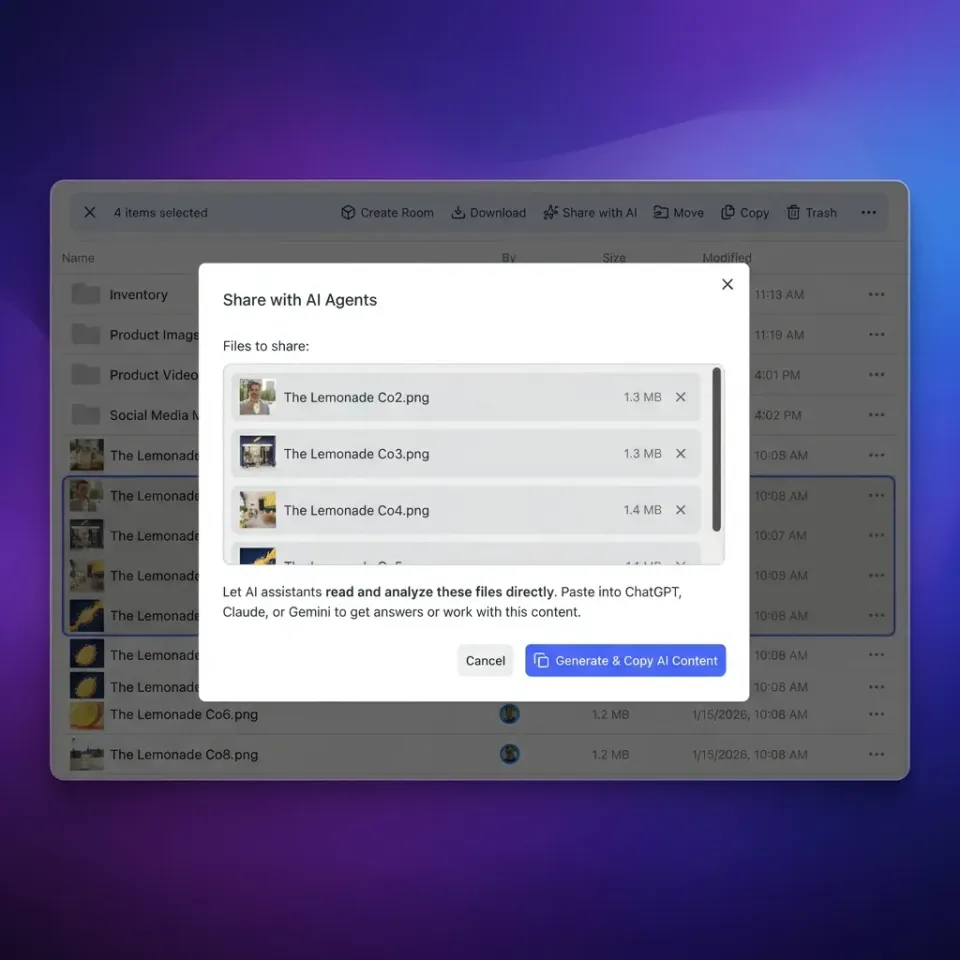
Fastio fills this gap as an intelligent workspace where agents store, organize, and share deployment artifacts. When Intelligence Mode is enabled, uploaded files are automatically indexed for semantic search. An engineer can search "failed deployment logs from last Thursday" and find the right file by meaning, not filename.
The remote Fastio MCP server connects via Streamable HTTP at https://mcp.fast.io/mcp/tools, with scoped-key authentication through an Authorization: Bearer header. OpenClaw agents connect directly with a URL to access a consolidated MCP toolset to create workspaces, upload files, manage permissions, and query indexed documents without installing any local packages.
Practical workspace structure for a DevOps team:
- /pipelines/ stores generated CI configs with version history
- /infrastructure/ holds Terraform modules and plan outputs
- /deployments/ contains deployment logs and rollback snapshots
- /audits/ archives compliance reports and security scan results
Granular permissions and version history prevent conflicts when multiple agents write to the same workspace. One agent generating a Terraform plan while another updates the CI config will preserve distinct revision histories for each file. The realtime activity feed and WebSocket events feed notify downstream agents when new artifacts arrive, enabling reactive workflows.
When the automation work is done, ownership transfer lets the agent hand off the entire workspace to a human operator. The agent keeps admin access for future runs, but the human becomes the owner and can manage permissions, invite team members, and review everything the agent produced.
Fastio offers a 14-day Business Trial (credit card required), and plans start at $9.99/mo for Starter with 250 GB of storage and 100,000 credits per month. That is generous capacity for DevOps teams to store months of deployment artifacts.

Intelligence Mode for Infrastructure Search
Once Intelligence is enabled on a workspace, every uploaded file gets indexed for semantic search and RAG-powered chat. Ask "which Terraform module provisions the RDS cluster" and get a citation-backed answer pointing to the exact file and section. This turns your infrastructure documentation from a static folder into a queryable knowledge base.
Metadata Views take this further by extracting structured data from deployment documents. Define columns like "cloud provider," "region," "resource count," and "last applied date" in natural language, and Fastio populates a sortable spreadsheet across all your Terraform plan outputs. No templates, no manual tagging. Learn more at Document Data Extraction.
How to Build a Complete DevOps Pipeline with OpenClaw
Here is how the pieces fit together for a team shipping a containerized application to AWS.
Step 1: Generate the CI pipeline. The senior-devops skill's Pipeline Generator creates a GitHub Actions workflow with build, test, security scan, and deploy stages. The generated config goes into your repo's .github/workflows/ directory and also uploads to your Fastio workspace under /pipelines/ for version tracking.
Step 2: Scaffold the infrastructure. The Terraform Scaffolder generates modules for an ECS cluster, an Application Load Balancer, and an RDS database. It validates the configuration and runs terraform plan to surface any issues. Plan outputs upload to Fastio under /infrastructure/ where the team can review before approving.
Step 3: Set up deployment automation. The Deployment Manager configures a rolling deployment strategy with health-check gates. After each deployment step, it hits the application's health endpoint. If the new version returns errors within the check window, it triggers automatic rollback and logs the incident.
Step 4: Wire up monitoring. Scheduled tasks poll the application health endpoint every 15 minutes during the first 24 hours post-deploy. Hooks fire on any status change, sending alerts to the team's notification channel with context about what changed and when.
Step 5: Store everything persistently. Every artifact, log, and config file uploads to Fastio. Semantic search means anyone on the team can find what happened during a specific deployment without digging through folder hierarchies. The audit trail lives in a shared workspace, not in an agent's local directory.
Task Flow ties these steps together as a durable pipeline. If the agent restarts between Step 2 and Step 3, it resumes from the infrastructure scaffolding completion rather than starting over. Each step creates a task record with timestamps, inputs, outputs, and status.
This is not a theoretical architecture. OpenClaw's Lobster runtime provides typed, local-first pipeline execution with mandatory human approval gates before destructive actions. The agent proposes, a human approves, and the agent executes. That approval loop is what makes autonomous DevOps practical rather than terrifying.
Multi-Agent Coordination
Larger teams can run specialized agents in parallel. One agent handles CI optimization and failure triage. Another manages infrastructure provisioning. A third handles deployment and rollback. All three write to the same Fastio workspace, coordinated through advisory file locks, granular permissions, version history, and the activity feed. Agents acquire a lock before updating shared deployment manifests, while version history tracks every change.
When Agent A finishes a Terraform plan, the activity feed alerts Agent B to review the changes. Agent B posts its analysis as a comment in the workspace. A human reviews both the plan and the analysis using in-browser previews and pinned comments, and Agent C executes the deployment.
This pattern scales because each agent has a narrow scope but shares context through the workspace. No agent needs to understand the full pipeline. The workspace is the shared state layer.
Five DevOps Use Cases for OpenClaw
1. CI/CD pipeline generation. Scaffold complete pipeline configs for GitHub Actions or CircleCI with build, test, scan, and deploy stages. The Pipeline Generator handles caching strategy, artifact management, and secret injection so you skip the copy-paste-modify cycle that eats the first hour of every new project.
2. Infrastructure-as-code scaffolding. Generate Terraform modules for AWS, GCP, or Azure with consistent structure, validated configurations, and automated plan outputs. The Scaffolder enforces naming conventions and module boundaries that prevent the "one giant main.tf" anti-pattern.
3. Deployment automation with rollback. Blue/green and rolling deployment strategies with health-check gates. Automatic rollback when health checks fail within the configured window. Every deployment produces a timestamped log stored in your shared workspace for post-incident review.
4. Monitoring hooks and alert management. Scheduled health checks, automation hooks-driven alerting, and alert noise tuning. The agent learns which alerts matter and which are noise, routing critical issues to the right responder and suppressing false positives that desensitize on-call engineers.
5. Incident response and failure triage. Automated log analysis categorizes failures by type, extracts relevant error details, and suggests remediation. Recurring patterns get flagged for systemic fixes rather than repeated one-off investigations. The agent builds institutional memory that survives team turnover.
Each use case benefits from persistent storage. Pipeline configs need version history. Terraform plans need collaborative review. Deployment logs need searchability. Fastio provides all three in a single workspace that both agents and humans can access through the same interface or MCP server.
Sources
References used to verify factual claims in this guide.
-
73% of organizations don't use AI in CI/CD pipelines AI tool usage exceeds 90% among professional developers in general development work
-
senior-devops skill provides Pipeline Generator for GitHub Actions and CircleCI, Terraform Scaffolder for AWS/GCP/Azure, and Deployment Manager with rollback
-
Over 5,400 community skills available on ClawHub
Frequently Asked Questions
Can OpenClaw automate CI/CD pipelines?
OpenClaw automates CI/CD through two complementary paths. Its core automation primitives (scheduled tasks, hooks, and Task Flow) let you wire up automation hooks-driven responses to pipeline events, like analyzing build failures and routing alerts. Community skills on ClawHub, particularly the senior-devops skill, add pipeline generation capabilities that scaffold GitHub Actions and CircleCI configurations with build, test, security scan, and deploy stages. The agent can also monitor running pipelines, categorize failures, and suggest fixes based on patterns it has seen before.
How do I use OpenClaw for infrastructure as code?
Install the senior-devops skill from ClawHub, which includes a Terraform Scaffolder supporting AWS, GCP, and Azure. The Scaffolder generates module structures with provider blocks, backend configuration, variables, and outputs. It runs terraform validate and terraform plan before any apply to catch misconfigurations early. For ongoing infrastructure management, OpenClaw's scheduled tasks can run periodic drift detection to flag resources that have changed outside of Terraform.
Does OpenClaw work with Terraform?
OpenClaw works alongside Terraform through community skills and its general tool system. The senior-devops skill's Terraform Scaffolder generates and validates modules for AWS, GCP, and Azure, enforcing consistent structure and running validation before applies. Beyond scaffolding, the agent can execute terraform plan, analyze the output, flag risky changes, and store plan outputs in a shared workspace for team review. Several community Terraform modules also exist for deploying OpenClaw itself on cloud providers like AWS and DigitalOcean.
Can OpenClaw deploy containers automatically?
The Deployment Manager component of the senior-devops ClawHub skill orchestrates container deployments with blue/green or rolling strategies. It includes health-check gates that monitor your application's endpoints after each deployment step and triggers automatic rollback if the new version fails checks within a configurable window. Task Flow ensures the deployment pipeline is durable, so the agent can resume from the last completed step if interrupted rather than starting the entire process over.
What is the difference between OpenClaw and KiloClaw?
OpenClaw is the free, open-source agent framework you self-host with Docker. KiloClaw is the fully managed version with hosting, updates, monitoring, and security handled for you. Both run the same core agent, skills, and automation primitives. Choose OpenClaw if you want full control over your infrastructure and data. Choose KiloClaw if you want a running agent in minutes without server setup.
How does Task Flow handle deployment failures?
Task Flow persists state to SQLite with write-ahead logging, so every step in a deployment pipeline has a durable record. If a deployment fails at the health-check stage, the Deployment Manager triggers rollback while Task Flow records the failure, the rollback action, and the final state. If the agent itself restarts mid-flow, Task Flow resumes from the last completed step rather than re-running the entire pipeline. You can inspect flow state through the agent's tool interface to see exactly where a failure occurred and what recovery actions were taken.
Related Resources

Give your DevOps agents persistent artifact storage
Persistent workspace storage for deployment logs, Terraform plans, and pipeline configs, with an MCP-ready endpoint for OpenClaw.