Cline and Other Open Source Cursor Alternatives
Cline markets 8.0M+ installs across platforms as an Apache 2.0 coding agent, which is why "open source cursor alternative" keeps drawing buyers who want model choice without a closed IDE subscription. This guide ranks the main free and self-hosted options by license, editor surface, BYOK vs billed models, and agent autonomy, then shows when open source beats Cursor and where shared workspaces fit after the agent finishes.


Shortlist of open source Cursor alternatives
Cline's product site reports 8.0M+ installs across platforms for an Apache 2.0 open coding agent that runs in the editor, terminal, and SDK, with Plan/Act control and bring-your-own-key model access. That install base is the practical reason developers search for an open source Cursor alternative: they want agent autonomy and model control without renting a proprietary VS Code fork.
An open source Cursor alternative is a free or self-hosted AI coding agent that runs in your editor or terminal with model choice and local control instead of a closed IDE subscription. Cursor remains a polished product for tab completion and inline edits. The open stack answers a different brief: inspectable runtime, provider flexibility, and tools you can point at Claude, GPT, Gemini, or local weights.
DataForSEO currently measures about 140 US monthly searches for "open source cursor alternative" (keyword difficulty 13, CPC about $2.96) and about 30 for the related phrase "open source alternative to cursor." Volume is modest, intent is commercial, and the people behind those queries usually compare five to seven tools before installing one.
Use this shortlist as a featured-snippet style answer, then read the criteria that follow:
- Cline (Apache 2.0): IDE + CLI + SDK agent with Plan/Act, BYOK or Cline billing, MCP tools, human approval on actions
- Kilo Code (MIT): VS Code / JetBrains / CLI agent with BYOK or gateway billing and local-model paths
- opencode (MIT): Terminal-first open agent with optional desktop/IDE surfaces and model-agnostic keys
- Aider (Apache 2.0): Terminal pair-programmer with strong git workflows and BYOK models
- Roo Code (Apache 2.0): VS Code-oriented open agent in the same family as Cline-style loops
- OpenAI Codex CLI (Apache 2.0 client): Open CLI with terminal, IDE, and cloud sandbox modes (usage often tied to OpenAI plans)
- Zed (open editor): GPU-accelerated open editor that hosts external agents rather than shipping one closed stack
MorphLLM's June 2026 comparison of nine Cursor alternatives noted that BYOK open agents (including Cline) inherit the SWE-bench score of the model you attach, and that Claude Opus 4.8 scored 88.6% on SWE-bench Verified in that round. The agent shell is not the whole quality story; the model and how you gate tools matter as much as the brand name on the sidebar.
The rest of this article digs into Plan/Act, BYOK versus subscription economics, MCP extension, and the handoff problem most listicles skip: where agent-produced files live when more than one person needs them.
Related guides
- Best Devin AI Alternatives: Open-Source and Terminal Coding AgentsA 2026 study of over 128,000 GitHub projects shows that up to 28.66% of repositories now deploy active coding agents...
- Is Claude Code Open Source? Source Code, Licensing, and AlternativesClaude Code is proprietary software governed by Anthropic's Commercial Terms of Service, not an open source project. A...
- How to Set Up MCP Servers in CursorCursor MCP server setup is the process of connecting Model Context Protocol servers to the Cursor AI code editor,...
- How to Connect Cursor to Box Storage via MCP: Integration GuideConnecting Cursor to Box allows AI coding agents to search and reference enterprise documentation, specs, and design...
- How to Connect Cursor to Dropbox Storage via MCP: Integration GuideConnecting Cursor to Dropbox allows AI coding agents to search and reference project documentation, specs, and design...
- How to Connect Cursor to Dropbox via MCP: Step-by-Step SetupConnecting Cursor to Dropbox via MCP allows Cursor agent mode to retrieve documents and code assets directly from cloud...
More on this subject: AI Coding Assistants (80 guides)
Plan/Act, BYOK, and MCP: how open agents differ from Cursor
Most "best Cursor alternative" posts rank tools by star counts and price tags. That misses the axes that decide whether open source actually fits your work.
Plan mode versus Act mode
Cline documents Plan and Act as a dual-mode loop. In Plan mode the agent can explore the codebase, search, and discuss strategy without modifying files or running shell commands. In Act mode it can edit files, run commands, and execute the agreed plan, still behind approval gates for sensitive steps unless you intentionally widen auto-approve.
That split is the operational heart of an open agent. Cursor's Composer and agent features also plan and edit, but the control surface is product-defined inside a closed IDE. With Cline, planning is a first-class mode you can keep open while you argue about design, then flip only when you are ready for disk and terminal changes. Different models can even sit on different modes: a stronger reasoner for planning, a cheaper model for mechanical Act steps, when your provider setup allows it.
Practical pattern for medium tasks: start in Plan, force the agent to list files and risks, then Act with step-by-step review. Tiny fixes can start in Act. Large refactors deserve a longer planning pass before any write.
BYOK versus subscription
Cursor Pro is a subscription product with included model usage and higher tiers as spend grows. Open agents usually reverse the economics:
- Tool cost: Extension or CLI is free under an open license (Apache 2.0 or MIT for the main options above).
- Model cost: You pay providers directly via API keys, local GPU power, or an optional hosted path such as Cline usage billing or ClinePass for selected open coding models.
- Predictability tradeoff: Light weeks can cost less than $20. Heavy multi-file agent loops can exceed a flat Pro plan if you leave Opus-class models on auto-approve all night.
Cline's docs list three access paths: Cline usage billing (fastest setup, built-in billing, some free model options), ClinePass (flat monthly subscription for selected open coding models), and bring-your-own-key for cloud providers or local runtimes. That menu is the real free Cursor alternative story. The agent is free; intelligence is not free.
BYOK wins when you already have Anthropic, OpenAI, Google, Bedrock, Vertex, OpenRouter, or Ollama access and want line-item control. Subscription-style paths win when your team hates key management. Closed IDE subscriptions win when you want tab completion and agent features bundled with one editor bill and do not care about inspecting the agent runtime.
MCP as the extension surface
Model Context Protocol turns an agent from "chat that edits files" into "chat that can call tools." Cline markets MCP and plugins for databases, APIs, and infrastructure, plus an SDK for custom tools and lifecycle hooks. Official docs describe the same core agent across VS Code, JetBrains, CLI, Kanban, and @cline/sdk.
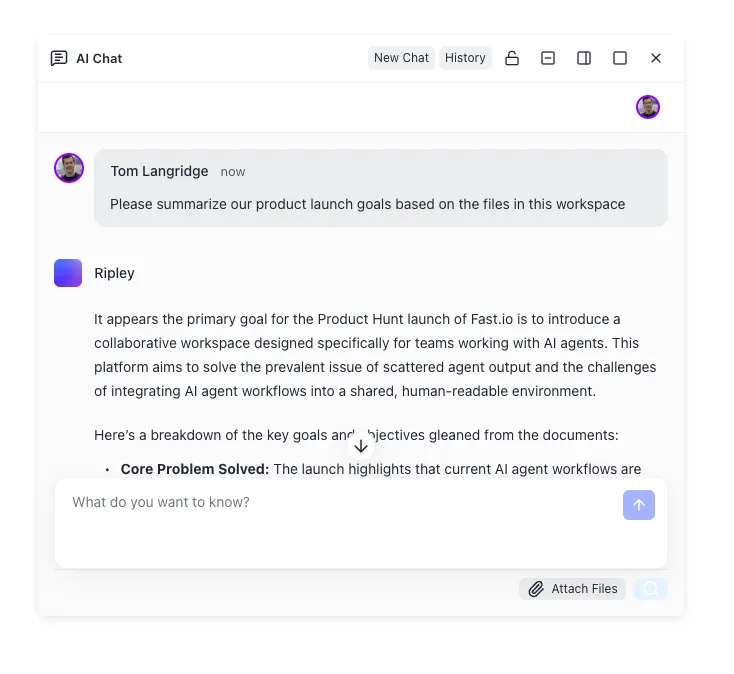
For storage and team handoff, MCP is how an editor agent reaches shared systems without inventing one-off plugins. Local git still owns source control. Object stores such as S3 or consumer Drive folders can hold dumps. An intelligent workspace with an MCP endpoint is a third pattern: the agent reads and writes durable project artifacts, shares, and searchable docs where humans already work.
Fast.io exposes a consolidated MCP toolset over Streamable HTTP at /mcp and legacy SSE at /sse. Connect a Cline MCP configuration to that endpoint when you want agent output to land in an org-owned workspace with version history, permissions, and Intelligence Mode indexing. That is a workflow pattern around Cline, not a built-in Cline feature.
Autonomy with approval
Open agents earn trust when every risky action is visible. Cline's public positioning stresses explicit approval for actions so you stay in control of disk and shell. Cursor optimizes for speed and ambient completions. Neither is "wrong." Autopilot without review burns tokens and can ship half-broken refactors. Over-gating turns a coding agent into a slow chat UI. Tune auto-approve by tool class once you trust the loop.
Cline and the main open source options in detail
This section expands the shortlist with enough detail to install one tool without another comparison tab.
1. Cline (Apache 2.0)
Cline is the open coding agent most people mean when they say free Cursor alternative. Product marketing states 8.0M+ installs, Apache 2.0, Plan/Act, multi-model support (Claude, GPT, Gemini, Ollama/LM Studio, OpenAI-compatible endpoints), MCP extension, and install paths for IDE, CLI (npm i -g cline), Kanban, and SDK. Docs list VS Code, Cursor, Devin Desktop (formerly Windsurf), JetBrains IDEs, Antigravity, Zed, and Neovim (via ACP mode) among supported environments.
Strengths: Open runtime you can inspect; Plan/Act separation; BYOK plus optional Cline billing; multi-surface agent core; MCP and rules (.clinerules) for project standards.
Limitations: Not a tab-completion engine; API spend can spike on long Act loops; you own provider setup and spend monitoring.
Best for: Developers who want an autonomous coding agent inside the editor or terminal they already use, including hybrid installs of Cline inside Cursor.
Pricing: Agent is open source and free to install. Model usage is BYOK, Cline usage billing, or ClinePass for selected open coding models (ClinePass is marketed as a flat monthly subscription).
2. Kilo Code (MIT)
Kilo Code is another free in-editor agent for VS Code, JetBrains, and CLI. Independent comparisons highlight BYOK, local models via Ollama/LM Studio, and a gateway that bills provider rates with no markup. Community size is smaller than Cline's, which matters if you depend on issue response speed.
Best for: Teams that want an open extension with zero-markup hosted inference options without juggling every provider console.
3. opencode (MIT)
opencode is a terminal-first open agent with a large public star count in 2026 comparisons. It is model-agnostic BYOK, with optional hosted model packages for people who do not want to manage keys. Expect less inline editor polish than Cursor and more scriptable, headless-friendly workflows.
Best for: Terminal-centric developers and automation-heavy agent runs.
4. Aider (Apache 2.0)
Aider is a terminal pair-programmer with deep git integration. It is BYOK and model-agnostic, and it publishes its own editing benchmarks. It is less "full agent product surface" than Cline's IDE + CLI + SDK map, and more of a focused CLI collaborator.
Best for: Developers who live in git and the shell and want reproducible, scriptable pair sessions.
5. Roo Code (Apache 2.0)
Roo Code sits in the open VS Code agent category with Cline-like autonomy patterns. Treat it as a peer community fork/ecosystem option when you want an alternate extension implementation under an Apache license. Verify current release cadence on its own repo before standardizing a whole team.
Best for: Teams evaluating more than one open VS Code agent before locking policy.
6. OpenAI Codex CLI (Apache 2.0 client)
Codex offers an open CLI client and cloud sandbox workflows often tied to OpenAI or ChatGPT plan usage. Isolation is a real differentiator for security-sensitive tasks. It is not a full replacement for Cursor's editor UX, and usage metering follows OpenAI product rules rather than pure BYOK math.
Best for: Spec-then-review tasks and sandboxed cloud runs when you already live in the OpenAI ecosystem.
7. Zed (open editor hosting agents)
Zed is an open, GPU-accelerated editor that hosts external agents instead of forcing one closed AI IDE. Free and paid tiers cover edit predictions and tokens; BYOK can keep model choice open. You still need a separate agent runtime for deep autonomous work.
Best for: Performance-first editing with plug-in agents rather than a single-vendor AI IDE.
What closed tools still do better
Cursor still leads for sub-second tab completion and a tightly integrated fork experience. Claude Code (proprietary agent) posts strong benchmark numbers when you want Anthropic's productized agent stack rather than an open runtime. GitHub Copilot remains the simplest no-key starter option from a major vendor. Open source is not automatically "better"; it is better when license, model control, and tool transparency are your buying criteria.


Persist open source Cursor alternative output
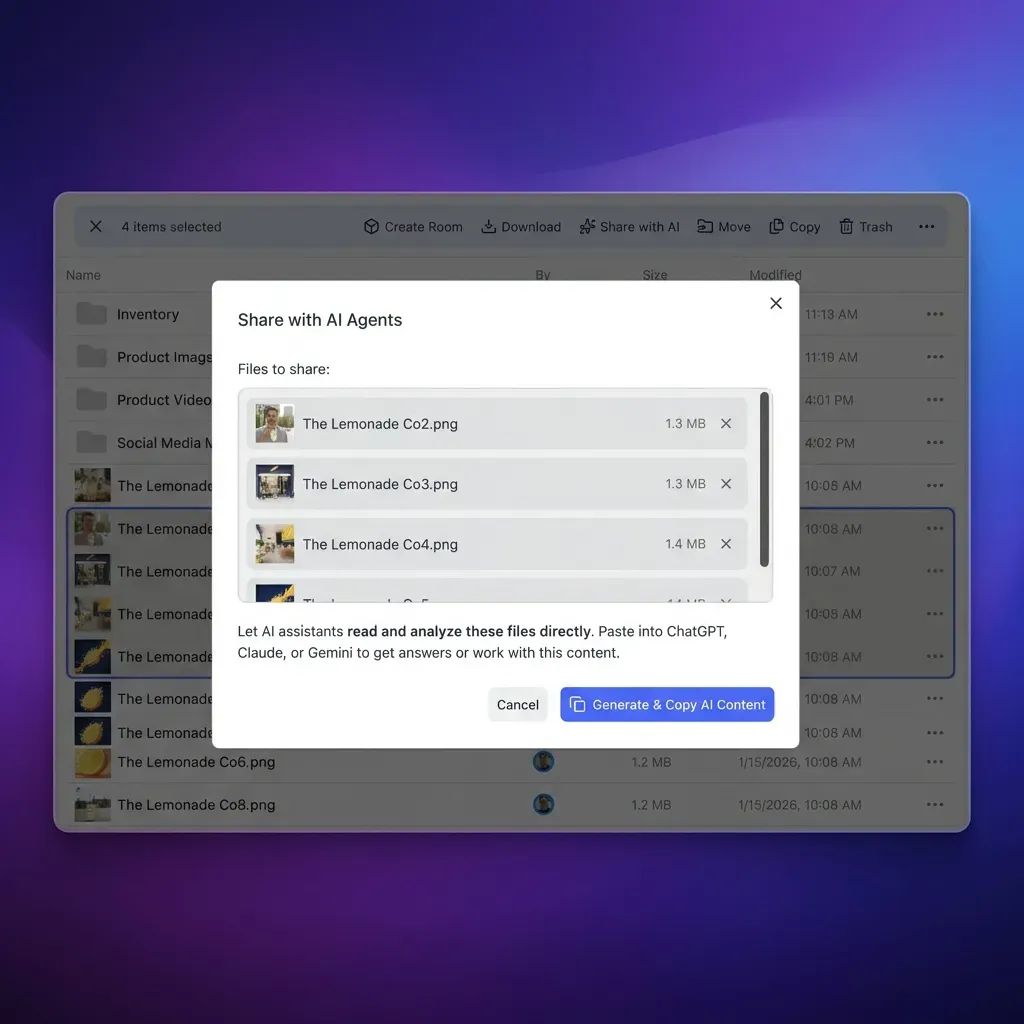
After Cline or another open agent finishes Act mode, keep packages and handoffs in a shared Fast.io workspace with MCP access and version history. Monthly plans start with a trial of up to 14 days (credit card required); annual plans have no trial.
When open source beats Cursor's closed agent stack
Open source is the better Cursor alternative under a short list of concrete conditions. If none apply, staying on Cursor is a valid engineering decision.
You need model portability. Policy or cost requires switching between Anthropic, OpenAI, Gemini, Bedrock, Vertex, OpenRouter, and local Ollama without changing editors. Cline and peers keep the agent shell constant while providers change.
You need runtime transparency. Security review, air-gapped pilots, or "show me the agent loop" audits are easier when the agent is Apache/MIT and runnable under your control. Closed IDE agent stacks ask you to trust vendor packaging.
You need Plan-then-Act discipline. Teams that over-edit from chat benefit from Cline's Plan mode constraint: explore and agree before writes and shell. That is a process win, not only a feature checkbox.
You refuse editor lock-in. Cursor is a proprietary VS Code fork. Keybindings and workflows can migrate, but the AI layer does not follow you cleanly to plain VS Code, JetBrains, or Neovim. Cline docs explicitly list multi-IDE install paths so the agent moves with you.
You already pay model APIs. If your company has enterprise keys, BYOK agents avoid double-paying for both an IDE subscription and separate model spend. If you have no keys and want zero ops, a closed Pro plan may still be cheaper in calendar time.
You extend tools with MCP. Custom databases, internal APIs, and shared storage workspaces attach cleanly when the agent is MCP-native. Closed stacks may expose fewer extension points or slower vendor roadmaps.
Open source loses when you optimize for tab completion latency, want a single vendor support contract for the whole IDE, or lack appetite to manage keys, spend alerts, and approval policies. Hybrid setups are common: Cursor for ambient editing, Cline installed as an extension for heavy agent runs, because Cursor still accepts VS Code marketplace extensions.
After the agent works, the next failure mode is organizational, not model quality. Diffs live on one laptop. Specs live in a chat transcript. Clients never see a clean package. That is where storage choices matter more than which sidebar logo you picked.
Where Cline output should live after the IDE
Coding agents write to the local tree first. That is correct for compile-test loops. It is incomplete for teams.
Local disk and git remain the source of truth for application code. Commit early, review diffs, and keep secrets out of agent context. Do not replace git with a file host.
Object storage and Drive-class folders (S3, Google Drive, Dropbox, OneDrive) work for bulk dumps and non-code assets. They are weak as agent memory: little semantic search and coarse permissions.
Fast.io workspaces sit in a different category: org-owned intelligent workspaces where agents and humans share the same files. Enable Intelligence Mode so uploads are indexed for hybrid search and citation-backed chat. Use branded Send, Receive, or Exchange shares when a client needs a durable or expiring package. Per-file version history keeps concurrent agent edits auditable. Ownership transfer lets an agent bootstrap an org, then hand it to a human via a claim link while keeping admin access as designed.
Wire the agent through MCP rather than copy-paste. Point Cline at Fast.io's Streamable HTTP MCP endpoint (/mcp) or legacy SSE (/sse) as described in the storage for agents guide. Agents can upload artifacts, open shares, and leave work in a place teammates can search without opening your laptop. For structured document packs (contracts, invoices, design briefs), Metadata Views turn folders into queryable tables with natural-language schemas, separate from Intelligence Mode's search and summarization layer.
Plans start at Starter $9.99/mo, Business $49.99/mo, and Enterprise $199.99/mo; monthly plans start with a trial of up to 14 days (credit card required). Real org work runs on a paid subscription after trial. Pair that with your Cline BYOK bill so you see coding inference and workspace usage as separate line items.
Recommended flow for a Cline-heavy week:
- Plan the feature in Cline Plan mode against a local clone.
- Act with approval gates; keep commits small.
- Push code to git as usual.
- Upload specs, demos, client packages, and non-repo artifacts to a Fast.io workspace via MCP or UI.
- Share a branded link or portal-style package when a human outside the repo needs access.
- Transfer ownership if an agent created the org for a client engagement.
That pattern keeps open source freedom in the editor without scattering deliverables across DMs and desktop folders. For agent-oriented storage patterns more broadly, see storage for agents and pricing.
Which open source Cursor alternative should you pick?
Match the tool to the job instead of chasing star rankings.
Pick Cline if you want the mainstream open source Cursor alternative with Plan/Act, IDE and CLI surfaces, MCP, and a documented multi-editor install path. It is the default recommendation for most commercial-intent readers of this page.
Pick Kilo Code if you want a free MIT extension with gateway-style billing and strong model catalog marketing.
Pick opencode or Aider if your workflow is terminal-first and you prefer scriptable sessions over a sidebar agent.
Pick Roo Code only after you compare release health and team familiarity against Cline; treat it as a peer, not a default.
Pick Codex CLI if sandboxed cloud tasks and OpenAI plan economics matter more than pure BYOK.
Pick Zed + an external agent if editor performance is the primary constraint and AI is secondary.
Stay on Cursor (or run hybrid) if tab completion and a closed, integrated IDE experience are how you ship day to day, and open licensing is not a requirement. Installing Cline inside Cursor is a supported hybrid path because Cline installs as a VS Code-compatible extension.
Whatever agent you choose, decide storage and review policy on day one. Open agents amplify both good and bad process. Plan mode without review is theater. Act mode without git is risk. Shared workspaces without permissions are leaks. Close those loops and open source becomes a durable alternative to Cursor's closed stack, not a weekend experiment.
Sources
References used to verify factual claims in this guide.
-
Cline reports 8.0M+ installs across platforms and ships as Apache 2.0 open source with Plan/Act and multi-model support
-
Cline is an AI coding agent in the editor and terminal with Plan-oriented and Act-oriented workflows, multi-IDE support, BYOK and Cline billing paths, CLI, Kanban, and SDK surfaces
-
BYOK open agents inherit the SWE-bench score of the attached model; Claude Opus 4.8 scored 88.6% on SWE-bench Verified in MorphLLM's June 2026 Cursor alternatives comparison
-
DataForSEO US search volume about 140/mo for open source cursor alternative (KD 13, CPC about $2.96) and about 30/mo for open source alternative to cursor
-
Cline install paths include IDE extension, CLI via npm install -g cline, Kanban via npx kanban, and SDK via npm install @cline/sdk
-
Fast.io plans include Starter $9.99/mo, Business $49.99/mo, Enterprise $199.99/mo with a 14-day free trial requiring a credit card
Frequently Asked Questions
What is the best open source alternative to Cursor?
For most developers who want an open agent inside a familiar editor, Cline is the strongest default. It is Apache 2.0, reports 8.0M+ installs, supports Plan/Act, BYOK or Cline billing, MCP tools, and runs across VS Code-family editors, JetBrains, CLI, and SDK surfaces. Terminal-first users may prefer opencode or Aider; teams that want gateway billing may prefer Kilo Code. "Best" depends on whether you optimize for IDE agents, CLI pair programming, or hosted inference convenience.
Is Cline a free Cursor alternative?
Cline the agent is free to install under Apache 2.0. Model usage is not free. You pay via bring-your-own-key providers, Cline usage billing, or ClinePass for selected open coding models. That is free software with usage-priced intelligence, not a permanent free unlimited coding plan. Cursor remains a paid closed IDE product with its own included usage rules.
Can open source coding agents use Claude or GPT?
Yes. Cline and other BYOK agents support major cloud providers and OpenAI-compatible endpoints, including Claude and GPT families, plus Gemini and local runtimes such as Ollama or LM Studio. Quality tracks the model you attach; independent 2026 comparisons note that BYOK tools inherit the benchmark profile of that model rather than inventing a separate closed score.
How is Plan mode different from Act mode in Cline?
Plan mode explores and discusses strategy without modifying files or running shell commands. Act mode can edit files and execute commands to implement the plan, typically behind approval gates. Conversation context carries across the switch so you do not restate the design when you start writing code.
When should I keep Cursor instead of switching?
Keep Cursor when sub-second tab completion, a vertically integrated IDE, and a single vendor subscription matter more than open licensing and model portability. Many developers keep Cursor for ambient editing and install Cline as an extension for long-horizon agent tasks.
Where should Cline put files that teammates need to review?
Keep application source in git. Put client packages, specs, demos, and non-repo artifacts in a shared workspace. Local folders and Drive-class storage work for dumps; Fast.io workspaces add MCP access, version history, Intelligence Mode search, and ownership transfer so agent output becomes team output without emailing zip files.
Related Resources

Persist open source Cursor alternative output
After Cline or another open agent finishes Act mode, keep packages and handoffs in a shared Fast.io workspace with MCP access and version history. Monthly plans start with a trial of up to 14 days (credit card required); annual plans have no trial.