Introduction to Multi-Agent-Oriented Programming (MAOP)
Gartner predicts that 33% of enterprise software applications will include agentic AI by 2028. As developers scale these systems, they face a severe coordination crisis. Multi-Agent-Oriented Programming (MAOP) provides a structured software engineering framework to decouple reasoning from environments and organizations, helping teams build reliable multi-agent systems.

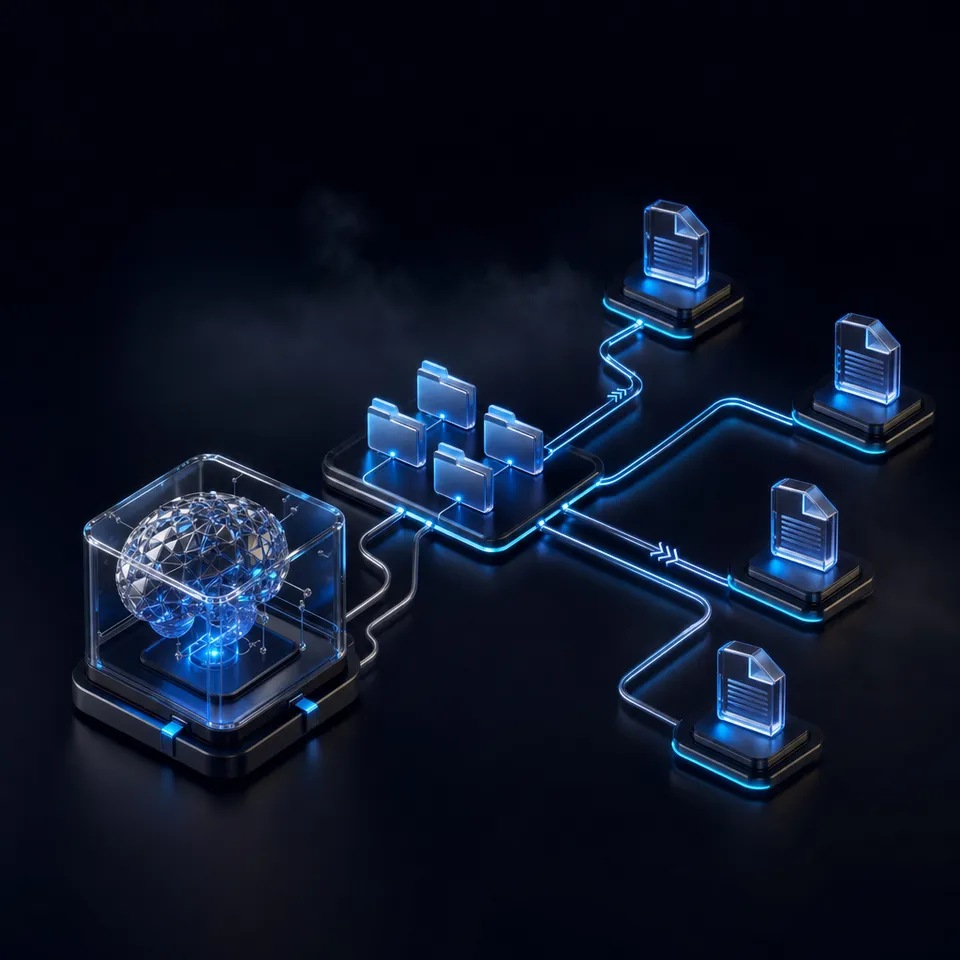
The Coordination Problem in Distributed Agent Systems
Gartner predicts that 33% of enterprise software applications will include agentic AI by 2028. This shift represents one of the fastest capability changes in the history of enterprise software. However, building a single agent that runs loop-based prompting is different from scaling a team of agents that must work together. As developer teams deploy multiple autonomous units in production, they face a severe coordination crisis. Uncontrolled loops and conflicting file writes quickly lead to high costs and system instability. In fact, Gartner also projects that over 40% of agentic AI projects will be canceled by the end of 2027 due to escalating costs and inadequate risk controls.
Traditional programming models like object-oriented programming or functional programming are poorly suited for this new landscape. They model passive data structures and operations, but they do not natively represent autonomous, self-directed actors that monitor environment state, change plans, and coordinate with other actors. This is where Multi-Agent-Oriented Programming (MAOP) comes in. Rooted in academic research from the early 2010s, MAOP offers a structured software engineering framework to coordinate autonomous systems. By treating coordination and environment interactions as first-class abstractions, MAOP reduces code complexity in distributed systems by modeling units as autonomous entities. Read about workspace coordination patterns in the Fastio product guide.
Related guides
- Multi-Agent Orchestration Patterns for Shared WorkspacesSelecting the right orchestration pattern prevents out-of-sync agent states and keeps token costs low. Learn how...
- Comparing AI Orchestration Tools for Multi-Agent WorkflowsChoosing the right AI orchestration tool is critical for building reliable multi-agent systems. While frameworks like...
- How to Establish Closed-Loop Communication in Multi-Agent SystemsIn multi-agent systems, unverified agent coordination introduces a major failure risk. While typical peer-to-peer...
- How to Implement Consensus Protocols for Reliable Multi-Agent SystemsGuide to consensus protocols multi agent systems: Consensus protocols help autonomous agents agree on a single value or...
- How to Connect CrewAI to OneDrive: Multi-Agent Integration GuideConnecting CrewAI to Microsoft OneDrive enables autonomous multi-agent crews to search, read, and cross-reference...
- CrewAI S3 Connector: Managing Shared Cloud Storage for Multi-Agent CrewsA CrewAI S3 connector is a tool integration that allows CrewAI multi-agent crews to access, search, and write files to...
More on this subject: Multi-Agent Systems (62 guides)
What Is Multi-Agent-Oriented Programming?
Multi-Agent-Oriented Programming (MAOP) is a programming paradigm focused on designing software systems as assemblies of autonomous agents that interact within shared environments under organizational rules. The paradigm structures complex software using four core pillars:
- Agent: An autonomous computing entity equipped with reasoning and an internal state. Agents are often modeled using the Belief-Desire-Intention (BDI) architecture.
- Environment: The physical or virtual space containing tools and artifacts that agents can perceive and manipulate.
- Interaction: The communication protocols and coordination channels that enable agents to exchange information.
- Organization: The social and structural framework defining roles and missions that govern agent behavior and establish team boundaries.
This architecture stems from the JaCaMo framework. JaCaMo integrates Jason for agent reasoning with CArtAgO for environment artifacts, while Moise governs the organizational rules. While early MAOP research emerged in the early 2010s, this approach provides the architectural blueprints needed for modern AI agent teams. Instead of relying on a single Large Language Model (LLM) to manage an entire workflow, developers can build systems where specialized agents interact through structured environmental interfaces.
The BDI Architecture and Agent Autonomy
At the heart of the agent dimension in MAOP lies the Belief-Desire-Intention (BDI) architecture. Originally developed to mirror human cognitive processes, the BDI model provides a structured framework for rational decision-making. Beliefs represent the agent's current knowledge about the system state. Desires represent the goals the agent wants to achieve. Intentions represent the concrete plans the agent has chosen to execute. In an MAOP framework like Jason, an agent runs a continuous reasoning loop that monitors environment changes, updates its beliefs, and selects plans to achieve its active goals. This cognitive loop separates agent-oriented programming from object-oriented programming by allowing the agent to react dynamically to unexpected changes.
How Agent-Oriented Programming Differs from Object-Oriented Programming
Understanding the difference between agent-oriented programming and object-oriented programming (OOP) is key to designing autonomous software. In traditional OOP, software is composed of objects that encapsulate state and behavior. These objects are passive entities. They only execute actions when another part of the program explicitly calls their methods. The caller retains complete control over the execution flow.
In contrast, agent-oriented programming models units as autonomous entities. Agents are proactive. They decide for themselves whether and when to execute an action based on their internal beliefs and goals. An agent monitors its environment and adjusts its plans dynamically. While you call a method on an object, you send a message to an agent, and the agent determines its own response. This autonomous execution model reduces code complexity in distributed systems, as each agent manages its own control loop and state transitions independently.


Coordinate Multi-Agent-Oriented Programming
Deploy shared workspaces designed for multi-agent-oriented programming. Equip your autonomous agents with a consolidated MCP toolset, file versioning, and semantic search. Starts with a 14-day Business Trial.
Decoupling Agent Reasoning from Environment Dynamics
MAOP frameworks typically decouple agent reasoning from environment dynamics. In a decoupled architecture, the agent reasoning engine focuses entirely on decision-making and planning. It does not handle the mechanics of tool execution and state storage. Instead, these operations are offloaded to environment artifacts.
For example, when multiple agents must coordinate, writing directly to local disk space or using raw cloud storage buckets like Amazon S3 can create severe integration challenges. Without a shared workspace model, agents must build custom databases and polling systems to avoid file conflicts.
By decoupling reasoning, you can swap the underlying model or reasoning engine without rewriting the tools. It also reduces context window consumption. Instead of packing raw data and tool logic into a single prompt, the agent interacts with environment artifacts. Here is a conceptual implementation of an agent interacting with a decoupled workspace via the Model Context Protocol (MCP):
from mcp_client import WorkspaceClient

class WritingAgent:
    def __init__(self, agent_id: str, role: str):
        self.agent_id = agent_id
        self.role = role
        self.beliefs = {}

    def execute_task(self, workspace_id: str):
        client = WorkspaceClient(workspace_id)
        file_data = client.read_document("research/summary.txt")
        self.beliefs["source_material"] = file_data
        draft_content = self.generate_draft()
        client.write_document("drafts/article_v1.txt", draft_content)
By keeping the environment separate from the reasoning engine, the workspace can manage concurrency and version history. This separation ensures that agent interactions remain clean and auditable.
Preventing Context Window Bloat and Race Conditions
Decoupling the environment also solves the critical problem of context window bloat in LLM-based systems. In a naive multi-agent implementation, developers often pass the entire state of the workspace and the contents of all files in every prompt. This approach is expensive and increases the likelihood of model confusion and hallucinations. By offloading resource management to environment artifacts, agents only request specific data when needed, using standard tool interfaces. Furthermore, this pattern prevents race conditions and conflicts. If two agents attempt to write to the same file simultaneously, the environment layer handles queuing or version diffing, keeping the core reasoning loop of both agents simple and focused on their individual tasks.
Implementing Multi-Agent Environments in Modern Workspaces
To bring MAOP from academic theory into modern production systems, developers need a shared substrate where agents and humans can coordinate. While local directories or consumer cloud storage like Google Drive can host files, they lack the structured features necessary for autonomous systems. They do not offer native MCP tooling and semantic search out of the box, forcing developers to build complex custom pipelines.
Fastio serves as a structured environment layer for agentic teams. By combining persistent cloud storage with agent tooling into a single platform, it allows agents and humans to share the same file context. The platform provides key capabilities that map directly to the environment and interaction dimensions of MAOP:
- Model Context Protocol: Fastio exposes a consolidated MCP toolset through streamable HTTP at
/mcpand legacy SSE at/sse. This allows tools like Claude Code and OpenClaw to participate directly in the workspace environment (see the developer guide at /storage-for-agents/). - File Version History: Since agents are prone to writing corrupt data, every file keeps a full version history. Prior versions can be restored, ensuring that concurrent agent writes are fully auditable.
- Metadata Views: Fastio turns documents into a live, queryable database. Rather than building custom parsing rules, developers describe the columns they need in natural language. The system suggests a typed schema using field types like Text, Integer, or Date and Time, then extracts values from PDFs and scanned pages automatically. You can read more about this in the product guide at /product/document-data-extraction/.
- Granular Permissions: Workspaces and folders have independent permission controls. This makes it easy to set boundaries so that a research agent can write raw summaries to a staging folder, while a human reviewer retains sole publish permissions.
- WebSocket Events and Realtime Activity Feed: Fastio surfaces file creations, modifications, and deletions in a realtime activity feed and a WebSocket events feed. Agents can poll the feed or subscribe to WebSocket events to react to environment changes as they occur.
When a multi-agent project is complete, Fastio supports a clean ownership transfer workflow. An agent account can set up the shared workspaces, import documents from Google Drive or OneDrive using OAuth-based URL Import, configure Metadata Views, and then transfer the entire organization to a human client via a secure claim link. The human client then enters their credit card to begin a paid subscription after the trial period. This workflow ensures that developers can build agentic systems and hand them off to clients with ease. Read more details on the /pricing/ page.
Sources
References used to verify factual claims in this guide.
-
Gartner predicts that 33% of enterprise software applications will include agentic AI by 2028.
-
Gartner also projects that over 40% of agentic AI projects will be canceled by the end of 2027 due to escalating costs and inadequate risk controls.
-
Research shows that uncoordinated agent swarms can experience error rates up to 17x higher than structured pipelines.
Frequently Asked Questions
What is multi-agent-oriented programming?
Multi-Agent-Oriented Programming (MAOP) is a programming paradigm focused on designing software systems as assemblies of autonomous agents that interact within shared environments under organizational rules. It treats agents, environments, and organizations as first-class abstractions.
What are the key components of MAOP?
The four key components of MAOP are Agents (autonomous entities with internal beliefs and goals), Environments (the shared digital space containing resources and tools), Interactions (communication protocols and channels), and Organizations (social structures defining roles, missions, and norms).
How is agent-oriented programming different from object-oriented?
In object-oriented programming, objects are passive entities that only execute actions when their methods are explicitly called by an external caller. In agent-oriented programming, agents are autonomous and proactive, determining for themselves whether and when to execute actions based on internal states and goals.
Related Resources

Coordinate Multi-Agent-Oriented Programming
Deploy shared workspaces designed for multi-agent-oriented programming. Equip your autonomous agents with a consolidated MCP toolset, file versioning, and semantic search. Starts with a 14-day Business Trial.