Legal Operations Management: Building Scalable Law Firm Workflows
Legal operations management aligns people, technology infrastructure, matter intake, and document governance to improve legal service delivery. By decoupling administrative coordination from substantive practice, law firms and corporate legal teams eliminate administrative bottlenecks, improve cross-functional collaboration, and build repeatable operational workflows that scale without inflating overhead.


What Is Legal Operations Management?
When a high-stakes legal matter lands, operational friction rarely stems from a lack of legal acumen. It starts with fragmented intake: intake forms trapped in inbox threads, discovery exports scattered across personal drives, paralegals manually re-keying client data into practice management software, and external counsel waiting days for access permissions. Legal operations management exists to replace this ad-hoc scramble with a repeatable systems architecture.
According to Axiom, 87% of general counsel increased their legal operations budgets by an average of 11% in 2025, with 40% of organizations already having established legal operations teams and another 40% actively implementing them. This widespread expansion reflects a structural change across the legal sector. As client demands increase and legal matters grow more data-intensive, firms can no longer rely on unstandardized habits to deliver high-quality legal work.
Legal operations management is the strategic discipline of aligning legal processes, technology infrastructure, matter intake, and resource allocation to improve operational delivery and cost-efficiency. Rather than treating practice support as a series of disconnected administrative chores, modern legal ops applies rigorous systems thinking to the entire lifecycle of a legal engagement.
At its core, legal operations decouples the business of law from the practice of law. Attorneys spend years honing their expertise in statutory analysis, complex negotiation, courtroom advocacy, and risk mitigation. Forcing senior lawyers to spend hours navigating file transfers, managing document versions, tracking external vendor invoices, or configuring client access links diminishes billable capacity and introduces unnecessary operational risk. A dedicated legal operations strategy gives attorneys a stable operational runway, ensuring that files, client communications, and administrative handoffs flow through matter-centric workspaces systematically without constant manual intervention.
The Corporate Legal Operations Consortium, commonly known as CLOC, defines twelve core competencies that form the foundation of mature legal departments. These competencies span business intelligence, financial management, vendor oversight, information governance, knowledge management, practice operations, project management, and technology infrastructure. While large corporate enterprises often maintain dedicated specialists for each competency, small and mid-sized law firms can apply the same underlying principles. By standardizing folder structures, automating document intake, and implementing clear access controls, practices of any size can achieve operational resilience without ballooning their administrative headcount.
Related guides
- Immigration Case Management Software: Workflows and Systems GuideImmigration practices handle document-heavy filings under strict USCIS deadlines. This guide covers how immigration...
- Legal Workflow Software: How to Automate Legal OperationsFirms struggle to automate legal operations because standard processes are fragmented. Modern legal workflow software...
- Matter Management System: Structuring Workspaces, Budgets, and Legal DocumentsA matter management system serves as the operational engine for corporate legal teams and firms, unifying intake,...
- Client Intake Software for Law Firms: Automating Onboarding & Case FilesClient intake software for law firms automates client screening, conflict verification, and case file creation. While...
- Cloud Based Legal Software: Architecture, Security, and Practice WorkspacesCloud based legal software replaces vulnerable on-premise Windows servers with browser-accessible, secure practice...
- Document Management Software for Attorneys: Workspaces and Active Case FilesDocument management software for attorneys organizes privileged case files, discovery exhibits, and pleadings into...
More on this subject: Legal Teams (211 guides)
Five Core Pillars of an Effective Legal Ops Framework
Building an operational engine that scales requires law firms and corporate legal teams to focus on foundational systems before purchasing niche software. An effective legal ops framework rests on five core pillars:
- Matter Intake and Scoping: Establishing structured, standardized front doors for all incoming client requests, new litigation cases, and advisory matters to ensure complete information capture from day one.
- Workflow Standardization and Knowledge Governance: Designing consistent file taxonomies, matter playbooks, and standardized documentation templates that eliminate guesswork and prevent duplicated effort across teams.
- Technology Integration and Workspace Infrastructure: Deploying modern, cloud-based workspaces that centralize documents, provide metadata extraction, and offer scoped collaboration surfaces for internal and external stakeholders.
- Performance Metrics and Operational Visibility: Tracking cycle times, outside counsel expenses, resource allocation, and matter velocity to identify process bottlenecks and justify operational investments.
- External Counsel and Vendor Collaboration: Managing outside law firms, alternative legal service providers, expert witnesses, and litigation support vendors through unified communication standards and shared file repositories.
1. Matter Intake and Scoping
Every operational delay downstream can usually be traced back to incomplete or disorganized intake. When clients submit matters through casual emails, phone calls, or fragmented chat messages, staff spend days following up for basic details like corporate entity structures, opposing party names, contract dates, and relevant background documentation. Standardized matter intake turns this chaotic exchange into a predictable procedure. By defining required fields, conflict check requirements, and initial file drop locations before work begins, firms prevent administrative drag and accelerate matter initiation.
2. Workflow Standardization and Knowledge Governance
Law firms frequently suffer from institutional amnesia. When each partner or senior associate organizes files according to their own personal preferences, paralegals and junior staff waste hours hunting for historical work product. Standardizing matter workflows means establishing uniform folder hierarchies across practice areas, creating definitive template libraries for standard agreements, and codifying retention policies. When every litigation matter or real estate closing follows the identical folder layout, team members can step into an active file instantly without undergoing an onboarding curve.
3. Technology Integration and Workspace Infrastructure
A common trap in legal department workflow optimization is software sprawl. Departments often adopt separate point solutions for document editing, secure file delivery, client communications, metadata extraction, and billing, only to find that these applications do not communicate with one another. Legal ops professionals evaluate technology through the lens of interoperability and simplicity. Infrastructure should center around flexible, matter-centric workspaces where files remain organized, searchable, and accessible to authorized team members without requiring complex local software configurations.
4. Performance Metrics and Operational Visibility
You cannot manage what you do not measure. A mature legal operations discipline monitors key performance indicators such as matter turnaround times, average intake processing duration, vendor spend variance, and document retrieval velocity. These metrics illuminate operational friction points, showing managing partners where staff are overburdened and demonstrating the tangible business value generated by operational improvements.
5. External Counsel and Vendor Collaboration
Modern legal practice depends heavily on outside contributors, including external litigation counsel, specialized local attorneys, discovery vendors, and financial consultants. Without centralized coordination, sharing sensitive case materials with external partners leads to unencrypted email attachments, fragmented file copies, and confusion over which document represents the true final draft. Establishing clear collaboration boundaries, scoped access permissions, and auditable delivery portals ensures that external partners receive the context they need without compromising internal security.
How to Build Modern Matter Intake and Document Routing
The traditional method of client intake relies heavily on manual communication: an email request arrives, an assistant replies with an intake form attached as a document, the client prints and scans the document back, and a paralegal manually keys the details into a case management system while saving attachments to a local desktop folder. This fractured workflow causes document sprawl, risks losing critical evidentiary exhibits, and frustrates clients who expect a clean digital experience.
Modern legal operations replaces this friction with an automated intake blueprint. The intake process begins with a dedicated, client-facing portal that collects case details and necessary supporting documentation in a single step.
Client Submits Portal Intake
            │
            ▼
┌──────────────────────────────────────────────┐
│  Branded Fast.io Receive Portal              │
│  - Client uploads records (PDFs, scans, docs)│
│  - Eliminates email file size restrictions   │
└──────────────────────┬───────────────────────┘
                       │
                       ▼
┌──────────────────────────────────────────────┐
│  Automated Matter Folder Routing             │
│  - Client Name/Matter ID/Intake Documents/   │
│  - Ingestion into workspace storage          │
└──────────────────────┬───────────────────────┘
                       │
                       ▼
┌──────────────────────────────────────────────┐
│  Metadata Views Extraction                   │
│  - AI parses contracts, leases, or pleadings │
│  - Generates live table of key legal fields  │
└──────────────────────────────────────────────┘
Using branded share links and client portals, law firms give clients a direct, professional destination to upload financial disclosures, corporate agreements, tax records, and multimedia exhibits. Clients do not need to create platform accounts or navigate confusing software interfaces; they simply open a secure link in their browser and drag their files into the portal.
Once files land in the workspace, the operational challenge shifts from file collection to document processing. In a typical corporate review, real estate transaction, or commercial litigation matter, paralegals must review dozens or hundreds of files to extract key data points: party names, execution dates, governing law, termination provisions, and liability caps. Doing this manually across hundreds of pages requires immense time and introduces human error.
This is where Metadata Views changes the intake process. Rather than forcing staff to manually read every page or configure rigid optical character recognition templates, Metadata Views turns unstructured legal documents into a live, queryable database. Legal operations managers describe the fields they want extracted in natural language, such as Agreement Title, Counterparties, Effective Date, Governing Law, and Expiration Date. The platform designs a typed schema (including Text, Date, Boolean, and Decimal fields), matches the files in the workspace, and populates a sortable, filterable spreadsheet.
Metadata Views works smoothly across PDF filings, scanned documents, Word agreements, and even handwritten notes. Furthermore, if a litigation team realizes midway through a matter that they also need to extract indemnification thresholds or arbitration clauses, they can add a new column to the view without reprocessing the original files. This structured extraction gives managing attorneys immediate operational visibility into matter obligations while sparing paralegals hours of repetitive manual data entry.



Scale legal operations management across your firm
Organize matter files in structured workspaces, deploy branded portals for client intake, and extract contract metadata with Metadata Views. Monthly plans start with a trial of up to 14 days (credit card required); annual plans have no trial.
Managing Cross-Functional Document Sharing and External Collaboration
A primary challenge for legal departments is cross-functional document sharing. Corporate legal teams must constantly coordinate with finance, human resources, procurement, executive leadership, and outside law firms. Similarly, private law firms must exchange sensitive records with co-counsel, expert witnesses, court reporters, opposing counsel, and clients.
When teams lack a centralized workspace, they default to sending documents as email attachments. This habit introduces three dangerous operational vulnerabilities:
- Version confusion: Multiple recipients download, edit, and reply with different versions of a contract or brief, leaving the lead attorney to manually reconcile conflicting edits.
- Security and confidentiality risks: Email messages can be forwarded accidentally, sent to autocomplete email addresses, or intercepted, exposing privileged work product.
- File size failures: Modern litigation and corporate transactions involve multi-gigabyte files, including deposition video recordings, forensic drive images, scanned historical record sets, and electronic discovery exports. These files routinely bounce against standard email attachment ceilings.
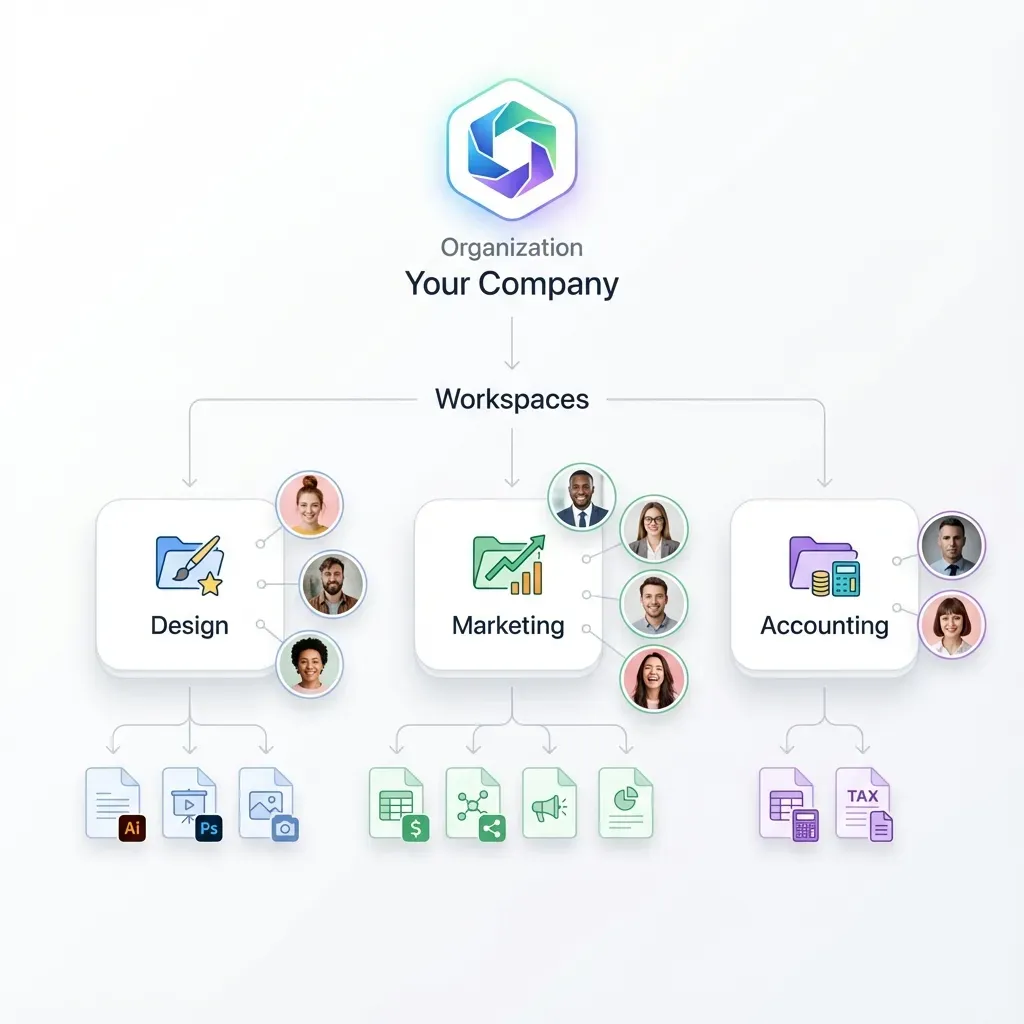
Solving this friction requires a clear permissions architecture. In a mature legal operations framework built on legal practice solutions, documents reside in organized, org-owned workspaces with granular permission controls applied at the organization, workspace, folder, and file level.
┌─────────────────────────────────────────────────────────────┐
│  Matter Workspace: "Acquisition - Project Horizon"          │
├─────────────────────────────────────────────────────────────┤
│  ├── 01_Internal Legal (Full Admin: In-House Legal Team)    │
│  ├── 02_Financial Disclosures (Read/Write: Finance Leads)   │
│  ├── 03_Due Diligence Vault (Read-Only: External Counsel)   │
│  └── 04_Client Deliverables (Branded Portal Share: Client)  │
└─────────────────────────────────────────────────────────────┘
Within a single matter workspace, internal legal counsel maintain full administrative control. Finance teams receive access strictly to financial disclosure folders. External co-counsel or auditors receive read-only permissions scoped to relevant due diligence materials, preventing them from viewing internal billing notes or privileged legal strategy memos.
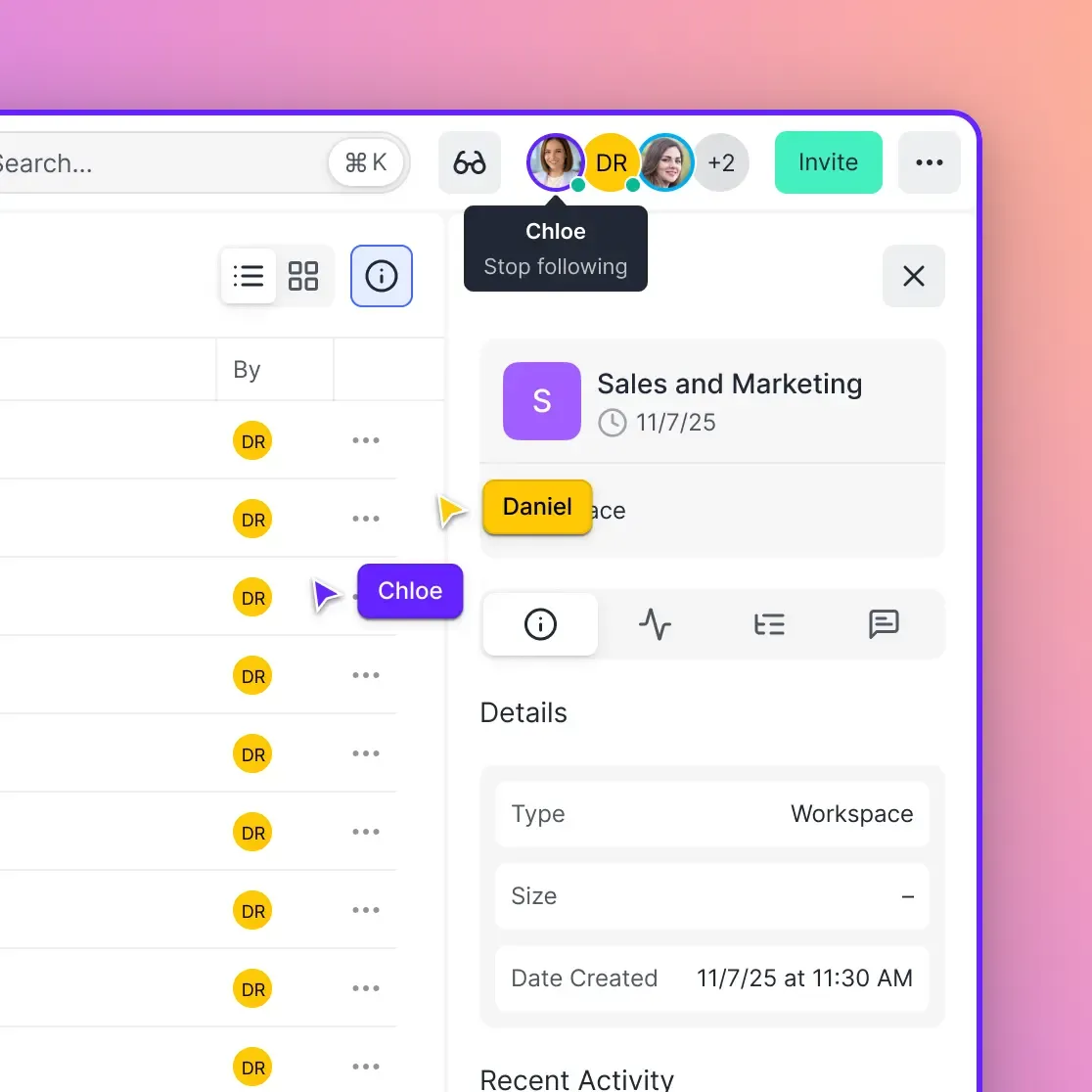
To preserve evidentiary integrity, the workspace maintains a detailed activity log. Every file access, view, download, and permission change is recorded with timestamps and user identities. If a question arises during litigation or compliance audits regarding who accessed a specific document and when, the legal operations team can produce a record of who accessed the document and when.
Additionally, per-file version history eliminates the confusion of multiple conflicting drafts. When an attorney or external collaborator uploads an updated draft, the platform creates a new version while preserving every prior revision. Team members can inspect earlier drafts, compare changes, and restore previous versions if an unauthorized modification occurs.
Handling large litigation assets becomes straightforward through chunked uploads and cloud-to-cloud import. Rather than forcing staff to download massive discovery archives to their personal computers before transferring them, legal teams can use URL Import to pull files directly from Google Drive, OneDrive, Box, or Dropbox into the matter workspace without local bandwidth bottlenecks.

How to Evaluate Practice Management and Dedicated Workspaces
When selecting technology to support a legal ops framework, decision-makers often face a confusing landscape of software categories. Understanding the boundaries and complementary strengths of each category is essential for making prudent operational investments.
Traditional legal software divides primarily into two camps: practice management suites and enterprise document management systems.
Practice management software, including platforms like Clio, MyCase, and PracticePanther, excels at the transactional mechanics of running a law practice: tracking billable hours, generating client invoices, managing trust accounting ledgers, and maintaining master court calendars. However, their document management features are typically basic, offering limited folder structures and struggling with massive file volumes or advanced metadata extraction.
Enterprise document management systems, such as iManage and NetDocuments, provide deep taxonomy tools and email filing plugins designed for multinational firms. However, they carry significant drawbacks for boutique and mid-sized practices: lengthy onboarding periods, complex administrative configurations, and steep per-user pricing that requires long-term enterprise commitments.
Intelligent cloud workspaces serve a distinct function in the modern legal tech stack, providing the collaborative substrate where matter files, client intake portals, and metadata extraction operate cohesively alongside core practice management tools.
Instead of attempting to force every operational task into a single monolithic software suite, high-performing legal teams integrate specialized tools that address specific operational needs. They pair an efficient billing and practice management tool with an intelligent workspace platform that handles large files, client portals, and automated document data extraction.
Blueprint for Implementation
Transitioning a firm to a modern legal operations architecture does not require months of disruption. Operations leaders can execute a phased rollout across four practical steps:
- Standardize Workspace Taxonomies: Establish a uniform naming convention and folder hierarchy for all active matters. A clean structure like Client Name / Matter Number / Phase ensures immediate discoverability.
- Deploy Branded Intake Portals: Replace email attachment requests with secure receive portals. Clients appreciate the branded interface, and staff eliminate hours spent managing bounced email messages.
- Configure Metadata Views: For document-heavy practice areas like commercial real estate, corporate governance, or employment law, set up Metadata Views to extract critical dates, counterparties, and clauses into queryable tables.
- Enable Workspace Intelligence: Activate Intelligence Mode on active litigation workspaces to enable semantic search across large discovery archives, allowing staff to ask natural-language questions and retrieve instant answers with document citations.
Getting started with structured matter workspaces is straightforward. Monthly plans start with a trial of up to 14 days (credit card required); annual plans have no trial. Subscription tiers are transparent: Starter at $9.99/mo, Business at $49.99/mo, and Enterprise at $199.99/mo on Fast.io pricing. This predictable pricing model allows firms to scale their workspace infrastructure alongside their active matter load without entering into rigid multi-year enterprise contracts.

Operational Metrics for Measuring Legal Operations Success
Implementing legal operations workflows requires continuous monitoring to confirm that process adjustments deliver intended efficiencies. By establishing a clear measurement baseline, legal operations leaders can track improvements over time and demonstrate tangible return on investment to firm leadership.
Key metrics to track include:
- Intake Velocity: The average time required from initial client inquiry to complete document collection and formal matter opening. Standardized intake portals typically cut intake duration substantially.
- Document Retrieval Duration: The average time staff spend searching for executed contracts, previous briefs, or discovery exhibits. Centralized workspaces with semantic search compress search times.
- Vendor Spend Variance: The difference between initial outside counsel or vendor budget estimates and final invoiced amounts. Structured matter collaboration gives operations leads real-time oversight of external work.
- Matter Cycle Time: The overall elapsed days required to resolve specific categories of legal matters, such as contract negotiations, trademark registrations, or regulatory disclosures.
- Administrative Burden Ratio: The percentage of non-billable time attorneys and paralegals spend on administrative logistics like filing documents, following up on email attachments, and converting file formats.
By reviewing these operational metrics quarterly, legal operations managers identify lingering friction points, refine intake questionnaires, and adjust workspace folder structures. Over time, this disciplined approach transforms legal service delivery from a reactive administrative burden into an agile, scalable competitive advantage.
Sources
References used to verify factual claims in this guide.
-
87% of general counsel increased their legal operations budgets by an average of 11% in 2025, with 40% of organizations already having established legal operations teams and another 40% actively implementing them.
Frequently Asked Questions
What is the difference between legal operations management and practice management?
Practice management centers on the administrative mechanics of legal cases, such as tracking billable hours, managing trust accounting ledgers, sending client invoices, and maintaining court calendars. Legal operations management is a broader strategic discipline that oversees the technological, process, and organizational infrastructure of legal service delivery. Legal ops focuses on matter intake blueprints, document routing, cross-functional collaboration, vendor management, and workflow optimization across law firms and corporate legal departments.
What are the core competencies of legal operations management?
As defined by the Corporate Legal Operations Consortium (CLOC), legal operations comprises twelve core competencies: business intelligence, financial management, vendor oversight, information governance, knowledge management, organization optimization, practice operations, project management, service delivery models, strategic planning, technology infrastructure, and cross-functional alignment. These competencies enable legal teams to deliver high-quality legal services with operational discipline and cost efficiency.
How do law firms structure legal operations roles?
Small and mid-sized law firms typically designate a legal operations manager or senior practice manager who reports directly to the managing partner or chief operating officer. In larger firms and corporate legal departments, legal operations is structured as a multidisciplinary team that includes legal project managers, legal technologists, procurement specialists, and data analysts who collaborate to organize matter workflows and evaluate software investments.
How does legal department workflow optimization improve firm profitability?
Optimizing workflows eliminates non-billable administrative bottlenecks such as chasing email attachments, manually extracting contract clauses, and managing version conflicts. By standardizing matter intake, centralizing document storage, and utilizing automated metadata extraction, attorneys and paralegals can manage higher matter volumes without requiring proportional increases in administrative staff or overhead costs.
How should legal teams manage large discovery files and deposition video?
Large litigation files like multi-gigabyte deposition recordings, scanned historical discovery sets, and forensic disk images should be managed in cloud workspaces that support chunked uploads, granular access permissions, and branded portals. This eliminates the file size limits and bounce risks of email attachments while maintaining strict chain-of-custody tracking through detailed activity logs.
Related Resources

Scale legal operations management across your firm
Organize matter files in structured workspaces, deploy branded portals for client intake, and extract contract metadata with Metadata Views. Monthly plans start with a trial of up to 14 days (credit card required); annual plans have no trial.