Hermes Agent vs. Quillbot AI Detector: Active Workflows vs. Passive Verification
Comparing Hermes Agent and Quillbot AI Detector highlights the split between active autonomous agent systems that manage workflows and passive single-purpose text utilities. While text detectors identify machine-written sentence structures in pasted snippets, agent frameworks execute multi-step scripts, manage files, and interact with web resources. This guide evaluates their architectural differences and explains how developers deploy persistent filesystems to coordinate agent activities.

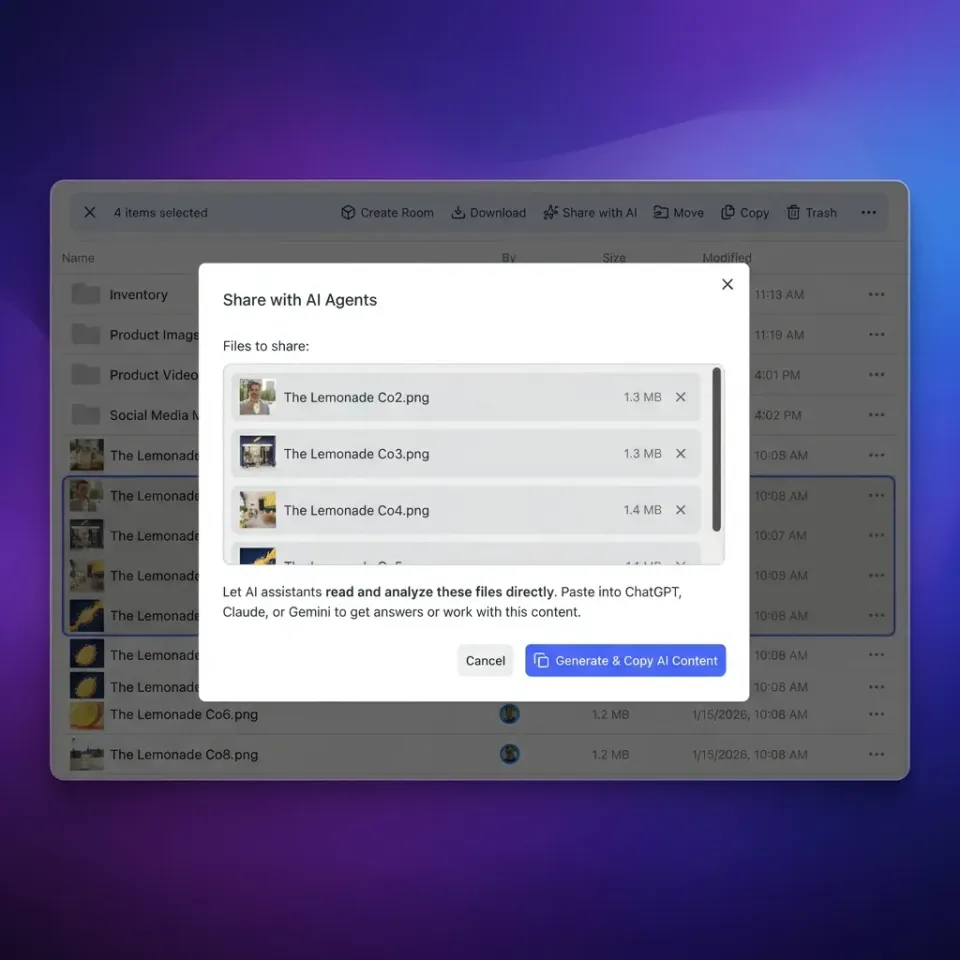
The Active-Passive Divide in AI Tooling
With independent testing showing that perplexity-based AI text classifiers falsely flag up to 61.3% of essays written by non-native English speakers [Liang et al., Patterns, Cell Press, 2023], the limitations of passive text checkers have become a bottleneck. This 61.3% error rate is the architectural dividing line where developers are transitioning from single-purpose text scanning tools to active, stateful AI agent frameworks. Comparing Hermes Agent and Quillbot AI Detector highlights the split between active autonomous agent systems that manage workflows and passive single-purpose text utilities. This divide dictates how teams organize their document pipelines and verify content authenticity.
The distinction between these two systems begins with their execution mode. Quillbot operates as a stateless web page where a user copies a string of characters and receives a percentage score. The tool is useful for isolated checks, but it remains a passive utility. It cannot write files, run tests, or execute programs.
Hermes Agent, developed by Nous Research, represents the opposite end of the AI landscape. It runs as a stateful, persistent process on a server or a local machine. It connects to the web, runs terminal commands, spawns subagents, and integrates with external tools. In terms of capabilities, the Quillbot AI content detector is limited to text blocks. In contrast, Hermes Agent supports 40+ dynamic tool integrations, persistent file storage access, and custom python skills. This enables it to interact with files directly in their storage environments, run automated pipelines, and manage workspaces.
To clarify these architectural differences, the following table compares their key operational dimensions:
This table shows that the two platforms serve entirely different purposes. Quillbot is an analytical utility for evaluating human versus machine authorship in short texts. Hermes Agent is an execution engine designed to automate multi-step developer operations, using local models or API integrations to complete complex software tasks. If you're sizing up Hermes Agent against other autonomous agents rather than against a detection tool, our Hermes Agent alternatives breakdown covers OpenClaw, Manus, and Lindy AI.
Related guides
- Best OpenClaw Alternatives for AI Agent Workflows in 2026OpenClaw's 353k GitHub stars make it the most popular AI agent framework, but security issues in ClawHub and a growing...
- Best OpenClaw Workflows for AI Code ReviewOpenClaw's skills ecosystem includes several code review tools that analyze pull requests, scan for security...
- How to Build a Hermes Agent QuillBot AI Detector WorkflowAutomating AI content checks prevents formatting issues and publishing bottlenecks. This guide covers building a custom...
- How to Connect Nous Research Hermes Agent to QuillBot AI DetectorThis guide details how to build a custom Markdown-based skill that connects Nous Research Hermes Agent to QuillBot's AI...
- How to Build an Open Source AI Detector Stack with Hermes AgentOpenAI's own GPT-2 detector team reported about 95% accuracy and still said that is not enough for standalone decisions...
- Nous Research Hermes Agent AI Code Detector Setup: Automating Code AuditsNous Research Hermes Agent AI code detector setup involves configuring the agent to automatically fetch source files...
More on this subject: Hermes Agent (100 guides)
Quillbot AI Detector: Capabilities and Limitations
The Quillbot AI Detector is part of a larger suite of writing tools that includes a paraphraser, grammar checker, and plagiarism scanner. Launched to assist writers and educators, the detector scans text to evaluate whether it matches patterns typical of large language models.
At its core, Quillbot's detection engine relies on two statistical features: perplexity and burstiness. Perplexity measures the predictability of word choices. Because generative models select the most probable next word based on training weights, AI-written text tends to have lower perplexity than human writing. Burstiness measures the variation in sentence length and structure. Humans naturally mix short sentences with longer, complex clauses, while generative models produce more uniform sentence lengths.
Key Limitations:
- Paste-only input: Users cannot upload folders, scan databases, or analyze file systems directly.
- Character limits: The free version restricts users to 1,200 words per check, requiring premium subscriptions for larger files.
- Sensitivity to paraphrasing: Because the tool is closely linked with Quillbot's own paraphrasing algorithms, it often struggles to identify text that has been modified by rewrite engines.
- False positive bias: As noted in the Liang et al. study, perplexity models frequently misclassify non-native English writing as machine-generated because second-language writers often use more formulaic vocabulary and sentence structures.
A common question among developers is: Is Hermes Agent a text humanizer like Quillbot? No, Hermes Agent is not a text humanizer. It does not rewrite text, bypass detectors, or paraphrase essays. Hermes is an execution framework. If a developer needs to paraphrase text, they can instruct Hermes to run a python script that connects to a rewriting API, but the framework itself has no built-in paraphrasing logic. Its purpose is to run tasks and coordinate workspace files, not to modify text styles.
For teams that only need to check short articles or student submissions, Quillbot's browser interface is simple. But for developers who need to manage large, automated document sets, paste-only tools create an operational bottleneck.



Coordinate your Hermes Agent files in a unified workspace
Get a persistent shared workspace with a Model Context Protocol endpoint for your agent's reads and writes, complete with file versioning, semantic search, and structured data extraction. Starts with a 14-day free trial.
Nous Research Hermes Agent: Persistent Automation and Custom Skills
Nous Research Hermes Agent is an open-source, developer-focused framework designed for continuous, autonomous operation. Released under the MIT license, it represents a class of software that does not just respond to prompts, but plans and executes work over hours or days.
Rather than running in a standard web browser, Hermes runs on local servers, cloud instances, or containerized environments. It maintains context across runs by writing its observations to local markdown files, specifically MEMORY.md and USER.md. This persistent memory allows it to remember user preferences, project structures, and past execution errors.
Key Features:
- Persistent memory logs: Saves user preferences and past project contexts across sessions.
- Dynamic tool integration: Hermes Agent supports 40+ dynamic tool integrations, persistent file storage access, and custom python skills.
- Multi-platform gateway: A single process can handle input and output across the CLI, Discord, Slack, and email.
- Self-improving skills: Hermes uses genetic evolutionary prompting and DSPy to compile, test, and debug its own Python scripts.
Because Hermes runs in transient environments like Docker containers or Modal instances, its local disk space is temporary. When a container reboots, any local logs, scripts, or outputs are lost. This makes persistent, external storage a critical requirement for Hermes deployments.
While developers often start by writing files to raw AWS S3 buckets or local disks, these storage solutions lack the collaboration and indexing features needed for team workflows. Raw object storage does not allow humans to review files in a clean interface, edit documents side-by-side with the agent, or track changes without writing custom version-control logic. This is where dedicated collaborative workspaces become necessary.
How Developers Use Hermes Agent for Document and AI Verification
Developers often need to verify content authenticity at scale, such as scanning incoming contract drafts, verifying academic submissions, or checking user-generated uploads. Copying files manually into Quillbot is impractical for these tasks. Instead, developers use Hermes Agent to check AI content by building automated validation pipelines.
In this workflow, Hermes does not act as a detector itself. Instead, it acts as the orchestrator. Hermes long-polls the workspace activity feed. When a new file is uploaded, the feed reports it, and Hermes downloads the file and runs validation checks.
A typical verification pipeline works as follows:
Workflow Execution Steps:
- File ingestion: Hermes uses URL Import to pull files from cloud folders without local I/O overhead.
- Structured data extraction: The agent calls Fastio's Metadata Views to turn the document into a structured record. Instead of manually writing OCR rules, the developer defines columns in natural language, and the system populates a spreadsheet grid.
- Automated analysis: Hermes runs local Python tools or API calls to evaluate the text, checking for high-perplexity markers or looking up known AI signatures.
- Validation logging: Hermes writes the results back to the workspace, creating a record in Fastio's activity log.
- Handoff: If the document is flagged as suspicious, Hermes sends a notification to a developer's Telegram or Discord channel and routes it to a human supervisor for approval.
By integrating Hermes with Fastio's Metadata Views and hybrid Search, developers can query their document vault like a database. They can run queries like finding contracts signed before a certain date where the AI probability score is high directly from the agent's CLI. This transforms storage from a simple folder tree into an active, queryable index.
Fastio: The Intelligent Coordination Layer for Agentic Teams
Fastio provides the persistent storage and collaboration infrastructure that makes autonomous agents practical in team environments. It is a cloud workspace platform designed for teams that use both human employees and autonomous agents, ensuring they can work on the same files with a shared context.
Fastio Capabilities:
- MCP-Native Access: Fastio exposes Streamable HTTP at /mcp and legacy SSE at /sse. This allows Hermes Agent to connect using standard Model Context Protocol tooling (documented at https://mcp.fast.io/skill.md), reading and writing files directly without custom API integrations.
- Metadata Views: Extracted columns are fully typed (Text, Integer, Decimal, Boolean, URL, JSON, Date & Time), allowing teams to convert PDFs, images, and scanned pages into a queryable grid.
- Intelligent Search: Fastio's hybrid Search combines exact full-text matching with semantic meaning-based retrieval, indexing filenames and file contents automatically when Intelligence Mode is enabled.
- Ownership Transfer: When an agent finishes building a workspace or a custom document portal, it generates a claim link to transfer the organization to a human client. The human takes over the workspace, while the agent retains developer access.
Creating an account is free, but executing real work requires an organization running on a paid subscription. Monthly plans start with a trial of up to 14 days (credit card required); annual plans have no trial. This trial allows teams to test the MCP server, RAG search, and Metadata Views before committing to a plan.
Fastio offers three billing tiers:
- Starter: $9.99 per month, or $99 per year, providing 3 seats, 250 GB of storage, and 100,000 monthly credits.
- Business: $49.99 per month, or $499 per year, providing 10 seats, 5 TB of storage, and 600,000 credits.
- Enterprise: $199.99 per month, or $1,999 per year, providing 30 seats, 25 TB of storage, and 3 million credits.
Storage and seats come with the plan. Credits meter the AI work on top: chat, document ingestion, agent runs, and media processing. If a team exceeds its monthly allowance, additional credits cost $10 per 100,000. This model means teams pay for the volume of AI work their agents actually perform.
By using Fastio as the storage and coordination layer, developers can run Hermes Agent in temporary container environments while ensuring their project files, memory logs, and verification records remain safe, versioned, and accessible to the entire team.
Sources
References used to verify factual claims in this guide.
-
Perplexity-based AI text classifiers falsely flag up to 61.3% of essays written by non-native English speakers.
-
Hermes Agent supports 40+ dynamic tool integrations, persistent file storage access, and custom python skills.
-
Quillbot AI content detector is limited to text blocks.
-
Independent tests in 2026 estimate Quillbot AI Detector accuracy around 80% on raw text.
Frequently Asked Questions
Is Hermes Agent a text humanizer like Quillbot?
No, Hermes Agent is not a text humanizer or paraphraser. Unlike Quillbot's text rewriting tools, Hermes Agent is an open-source autonomous agent framework designed to run persistent scripts and manage file workflows. While a developer could program a custom Python skill within Hermes to call a rewriting API, the framework itself does not contain built-in bypass algorithms.
How do developers use Hermes Agent to check AI content?
Developers configure Hermes Agent as an automated validation pipeline. Instead of manually pasting text into a web interface, developers connect Hermes to folder endpoints or storage APIs. Hermes can monitor folders, download documents via OAuth-based imports, run programmatic evaluation scripts using local libraries, and output validation reports to shared workspaces.
Can Quillbot AI Detector scan files in cloud storage?
No, the Quillbot AI content detector is limited to text blocks pasted directly into its browser window. It cannot read directory files, access external filesystems, or connect to APIs. For automated file verification across large document sets, developers must use autonomous agent frameworks or cloud workspaces with built-in AI indexing.
How do developers ensure persistent storage for Hermes Agent?
Developers connect Hermes Agent to persistent cloud workspaces using its Model Context Protocol (MCP) server. Since Hermes runs in ephemeral runtime environments like Docker containers or cloud servers, configuring external, versioned filesystems ensures the agent's memory logs and generated files are preserved and accessible to human team members.
Related Resources

Coordinate your Hermes Agent files in a unified workspace
Get a persistent shared workspace with a Model Context Protocol endpoint for your agent's reads and writes, complete with file versioning, semantic search, and structured data extraction. Starts with a 14-day free trial.