How to Build a Reliable AI Detector Workflow with Hermes Agent
US search data puts "reliable ai detector" near 720 monthly searches at keyword difficulty 81, yet most accuracy articles stop at a vendor percentage. A reliable AI detector workflow combines model scores with thresholds, human review, and audit logs so teams never treat a single probability as a final verdict. Hermes Agent can codify that procedure with skills, subagents, and persistent memory while a shared workspace keeps evidence reviewable.


Why a single detector score fails production review
GPTZero states that when its confidence category is high, average error rates on an internal held-out evaluation set fall below 1%, and it reports a false positive rate under 1% for AI-versus-human classification on its own benchmarks. That is a strong model claim. It is still not a production verdict. The same product documentation tells users to treat detection as a conversation starter rather than a final decision, and API responses return classifications (HUMAN_ONLY, MIXED, AI_ONLY), class probabilities, and a confidence_category of high, medium, or low. Teams that collapse those fields into a single binary flag reintroduce the risk the confidence design was meant to reduce.
US keyword data from DataForSEO shows about 720 monthly searches for "reliable ai detector," with keyword difficulty near 81 and CPC around $3.49. Adjacent phrases like "ai detector accuracy," "best reliable ai detector," and "ai detection false positives" point at the same buyer intent: people are shopping for trust, not another paste box. Most articles answer that intent with vendor scorecards. They rarely show agent-side consensus, sampling strategy, or a dispute path when a human writer is wrongly flagged.
A reliable AI detector workflow combines model scores with thresholds, human review, and audit logs so teams do not treat a single probability as a final verdict. That definition is the thesis of this guide. Detectors remain useful signals. Reliability comes from how you route, sample, recheck, and record those signals before anyone acts on them.
Nous Research Hermes Agent is an open-source, MIT-licensed autonomous agent with a built-in learning loop: it creates reusable skills from experience, keeps curated memory across sessions, connects to MCP servers, and can spawn isolated subagents for parallel work. Hermes runs on infrastructure you control (local, Docker, SSH, Modal, Singularity, Daytona). It does not ship a native AI detector. You connect a detector API or MCP server, then encode reliability controls as skills and procedures the agent reuses. That is the right architecture for production review: the detector scores text, Hermes orchestrates the process, and a shared workspace holds the evidence.

Related guides
- How to Build Multi-Agent Workflows in OpenClawOpenClaw multi-agent workflows let multiple agents coordinate on tasks like data processing or report generation....
- How to Build a Manus AI Curriculum Builder WorkflowNearly 50% of K-12 teachers in the United States must design and build their own curriculum materials, leading to...
- How to Build an Online AI Detector API with Hermes AgentCommercial AI detectors frequently produce false accusations, with studies showing they flag up to 61% of essays...
- How to Configure a Hermes Agent AI-Generated Code Detector WorkflowImplementing a Hermes Agent AI generated code detector workflow allows developers to validate script quality before...
- How to Benchmark the Most Accurate AI Detector with Hermes AgentIndependent testing puts the most accurate AI detector near 84% on a mixed sample set, while several popular free tools...
- How to Connect Hermes Agent to the Copyleaks APICopyleaks access tokens stay valid for 48 hours after login, long enough for agent batches but short enough that...
More on this subject: Hermes Agent (100 guides)
What reliability means for an AI detector in production
Reliability is not the same as marketing accuracy. A detector can score well on clean, full-length AI samples and still fail your policy if it cannot express uncertainty, if medium-confidence MIXED results auto-reject writers, or if you cannot reconstruct who saw which score on which file version.
For production, a detector stack is reliable enough when all of the following hold:
- Scores arrive with a classification and a confidence band, not only a raw percentage.
- Thresholds map to actions (auto-pass, second check, human review), not to immediate punishment.
- Medium and low confidence never auto-fail a person or a publish gate.
- Edge cases (short text, non-native English, hybrid human-AI edits) have explicit routing rules.
- Disputes create a recorded human decision that overrides the model without erasing the original score.
- Every run stores input hash, detector version, timestamps, and outcome in an append-only trail.
- The procedure is codified so the next agent run follows the same path without re-prompting.
Reliability checklist of 7 controls
Use this as a featured, skimmable standard for any Hermes-based setup:
- Fixed input contract: document ID, full text or file path, language, word count, source system.
- Confidence-aware thresholds: high-confidence AI_ONLY may auto-flag; medium and low always escalate.
- Second-look sampling: re-score a percentage of auto-pass traffic and all high-stakes queues.
- Consensus path: optional second detector or second model when the first score sits near a boundary.
- Human review queue: tasks with the draft, highlights, and a structured decision form.
- Dispute and appeal record: final human outcome, reason code, reviewer identity, link to file version.
- Audit and retention: immutable log of score payloads, skill version, and actions taken.
GPTZero's developer FAQ documents document_classification, class_probabilities, and confidence_category, with high-confidence error rates claimed below 1%. Wire your Hermes skill to consume those fields explicitly. If a detector only returns a bare percentage, store it as low interpretability and force human review for any policy impact.
Hosted paste tools (GPTZero web UI, QuillBot's detector, Grammarly, ZeroGPT) still work for ad hoc checks. Production reliability needs a procedure that survives staff turnover and agent restarts. That is why skills and memory matter more than any single vendor label.
Codifying the detector procedure as a Hermes skill
Hermes skills are on-demand knowledge documents compatible with the agentskills.io standard. Official docs place them under ~/.hermes/skills/, load them with progressive disclosure (compact catalog first, full SKILL.md only when needed), and let the agent create or patch skills via the skill_manage tool after complex successful runs. That design is a good fit for a reliable AI detector workflow: the procedure is long, you do not want it in every prompt, and you do want the agent to improve the procedure when reviewers correct false positives.
A practical skill skeleton looks like this (structure only; adapt paths and API details to your environment):
---
name: reliable-ai-detector
description: Score drafts with confidence-aware thresholds, optional consensus, and human review routing. Use for reliable AI detection, false positive reduction, and production authenticity gates.
version: 1.0.0
metadata:
  hermes:
    tags: [detection, review, quality]
    category: writing
---

# Reliable AI Detector Workflow

## When to Use
- Content authenticity gate before publish or client delivery
- Batch review of agent-generated drafts
- Escalation after a disputed detector score

## Procedure
1. Load document text and compute word count.
2. Call primary detector API; store classification, probabilities, confidence.
3. Apply threshold matrix (see references/thresholds.md).
4. If near-boundary or high stakes, call secondary detector or sample-based recheck.
5. Write score JSON and markdown report next to the draft.
6. Open human review task when route is review or dispute.
7. Append audit event with input hash, skill version, detector version.

## Pitfalls
- Short texts under ~250 words are weak signal; never auto-fail.
- Hybrid human edits often score MIXED; route to review, not reject.
- ESL and formal academic prose can raise false positives; require human judgment.

## Verification
- Report includes confidence_category and class_probabilities
- Action taken matches threshold matrix
- Audit event exists for the same document version
Official Hermes skills docs describe /learn as a way to turn API docs or a procedure you just walked through into a SKILL.md without hand-authoring every section. Point /learn at the GPTZero developers page or your internal threshold matrix, then edit the draft skill so it never invents commands and never auto-punishes medium confidence.
Subagents for parallel scoring and isolation
Hermes can spawn isolated subagents for parallel workstreams. A recommended pattern (workflow design, not a built-in detector feature):
- Parent agent: owns policy, thresholds, final route, audit write.
- Scorer subagent: calls the detector API and returns structured JSON only.
- Consensus subagent (optional): runs a second detector or a second pass on sampled paragraphs.
- Review subagent: formats the human packet (highlights, diffs, reason codes) without changing the original score file.
Isolation matters when detector API keys, draft content, and reviewer notes should not share a single context window or filesystem path. Keep each subagent's working directory separate, then merge only the score artifacts into a parent folder such as reviews/<doc-id>/.
Persistent memory for policy, not for secrets
Hermes persistent memory is bounded and curated so the agent remembers preferences and environment facts across sessions. Store durable policy facts there: default threshold bands, which content types always need human review, which detector is primary this quarter. Do not store API keys or full draft text in memory files. Keep secrets in environment configuration and drafts in versioned storage.
For teams that share the same reliability policy, put the skill in an external skills directory or a Git-backed tap your Hermes profiles all read. Local edits can then improve the procedure without rewriting chat prompts every week.
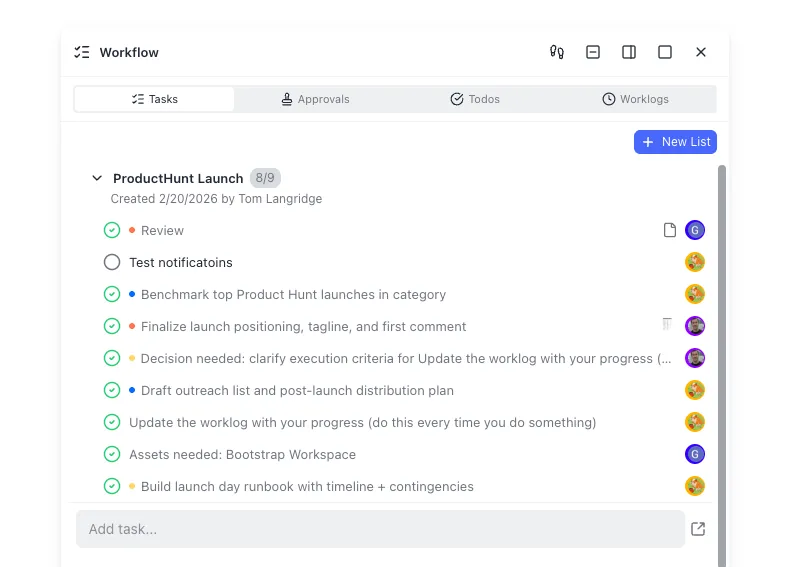


Keep detector scores, drafts, and disputes in one workspace
Store Hermes detection reports, file versions, and human review decisions where agents and editors share the same audit trail. Fast.io workspaces include MCP access, Intelligence Mode search, and a 14-day free trial when you create an organization.
Thresholds, sampling, and multi-detector consensus
Accuracy articles almost always stop at "tool X claims 99%." Production teams need a threshold matrix that maps detector outputs to actions. Start with a conservative matrix and tighten only after you measure false positives on your own corpus.
Example threshold matrix
Use GPTZero-style fields as the primary example because the public developer docs spell them out. Adapt labels if you use another vendor.
- HUMAN_ONLY + high confidence: auto-pass. Sample 5% for second-look.
- HUMAN_ONLY + medium/low: auto-pass only for low-stakes drafts. Queue review for legal, academic, or client-facing work.
- MIXED + any confidence: human review. Do not treat mixed as cheating or as clean human text.
- AI_ONLY + high confidence: flag for rewrite or disclosure policy. Still allow dispute.
- AI_ONLY + medium/low: second detector or paragraph re-sample before any policy action.
- Word count under 250 or non-English primary language: force review regardless of score.
GPTZero reports 96.5% accuracy on mixed human-AI documents in its own benchmarking narrative, and states high-confidence error rates under 1%. Those figures justify trusting high-confidence bands more than raw mid-range percentages. They do not justify skipping review on MIXED results, short posts, or disputed cases.
How to reduce false positives in a Hermes detection workflow
False positives are the failure mode that destroys trust. Reduce them with process, not with louder marketing claims:
- Require confidence, not only class. Ignore or down-weight results that omit confidence_category.
- Ban auto-fail on medium and low. Those bands exist because the model is uncertain.
- Segment by content type. Academic, ESL, technical, and marketing prose have different baseline rhythms. Apply stricter human review where bias risk is higher. GPTZero documents ESL-focused de-biasing work that reduced TOEFL false positives to about 1.1% on its tests; your corpus may differ, so measure it.
- Sample paragraphs, not only whole documents. Full-document scores can hide a human introduction glued to an AI body. A consensus subagent can re-score three random 150-word windows and compare.
- Log overturns. When a human reviewer marks "false positive," write a reason code the skill can learn from later (
formal_register,esl_structure,template_boilerplate). - Version the skill after policy changes. A threshold change without a skill version bump makes past audits uninterpretable.
Should you run multiple AI detectors on the same document?
Yes, selectively. Running two detectors on every document doubles cost and can create contradictory noise. Run multi-detector consensus when:
- The primary score is near a policy boundary (for example AI probability between 0.40 and 0.70).
- Confidence is medium or low.
- The document is high stakes (grades, employment, legal disclosures, client deliverables).
- A dispute was opened and you need independent signal before a final human decision.
Consensus rules should be explicit. Example: if detectors disagree on class, route to human review. If both return AI_ONLY with high confidence, flag for rewrite policy. If both return HUMAN_ONLY with high confidence, auto-pass and sample later. Never average two different vendor percentages into a fake precision number. Different models are not the same scale.
Sampling plan you can implement this week
- Second-look sample: 5% of auto-pass traffic every day.
- Boundary sample: 100% of scores within ±0.10 of any action threshold.
- Dispute sample: 100% of appealed cases get a second detector before final close.
- Regression sample: keep a fixed set of known-human and known-AI fixtures; run them after every skill or detector version change.
Hermes cron can schedule the fixture suite and deliver a summary to your messaging gateway or a report folder. Scheduled automations are a documented Hermes feature; wire them to your report path rather than inventing a custom scheduler first.
Dispute handling, audit logs, and where files should live
Reliability collapses the first time someone cannot answer: which file version was scored, which detector version ran, who overrode the flag, and why. Paste tools leave that history in a browser tab. Agent runs on ephemeral disks lose it when the container stops. Object storage such as Amazon S3 or Google Drive can keep blobs, but you still have to build versioning, review records, and search yourself.
A better production shape:
- Store source drafts and score reports as sibling files under a stable document ID.
- Keep per-file version history so a rewrite creates a new version, not a silent overwrite.
- Attach human decisions as structured review records, not chat lore.
- Write detector events to an append-only audit trail.
- Grant reviewers folder-level access without giving every agent write access to production shares.
Local disk is fine for a solo Hermes experiment. S3 or Drive is fine for bulk archive. For agentic teams that need humans and agents on the same artifacts, put the pipeline in a Fast.io workspace. Fast.io gives org-owned workspaces, per-file version history, granular permissions, and a detailed activity log. Enable Intelligence Mode so reviewers can search past score reports by meaning ("false positive ESL essay overturned last month") instead of hunting filenames. Use Metadata Views to extract fields such as classification, confidence, route, reviewer, and dispute outcome into a live spreadsheet agents can query through Fast.io's consolidated MCP tools.
Hermes connects to MCP servers for extended tools. Fast.io exposes Streamable HTTP at /mcp and legacy SSE at /sse (see /storage-for-agents/). A common pattern is: Hermes skill calls the detector API, writes the JSON report into Fast.io, leaves a comment on the report for a human reviewer when the threshold matrix requires one, then records the final decision next to the draft. Ownership transfer lets an agent scaffold the review workspace and hand the org to a human operator while keeping admin access for maintenance.
Dispute packet checklist
When a writer or client disputes a flag, the human reviewer should receive:
- Link to the exact file version scored
- Full detector payload (class, probabilities, confidence, sentence highlights if available)
- Word count, language, content type
- Any second-detector or sampling results
- Prior overturns for similar content types
- A fixed decision form: uphold, overturn false positive, request rewrite, request disclosure
Hermes should not invent a soft resolution in chat. The skill should write the decision into reviews/<doc-id>/decision.md and append an audit event. That is how you reduce false positives over time: you measure overturn rates by content type and tighten thresholds only where evidence supports it.
What not to automate
- Academic integrity penalties without human review
- Employment or admissions decisions based solely on detector output
- Auto-deletion of drafts marked AI_ONLY
- Silent rewrites that destroy the original evidence trail
Detectors are imperfect instruments. A reliable workflow makes that imperfection visible, bounded, and reviewable.
Putting the Hermes reliability loop into daily operation
Once the skill, thresholds, and storage path exist, run the loop as an operating rhythm rather than a one-off experiment.
Daily
- Score new drafts through the reliable-ai-detector skill.
- Empty the human review queue before publish windows.
- Spot-check second-look samples from auto-pass traffic.
Weekly
- Compute false positive overturn rate by content type.
- Re-run the fixed fixture suite after any detector or skill change.
- Patch the skill with new pitfalls when reviewers find a repeated miss.
Monthly
- Revisit threshold bands with actual overturn data.
- Decide whether multi-detector consensus is still worth the cost on boundary cases.
- Archive closed disputes with Metadata Views filters for audit readiness.
Hermes' learning loop helps here when you allow skill self-improvement carefully. Official skills docs support a write-approval gate so agent-proposed skill edits can be staged for human approval before they land. Turn that on for production reliability skills. You want the agent to propose better procedures after complex tasks, not to silently loosen thresholds after one noisy day.
Minimal architecture recap
Hermes Agent: orchestration, skills, subagents, cron, MCP client
- Detector API (for example GPTZero): classification, probabilities, confidence
- Threshold matrix: maps scores to pass, sample, review, or dispute
- Shared workspace (Fast.io or your equivalent): versioned drafts, reports, audit trail, granular permissions
- Human reviewers: final authority on medium/low confidence and all disputes
Plans for Fast.io start at Starter $9.99/mo, Business $49.99/mo, and Enterprise $199.99/mo, each with a 14-day free trial that requires a credit card when you create an organization. Real workspace work requires a paid org subscription after the trial. Agents can create accounts and hand off to a human who starts the org trial.
If you only need a quick score on a paragraph, use a hosted detector and stop. If you need a reliable AI detector process that your team can defend under scrutiny, codify thresholds, consensus, sampling, and dispute handling inside Hermes, then keep every artifact where humans and agents can both audit it.
Sources
References used to verify factual claims in this guide.
-
US search volume for "reliable ai detector" is about 720 monthly searches, keyword difficulty about 81, CPC about $3.49
-
When GPTZero confidence is high, average error rates are less than 1% on an internal held-out evaluation set; false positive rate kept at no more than 1% for AI vs human evaluation GPTZero reports 96.5% accuracy on mixed human-AI documents in its benchmarking materials GPTZero reports ESL de-biasing reduced false positive rate on TOEFL texts to 1.1%
-
GPTZero API returns document_classification (HUMAN_ONLY, MIXED, AI_ONLY), class_probabilities, and confidence_category (high, medium, low); high confidence error rates below 1%
-
Hermes Agent is open source (MIT), creates skills from experience, supports persistent memory, MCP, subagents, and cron; skills follow agentskills.io progressive disclosure
-
Hermes skills live under ~/.hermes/skills/, support /learn, skill_manage, write-approval gates, and skill bundles
Frequently Asked Questions
What makes an AI detector reliable enough for production?
Production reliability needs more than a high vendor accuracy claim. Require confidence bands with classifications, thresholds that map scores to actions, forced human review for medium/low confidence and MIXED results, sampling of auto-pass traffic, a dispute path that records human overrides, and an audit trail of detector version plus file version. GPTZero documents high-confidence error rates under 1% on internal evaluation data, which supports trusting high-confidence bands more, not treating every score as final.
How do you reduce false positives in Hermes detection workflows?
Never auto-fail on medium or low confidence. Segment routing by content type (especially ESL, short text, and formal academic prose). Sample paragraphs as well as whole documents. Log every human overturn with a reason code. Optionally run a second detector only on boundary scores. Encode those rules in a Hermes skill so the agent cannot invent a stricter policy at runtime, and measure overturn rates weekly before tightening thresholds.
Should you run multiple AI detectors on the same document?
Yes for boundary cases, high-stakes documents, medium/low confidence results, and active disputes. No as a default on every file, because dual scoring raises cost and can add contradictory noise. When detectors disagree on class, route to human review. Do not average percentages across vendors; treat disagreement as uncertainty, not as a blended score.
Does Hermes Agent include a built-in AI detector?
No. Hermes Agent is an open-source autonomous agent from Nous Research with skills, memory, subagents, cron, and MCP support. You connect a detector through an API or MCP server, then codify reliability controls as a reusable skill. That separation is useful: detector vendors improve models, while your procedure, thresholds, and audit trail stay under your control.
Where should detection reports and dispute records be stored?
Store them next to the scored draft under a stable document ID, with version history and an append-only audit event for each run. Local disk works for solo tests. Object stores work for bulk archive. Shared agentic teams usually want a workspace with permissions, version history, and search. Fast.io workspaces, audit logs, Intelligence Mode, and Metadata Views fit that pattern when humans and Hermes need the same evidence set.
What is a reliable AI detector workflow in one sentence?
A reliable AI detector workflow combines model scores with thresholds, human review, and audit logs so teams do not treat a single probability as a final verdict.
Related Resources

Keep detector scores, drafts, and disputes in one workspace
Store Hermes detection reports, file versions, and human review decisions where agents and editors share the same audit trail. Fast.io workspaces include MCP access, Intelligence Mode search, and a 14-day free trial when you create an organization.