How to Benchmark the Most Accurate AI Detector with Hermes Agent
Independent testing puts the most accurate AI detector near 84% on a mixed sample set, while several popular free tools score in the 50s and 60s. Vendor homepages still advertise 95% to 99% accuracy. This guide shows how to run a controlled Hermes Agent benchmark with a fixed corpus, multi-tool scoring, and an exportable comparison table so you pick detectors from measured results, not marketing copy.


A five-step Hermes benchmark before you trust any accuracy claim
Scribbr's independent 12-tool evaluation found that the highest overall accuracy on its mixed sample set was 84% for its own premium detector, while GPTZero scored 52% and several free tools landed between 58% and 78%. That gap between vendor "most accurate AI detector" claims and third-party labels is the reason a reproducible benchmark matters more than another ranked list.
US search demand for "most accurate ai detector" sits near 2,900 monthly queries (keyword difficulty 47, CPC about $2.62). Related terms such as "ai detector accurate" (590 searches, KD 59) and "is ai detector accurate" (390 searches) show the same commercial intent: buyers want a winner, not a methodology. Most SERP results still answer with product roundups. They rarely ship a fixed sample corpus, a multi-tool run script, or an exportable comparison table you can re-run next quarter when models change.
An accuracy benchmark for AI detectors is a controlled, multi-tool test that runs the same sample set through several detectors and scores agreement, false positives, and failure modes. That definition is the standard this article uses. The workflow host is Nous Research Hermes Agent: an open-source, MIT-licensed autonomous agent with skills, terminal and browser tools, MCP integration, and subagent delegation for multi-tool pipelines. Hermes does not score text as a built-in detector. Detector accuracy claims belong to third-party vendors. Hermes is the orchestration layer that makes the benchmark repeatable.
Five-step checklist
- Freeze a labeled corpus of human, AI, mixed, and paraphrased samples with stable IDs and word counts.
- Pick a detector panel of at least three tools (for example GPTZero, Originality.ai, QuillBot, or Winston AI) and record product version or endpoint date.
- Run Hermes with a benchmark skill that posts each sample to every detector through API, browser, or MCP, then writes structured JSON next to the source file.
- Score agreement and errors (true positives, false positives, misses on paraphrased text, short-text failures) into a comparison table.
- Export and share the table, raw score files, and method notes in a durable workspace so humans can re-run or dispute the ranking.
Use this checklist as a featured answer, then treat the rest of the guide as implementation detail for developers who already run Hermes on a laptop, Docker host, or remote backend. Official Hermes docs cover skills, tools, and MCP. For workspace-side persistence after a run, see Fast.io workspaces, Fast.io AI, and storage for agents.

Related guides
- How to Build a Lightning Storm Detector Agent with OpenClaw, Raspberry Pi, and the AS3935 SensorThe AS3935 lightning sensor detects electromagnetic signatures from storms up to 40km away, but its raw interrupt...
- How to Connect Hermes Agent to the Copyleaks APICopyleaks access tokens stay valid for 48 hours after login, long enough for agent batches but short enough that...
- How to Connect Hermes Agent to the GPTZero APIWhen GPTZero confidence is high, error rates drop below 1% on official API guidance, yet most GPTZero API tutorials...
- Is Any AI Detector 100% Accurate? Multi-Provider Hermes WorkflowsWhile independent benchmarks demonstrate that a single AI detector 100 accurate does not exist in isolation,...
- Nous Research Hermes Agent AI Code Detector Setup: Automating Code AuditsNous Research Hermes Agent AI code detector setup involves configuring the agent to automatically fetch source files...
- How to Build an Online AI Detector API with Hermes AgentCommercial AI detectors frequently produce false accusations, with studies showing they flag up to 61% of essays...
More on this subject: Hermes Agent (100 guides)
What the most accurate AI detector label actually measures
Accuracy is not one number. A detector that never flags human writing can look safe while missing most lightly edited AI drafts. A detector that flags everything as AI looks aggressive while drowning reviewers in false positives. Your benchmark should report a small set of metrics on the same corpus for every tool.
Overall accuracy is the share of samples where the detector's label matches ground truth (human vs AI, or a multi-class scheme if you include mixed). Scribbr's 12-tool study used fully AI text, mixed AI-and-human text, fully human text, and paraphrased variants, then ranked tools by how often the label was correct. That design is a solid template for your own panel.
False positive rate is the share of human samples labeled AI. Four of Scribbr's 12 tools produced at least one false positive on human text. In high-stakes settings (admissions, employment, academic integrity), false positives are the metric that should dominate your ranking, not marketing recall.
Agreement is how often two detectors return the same binary call on the same sample. Low agreement is normal. Detectors use different training data and decision thresholds. Disagreement is a feature of your benchmark report: it tells reviewers when a second opinion is mandatory.
Failure modes are the rows where accuracy collapses: short passages under roughly 250 words, specialist technical prose, non-native English, and text that was AI-generated then paraphrased or lightly edited. Scribbr found paraphrased and mixed samples much harder than raw AI output. Independent commentary and vendor write-ups in 2026 still advertise 95% to 99% accuracy on clean model output while independent panels sit well below that. Your corpus must include the hard cases, or you will crown a tool that only wins on easy ones.
When someone asks "is AI detector accurate?", the honest answer is: on a controlled mix of sample types, top tools in one published independent panel reached the low-to-mid 80s percent, free tools often landed in the 50s to 70s, and no detector is proof of authorship. A Hermes benchmark exists to make that statement specific to your content types, not someone else's blog samples. See Scribbr's 12-tool comparison and GPTZero's June 2026 detector ranking for two different third-party frames on the same commercial question.
Building a sample corpus Hermes can re-run
A ranked list without a corpus is not a benchmark. Start with a folder of text files (or a single JSONL) that you will never silently edit after the first official run. Version the corpus. If you improve a sample later, bump a corpus version field so historical comparison tables stay interpretable.
A practical minimum set for commercial intent around "most accurate ai detector":
- 20 fully human samples: internal docs, published essays you own rights to, support macros written before generative tools were common.
- 20 fully AI samples: generated from known models (for example GPT-class, Claude-class, Gemini-class) with the model name stored in metadata, not in the visible text.
- 15 mixed samples: human outline plus AI expansion, or AI draft plus human rewrite of the middle third.
- 15 paraphrased or humanized samples: take AI drafts through one or two rewrite passes so you measure post-edit detection, not only raw model output.
- Optional stress rows: sub-100-word snippets, non-native English prose, and dense technical sections.
Store each sample as corpus/v1/sample-041.md with a sidecar or header block:
{
  "id": "sample-041",
  "label": "ai_paraphrased",
  "source_model": "model-family-a",
  "word_count": 612,
  "language": "en",
  "corpus_version": "v1"
}
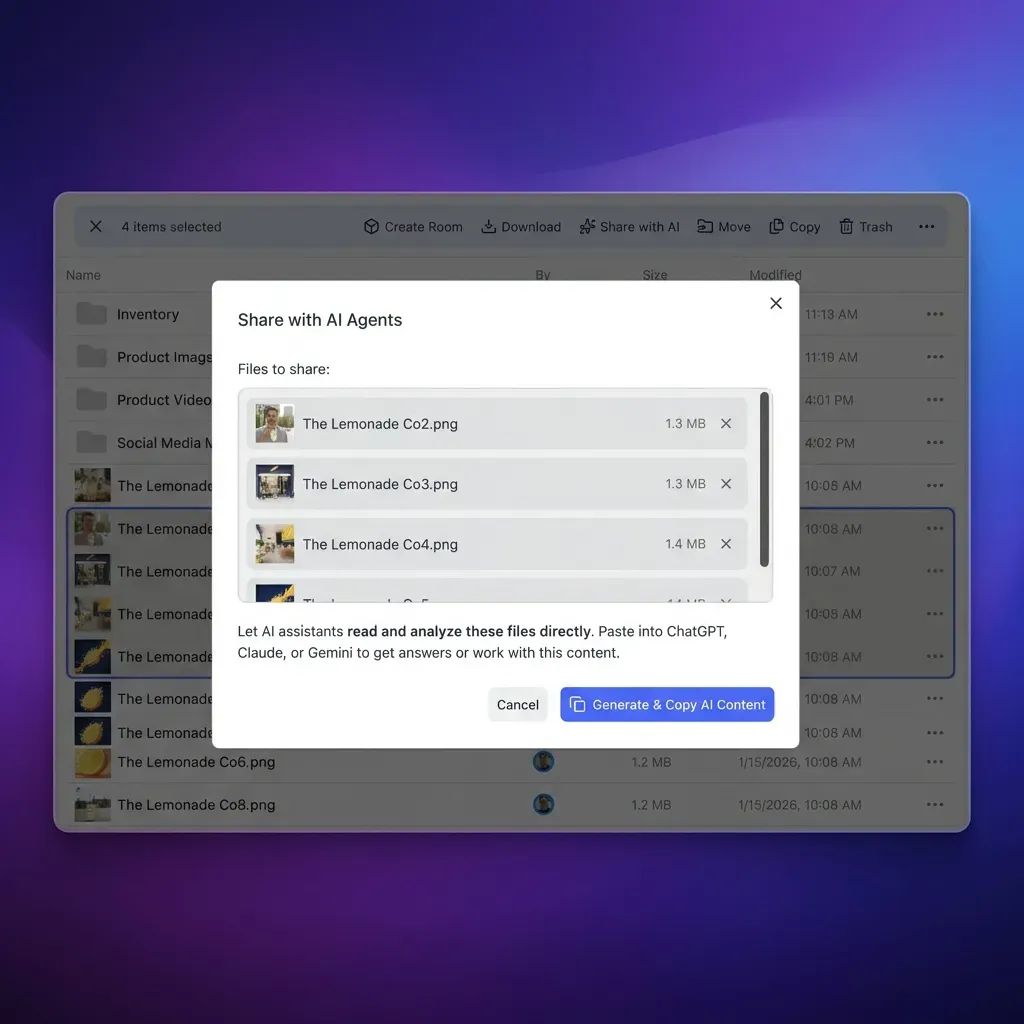
Local disk and object storage (S3, a team Google Drive folder) both work for the first run. Shared team storage such as Dropbox or Box also works if you freeze a dated export. For agentic teams, a shared intelligent workspace is a better default: every file keeps version history, agents and humans see the same paths, and Intelligence Mode can index method notes so reviewers ask "which samples failed paraphrased detection?" against the corpus itself. Fast.io workspaces fit that pattern with org-owned workspaces, per-file version history, and hybrid search once Intelligence is enabled. Point Hermes at that workspace through MCP (Streamable HTTP at /mcp, legacy SSE at /sse) so scoring runs write results next to sources instead of scattering CSVs across laptops. Setup notes for agent storage live on storage for agents.
Do not put secrets in corpus files. Keep detector API keys in Hermes environment configuration (~/.hermes/.env style storage is the usual pattern in Hermes docs). The corpus is evidence. Keys are configuration.



Keep detector benchmarks next to the corpus that produced them
Store sample sets, score JSON, and comparison tables in a shared Fast.io workspace with MCP access for Hermes Agent, version history, and human review. Start with a 14-day Business Trial on Starter, Business, or Enterprise.
Running multi-detector scoring with Hermes Agent
Hermes Agent ships a broad tool surface: terminal and file tools, browser automation, web extract, code execution, memory, cron-style scheduled tasks, and delegate_task for isolated subagents. Official docs also document MCP servers (stdio or HTTP) so external tools register as first-class capabilities. That combination is enough to drive a multi-detector panel without hand-pasting samples into ten browser tabs.
Skill for the benchmark procedure
Skills in Hermes are on-demand knowledge documents compatible with the agentskills.io standard. They live under ~/.hermes/skills/, load with progressive disclosure, and can be created or improved after a successful run. Encode the benchmark as a skill so the next session does not reinvent thresholds.
---
name: ai-detector-accuracy-benchmark
description: Run a fixed corpus through multiple AI detectors, store JSON scores, and build a comparison table of accuracy and false positives.
version: 1.0.0
metadata:
  hermes:
    tags: [benchmark, detection, evaluation]
    category: research
---

AI Detector Accuracy Benchmark

When to Use
- Choosing a primary detector for a team policy
- Re-ranking detectors after a new model generation
- Auditing whether a "most accurate" claim holds on your corpus

Procedure
1. Load corpus/vN/manifest.json and verify file hashes.
2. For each sample, call each detector in the panel.
3. Normalize outputs into a common schema (label, score, raw payload).
4. Write scores under results/<run-id>/<detector>/<sample-id>.json.
5. Aggregate metrics into results/<run-id>/comparison.csv and comparison.md.
6. Record detector product version, run timestamp, and Hermes skill version.

Pitfalls
- Never change corpus text mid-run without a version bump.
- Short samples produce noisy scores; keep them but tag them as short.
- Rate limits and UI changes break browser-only scoring; prefer APIs when available.

Verification
- Every sample x detector pair has a result file
- Comparison table row counts match the panel size
- False positive rate is computed only on human-labeled samples
Official Hermes skills docs describe /learn as a way to turn reference material or a walkthrough into a SKILL.md. Point /learn at your detector API docs after a manual dry run, then edit the skill so it never invents CLI flags Hermes does not own.
Parallel subagents for the panel
Hermes can spawn isolated subagents for parallel workstreams. A recommended workflow pattern (not a built-in detector product):
- Parent agent: owns the corpus hash check, metric aggregation, and final markdown report.
- Per-detector subagents: each calls one vendor API or browser flow and writes only that detector's JSON tree.
- Aggregator subagent (optional): merges JSON into CSV and flags samples with high disagreement.
Isolation keeps one flaky browser session from contaminating the whole run. Parent merges only the score artifacts under results/<run-id>/.
MCP and browser as access paths
When a detector exposes MCP or HTTP tooling, register it under Hermes MCP config the same way you would any external server (stdio command or remote URL). When you only have a web UI, Hermes browser tools can navigate and extract results, but UI scrapes break more often than APIs. Prefer API keys for production benchmarks. For workspace persistence, connect Fast.io's MCP server so Hermes can upload score packs and hand ownership of the run folder to a human when the agent finishes.
Example result schema
{
  "run_id": "2026-07-17-a",
  "sample_id": "sample-041",
  "detector": "vendor-a",
  "detector_version": "2026-07",
  "predicted_label": "ai",
  "score": 0.91,
  "ground_truth": "ai_paraphrased",
  "word_count": 612,
  "latency_ms": 1840,
  "raw": {}
}
Keep the raw payload. Future you will want to recompute labels if a vendor changes its threshold defaults.
Turning scores into a comparison table you can defend
Once every sample-detector pair has a result file, build one table. Avoid inventing a single "winner" column without showing the metric that defines the win.
Example markdown export Hermes can write:
detector | overall_acc | false_pos | recall_ai | recall_paraphrased | agreement_with_median
vendor-a | 0.81        | 0.05      | 0.90      | 0.48               | 0.77
vendor-b | 0.76        | 0.02      | 0.84      | 0.41               | 0.80
vendor-c | 0.68        | 0.08      | 0.92      | 0.35               | 0.71
How to pick a primary detector from this table
- If wrongful accusation is worse than missing AI, sort by false positive rate first, then overall accuracy.
- If your corpus is mostly paraphrased marketing drafts, sort by recall on paraphrased rows before overall accuracy.
- If two tools disagree often, require dual-score review instead of crowning a single tool.
Independent third-party rankings in 2026 still conflict with each other. Scribbr's published panel ranked its premium product first at 84% overall and placed GPTZero at 52% on that methodology. GPTZero's own "best AI detectors" editorial (June 2026) positions GPTZero as the most accurate option and cites strong RAID-related claims. Those are not the same experiments. Your Hermes export is the only ranking that uses your domain language, length distribution, and failure modes. Cite vendor and third-party numbers as context. Decide with your table.
Structured extraction can help after the run. If detectors return PDFs or screenshots, store them in the same workspace and use Metadata Views (describe columns such as detector name, score, label, timestamp) to build a queryable grid without hand-copying cells. On Fast.io, Metadata Views are the structured extraction layer for turning document batches into a live spreadsheet; Intelligence Mode remains the search and citation layer. Link method notes and CSV side by side so a reviewer can open either view.
Share the final pack through branded Send shares or a content portal when external auditors need read-only access. Keep the internal workspace as the system of record with a detailed activity log for who re-ran which detector. Pricing for org plans is on the Fast.io pricing page.
Interpreting disagreement and operationalizing the winner
Detectors disagree because they optimize different loss surfaces. Some minimize false positives for classrooms. Some maximize recall for SEO publishers. Some were trained harder on GPT-family text than on other model families. A sample that is half human outline and half model expansion will produce mixed scores almost by definition. Your benchmark report should include a short disagreement appendix: list the ten samples with the highest split among tools and open them for human reading. That appendix is often more useful than the leaderboard.
After you pick a primary detector, do not stop at a blog post. Encode the choice in the Hermes skill defaults and in team policy:
- Primary detector name and version pin.
- Secondary detector for boundary scores.
- Actions by band (auto-pass, dual-score, human review).
- Re-benchmark cadence (for example quarterly, or after each major model release).
- Storage location for corpus, results, and comparison exports.
Scheduled automations in Hermes (cron-style jobs documented in the tools guide) can re-run a smoke subset of the corpus monthly and alert when overall accuracy on the smoke set drops. Keep the full corpus for formal re-ranking; use a small smoke set for drift detection so API costs stay predictable.
For storage and collaboration after the agent run, local folders and generic cloud drives remain fine for solo research. Teams that mix agents and humans usually need shared permissions, version history, and a review path that is not email. Fast.io workspaces give agents MCP access and humans a UI over the same files, with comments anchored to text selections and PDF pages for team feedback. Monthly plans start with a Business Trial of up to 14 days (credit card required); annual plans have no trial. Starter is $9.99/month, Business is $49.99/month, and Enterprise is $199.99/month per the current plan table in product reference. Ownership transfer lets an agent assemble the benchmark org and hand it to a human admin without losing access for maintenance. Agent onboarding notes live at fast.io/llms.txt.
The commercial question "what is the most accurate AI detector?" only has a defensible answer inside a dated corpus and a documented method. Hermes Agent makes that method a reusable skill instead of a one-off spreadsheet. Detectors will keep changing. Your comparison table can stay honest if the procedure stays fixed.
Sources
References used to verify factual claims in this guide.
-
Scribbr's independent 12-tool evaluation reported 84% overall accuracy for its premium AI Detector, 78% for QuillBot and Scribbr free, 76% for Originality.AI, 66% for Copyleaks, and 52% for GPTZero on its mixed sample methodology
-
Scribbr states no AI detector provides complete accuracy and that the highest accuracy it found was 84% in a premium tool or 68% in the best free tool in earlier research framing
-
GPTZero's June 2026 editorial ranks GPTZero as the most accurate AI detector among tools it reviews and cites strong RAID-related accuracy claims for its product
-
Hermes Agent official docs describe skills, 60+ built-in tools including terminal and browser, MCP integration for external servers, and subagent delegation for parallel workstreams
-
Hermes skills follow progressive disclosure, live under ~/.hermes/skills/, and are compatible with the agentskills.io open standard
-
Hermes tools cover web, terminal and files, browser automation, code execution, and delegate_task for isolated subagents across local, Docker, SSH, Modal, Singularity, and Daytona backends
-
Hermes MCP support connects stdio and HTTP MCP servers, with config under mcp_servers in ~/.hermes/config.yaml and automatic tool discovery at startup
-
Independent tester Anangsha Alammyan reported testing 30+ AI detectors and publishing top picks for 2026, illustrating wide product disagreement outside vendor marketing
-
US search demand for most accurate ai detector is about 2,900 monthly searches at KD 47 and CPC $2.62; ai detector accurate about 590 monthly at KD 59; is ai detector accurate about 390 monthly
Frequently Asked Questions
What is the most accurate AI detector in 2026?
Independent panels disagree by methodology. Scribbr's 12-tool evaluation reported 84% overall accuracy for its premium detector on a mixed sample set, with free tools such as QuillBot and Scribbr Free at 78% and GPTZero at 52% under that same design. Vendor editorials (including GPTZero's June 2026 ranking) place different products first using different tests. The most accurate detector for you is the one that wins on a frozen corpus that matches your content types, measured with false positives and paraphrased failure rates, not the one with the boldest homepage percentage.
How do you measure AI detector accuracy?
Run the same labeled sample set through each detector, then compute overall label accuracy, false positive rate on human samples, recall on fully AI and paraphrased AI rows, and inter-detector agreement. Store raw scores, product versions, and sample IDs so the run is auditable. An accuracy benchmark for AI detectors is a controlled, multi-tool test that scores agreement, false positives, and failure modes on one corpus, not a single vendor claim.
Can Hermes Agent run multiple AI detectors at once?
Yes, as an orchestration pattern. Hermes Agent supports terminal tools, browser automation, MCP servers, and subagent delegation, so a parent agent can assign one subagent per detector and merge JSON results. Hermes does not include a built-in commercial detector. You connect APIs, MCP tools, or browser flows, then encode the multi-tool procedure as a skill so runs stay consistent.
Why do AI detectors disagree on the same text?
Detectors train on different datasets, use different thresholds, and optimize different tradeoffs between false positives and missed AI text. Mixed human-AI drafts, paraphrased passages, short text, and specialist prose all increase disagreement. Low agreement on a sample is a signal to route that sample to human review rather than force a single winner.
Is any AI detector accurate enough to be sole evidence of authorship?
No. Even top independent scores on mixed panels sit well below perfect accuracy, and false positives still occur. Use detectors as risk signals inside a workflow that keeps drafts, version history, dual scores on boundary cases, and a human decision record. Treat "most accurate" as a ranking on your benchmark, not as courtroom-grade proof.
Where should Hermes store benchmark results for a team?
Keep corpus files, score JSON, and comparison tables in a durable shared location with version history. Local disk or S3 works for solo runs. For agent-plus-human teams, a Fast.io workspace with MCP access, Intelligence Mode for search over method notes, and a detailed activity log keeps the full pack reviewable after ownership transfer to a human admin.
Related Resources

Keep detector benchmarks next to the corpus that produced them
Store sample sets, score JSON, and comparison tables in a shared Fast.io workspace with MCP access for Hermes Agent, version history, and human review. Start with a 14-day Business Trial on Starter, Business, or Enterprise.