How to Configure a Hermes Agent AI-Generated Code Detector Workflow
Implementing a Hermes Agent AI generated code detector workflow allows developers to validate script quality before deployment. This guide covers setting up sandboxed execution environments, configuring recursive verification loops, and storing validated builds in persistent workspaces.


The Reliability Deficit in Autonomous Code Generation
According to the Veracode Spring 2026 GenAI Code Security Update, approximately 45% of AI-generated code samples introduce known security vulnerabilities, meaning that over 40% of generated code contains linting, security, or structural errors. This high rate of failure is where this guide lives: while AI-assisted development accelerates raw code output, deploying untested scripts directly to production poses significant operational and security risks. AI models generate code based on statistical patterns rather than strict compilation, analysis, or runtime validation. When developers run Nous Research Hermes Agent on isolated servers, local disk storage lacks the persistent environment required to maintain a consistent code generation pipeline. Without validation, these agents can introduce bugs, security vulnerabilities, or API key exposures. To close this gap, developers must configure a hermes agent ai generated code detector workflow. This setup establishes an automated verification pipeline that runs generated code through strict validation checks before it is committed or deployed.
Nous Research Hermes Agent is an open-source, MIT-licensed agentic framework designed to execute complex, multi-step development tasks. It operates in user-controlled environments such as local servers or cloud containers, extending its capabilities through reusable skills that are compatible with the agentskills.io standard. To build reliable workflows, developers must configure the agent to write its generated scripts to a shared environment where they can be executed, linted, and verified. Connecting the agent to an intelligent cloud workspace like Fastio provides the persistent storage needed to manage code files across runs, track version history, and hand off verified builds to human teams. You can learn more about installing the agent by visiting the Nous Research Hermes Agent GitHub repository page.
Related guides
- How to Configure and Use the Cline VSCode ExtensionEstablishing a reliable workspace environment for the Cline VSCode extension requires setting up local tool...
- How to Configure and Use the Devin AI MCP ServerThe official Devin MCP server enables external AI clients to control Devin programmatically. This step-by-step guide...
- How to Build a Reliable AI Detector Workflow with Hermes AgentUS search data puts "reliable ai detector" near 720 monthly searches at keyword difficulty 81, yet most accuracy...
- Best Storage for Hermes Agent Autonomous Workflows: Local vs Cloud WorkspacesAutonomous agent operations require persistent file layers to retain context across task execution cycles. This guide...
- How to Run a ChatGPT Code Detector Workflow with Hermes AgentEighty-four percent of developers use or plan to use AI tools in their work, yet 46% say they do not trust the accuracy...
- Nous Research Hermes Agent AI Code Detector Setup: Automating Code AuditsNous Research Hermes Agent AI code detector setup involves configuring the agent to automatically fetch source files...
More on this subject: Hermes Agent (100 guides)
How to Design the Hermes Agent AI Generated Code Detector Workflow
To establish a secure hermes agent coding verification pipeline, you must first isolate the code execution environment. Running agent-generated scripts directly on a host machine can expose system configurations or database paths. Instead, you should deploy the agent within a sandboxed runtime, such as a Docker container, microVM, or isolated cloud server. The Hermes Agent reads its configuration from the user's home directory. The main configuration settings reside in the config.yaml file, while local environment variables and credentials are kept in a separate file.
To configure the workflow, you can add a custom verification skill to your agent's local directory. This custom skill defines the commands and tools the agent uses to run and check code files. You can configure skill preferences via the CLI by running the config command:
hermes skills config code-verification
Alternatively, you can edit the global config file directly:
hermes config edit
Within the configuration file under the skills section, define the directory path where your custom code checker tools are stored:
skills:
  directory: "~/.hermes/skills"
  auto_load: true
By defining a dedicated skill, you ensure the agent automatically loads the validation rules at the start of each session. For concurrent tasks, Hermes Agent can launch subagents. To prevent concurrent write conflicts, each subagent is assigned to an isolated subfolder. When a subagent writes a script, the parent agent routes the file to the code verification pipeline. To secure the connection to remote storage, developers can store their API tokens in the environment file:
FASTIO_API_KEY="your_secure_api_key"
These environment variables are then loaded into the config.yaml, ensuring the agent has access to persistent shared storage. By building a hermes agent code checker, teams can enforce standards across all child processes automatically.
Steps for Building a Recursive Code Validation Loop
Most articles on code validation cover basic setup, failing to cover the recursive feedback loop where the agent corrects its own errors. A simple pass-fail check is insufficient; if a generated script fails validation, the agent must inspect the error logs and fix the script. This step-by-step recursive code validation pattern forms the core of the hermes agent code checker workflow.
The recursive validation loop operates through a structured process:
Code Generation: The primary agent writes the initial version of a script to the workspace.
Syntax and Style Scanning: A script executor calls validation tools such as static analysis scanners or linters (e.g., flake8 or black) on the file.
Static Security Analysis: Security tools scan the code for hardcoded secrets, database paths, or shell command injections.
Error Capture: The output of the linting and security scans is piped to a local log file.
Agent Feedback Loop: If the scan returns errors, the workflow updates the agent's context with the error logs.
Recursive Iteration: The agent parses the logs, rewrites the script, and triggers the validation tools again.
This loop runs recursively until the code passes all checks or the agent reaches its step limit. By default, the iteration limit is set to 50 steps [Nous Research Hermes Agent Repository]. If an agent gets stuck in a loop, it terminates after 50 steps, preventing runaway costs.
To implement this recursive check, developers can use a script that executes the validation tools and feeds the output back to the agent:
"""Recursive code validation loop for Hermes Agent workflows"""
import os
import subprocess
from hermes_agent import HermesAgent, AgentConfig

def run_validation_loop(agent_instance: HermesAgent, file_path: str):
    """Run validation tools and recursively fix errors up to 5 iterations"""
    max_retries = 5
    for attempt in range(max_retries):
        print("Running validation attempt...")

        result = subprocess.run(
            ["flake8", file_path],
            capture_output=True,
            text=True
        )

        if result.returncode == 0:
            print("Validation passed. Storing build.")
            return True

        print("Validation failed.")

        prompt = (
            "The script failed validation. "
            "Please rewrite the file to correct the linting errors."
        )

        agent_instance.run_task(prompt)

    print("Reached maximum validation retries. Build rejected.")
    return False
This Python script ensures that errors are solved programmatically, avoiding manual intervention. To automate ai code detector workflows, you can trigger this script via webhooks whenever a code file is saved, creating a continuous integration pipeline.
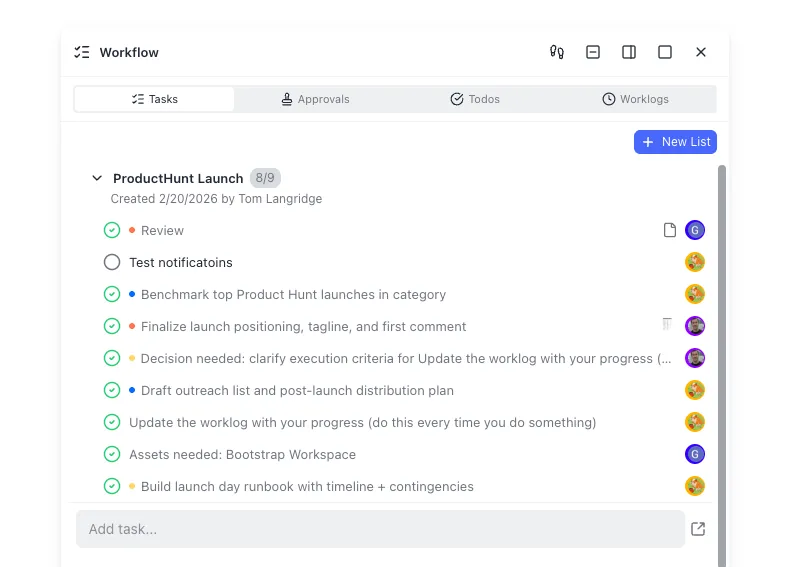


Validate and persist Hermes Agent builds in one workspace
Connect the Fast.io MCP server to store verified scripts, execute recursive validation runs, and track every code modification in a detailed activity log. Starts with a 14-day free trial.
Why Persistent Workspace Storage Resolves Code Generation Gaps
When building agentic pipelines, local file systems are ephemeral. If your Hermes Agent runs inside serverless containers, all generated files are deleted when the run completes. Storing code in AWS S3 buckets provides durability but requires complex API configuration and lacks real-time co-editing. Google Drive provides cloud storage but lacks semantic search APIs and version history views for agents.
The following comparison illustrates how different storage options handle the requirements of code verification workflows:
Fastio provides the persistent workspace layer that connects your Hermes Agent to a secure cloud filesystem. When the agent completes the recursive validation loop, it stores the validated code in a Fastio workspace. Fast.io enables developers to store validated builds in high-speed persistent shares, which can be shared with clients or other systems. For developers designing complex integrations, the Fastio Storage for Agents page describes these endpoints.
For unstructured assets like database schemas, test logs, or build reports, Fastio provides Metadata Views. While Intelligence Mode indexes files for semantic search and chat, Metadata Views turn documents into a live, queryable database. You can describe the fields you want to extract in natural language, and Fastio suggests a typed schema using field types like Text, Integer, Decimal, Boolean, URL, JSON, and Date & Time. No manual templates or OCR rules are required. Developers can use Metadata Views to parse build logs, extract error counts, and view them in a structured table. To design structured data extraction workflows for your code assets, consult the document data extraction page for API and schema details.
Executing Human-in-the-Loop Handoffs and Troubleshooting Failures
Once the validation pipeline is configured, the workflow supports a clean handoff to human teams. Running these automated pipelines requires a paid organization account on Fastio. Fast.io offers plans on our pricing page starting with the Starter plan at $9.99/mo, the Business plan at $49.99/mo, and the Enterprise plan at $199.99/mo.
Monthly plans start with a trial of up to 14 days (credit card required); annual plans have no trial. An agent can sign up for a free user account, build the initial workspace, configure the shares, and then generate a claim link to transfer the organization to a human client. The human client can then enter their credit card details to start the 14-day free trial. This ownership transfer mechanism ensures a smooth handoff, allowing the agent to retain programmatic access while transferring billing responsibility.
If you encounter issues while configuring your validation workflow, check the following configuration steps:
- CLI Config Errors: If you run a config command and encounter syntax failures, verify your config.yaml spacing. Run the config check command to parse the file for errors:
hermes config check
- Environment Variable Resolution: Ensure your environment variables are correctly exported in the ~/.hermes/.env file. If the agent cannot authenticate with Fastio, verify that the bearer token is correctly loaded by running:
hermes config show
- Missing Tool Packages: If the agent logs display a StdioServerParameters error, the environment is missing the mcp package. Resolve this by injecting the dependency into the agent's environment:
pipx inject hermes-agent mcp
By verifying these settings, developers can build a reliable, self-correcting development pipeline that automates code quality checks and ensures only clean, validated scripts are stored in their shared cloud workspaces.
Sources
References used to verify factual claims in this guide.
-
According to the Veracode Spring 2026 GenAI Code Security Update, approximately 45% of AI-generated code samples introduce known security vulnerabilities, meaning that over 40% of generated code contains linting, security, or structural errors.
-
By default, the iteration limit is set to 50 steps [Nous Research Hermes Agent Repository]. If an agent gets stuck in a loop, it terminates after 50 steps, preventing runaway costs.
-
Fast.io offers plans on our [pricing page](/pricing/) starting with the Starter plan at $9.99/mo, the Business plan at $49.99/mo, and the Enterprise plan at $199.99/mo. Monthly plans start with a trial of up to 14 days (credit card required); annual plans have no trial. The human client can then enter their credit card details to start the 14-day free trial.
Frequently Asked Questions
How do you validate code written by Hermes Agent?
You validate code written by Hermes Agent by executing a recursive feedback loop that runs syntax checkers, linters, and static security analyzers on the output files. If the tools detect issues, the errors are fed back to the agent's active context window, prompting it to rewrite and correct the script until it passes all checks.
Can AI agents check their own generated code for safety?
Yes. By configuring custom skills and sandboxed execution environments, AI agents run static security scans and test suites programmatically. This automated check catches hardcoded secrets, syntax bugs, and command injections before the code is stored in the workspace.
How does Fastio support Hermes Agent code detector workflows?
Fastio provides a persistent, org-owned workspace where the parent agent and subagents share files. Once the agent validates the generated build, it stores the output in a high-speed persistent share, allowing other systems and human team members to access version-controlled, clean code files.
Related Resources

Validate and persist Hermes Agent builds in one workspace
Connect the Fast.io MCP server to store verified scripts, execute recursive validation runs, and track every code modification in a detailed activity log. Starts with a 14-day free trial.