How to Use the Fastio API for HLS Video Streaming
Building a video application usually requires chaining together cloud storage and separate transcoding services. The Fastio API changes this by supporting native video delivery directly from your workspace. This Fastio API HLS video streaming guide explains how to serve adaptive media. It lets you avoid expensive transcoders and reduces architectural complexity for your development team.

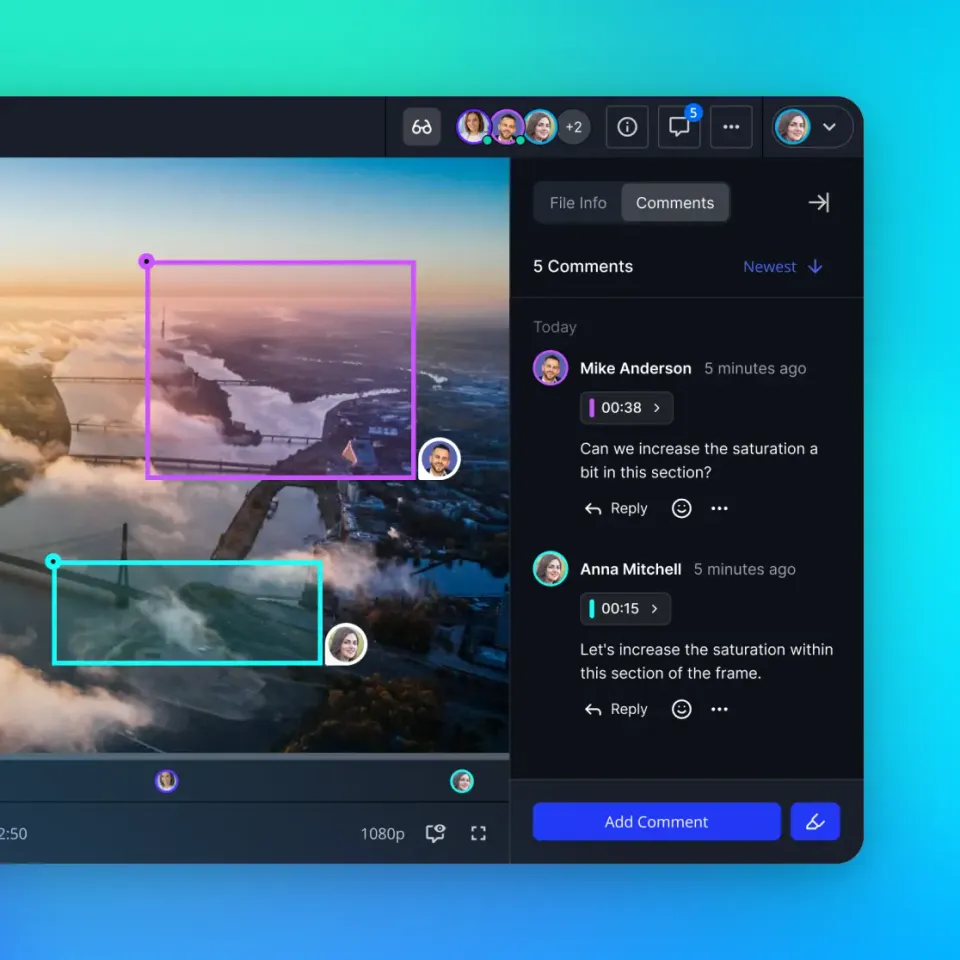
The Problem with Traditional Cloud Storage for Video
Most file storage APIs do not document or support HLS delivery out of the box. Upload a video to a standard cloud bucket, and you get a static file back. You cannot just link to that file to stream it to users. Standard downloads force the user's device to pull the entire file before playback begins. The alternative is basic progressive downloading, which stalls on slow connections.
Development teams often build complex processing pipelines to fix this. They upload the source file to a bucket, trigger a cloud function, and run the video through an intermediate transcoder. Finally, they store the resulting segments in a separate delivery bucket. This adds architectural overhead. It also drives up costs since you pay for storage twice and add processing fees for transcoding.
Maintaining this infrastructure takes time away from your core application. When a user uploads a video, your system has to manage state, track encoding progress, and catch failures. Manual infrastructure management becomes a bottleneck for teams building intelligent applications or agentic workflows. Instead, you need a platform that makes video files ready for playback the moment they finish uploading.
Related guides
- How to Connect the Fastio API to OpenAI AssistantsConnecting Fastio to OpenAI Assistants gives your agents direct access to persistent file workspaces, skipping manual...
- How to Build a Fastio API Integration With Remix ApplicationsGuide to fastio api integration with remix applications: Integrating Fastio with Remix means using server-side Action...
- How to Implement URL Imports with Fastio APIGuide to how implement url imports with fast api: With Fastio's API, URL imports pull files straight from external...
- How to Build a Fastio API Golang ImplementationBuilding a Fastio API Golang implementation allows developers to manage workspaces, upload files concurrently, and...
- Fastio API vs Google Drive API for AI AgentsWhen building autonomous systems, developers must choose the right storage layer for their AI agents. While the Google...
- How to Automate File Ownership Transfer with Fastio APIAutomating file ownership transfer with the Fastio API lets AI agents securely deliver finished assets to human clients...
More on this subject: Agent Integrations and APIs (191 guides)
How the Fastio HLS Integration Works
Fastio's API supports HLS video streaming so developers can deliver adaptive bitrate media directly from intelligent workspaces. HLS (HTTP Live Streaming) breaks a video down into small segments. These segments are usually a few seconds long. It then creates an M3U8 playlist file that lists them.
When you upload a video file into a Fastio workspace, the system automatically indexes it and prepares it for streaming. You skip configuring a separate transcoding service because the platform handles segmentation and playlist generation behind the scenes. Your application requests the HLS preview from storage and passes the redirected playlist to your frontend video player.
Fastio operates as an intelligent workspace rather than dumb storage, so this process happens automatically. Agents can upload generated videos, or humans can drop source files into a shared folder. The content becomes instantly available through the Fastio HLS integration. This unified approach removes the delay between upload and playback. It fits perfectly into fast-paced media workflows and AI-generated content pipelines.


Ready to simplify your video delivery?
Start streaming HLS video natively from your workspace. Authenticate with an API key and request the HLS preview.
Getting Started: Prerequisites and Authentication
Before integrating HLS playback from Fastio, set up your workspace and authentication. Plan limits and trial details live on our pricing page.
Authentication uses API keys. Create a key in Settings > Devices & Agents > API Keys, or with POST /current/user/auth/key/. Send it on every authenticated call as Authorization: Bearer {api_key}. Developers building agentic workflows can use the MCP server over Streamable HTTP at https://mcp.fast.io/mcp/tools (or https://mcp.fast.io/mcp/code for coding agents), with the API key as a Bearer header in the client config for headless agents.
Create a workspace specifically for your media assets to prepare your environment. This keeps video files isolated from other project data. Generate an API key once the workspace is active. If an AI agent manages your uploads, provide this key to the agent so it can drop files into the workspace and request HLS previews.
Step-by-Step Implementation Guide
Requesting an HLS preview uses the storage preview route after your video is in the workspace.
Make a GET request to the HLS preview endpoint. You need the workspace ID and the file's node ID (both are 19-digit profile IDs). Keep the trailing slashes. The route looks like this in a typical cURL request:
curl -X GET "https://api.fast.io/current/workspace/{workspace_id}/storage/{node_id}/preview/hlsstream/read/" \
  -H "Authorization: Bearer YOUR_API_KEY"
If you are building your backend in Python, the same route applies. Follow the redirect to obtain the sub-file location:
import requests

workspace_id = "1234567890123456789"
node_id = "1234567890123456789"
url = (
    f"https://api.fast.io/current/workspace/{workspace_id}"
    f"/storage/{node_id}/preview/hlsstream/read/"
)
headers = {
    "Authorization": "Bearer YOUR_API_KEY"
}

response = requests.get(url, headers=headers, allow_redirects=False)
print(response.status_code)
print(response.headers.get("Location"))
HLS previews return 307 Temporary Redirect to a sub-file endpoint. Point your player at that Location. The same preview route accepts thumbnail, image, mp4, hlsstream, audio, pdf, spreadsheet, and bin as the preview type. Share-scoped variants use share/{share_id} in place of workspace/{workspace_id}.
Integrating with Frontend Players
You need a compatible video player on the frontend after you follow the HLS preview redirect. Safari supports HLS natively in the standard HTML5 video tag. Most other browsers like Chrome and Firefox require a JavaScript library to parse the playlist and fetch the segments.
Video.js and hls.js are two of the most popular libraries for this task. Both work well with the playlist Location from the Fastio HLS preview.
Here is a basic example using hls.js. First, include the library in your project. Then, bind it to a standard video element.
if (Hls.isSupported()) {
  const video = document.getElementById('my-video');
  const hls = new Hls();

// Use the Location returned by the HLS preview redirect
  hls.loadSource(hlsPlaylistUrl);
  hls.attachMedia(video);

hls.on(Hls.Events.MANIFEST_PARSED, function() {
    video.play();
  });
}
This setup automatically handles adaptive bitrate switching. If the user's internet connection drops, the player requests lower-quality segments. This prevents the video from buffering.
Managing Media Workflows with Agents
Fastio is built for agentic workflows, which makes managing your media pipeline highly automated. Agents should use the MCP server rather than raw HTTP. You can configure this process by setting up storage for agents and providing the necessary access tokens.
Connect the agent to https://mcp.fast.io/mcp/tools. Named mode exposes a consolidated MCP toolset, including upload, storage, ai, event, and how-to, with changes such as imports on the matching _manage tool. A typical ingest call looks like this:
{"jsonrpc":"2.0","id":1,"method":"tools/call",
 "params":{"name":"upload_manage","arguments":{"action":"web-import","url":"https://example.com/clip.mp4",
 "profile_type":"workspace","profile_id":"1234567890123456789"}}}
After the file is in the workspace, request the HLS preview with GET /current/workspace/{workspace_id}/storage/{node_id}/preview/hlsstream/read/. Headless agents can run that same path through the execute tool. The agent can then store the redirect Location in a database or send it to a client via email.
For example, an agent can connect via the remote MCP server to watch a designated folder and run this ingest plus preview flow when a raw video arrives.
During multi-agent operations, Fastio's advisory file locks allow agents to coordinate edits cleanly. An agent can acquire a file lock before modifying an asset so other agents know work is underway, while version history and the audit log preserve every change regardless. Once an agent finishes building a media portal or workspace, it can transfer ownership entirely to a human user and keep only admin access for future maintenance.
Performance and Edge Cases
Streaming from workspace storage works well for most applications, but developers should plan for edge cases. High-traffic applications can hit rate limits if they repeatedly call the preview endpoint. HTTP 429 with error code 1671 means you should back off until the x-ve-limit-expires header. Cache the HLS preview Location in your own database like Redis or PostgreSQL once you have it. This lets your frontend render the video player instantly without making redundant backend API calls.
Large files can take longer before playback can start. Show a loading state or a static thumbnail from GET /current/workspace/{workspace_id}/storage/{node_id}/preview/thumbnail/read/ in your UI.
Network restrictions on the client side can also cause playback issues. If a corporate firewall blocks the redirected host, the hls.js player will throw an error. Add error event listeners in your frontend code to catch these failures. Display a helpful message to the user instead of leaving them with a blank video player. Make sure your frontend application correctly handles Cross-Origin Resource Sharing (CORS) by serving the player from an authorized domain.
Sources
References used to verify factual claims in this guide.
-
HLS preview type hlsstream on the storage preview read route HLS multi-file previews return 307 Temporary Redirect A consolidated MCP toolset including upload and storage HTTP 429 error code 1671 with x-ve-limit-expires
Frequently Asked Questions
Can I stream video using Fastio?
Yes, Fastio natively supports video streaming using the HLS protocol. When you upload a video to your workspace, the platform automatically generates the necessary segments and playlists, allowing you to stream it directly to users without needing an external transcoder.
How do I get an HLS stream URL from Fastio?
Make a GET request to https://api.fast.io/current/workspace/{workspace_id}/storage/{node_id}/preview/hlsstream/read/ with a Bearer API key. The preview returns a 307 Temporary Redirect to a sub-file endpoint. Pass that Location to any compatible frontend video player.
Are there file size limits for video streaming?
On the Business Trial, the maximum file size for any upload is 1GB. If your video exceeds this limit, you will need to compress the source file before uploading or upgrade to a paid tier that accommodates larger file sizes.
Do I need a third-party transcoder with Fastio?
No, you do not need a third-party transcoder. Fastio handles the technical requirements of HLS streaming internally. It automatically segments the video and generates the required M3U8 playlists directly from your workspace storage.
Which frontend players work with Fastio HLS streams?
Any video player that supports the HLS protocol will work with Fastio streams. Native Safari video tags support it out of the box, while other browsers typically require libraries like Video.js or hls.js to parse the M3U8 playlist and handle playback.
Related Resources

Ready to simplify your video delivery?
Start streaming HLS video natively from your workspace. Authenticate with an API key and request the HLS preview.