Devin AI Dynamic Metadata Extraction: Tagging & Structuring Agent Files
Devin AI dynamic metadata extraction automatically analyzes document properties, tags, and structural data to enhance AI prompt context. By converting raw document attachments into queryable metadata fields, software engineering agents can filter files and route tasks automatically. Combining Devin's attachment workflow with Fast.io Metadata Views creates a persistent structured indexing layer across agent sessions.


Why File Metadata Extraction Matters for Devin AI Workflows
Unstructured documents account for 80% of enterprise data backlogs, yet automated metadata extraction reduces manual file cataloging time by 80% [Soutron Information Management 2026 Report]. Without a systematic tagging layer, autonomous software engineering agents like Devin AI waste execution context scanning irrelevant file contents.
When executing complex development tasks, Devin AI processes source code, technical specifications, architecture diagrams, and API definitions attached to its sessions. In standard sandbox environments, these files exist as unindexed raw blobs. Every time Devin needs to locate a schema payload or verify a configuration parameter, it must run container shell commands or write custom script parsers.
This unindexed file access creates three primary bottlenecks in agent workflows:
- Increased token consumption caused by ingesting full document bodies into context windows repeatedly.
- Session context degradation when temporary sandboxes reset between execution jobs.
- Uncontrolled prompt overhead when agents must filter hundreds of repository assets manually.
Establishing an automated metadata pipeline solves these inefficiencies. By attaching structured key-value properties to workspace files, software agents can search, filter, and retrieve exact document subsets before passing content into prompt context.
For background on workspace management and context storage, explore Fast.io Workspaces, Fast.io Collaboration, and Fast.io AI Storage.
Related guides
- How to Build Base44 Metadata Views for Document ExtractionBase44 metadata views automatically parse file attributes to populate structured database tables and search filters....
- How to Query Files with Manus AI MCPLearn how to query files with Manus AI MCP using Fast.io workspaces as secure, hosted endpoints. This guide covers...
- How to Query Fast.io Custom Metadata Views in Devin AI via MCPConnecting Devin AI to Fast.io workspaces via the Model Context Protocol provides autonomous agents with direct,...
- How to Install and Use the Devin AI CLICognition positions Devin AI CLI as a local coding agent that runs on your machine, separate from cloud Devin in a VM....
- How to Use Devin DeepWiki for Codebase DocsDevin DeepWiki is Cognition's AI documentation layer for Devin AI. It indexes repositories into architecture diagrams,...
- Devin AI Docs: Map of Official DocumentationCognition publishes 537 documentation entries at docs.devin.ai, and more than half of that index is API reference...
More on this subject: Devin (104 guides)
How Devin AI Processes File Attachments and Session Metadata
Devin AI handles file ingestion through its attachments API endpoint (POST /v1/attachments), which accepts multipart/form-data uploads and returns referenceable URLs. To expose an attached file to Devin during a session, the prompt passes the file URL using the exact attachment syntax format: ATTACHMENT:"{file_url}".
Once attached, Devin uses its internal Linux shell, Python execution environment, and headless browser tools to inspect file properties. However, Devin's native sandbox environment does not maintain persistent index tables across separate prompt sessions. Each session initializes in a fresh sandbox container, requiring Devin to re-extract file metadata whenever a new execution job begins.
Primary Metadata Fields Extracted for Agent Context
Devin AI dynamic metadata extraction relies on extracting technical system properties, structural content indicators, and domain-specific attributes. Passing these key metadata fields directly into prompt context optimizes agent routing decisions:
- Document Properties: File name, file path, MIME type, file size in bytes, and last modified timestamp.
- Authorial Attributes: Document author, organization owner, creation date, and generating application source.
- Structural Data: Header hierarchies, section tags, page count, and embedded media counts.
- Custom Business Key-Values: API version numbers, ticket IDs, environment flags, contract dates, and schema types extracted via AI schemas.
When Devin receives pre-indexed metadata alongside file attachments, it eliminates exploratory file scanning steps inside the sandbox. Instead of running ls -la, file, or pdfinfo inside the shell container, Devin reads structured metadata parameters directly to select the appropriate files for code modifications.
How to Automate Custom Key-Value Extraction with Fast.io Metadata Views
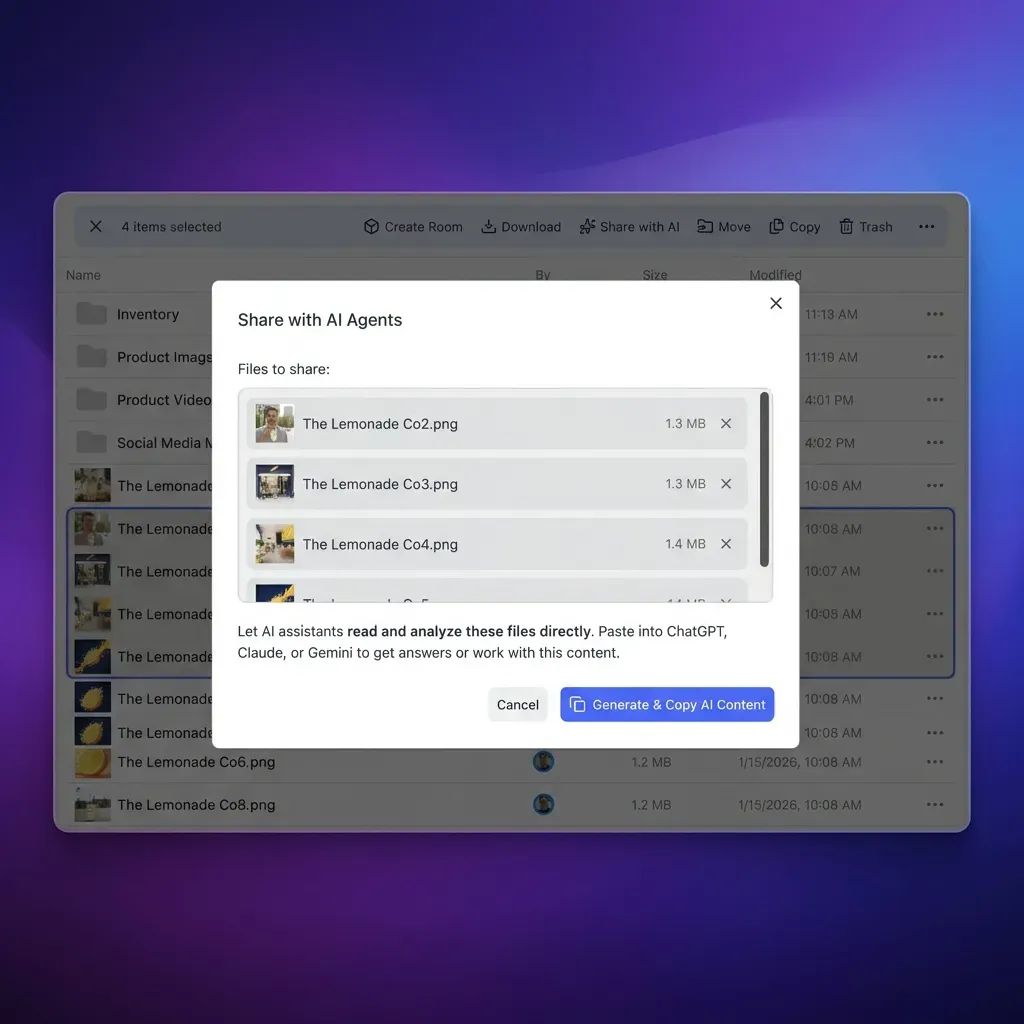
While local scripts inside Devin's sandbox can inspect files during execution, external cloud storage platforms provide a persistent extraction layer across sessions. Fast.io functions as an intelligent workspace platform designed for agentic teams, bridging temporary agent sandboxes with persistent organization storage.
Fast.io Metadata Views turn unstructured workspace documents into live, queryable tables. Rather than writing brittle regex rules or manual Python parsing routines, users and agents describe desired fields in natural language. Fast.io automatically generates a typed schema supporting Text, Integer, Decimal, Boolean, URL, JSON, and Date & Time formats.
Technical Extraction Mechanics
Fast.io extracts custom key-value pairs from files for agent queries automatically upon upload:
- Schema Definition: An agent or administrator defines required extraction attributes (for example,
API_Version,Endpoint_Path,Auth_Type). - Automatic Schema Matching: Fast.io matches inbound PDFs, Word documents, spreadsheets, scanned pages, or images against the active workspace schema.
- Field Extraction: The background intelligence engine parses structured values and populates a sortable workspace database.
- Incremental Column Additions: New metadata columns can be appended to existing Metadata Views without reprocessing previously uploaded files.
Devin AI accesses these extracted properties directly over the Fast.io Model Context Protocol server. Exposed via Streamable HTTP at /mcp and legacy SSE at /sse, Fast.io allows Devin to query workspace metadata views programmatically before fetching underlying file payloads.


Structure Devin AI file metadata with Fast.io
Set up persistent workspaces with natural language Metadata Views and an MCP-ready storage layer for your autonomous software engineering agents. Monthly plans start with a Business Trial of up to 14 days (credit card required); annual plans have no trial.
What Are the Best Practices for Structuring Multi-File Context in Agent Tasks?
Large software projects involve hundreds of disparate files, including OpenAPI specifications, UI design assets, database migration scripts, and deployment guides. Passing every file into Devin's context window exceeds token boundaries and degrades attention accuracy.
By pairing Fast.io Metadata Views with Devin AI session prompting, developers implement metadata-driven task routing.
Step-by-Step Implementation Pattern
To set up automated file routing using metadata views:
- Organize Shared Workspaces: Store project files in a dedicated Fast.io workspace accessible to both human developers and Devin AI.
- Configure Workspace Schemas: Use Metadata Views to extract key metadata like
Target_Module,Status, andPriorityacross technical specs. - Query via MCP: Before initiating code generation, Devin calls Fast.io MCP search tools to query metadata values (for example,
Status = 'Pending_Review'). - Fetch Filtered Attachments: Devin receives only the subset of file URLs matching the target query, constructing lightweight prompt payloads.
This hybrid approach decouples file discovery from file reading. Fast.io Intelligence Mode maintains full-text and semantic search indexing with direct citations, while Metadata Views handle precise tabular extraction. Devin uses tabular metadata to filter candidates, then relies on semantic search to read deep content snippets.
Steps to Build a Persistent Metadata Workflow Across Agent Sessions
Because Devin's sandbox environment resets when a session completes, any metadata generated inside the container disappears unless exported to external storage. Fast.io provides persistent org-owned workspaces, per-file version history, detailed activity logs, and agent-to-human ownership transfer.
When Devin completes an automated programming task, it writes updated documentation, generated code assets, or extracted CSV summaries back to the shared workspace. Human team members receive real-time activity events via the WebSocket events feed or inspect changes inside the Fast.io activity feed.
Production Team Architecture
For organizations running continuous AI agent workflows, team setups follow structured organization plans:
- Starter Plan ($9.99/mo): Built for individual developers pairing with Devin on personal code repositories and project assets.
- Business Plan ($49.99/mo): Built for engineering teams requiring centralized organization control, custom extraction schemas, and shared workspaces.
- Enterprise Plan ($199.99/mo): Built for high-volume agentic operations requiring expanded audit logs, WebSocket event feeds, and collaborative workspaces.
Fast.io's monthly plans start with a Business Trial of up to 14 days (credit card required); annual plans have no trial. Agents can register an organization to establish initial connections, then transfer workspace ownership to human organization owners through a claim link.
By standardizing file tagging with Fast.io Metadata Views and Devin AI session APIs, teams eliminate manual data entry, reduce token overhead, and maintain auditability across every agent interaction.
Sources
References used to verify factual claims in this guide.
-
Automated metadata extraction reduces manual file cataloging time by 80%.
-
Devin attachments API uses multipart/form-data POST requests to produce referenceable file URLs.
Frequently Asked Questions
How does Devin AI read metadata from uploaded files?
Devin AI reads file metadata by accessing uploaded attachments via its REST API endpoint (POST /v1/attachments) and executing Linux shell utilities, Python scripts, or browser tools inside its isolated sandbox container. To make uploaded files referenceable in a session, prompts include the specific ATTACHMENT:"{file_url}" syntax.
What file metadata can be passed to Devin AI prompts?
Devin AI prompts accept system properties (file name, path, size, MIME type, modified date), author metadata, structural headers, and custom business key-value pairs (such as ticket numbers, contract dates, or schema versions) extracted via tools like Fast.io Metadata Views.
How do Fast.io Metadata Views differ from Intelligence Mode search?
Fast.io Metadata Views extract structured, tabular key-value fields from files using natural language schemas without manual OCR rules. Intelligence Mode provides hybrid full-text and semantic vector search with automatic indexing and grounded citations.
How do you persist metadata extracted by Devin AI across sessions?
Because Devin's local sandbox resets after each session, persistent metadata must be written back to a shared storage layer. Using Fast.io MCP tools or API endpoints, Devin pushes extracted key-values and updated files directly to an org-owned workspace with full version history.
Related Resources

Structure Devin AI file metadata with Fast.io
Set up persistent workspaces with natural language Metadata Views and an MCP-ready storage layer for your autonomous software engineering agents. Monthly plans start with a Business Trial of up to 14 days (credit card required); annual plans have no trial.