What Are Devin ACUs? Agent Compute Units Explained
Windows Devin sessions consume about 9% more usage than equivalent Linux sessions, a concrete signal that Agent Compute Units meter real work, not abstract seats. This guide explains what a Devin ACU is, how Enterprise billing differs from self-serve quota, how org limits and sleep behavior affect spend, and how Session Insights ties each session back to consumption.


What a Devin ACU is
Windows Devin sessions consume approximately 9% more usage than equivalent Linux sessions, according to Cognition's official usage documentation. That single percentage is the right place to start. An Agent Compute Unit (ACU) is not a seat license or a flat monthly package. It is Devin Enterprise's billing meter for the compute work Devin AI performs during sessions, tracked at enterprise, organization, and session levels.
Cognition's billing docs split Devin into two pricing models:
- Self-serve (Free, Pro, Max, Teams): usage is billed through included quota, then prepaid on-demand credits
- Enterprise: customers are billed in Agent Compute Units (ACUs) at the rate set in their order form
The metering mechanics are the same either way. The unit name is what changes. Enterprise draws from an ACU volume negotiated on the order form. Self-serve draws from daily or weekly plan quota first, then from on-demand credits. Legacy self-serve plans once sold ACUs directly; Cognition has since moved those customers onto quota and credit pricing, while Enterprise keeps ACUs as the contract unit.
If you only remember one definition, use this: a Devin ACU is the Enterprise unit that measures Devin's actual session work (planning, context gathering, code and browser actions, VM time, and related network use) so finance and engineering can allocate cost across orgs and sessions.
Admins and users track that consumption in a few places:
- Enterprise Settings > Consumption for enterprise-wide ACU totals
- Organization Settings > Consumption Analytics for org-level ACU totals and user breakdowns
- Session Insights for the ACU cost of a specific session (available to any user)
The people who dig into ACU docs are usually the ones holding the budget: enterprise admins, platform leads, and engineers who just watched a long session burn through a limit.
Related guides
- GitHub Copilot Models ExplainedGitHub Copilot now ships more than two dozen selectable foundation models from OpenAI, Anthropic, Google, Microsoft,...
- What Is Cline? Open-Source AI Coding Agent ExplainedCline reports 8.0M+ installs across platforms and ships as Apache 2.0 open source, which is why developers keep asking...
- How to Manage Files Generated by Devin AIDevin AI generates dozens to hundreds of files per session, but its workspace resets between runs. This guide covers...
- How to Connect Devin AI to VS CodeConnecting Devin AI to VSCode (Visual Studio Code) bridges local development environments with autonomous cloud...
- How to Try Devin AI for FreeA Devin AI free trial is Free at $0 per month with limited agent usage, not a short coupon clock. Pro starts at $20 per...
- Inside Devin AI: The Architecture and Engine Behind Cognition's Autonomous EngineerCognition Devin AI combines a cloud-based reasoning model with a secure, containerized Devbox environment equipped with...
More on this subject: Devin (104 guides)
How Devin ACU consumption is calculated
Cognition does not publish a public price-per-ACU for Enterprise. Rates live on the order form. What the docs do publish is what counts toward usage, and that is the part that matters for forecasting.
Usage accrues from the work Devin actually performs in a session, including:
- Number and complexity of actions (planning, context gathering, task execution, browser actions, code execution, and similar steps)
- Virtual machine time
- Networking bandwidth (usually a small fraction of total usage)
A few behaviors that often surprise teams:
- Windows costs more. Windows sessions use about 9% more usage than the same work on Linux (Ubuntu).
- Idle work is mostly free. Aside from the small amount needed to keep the Devin VM running, Devin does not consume usage while waiting for your response, waiting for a test suite to finish, or setting up and cloning repositories.
- Sleep stops the meter. When a session is idle, Devin goes to sleep. Sleeping sessions do not consume usage. You wake the session by sending another message. Devin typically sleeps after roughly 0.1 ACUs (or the equivalent quota or on-demand credit) of inactivity.
Variables that push ACU (or quota) higher are predictable once you treat Devin like a long-running remote developer rather than a single autocomplete call:
- Task complexity and how many files change
- Prompt quality and how much context the session carries
- Codebase size
- Session runtime and conversation length
- How often you bounce messages back and forth
Official tips for keeping consumption under control line up with good agent hygiene:
- Delegate clearly scoped tasks with a defined end goal
- Keep prompts and sessions short
- Avoid packing many unrelated tasks into one session
- Split large projects across sessions (there are no concurrent session limits called out in the usage guide)
On self-serve plans, the same metering model applies, but the unit you buy is plan quota plus on-demand credits, not Enterprise ACUs. Pro and Teams full seats refresh on a daily and weekly calendar. Max uses a weekly allowance without a daily cap. When included quota runs out, prepaid on-demand credits keep sessions running. Teams shares those credits across members. That is why pricing posts that still talk as if every Devin plan sells "ACUs by the hour" are out of date: self-serve is quota and credits; Enterprise is ACUs on an order form.



Keep Devin outputs in a workspace humans can review
Give agents and teammates the same org-owned workspace with version history, Intelligence Mode search, MCP access, and ownership transfer after the session. Start with a 14-day free trial.
Enterprise org limits and what happens when you hit them
Enterprise is where devin enterprise acu controls become operational, not just contractual. Cognition lets Enterprise admins set per-Organization ACU limits from Enterprise Settings under Organizations. Hover an org, open Manage, then set the limit (and rename the org if needed).
Once a limit is set, that organization can only consume up to that ceiling. When the org hits its devin acu limit:
- All Devin activity in that organization stops
- Users see a message that the organization has hit its ACU limit
- Users are told to contact the Enterprise admin to raise the limit
That hard stop is the feature many marketing pages skip. Soft budgets are useful for awareness. Hard org limits are useful when one team can otherwise spend the entire enterprise pool on exploratory sessions while production work waits.
Who sees what:
- Enterprise admins review enterprise ACU consumption and can break it down by organization from Settings > Consumption
- Organization admins review org ACU consumption and can break it down by user from Settings > Consumption Analytics
- Users with Personal Analytics enabled (and the View Personal Analytics permission) can see their own ACU consumption across organizations from My analytics
Billing cadence is also contract-driven: Enterprise customers are billed for ACUs as stated in the order form. Enterprise ACUs represent work performed by Devin for Enterprise plan customers, described in the docs as adhering more strictly to task planning and end-to-end testing, and they are distinct from self-serve quota and on-demand credits.
Practical admin pattern that works in multi-team companies:
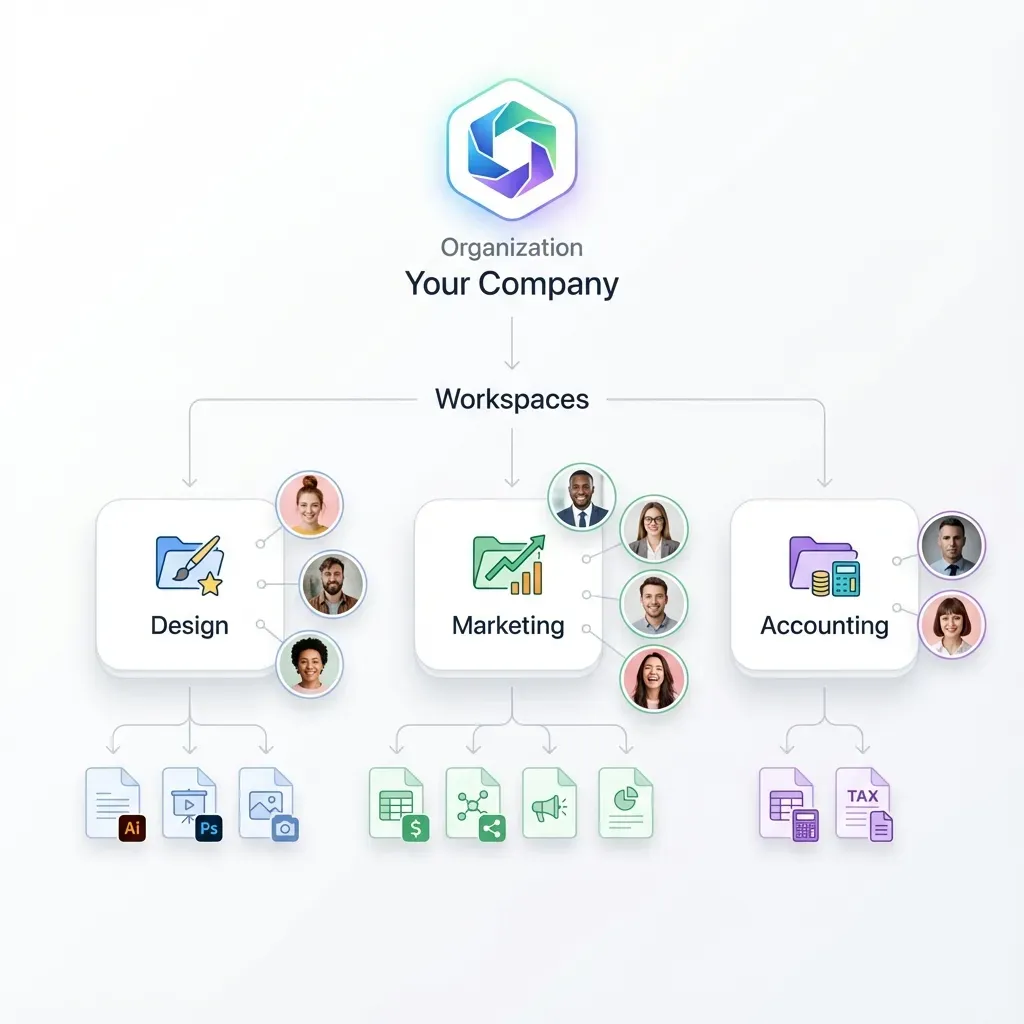
- Put each product group or business unit in its own Devin organization when possible
- Set org ACU limits that match quarterly engineering budgets, not peak "what if everyone runs XL sessions" imagination
- Review Consumption Analytics weekly for the first month, then monthly once patterns stabilize
- Raise limits only after you can point to Session Insights evidence (retry loops, missing environment setup, oversized tasks)
If finance only sees a single enterprise ACU line item without org splits, you will argue about cost after the money is gone. Org limits force the conversation earlier, while engineers still have session-level detail to fix process rather than just buy more capacity.
How Session Insights maps sessions to ACU spend
Session Insights is the missing bridge between "our enterprise burned a lot of ACUs" and "this specific session went wrong." Any user can open Session Insights for a completed session and see that session's ACU usage, regardless of pricing model. Analysis is free of extra charge. Short sessions with fewer than one Devin message do not produce useful insights.
At the top of the insights view, Cognition surfaces four overview metrics. The one finance cares about is ACU usage: how much compute Devin consumed in that session. Lower ACU usage for the same task class usually means a more efficient run. High ACU usage with few user messages often means Devin worked alone but struggled (retries, missing environment, vague requirements). Many user messages with low ACU usage usually means the human kept course-correcting because the first prompt was underspecified.
Session Insights also classifies session size (XS through XL) using ACU thresholds and user-message thresholds. For standard accounts:
- XS: ≤ 2 ACUs or ≤ 2 user messages
- S: ≤ 5 ACUs or ≤ 5 messages
- M: ≤ 10 ACUs or ≤ 10 messages
- L: ≤ 20 ACUs or ≤ 20 messages
- XL: > 20 ACUs or > 20 messages
For Enterprise customers, ACU thresholds are scaled by a factor of 10 (for example, XS ≤ 20 ACUs, XL > 200 ACUs). User-message thresholds stay the same. The overall size is the larger of the ACU-based size and the message-based size. Sessions classified L or XL are flagged as unhealthy: Devin likely hit serious issues, or the task scope was too broad for one session.
That mapping is how you turn ACU spend into process change:
- Repeated high-impact issues on the Issue Timeline often mean environment or dependency gaps that will tax every future session
- Actionable Feedback's improved prompt and action items give a concrete next session instead of "use Devin less"
- Knowledge Usage flags misleading knowledge items that can inflate ACU spend across the whole team until someone edits them
Teams that only watch the enterprise consumption chart without opening Session Insights end up buying more ACUs for problems that better prompts, smaller tasks, or cleaner machine setup would fix. Teams that only watch Session Insights without org limits end up with accurate postmortems and no budget guardrail. You need both.
Keeping ACU spend useful while you ship work
Controlling devin acu consumption is less about micromanaging every tenth of a unit and more about removing the failure modes that turn a two-hour job into an XL session.
Scope before you spend. Ask Devin to ship one vertical slice per session: one migration, one endpoint, one failing test suite. A multi-day rewrite in a single chat is how sessions climb into L and XL size classes. The usage docs explicitly recommend splitting big projects into sub-tasks across sessions.
Front-load context. Put success criteria, constraints, and environment facts in the first message. Session Insights treats high message counts as a smell for missing upfront detail. Every clarifying loop is extra conversation length, even if each loop is small.
Prefer Linux unless you need Windows. The documented 9% Windows premium is small on a short task and painful on a fleet of long-running agents.
Let sleep do its job. If you step away, Devin will typically sleep after about 0.1 ACUs of inactivity and stop charging. Do not keep the session "warm" with empty pings unless you need continuity that justifies the cost.
Fix environment once. If Action Items keep recommending the same dependency installs or repo config, put those into machine setup and Knowledge so later sessions stop paying the same retry tax.
Separate compute cost from artifact cost. ACUs measure Devin's work inside its cloud environment. They do not solve where finished code, docs, dumps, and review packages live after the session ends. Engineers still export patches through git, download files from the agent environment, or drop artifacts into object storage such as Amazon S3 or a shared drive like Google Drive or Dropbox. Those options work, with tradeoffs: S3 is durable and API-friendly but awkward for non-developer review; consumer drives are easy for humans but weak for concurrent agent writes, versioned handoff, and semantic search across agent output.
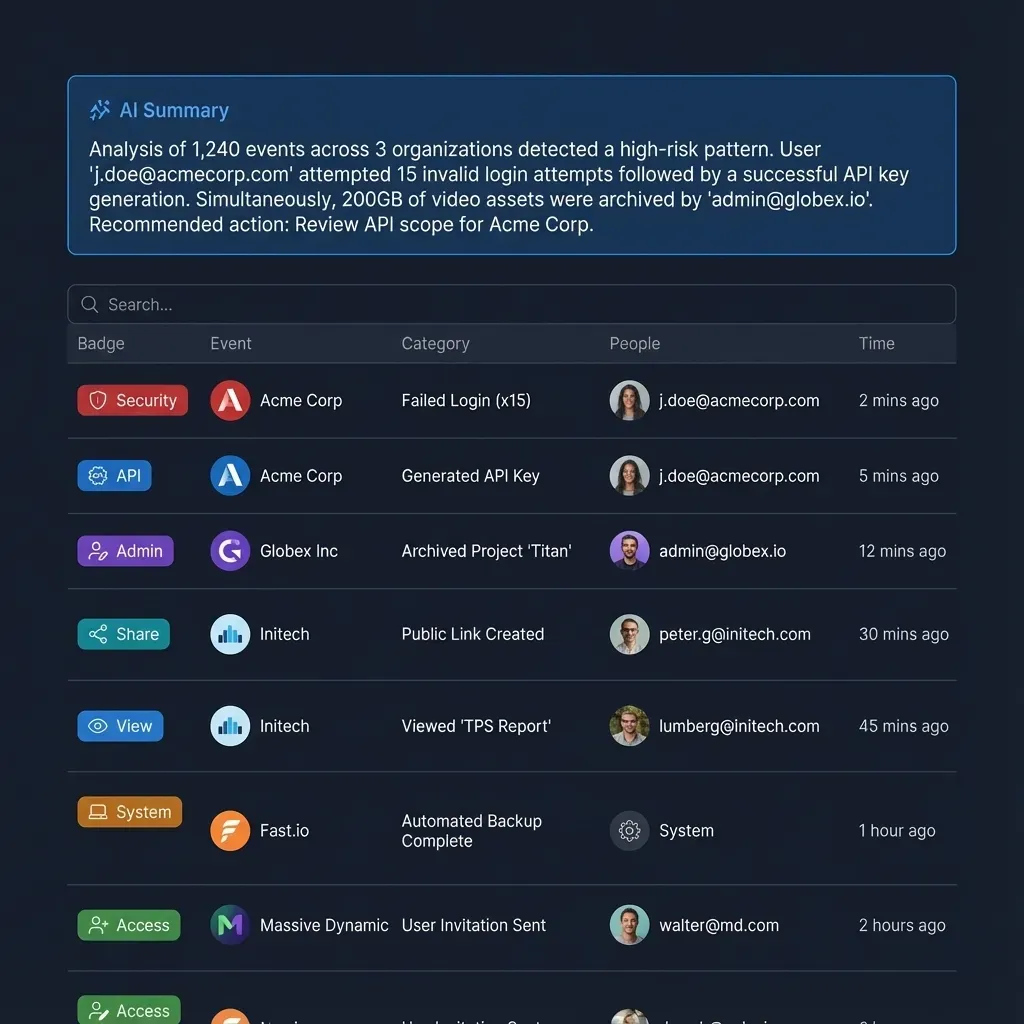
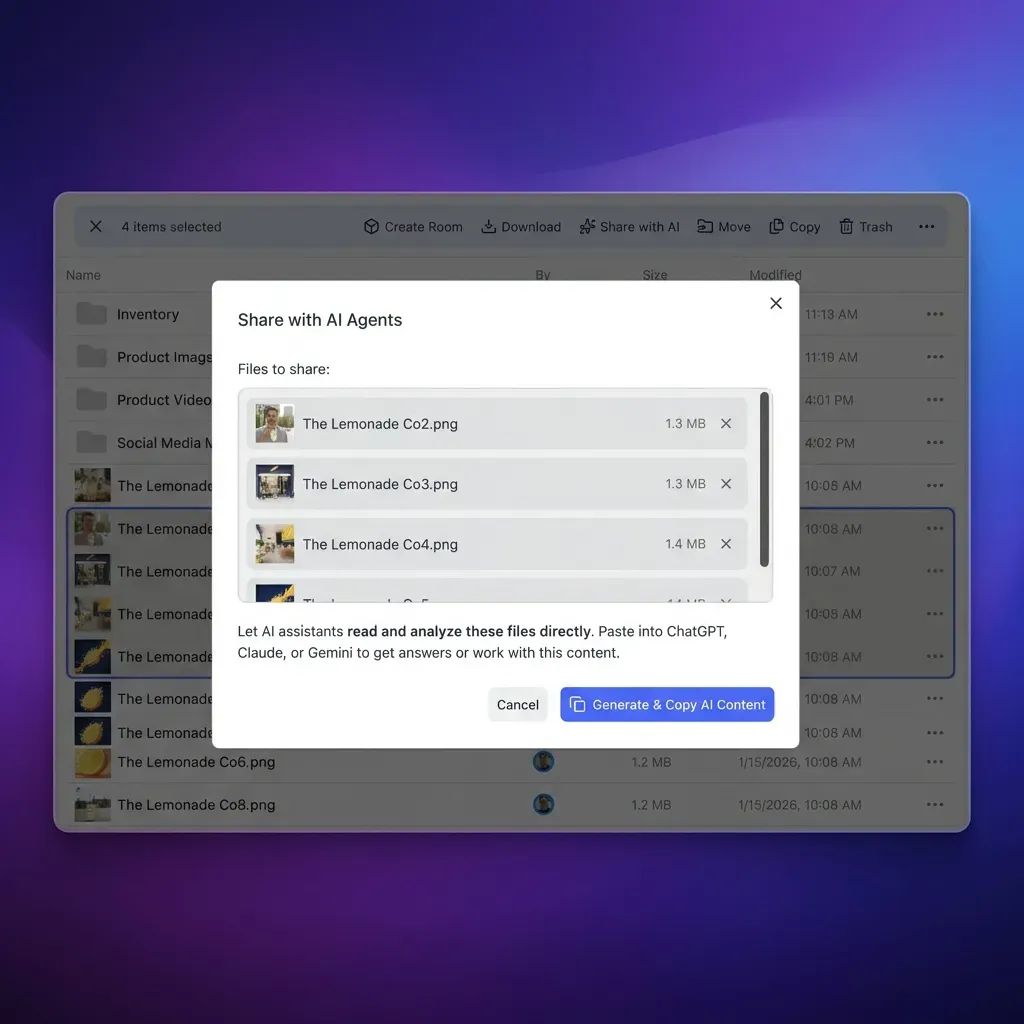
For teams that want a durable handoff layer around Devin AI rather than another dump folder, a shared intelligent workspace helps. Fast.io is built for agentic teams: org-owned workspaces, per-file version history, a detailed activity log, and a consolidated MCP toolset agents can call over Streamable HTTP at /mcp (or legacy SSE at /sse). Enable Intelligence Mode so files are indexed for hybrid search and chat with citations. When the work product is contracts, invoices, or other structured docs, Metadata Views turn natural-language field definitions into a typed, filterable table agents and humans can query. An agent can stage the workspace, then transfer ownership to a human admin who starts the 14-day free trial (credit card required) on Starter ($9.99/mo), Business ($49.99/mo), or Enterprise ($199.99/mo). Fast.io is not a Devin billing product and does not replace ACUs. It is the persistence and collaboration layer so expensive sessions produce assets the team can still find next week.
If you are evaluating Devin AI for production engineering work, treat ACU literacy as part of onboarding. Teach leads how org limits stop runaway spend, teach engineers how Session Insights sizes sessions, and decide where session outputs live before the first enterprise invoice arrives. The compute unit is only half the system; the other half is whether humans can review, search, and reuse what the agent shipped.
Sources
References used to verify factual claims in this guide.
-
Windows Devin sessions consume approximately 9% more usage than equivalent Linux sessions Devin typically sleeps after roughly 0.1 ACUs of inactivity and does not consume usage while sleeping
-
Enterprise customers are billed in Agent Compute Units at the rate set in their order form When an organization hits its ACU limit, all Devin activity stops until an Enterprise admin raises the limit
-
Self-serve usage is billed through included quota and on-demand credits; Enterprise uses ACUs
-
Session Insights shows per-session ACU usage; L/XL sessions use scaled ACU thresholds (standard XL > 20 ACUs; Enterprise thresholds x10)
-
Pro is $20/month, Max is $200/month, Teams starts at $80/month minimum with $40/month full seats
Frequently Asked Questions
What is a Devin ACU?
An Agent Compute Unit (ACU) is Devin Enterprise's billing meter for the compute work Devin performs during sessions. Enterprise customers are billed in ACUs at the rate on their order form. Self-serve plans use included quota and on-demand credits instead, though the underlying metering of session work is the same model under a different unit name.
How are Devin ACUs calculated?
ACUs (and the equivalent self-serve usage) accrue from the work Devin actually does: planning, context gathering, task execution, browser and code actions, virtual machine time, and networking. Windows sessions use about 9% more usage than equivalent Linux sessions. Devin generally does not charge for waiting on your reply, waiting on tests, or repo setup beyond keeping the VM running, and sleeping sessions consume no usage after roughly 0.1 ACUs of inactivity.
What happens when an organization hits its ACU limit?
Enterprise admins can set per-organization ACU limits. When an organization reaches its limit, all Devin activity in that organization stops. Users see a message that the org hit its ACU limit and should contact the Enterprise admin to raise it. Enterprise and organization consumption views show where the budget went; Session Insights shows per-session ACU cost.
Do self-serve Devin plans use ACUs?
Not as the primary commercial unit. Free, Pro, Max, and Teams use included usage quota and prepaid on-demand credits. Enterprise contracts use ACUs at order-form rates. Cognition also documents a migration path from legacy ACU-based self-serve plans onto the current quota and credit model.
Where can I see how many ACUs a Devin session used?
Open Session Insights on a completed session. Any user can view that session's ACU usage there. Enterprise admins see enterprise totals under Settings > Consumption. Organization admins see org and user breakdowns under Consumption Analytics. Optional Personal Analytics shows an individual's ACU consumption across organizations when enabled.
Does Devin consume ACUs while sleeping or idle?
No. While sleeping, Devin does not consume usage. Devin typically sleeps automatically after about 0.1 ACUs of inactivity (or the equivalent quota or on-demand credit). Awake-but-idle time is usually small because of that sleep behavior, and waits for user responses or test runs generally do not add usage beyond keeping the VM alive.
How do Session Insights size classes relate to ACU spend?
Session Insights classifies sessions XS through XL using ACU thresholds and user-message counts. On standard accounts, L is up to 20 ACUs and XL is above 20 ACUs (or the matching message thresholds). Enterprise ACU thresholds are scaled by 10. L and XL sessions are flagged as unhealthy and usually mean the task was too broad or Devin hit repeated failures worth fixing before buying more ACUs.
Related Resources

Keep Devin outputs in a workspace humans can review
Give agents and teammates the same org-owned workspace with version history, Intelligence Mode search, MCP access, and ownership transfer after the session. Start with a 14-day free trial.