Devin 2.0: What Changed and How to Use It
Cognition launched Devin 2.0 as an agent-native IDE with a Core plan starting at $20, parallel cloud Devins, Interactive Planning, Devin Search, and Devin Wiki. Release posts list the features. This guide focuses on how teams actually run multi-session work, review plans mid-flight, and keep session outputs where humans can find them after the PR is open.


What Devin 2.0 is
Cognition launched Devin 2.0 with a flexible Core plan starting at $20, and framed the release around parallel cloud Devins rather than a single long-running session. Official launch materials describe an agent-native IDE where each Devin gets its own interactive, cloud-based environment, plus three new capabilities: Interactive Planning, Devin Search, and Devin Wiki. That pricing and architecture shift is the practical story. More agents means more concurrent work, more mid-session steering, and more plans, search notes, and wiki pages to share with humans who never opened the session.
Devin 2.0 is Cognition's agent-native IDE generation of Devin AI, built around parallel cloud agents, interactive planning, and closer human collaboration during autonomous coding work. Earlier Devin generations already planned, wrote, tested, and opened pull requests. Devin 2.0 changes how you supervise that work: you can run several Devins at once, edit inside each session's IDE with familiar shortcuts such as Cmd+I and Cmd+K, and align on a plan before autonomy begins.
The product site still positions Devin as an AI software engineer for complex engineering tasks, from migrations and refactors to PR review, documentation, and issue triage. Customer materials on the same site cite Nubank's multi-million-line ETL migration, with reported 8x engineering-time efficiency and over 20x cost savings when engineers delegated subtasks and reviewed Devin's pull requests. Devin 2.0 is the UX that makes that parallel pattern the default product shape, not only a large-customer playbook.
If you only remember one definition: Devin 2.0 is the generation where Devin AI becomes a multi-agent workspace with cloud IDEs, not just a single autonomous chat that eventually opens a PR.
Related guides
- Moltbot vs OpenClaw: What Changed and How to MigrateOpenClaw went from Clawdbot to Moltbot to OpenClaw in three days in January 2026, leaving thousands of users unsure...
- How to Manage Files Generated by Devin AIDevin AI generates dozens to hundreds of files per session, but its workspace resets between runs. This guide covers...
- How to Try Devin AI for FreeA Devin AI free trial is Free at $0 per month with limited agent usage, not a short coupon clock. Pro starts at $20 per...
- How to Use the Devin IDE to Review and Take Over Agent WorkNubank reported 8-12x engineering efficiency and over 20x cost savings when people reviewed Devin's changes instead of...
- How to Use Devin AI with SlackOfficial Devin docs document 17 inline Slack keywords for @Devin sessions, from !ask and !fast through mute, sleep, and...
- Devin AI Agent: How the Autonomous Engineer WorksCognition's Nubank case study reports an 8x engineering-time efficiency gain and over 20x cost savings when Devin...
More on this subject: Devin (104 guides)
Five headline changes in Devin 2.0
Cognition's Devin 2.0 announcement groups the release into parallel agents, closer collaboration, in-IDE review, and three named features. Use this list when you need a quick map of what changed, with one concrete use for each item.
Parallel Devins with cloud IDEs. Spin up more than one Devin at a time, each with its own interactive, cloud-based IDE. Example: assign one Devin to add API tests, another to migrate a leaf package, and a third to draft docs, then step into only the session that goes off track.
Collaboration during the run. Devin can work hands-off or pull you in when it needs direction. Example: let a low-risk chore finish overnight, but stay in the loop on a production bug fix so you can approve a plan change when Devin hits an auth edge case.
Review and edit inside the Devin IDE. Touch up code, refine diffs, and run tests in the same environment Devin is using, with editor shortcuts such as Cmd+I and Cmd+K. Example: pause a flaky test loop, fix a fixture path yourself in the session IDE, then resume with a short note about what you changed.
Interactive Planning. At session start, Devin researches the codebase and returns relevant files, findings, and a preliminary plan you can edit before autonomy. Example: rewrite the plan so Devin only touches the billing service, adds a migration test, and leaves the mobile client alone.
Devin Search and Devin Wiki. Devin Search answers codebase questions with cited code (Deep Mode for heavier exploration). Devin Wiki indexes repositories on a recurring cadence and builds architecture diagrams and source-linked documentation. Example: ask Search how payment retries work, then attach the matching Wiki page to the ticket so the reviewer is not reconstructing system context from chat alone.
Later product updates, including Devin 2.2, extended autonomy with desktop computer use for end-to-end testing, review autofix loops, and faster session startup. Those builds sit on top of the 2.0 foundation: multi-session work, plan-first collaboration, and codebase understanding tools. When people say "Devin two" or "Devin agent IDE," they usually mean this generation's cloud IDE plus planning and wiki layer, not only a version number on a settings screen.

How Devin 2.0 differs from earlier Devin
Earlier Devin AI sessions already looked like a junior engineer with a shell, editor, and browser. The 2.0 generation changes supervision density and concurrency more than it changes the basic "task in, PR out" contract.
From one long run to many concurrent sessions
Pre-2.0 mental models often treated Devin as a single long job you watched or left alone. Devin 2.0 expects you to run concurrent agents, each with its own cloud IDE, and to intervene selectively. That matches large migration patterns on the product site, where fleets of agents handle similar subtasks while humans review pull requests.
From opaque plans to editable Interactive Planning
Scoping used to live mostly in your prompt or in chat back-and-forth. Interactive Planning makes the first deliverable a plan with files and findings, not the first code edit. You align on scope before autonomous work starts, which cuts the expensive failure mode where Devin invents a clever solution to the wrong problem.
From ad hoc exploration to Search and Wiki
Codebase understanding was previously buried in session transcripts. Devin Search turns exploration into a Q&A surface with citations. Devin Wiki keeps architecture diagrams and documentation regenerating as the repo changes. The practical difference: onboarding and review can reference durable wiki and search answers instead of replaying a private session log.
From black-box agent to agent-native IDE
Cognition's launch language emphasizes reviewing and editing Devin's work inside the Devin IDE with familiar tools. That is a different collaboration contract than waiting for a PR notification. You can correct course mid-session without discarding the agent environment.
None of this removes human ownership of merges, secrets, or production risk. It changes when humans enter the loop: earlier on plans, more often mid-session, and with better documentation artifacts for the people who only see the PR.
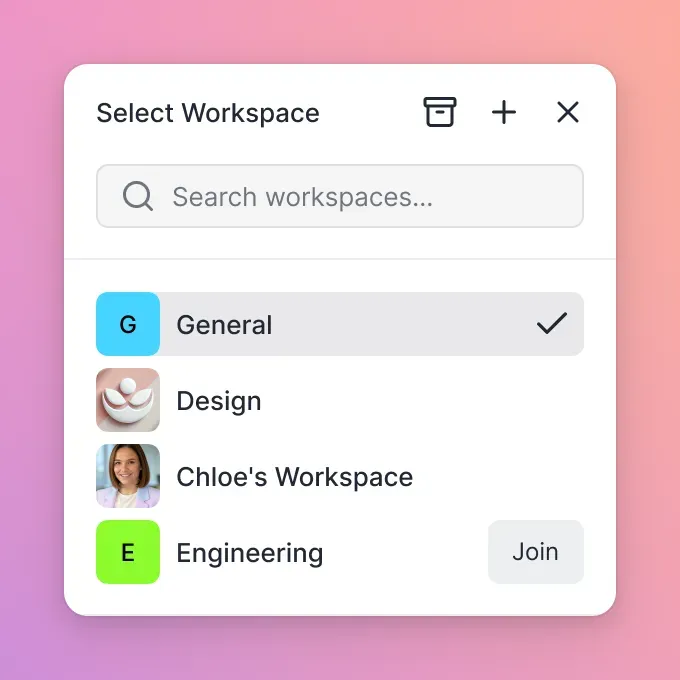


Keep Devin plans and PRs in one shared workspace
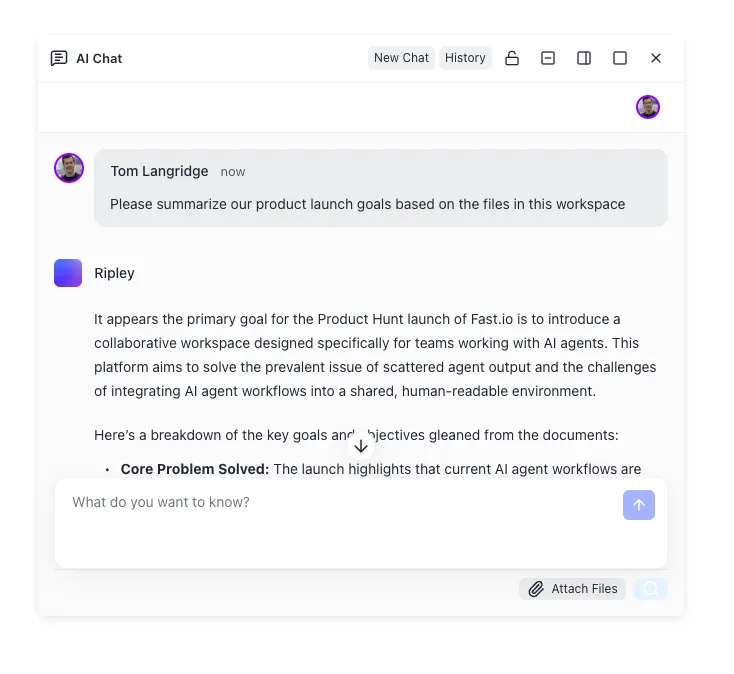
Store Interactive Planning notes, Search answers, and review packs where agents and humans share the same versioned files. Fast.io workspaces include Intelligence Mode, consolidated MCP access, and a 14-day free trial on paid org plans.
A practical first-session workflow
Official materials point people to app.devin.ai to start. The steps below are a recommended operating pattern for Devin 2.0 style sessions, grounded in the product behaviors Cognition documents (plan first, parallel agents, in-IDE review, Search and Wiki). Exact UI labels can change; treat the sequence as the workflow, not a button path.
1. Pick a bounded, testable task
Prefer work with a clear done state: a failing test to fix, a small endpoint with tests, a single-module refactor, or a documentation pass for one service. Avoid "redesign the platform" as a first multi-agent experiment. If you need breadth, split into parallel Devins with non-overlapping paths.
2. Start with Interactive Planning
Open a session and treat the plan as a first-class review. Check that listed files match the subsystem you care about. Edit the plan to state acceptance checks (commands to run, files that must not change, and PR expectations). Approve autonomy only after that alignment.
3. Use Devin Search before large edits when context is thin
If the area is unfamiliar, ask Search how the current flow works and keep answers with code citations. For open-ended questions that need wider exploration, Deep Mode is the heavier option Cognition describes. Paste the durable findings into the ticket or a shared note so the rest of the team does not depend on your session window.
4. Run parallel Devins only after path ownership is clear
Parallel agents help when packages, services, or file trees do not collide. Assign ownership explicitly: Devin A owns services/billing, Devin B owns packages/ui, Devin C owns docs. When two sessions need the same file, serialize or have a human merge intentionally in the IDE or in git.
5. Supervise with the session IDE, not only the chat
Watch diffs and tests in the cloud IDE. If you take over, pause the agent first so you are not both writing the same files, make the fix, then leave a short resume note. That habit is the difference between "pair programming with a fast junior" and "two writers thrashing a branch."
6. Close with a review package, not only a PR link
When the session finishes, collect the plan, Search notes, Wiki links, test commands, and the PR URL into one place the team already uses for review. GitHub (or your forge) holds the code review. The surrounding context still needs a home, or the next engineer re-asks Devin Search the same questions next week.
Team workflows and where session outputs should live
Release posts explain Interactive Planning, Search, and Wiki well. They rarely explain what happens when three people and five Devins produce plans, diagrams, and review notes on the same day. That operational layer is where most teams get stuck.
What each session tends to produce
- Plans: scope agreements from Interactive Planning, including rejected paths
- Search answers: cited explanations that should not die in a private chat
- Wiki pages and diagrams: architecture context regenerated on a recurring index cycle
- IDE notes: human takeover notes, fixture fixes, and "why we paused" comments
- PRs and CI output: the merge decision surface
- Review checklists: acceptance criteria the agent was told to satisfy
Storage options teams already use
Many teams start with what they have:
- Local folders or a shared network drive for quick dumps of plan text and screenshots. Fine for one engineer, weak for permissions and search.
- Git repos for anything that belongs next to code (runbooks, ADRs, generated docs). Strong for version control, awkward for expiring client shares and non-git reviewers.
- Object storage such as S3 for bulk artifacts and logs. Cheap and durable, but not a collaboration surface by itself.
- Google Drive, Dropbox, or similar for human-readable packs and screenshots. Familiar sharing, weaker agent APIs and weaker "ask the corpus" workflows unless you build them.
A shared intelligent workspace for agent handoff
When the bottleneck is not git but "where did the plan and wiki export go," a shared workspace helps. Fast.io is one option designed for agentic teams: org-owned workspaces, per-file version history, granular permissions, branded Send/Receive/Exchange shares, and Intelligence Mode that indexes files for hybrid search and citation-backed chat. Agents can work through Fast.io's consolidated MCP tooling (Streamable HTTP at /mcp, legacy SSE at /sse) while humans use the UI on the same files. Ownership transfer lets an agent prepare an org or project structure and hand it to a human without rebuilding the folder tree.
A concrete pattern for Devin 2.0 style work:
- Create a workspace per initiative (for example
billing-migration-2026). - After Interactive Planning, save the approved plan as a dated file in
/plans. - Export or paste Search answers and Wiki links into
/contextso reviewers can read them without a Devin seat. - Attach PR URLs and CI notes in
/reviews. - Enable Intelligence so the next person can ask "what did we already decide about retry policy?" against the corpus instead of mining chat logs.
- Use a branded share when an external contractor needs the review pack without full org access.
Fast.io is not a built-in Devin AI feature and does not replace Devin's cloud IDE or PR flow. It is the durable coordination layer around Devin: versioned files, searchable context, and controlled sharing after parallel sessions finish. Alternatives remain valid: keep everything in git, or store logs in S3 and share Drive folders. Choose based on who needs access and whether agents must write into the same system humans review.
Permissions and audit habits that scale
Parallel Devins raise the blast radius of a bad prompt. Keep production secrets out of session dumps. Restrict who can open shares that contain customer data. Prefer append-only activity history and clear folder ownership so you can answer "who uploaded this plan" without archaeology. On Fast.io, that means workspace and file permissions plus the activity log; on other stacks, it means IAM on the bucket plus a team convention for naming and retention.

When Devin 2.0 is a fit, and common failure modes
Devin AI still works best when tasks are concrete, environments are ready, and humans own the merge. Devin 2.0 improves concurrency and collaboration. It does not remove product judgment.
Strong fits
Migrations and refactors with many similar subtasks and a review checklist
- Backlog chores such as tests, docs, small features, and repetitive fixes
- Codebase onboarding via Search and Wiki before a larger change
- Teams that will actually edit plans instead of rubber-stamping the first draft
Weak fits
- Ambiguous goals with no acceptance tests
- Uncharted architecture work where the team still disagrees on the design
- Tasks that require private production data Devin should not see
- Parallel sessions with overlapping file ownership and no merge owner
Failure modes to watch
Plan drift: Interactive Planning was skipped or approved unread, so Devin solves the wrong problem efficiently.
- Path collisions: two Devins edit the same package; the branch becomes a merge puzzle.
- Context lost at handoff: Search answers and plans live only in one person's session UI.
- PR without evidence: reviewers get a diff but not the test commands, plan, or Wiki context.
- Tool sprawl: agents dump artifacts into chat, Drive, S3, and email with no index.
If you are evaluating Devin 2.0 for a team, run a two-week trial on real backlog slices. Measure plan edit rate, PR rework rate, and how long a second engineer needs to understand a finished session. The agent-native IDE pays off when those human metrics improve, not when session count alone goes up.
For storage and agent onboarding details around this workflow, see storage for agents and pricing. Start Devin itself from devin.ai or the app at app.devin.ai.
Sources
References used to verify factual claims in this guide.
-
Devin 2.0 launched as an agent-native IDE experience with a flexible Core plan starting at $20. Devin 2.0 supports multiple parallel Devins, each with its own interactive cloud-based IDE, plus collaboration and in-IDE review with shortcuts such as Cmd+I and Cmd+K. Devin 2.0 shipped Interactive Planning, Devin Search (including Deep Mode), and Devin Wiki with recurring repository indexing and architecture diagrams.
-
Nubank reported 8x engineering-time efficiency and over 20x cost savings using Devin on a multi-million-line ETL migration.
-
Devin 2.2 added end-to-end testing with computer use, review autofix, and reported 3x faster session startup; new users as of the post received $10 in credits.
Frequently Asked Questions
What is Devin 2.0?
Devin 2.0 is Cognition's agent-native IDE generation of Devin AI. Official launch materials describe parallel cloud Devins (each with an interactive cloud IDE), closer human collaboration during runs, in-IDE review and edit, plus Interactive Planning, Devin Search, and Devin Wiki. A flexible Core plan starting at $20 was part of the same announcement.
What new features did Devin 2.0 add?
Cognition's Devin 2.0 post highlights three named features. Interactive Planning covers codebase research and an editable plan before autonomy. Devin Search covers codebase Q&A with cited code, including Deep Mode for harder queries. Devin Wiki covers recurring repo indexing with architecture diagrams and source-linked documentation. The same release centers parallel Devins with cloud IDEs and in-session review using familiar editor shortcuts.
How is Devin 2.0 different from earlier Devin?
Earlier Devin already planned, coded, tested, and opened pull requests. Devin 2.0 shifts the product toward multi-agent concurrency, plan-first collaboration, and durable codebase understanding. You run more than one cloud Devin at a time, edit plans and code inside the agent IDE, and use Search and Wiki instead of burying all context in a single session transcript.
How do you run multiple Devins in parallel?
Cognition describes spinning up multiple parallel Devins, each with its own interactive cloud-based IDE, so you can multitask and step in when needed. In practice, give each session non-overlapping ownership (package, service, or file tree), keep a human merge owner for shared boundaries, and save plans and review notes outside the session so the team can follow concurrent work.
Where should teams store Devin 2.0 session outputs?
Keep code review in your forge (for example GitHub). Store plans, Search answers, Wiki exports, and review checklists in a place humans and agents can both reach: a git docs folder, Drive or Dropbox for quick human shares, S3 for bulk logs, or a shared intelligent workspace such as Fast.io when you need versioning, permissions, searchable context, and branded shares. Fast.io is not part of Devin; it is an optional coordination layer around agent artifacts.
Is Devin 2.0 the same as Devin 2.2?
No. Devin 2.0 is the agent-native IDE generation with parallel sessions, Interactive Planning, Search, and Wiki. Devin 2.2 is a later Cognition release that emphasizes desktop computer use for end-to-end testing, review autofix, a rebuilt interface, and faster startup. Treat 2.2 as an autonomy and UX upgrade on the 2.0 foundation, not a replacement of the parallel IDE model.
Related Resources

Keep Devin plans and PRs in one shared workspace
Store Interactive Planning notes, Search answers, and review packs where agents and humans share the same versioned files. Fast.io workspaces include Intelligence Mode, consolidated MCP access, and a 14-day free trial on paid org plans.