Claude Code vs GitHub Copilot: Which AI Coding Tool Wins in 2026?
Claude Code scored 88.6% on SWE-bench Verified with Opus 4.8, while GitHub Copilot's agent mode last published 56% on the same benchmark. The gap narrows when you factor in Copilot's inline completions, multi-model flexibility, and native GitHub integration. This comparison covers where each tool wins, what the actual costs look like in 2026, and how the most productive teams combine both.


The Benchmark Gap and What It Actually Measures
Claude Code scored 88.6% on SWE-bench Verified using Opus 4.8, the highest published result for any commercial coding agent as of May 2026. GitHub Copilot's most recent published score on the same benchmark is 56%, recorded during an agent mode test in April 2025.
That 32-point gap is real, but it needs context. SWE-bench Verified measures autonomous bug-fixing: the tool receives a GitHub issue, reads the repository, and produces a patch with no human guidance. It rewards deep codebase understanding and multi-step reasoning, exactly the kind of work Claude Code was built for.
SWE-bench does not measure inline code completion speed. It does not measure how fast a developer can accept a suggestion mid-keystroke. And it does not measure integration with pull request reviews, issue tracking, or CI pipelines. Those are Copilot's strengths, and no existing benchmark captures them well.
There is also an important detail: GitHub Copilot now offers Claude's own models (Opus 4.8 and Sonnet 4.6) as selectable options. The SWE-bench gap is not purely about model quality. It reflects the difference between Claude Code's purpose-built terminal agent harness (with subagent orchestration, memory, and full shell access) and Copilot's IDE-embedded agent mode. The same underlying model performs differently depending on the scaffolding around it.
Both tools have improved rapidly through 2026. Claude Code jumped from 80.8% (Opus 4.6, February 2026) to 88.6% (Opus 4.8, May 2026) on SWE-bench. Copilot added agent mode GA across VS Code and JetBrains in February 2026, introduced agentic code review in March, and shifted to token-based billing in June. The performance gap may narrow further, but the architectural difference between a terminal agent and an IDE companion will persist.
Related guides
- GitHub Copilot vs ChatGPT: Which AI Tool is Best for Coding?Choosing between GitHub Copilot and ChatGPT depends on where you are in the software development lifecycle. This...
- Cline vs Continue: Which AI Coding Tool Should You Use?US search volume for "cline vs continue" is about 140 queries per month, but most writeups still treat the two as the...
- Claude Cowork vs Microsoft Copilot: Same Model, Different WorkflowsClaude Cowork and Microsoft Copilot Cowork both run on Claude's agentic model, but they target different workflows. The...
- Claude Code vs OpenCode: Which Terminal AI Agent Fits Your WorkflowClaude Code handles roughly 4% of all public GitHub commits, while OpenCode has collected 179,000 stars as the leading...
- How to Use Claude Code Plan Mode for Safer Autonomous CodingAI-generated pull requests contain 75% more logic errors than human-written code, and those mistakes compound across...
- Is Claude Code Free? Free Tier, Credits, and Budget Options ExplainedClaude Code requires a paid Anthropic account or API credits, but "paid" does not have to mean $20 per month. Free API...
More on this subject: Claude and Claude Code (278 guides)
How Each Tool Approaches Code Generation
Claude Code and GitHub Copilot solve different problems in different environments. Understanding the architectural split helps explain why developers increasingly run both.
Claude Code: Terminal-First Autonomous Agent
Claude Code runs in your terminal. You launch it with the claude command, point it at a task, and it reads your entire repository, executes shell commands, runs tests, manages git operations, and edits files across your project. It operates on Anthropic's models (Opus 4.8 by default, Sonnet 4.6 for roughly 70% of daily tasks) and can process up to 1 million tokens of context, enough to hold most codebases in a single session.
The memory system gives Claude Code persistent project context through CLAUDE.md files. These files store project conventions, architecture notes, and working preferences that survive across sessions. Combined with a configurable permissions model that lets you auto-approve certain tool categories while requiring confirmation for others, Claude Code behaves more like an autonomous team member than a suggestion engine.
MCP (Model Context Protocol) support is first-class. You can connect external tools, databases, and APIs directly into the agent's workflow. This includes workspace platforms like Fast.io, which exposes its own MCP server for file operations, AI-powered search, and agent-to-human handoff. A Claude Code session can read from and write to shared workspaces where both agents and humans collaborate on the same files.
For complex work, Claude Code can spawn subagents for isolated tasks and run Dynamic Workflows that coordinate hundreds of parallel operations. The Agent SDK (the same framework Claude Code itself is built on) is available for teams building their own agentic systems in Python or TypeScript.
GitHub Copilot: IDE-Native Multi-Model Platform
Copilot lives inside your editor. It supports 12+ IDEs including VS Code, JetBrains, Visual Studio, Xcode, and Neovim. Its core feature is inline code completion: as you type, Copilot suggests the next line, function, or block. This is still its strongest daily-use capability and something Claude Code does not offer.
Since February 2026, Copilot's agent mode is generally available in both VS Code and JetBrains. It can plan multi-step tasks, edit files across your project, run terminal commands, and iterate on errors until tests pass. A separate cloud-based coding agent converts GitHub Issues into draft pull requests automatically, though it takes 90+ seconds to spin up per issue.
Agentic code review, shipped in March 2026, adds another layer. Copilot gathers full project context before suggesting fixes, then passes those suggestions to the coding agent to generate fix PRs. This closes the loop between review and implementation without leaving GitHub.
The multi-model approach sets Copilot apart from any single-vendor tool. It supports 15+ models including GPT-5.4-Codex, Claude Opus 4.8, Claude Sonnet 4.6, and Gemini 3.1 Pro. You can switch models per task, picking the best fit for cost, speed, or quality. For Pro+ and Enterprise users, GitHub Spark lets you describe an application in plain English and get generated code with a live preview.

Feature-by-Feature Breakdown
Here is how the two tools compare across the dimensions that matter most for daily development work.
Primary Interface
- Claude Code: Terminal CLI with optional VS Code and JetBrains extensions
- GitHub Copilot: IDE extension (12+ editors) with web and desktop interfaces
Inline Code Completion
- Claude Code: Not available. Terminal-first design does not support keystroke-level suggestions.
- GitHub Copilot: Unlimited on all paid plans. This remains Copilot's strongest daily-use feature.
Agentic Capabilities
- Claude Code: Fully autonomous. Reads repos, runs commands, writes and tests code, manages git. Supports subagents and Dynamic Workflows for parallel task execution across hundreds of operations.
- GitHub Copilot: Agent mode in IDE (GA February 2026). Cloud coding agent converts Issues to draft PRs. Agentic code review suggests and applies fixes automatically.
Model Support
- Claude Code: Anthropic models only. Opus 4.8 (default), Sonnet 4.6 for cost-effective tasks.
- GitHub Copilot: 15+ models. GPT-5.4-Codex, Claude Opus 4.8, Claude Sonnet 4.6, Gemini 3.1 Pro, and others.
Context Window
- Claude Code: Up to 1M tokens. Can index and reason over large codebases in a single session.
- GitHub Copilot: Up to 1M tokens (varies by model selected).
MCP Support
- Claude Code: First-class MCP client. Connect external tools, databases, workspace platforms, and APIs directly into the agent workflow.
- GitHub Copilot: Supports MCP connections via
.agent.mdconfiguration files.
Memory and Persistence
- Claude Code: CLAUDE.md files store project conventions and context across sessions. Persistent memory for user preferences.
- GitHub Copilot: Custom instructions via repository-level
.github/copilot-instructions.md. Enterprise customers can configure custom knowledge bases.
GitHub Integration
- Claude Code: Works with git directly via terminal commands. No native GitHub UI integration.
- GitHub Copilot: Deep GitHub integration. Issue-to-PR automation, pull request summaries, code review, and Actions workflows.
Maximum Output
- Claude Code: 128K tokens per response (Opus 4.8).
- GitHub Copilot: Varies by model selected.
The pattern is consistent. Claude Code dominates in autonomous, complex tasks where you define the goal and let the agent execute end-to-end. Copilot dominates in real-time development where you want AI suggestions while you write code, plus tight integration with GitHub's collaboration and review tools.
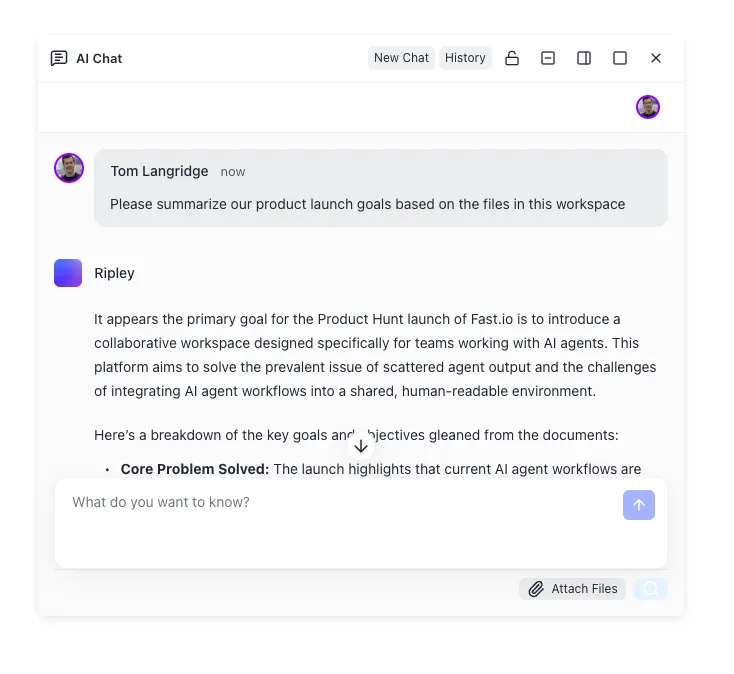


Give your AI coding agents a shared workspace
Fast.io's MCP server connects directly to Claude Code, giving your agents persistent file storage, versioning, and search. Start with a 14-day free trial.
What You'll Actually Pay in 2026
Pricing is where the comparison gets interesting. GitHub Copilot starts cheaper for individuals, but the June 2026 billing changes introduced cost variability that makes direct comparison harder at scale.
Claude Code Plans
Pro ($20/month): Access to Claude Code with rate-limited usage on a 5-hour rolling window. Good for occasional or exploratory use.
- Max 5x ($100/month): Five times Pro usage. Covers most full-day development work without hitting limits. This is the tier most active Claude Code users land on.
- Max 20x ($200/month): Twenty times Pro usage. Supports concurrent sessions and heavy autonomous workloads.
- Teams ($25/seat/month, or $20/seat annual): Max-equivalent usage per seat with admin controls, shared billing, and team management. Minimum 5 seats, maximum 150.
All Claude Code plans share their usage budget with Claude chat and other Anthropic products. Your token budget rolls over a 5-hour window starting from your first prompt, and only active processing counts against it.
For API users building on top of Claude, Sonnet 4.6 runs at $3/$15 per million input/output tokens (standard) or $1.50/$7.50 via the Batch API. Opus 4.8 runs at $5/$25 (standard) or $10/$50 in Fast Mode for 2.5x faster output.
GitHub Copilot Plans
Free ($0/month): 2,000 code completions and 50 premium requests per month. Includes agent mode and CLI access.
- Pro ($10/month): Unlimited completions plus 300 premium requests per month.
- Pro+ ($39/month): 1,500 premium requests with early access to new features including GitHub Spark.
- Business ($19/seat/month): Organization management, IP indemnity, and policy controls.
- Enterprise ($39/seat/month): Custom knowledge bases, fine-tuned models, SAML SSO, and full audit logs.
The June 2026 Billing Shift
On June 1, 2026, GitHub replaced Premium Request Units (PRUs) with token-based GitHub AI Credits. Every AI interaction now bills by tokens processed at published model rates. Chat, agent mode, code review, the cloud coding agent, CLI, and Copilot Apps all consume credits.
Monthly subscribers migrated automatically. Annual subscribers keep PRU pricing until renewal. Business and Enterprise customers received promotional included usage through August 2026.
This matters because heavy agent mode usage can consume credits fast. Developers who previously ran frequent agent sessions on a flat $10/month Pro plan reported cost increases after the switch. The exact impact depends on which model you select and how token-heavy each session runs.
Cost Per Task Comparison
For inline completions and light chat usage, Copilot Pro at $10/month is hard to beat. Claude Code's $20/month Pro plan does not include inline completions at all.
For heavy autonomous work like multi-file refactors, test generation, and complex debugging, Claude Code Max 5x at $100/month provides predictable flat-rate pricing. The equivalent workload on Copilot could cost more or less depending on credit consumption, making budgeting harder to predict.
One developer documented consuming 10 billion tokens over eight months on Claude Code. At standard API rates, that would have exceeded $15,000. The Max plan brought the actual cost to roughly $800 for the same period, a 93% reduction.
When to Use Each Tool
The most productive engineering teams in 2026 are not picking one tool over the other. They run both. Here is a decision framework based on the kind of work you do.
Use Claude Code when:
- You need to delegate a complex task and review the result rather than guide each step
- The task requires reading and reasoning across many files: refactoring, migrations, architectural changes
- You want to chain autonomous operations (read codebase, make changes, run tests, fix failures, commit)
- You need MCP integrations with external services like databases, APIs, or workspace tools
- You are building agent-to-agent workflows using the Claude Agent SDK
- You want a persistent memory system that carries project context across sessions
Use GitHub Copilot when:
- You want AI suggestions while typing, reducing keystrokes on routine code
- Your workflow centers on GitHub: Issues, PRs, code review, Actions
- You want to pick from multiple models per task (GPT for one thing, Claude for another, Gemini for a third)
- You need the free tier for occasional use or open source contributions
- Your team needs enterprise controls: IP indemnity, SAML SSO, custom knowledge bases
Running both together:
A common pattern has Copilot handling inline completions and GitHub workflow integration during normal coding, while Claude Code handles the heavy lifts: complex refactors, async tasks, and multi-step debugging sessions. The combined cost of $110/month (Copilot Pro plus Claude Code Max 5x) covers both real-time coding assistance and autonomous task execution.
Managing Agent Output Across Teams
When coding agents generate files, test results, documentation, or deployment artifacts, teams need a place to review and share those outputs. Local storage and S3 buckets work for solo developers, but they lack collaboration features. Google Drive handles sharing but was not built for agent workflows.
Workspace platforms like Fast.io fill this gap with MCP-connected workspaces where coding agents can store files and team members can review, version, and search the results using built-in intelligence. The ownership transfer model lets an agent build a workspace, then hand it off to a human reviewer while keeping admin access for future updates. For teams already using Claude Code with MCP, connecting a Fast.io workspace takes a single endpoint configuration at https://mcp.fast.io/mcp/code (while Codex connects through the Fastio plugin or its custom MCP server at https://mcp.fast.io/mcp/operations).
Sources
References used to verify factual claims in this guide.
-
Claude Code scored 88.6% on SWE-bench Verified using Opus 4.8
-
GitHub Copilot agent mode scored 56% on SWE-bench Verified in April 2025
-
GitHub Copilot agent mode reached general availability in VS Code and JetBrains in February 2026
-
GitHub replaced Premium Request Units with token-based AI Credits on June 1, 2026
-
One developer consumed 10 billion tokens over eight months, reducing cost from over $15,000 to roughly $800 with Claude Code Max
Frequently Asked Questions
Is Claude Code better than GitHub Copilot?
Claude Code outperforms Copilot on autonomous coding benchmarks, scoring 88.6% vs 56% on SWE-bench Verified. But 'better' depends on your workflow. Claude Code excels at complex, multi-step tasks you can delegate entirely. Copilot excels at real-time inline suggestions while you type and integrates deeply with GitHub's review and CI tools. For most developers, the answer is to use both.
Can Claude Code replace GitHub Copilot?
Not entirely. Claude Code does not offer inline code completions, which is Copilot's core daily-use feature. It also lacks native GitHub integration for pull request summaries, code review automation, and issue-to-PR conversion. If you primarily write code in an IDE and want AI suggestions as you type, Copilot fills a need Claude Code does not address.
What is the difference between Claude Code and Copilot?
Claude Code is a terminal-native autonomous agent that reads your entire codebase, executes commands, and completes multi-step tasks independently. GitHub Copilot is an IDE extension that provides inline code suggestions, chat, and agent mode for multi-file edits. Claude Code uses only Anthropic models with deep MCP integration, while Copilot supports 15+ models from multiple providers and ties into GitHub's ecosystem of Issues, PRs, and Actions.
Which AI coding tool is best for 2026?
No single tool covers everything. Claude Code leads in autonomous task completion and deep codebase reasoning. GitHub Copilot leads in inline completions, multi-model flexibility, and GitHub ecosystem integration. The most effective approach for active developers combines Copilot for daily coding (starting at $10/month) with Claude Code for complex tasks ($100/month for the Max 5x tier).
Does Claude Code work with VS Code?
Yes. Claude Code ships extensions for both VS Code and JetBrains IDEs, though its primary interface is the terminal CLI. The VS Code extension integrates Claude Code within the editor, but it does not provide Copilot-style inline code completions. Both tools can run simultaneously in VS Code without conflicts.
How much does Claude Code cost compared to GitHub Copilot?
GitHub Copilot offers a free tier with 2,000 completions per month and a $10/month Pro plan. Claude Code starts at $20/month for the Pro plan. For heavy autonomous usage, Claude Code Max 5x costs $100/month with predictable flat pricing. Copilot's June 2026 shift to token-based AI Credits means heavy agent mode users may see variable costs depending on model selection and session length.
Related Resources

Give your AI coding agents a shared workspace
Fast.io's MCP server connects directly to Claude Code, giving your agents persistent file storage, versioning, and search. Start with a 14-day free trial.