Claude App: How to Download and Use Claude on Every Platform
Anthropic ships Claude across six platforms, but each one gives you different capabilities. This guide covers how to download and install the Claude app on iOS, Android, Mac, Windows, web, and Chrome, plus a breakdown of which features work where and how Claude Cowork turns the desktop app into an autonomous work tool.


How Claude's Features Differ by Platform
Claude holds a 4.7-star rating across 178,000 reviews on the iOS App Store, placing it among the highest-rated AI assistant apps on the market. But downloading the app is just the first decision. Anthropic distributes Claude across six platforms: iOS, Android, Mac, Windows, the web at claude.ai, and a Chrome browser extension. Each one unlocks a different set of capabilities, and the differences are bigger than you might expect.
The desktop app runs Claude Cowork, an autonomous agent mode that reads your files, opens apps, navigates your browser, and executes multi-step tasks without constant supervision. The Chrome extension sits in a side panel while you browse and can click, fill forms, and manage tabs on your behalf. The mobile apps carry your conversations with you but skip the agentic features entirely. And the web app at claude.ai needs no install at all.
Here is what each platform supports:
iOS and Android
- Chat, voice input, image analysis, file uploads
- Conversation sync across devices
- No Cowork, no MCP server connections, no Projects creation
Mac and Windows Desktop
- Everything on mobile, plus Cowork autonomous agent
- MCP server connections for local tools, files, and databases
- Desktop Extensions for linking Claude to calendars, messaging apps, and local files
- Claude Code integration for developers
Web at claude.ai
- Full chat experience with no install required
- Projects for organizing conversations with custom instructions
- Artifacts library for saving and reusing generated content
- Receives new features before other platforms
Chrome Extension (paid plans only)
- Browser agent that reads pages, clicks elements, and navigates tabs
- Multi-tab management through tab groups
- Two permission modes for controlling how much autonomy Claude gets
Choosing the right platform depends on what you need Claude to do. If you want to chat and analyze documents, any platform works. If you want Claude to work on your files without you supervising every step, the desktop app is the only option.
Related guides
- How to Deploy OpenClaw on DigitalOcean App PlatformDigitalOcean gives you three ways to run OpenClaw: a 1-Click marketplace Droplet, the managed App Platform for...
- How to Download OpenClaw: Every Installation Method ExplainedOpenClaw passed 500,000 running instances in early 2026, but choosing the right installation method still trips up...
- Claude Pricing Guide: Every Plan ComparedThe average Claude Code developer spends $150 to $250 per month before optimization, yet most pricing guides only...
- Claude Desktop App: Features, Setup, and TipsThe Claude desktop app bundles Chat, Cowork, and Code into a single native application for Mac, Windows, and ChromeOS....
- Is Claude AI Free? What You Get Without Paying in 2026Claude.ai drew nearly a billion visits in May 2026, and most users start on the free tier. Anthropic's $0 plan includes...
- Claude Context Window: Sizes, Limits, and How to Maximize ItClaude's context window determines how much text fits in a single conversation, and it varies more than most developers...
More on this subject: Claude and Claude Code (278 guides)
How to Install Claude on iPhone and Android
Both mobile apps are free to download. Conversations sync across devices when you sign in, so you can start a thread on your phone and continue it on your laptop later.
iPhone and iPad
Open the App Store and search for "Claude by Anthropic," or go directly to the App Store listing. Tap "Get" to download. The app requires iOS 18.0 or later, which means you need an iPhone XS or newer. Older devices running iOS 17 or below cannot install the current version. The app is about 202 MB.
Once installed, sign in with your Anthropic account or create one using your Google account or email address. You can start chatting immediately on the free plan.
Android
Open the Google Play Store and search for "Claude by Anthropic," or navigate to the Play Store listing directly. Tap "Install" to begin the download. The app requires Android 10 or higher and weighs about 156 MB.
What you get on mobile
Both apps support text conversations, voice dictation in over 100 languages, photo and screenshot analysis, PDF reading, and web search with inline citations. If you subscribe to Pro or Max, you also get access to the Opus model family on mobile, not just Sonnet.
The main gap is agentic features. You cannot create new Projects on mobile, though you can open and work within existing ones created on the web or desktop. Claude Cowork does not run on phones or tablets. And there is no MCP server support, so Claude on mobile cannot connect to local tools or external workspaces.
One mobile-specific strength is voice mode. You can speak to Claude and hear responses read back, which makes it useful for brainstorming while commuting or getting quick answers when typing is inconvenient. Anthropic made voice mode free for all plan tiers in early 2026.
Installing Claude Desktop on Mac and Windows
The desktop app is where Claude becomes most capable. Beyond standard chat, it runs Cowork for autonomous tasks, connects to local tools through MCP servers, and supports Desktop Extensions that link Claude to your files, calendars, and other applications on your machine.
macOS
Go to claude.com/download and download the macOS installer. Open the DMG file, drag Claude to your Applications folder, and launch it. You need macOS 11 (Big Sur) or later. The app ships as a universal binary, so it runs natively on both Intel and Apple Silicon Macs.
Windows
Visit claude.com/download and pick the Windows installer. Anthropic provides separate downloads for x64 and ARM64 architectures. Most Windows PCs use x64, but newer ARM-based laptops like the Surface Pro need the ARM64 version. You need Windows 10 or later. The Windows version now has full feature parity with macOS, including Cowork, plugins, and MCP support.
Setting up after install
After launching Claude Desktop, sign in with your Anthropic account. To enable Cowork or Desktop Extensions, open Settings and configure your permissions. Claude asks for access to specific folders and apps as needed, and you can grant or revoke access at any time.
The desktop app needs to stay running for Cowork to complete background tasks. If you close the app or put your computer to sleep, any in-progress Cowork task pauses until you reopen it.
Connecting to external tools through MCP
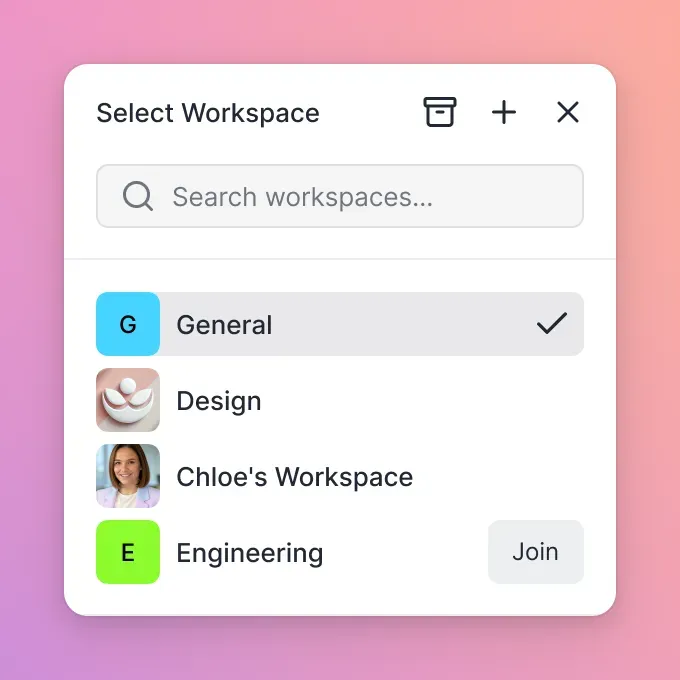
Claude Desktop's MCP support lets you connect Claude to databases, file systems, and external services. For developers and teams building AI-powered workflows, this is the most important differentiator. You can configure local MCP servers in the app's settings, or connect to remote servers like Fast.io's MCP endpoint to give Claude access to shared workspaces, file storage with versioning, and built-in semantic search.
The practical benefit: Claude can pull reference documents from a shared workspace, process them, and write results back, all without manual file transfers. If you store project files on a platform like Fast.io, Google Drive, or S3, MCP makes those files accessible to Claude without downloading them first.


Stop emailing files between Claude and your team
Connect Claude Desktop to a shared Fast.io workspace through MCP.
What the Web App and Chrome Extension Unlock
If you prefer not to install anything, claude.ai is the fast way to start. Open it in any modern browser, create an account, and you are chatting within a minute. The web app receives new features before they roll out to desktop or mobile, so it is often the first place to try recent additions.
The web version includes Projects, which let you organize conversations around specific tasks or topics, upload reference documents, and set custom instructions that Claude follows within that project. Projects are not available on mobile and make the web app a strong choice for research-heavy work where you want to maintain context across many conversations.
You also get the Artifacts library on the web, where Claude can save generated content like code, documents, and data tables for you to revisit and edit later. This library persists across sessions and is accessible from the sidebar.
The Chrome extension
Claude in Chrome takes things further. Instead of switching between Claude and your browser, the extension opens a side panel that can see and interact with your active tabs. Claude reads page content, clicks buttons, fills out forms, and navigates between pages.
One standout feature is multi-tab management. Drag tabs into a Claude-designated tab group, and Claude can view and interact with all grouped tabs at once. This is useful for comparing information across several pages, populating forms with data from different sources, or consolidating research from multiple sites into a single summary.
The extension offers two permission modes. "Ask Before Acting" is the default: Claude shows you what it plans to do and waits for approval. Once you greenlight a plan, Claude works through the steps independently but still pauses for anything high-risk, like a purchase or sharing personal data. "Act Without Asking" removes the approval step and lets Claude execute freely, which works well for repetitive, low-stakes tasks.
Claude in Chrome is currently in beta and requires a paid plan: Pro, Max, Team, or Enterprise. Free-tier users can access the web app at claude.ai but not the browser extension.
Claude Cowork: Autonomous Tasks on Desktop
Claude Cowork is the feature that separates the desktop app from every other platform. Available on Pro ($20/month), Max ($100 or $200/month), Team ($30/user/month), and Enterprise plans, Cowork lets Claude complete work on its own rather than just answering questions in a conversation.
Where regular chat gives you explanations and suggestions, Cowork delivers finished outputs. You describe what you need, Claude builds a plan, you review and approve it, and then Claude executes each step. It can open applications, create and edit files on your local drive, navigate websites, fill spreadsheets, and assemble slide decks.
Practical use cases
- Schedule recurring tasks: email triage, metric pulls, weekly digest generation
- Batch-rename and organize files using intelligent naming conventions
- Extract structured data from screenshots into spreadsheets
- Draft reports and presentations by pulling from multiple source documents
- Automate multi-step browser workflows like filling out forms across several sites
Cowork includes approval gates that keep you in control. Before taking any action, Claude shows its plan. You can refine the plan, approve individual steps, or cancel entirely. For sensitive actions like sending messages or modifying shared data, Claude pauses and asks for explicit permission even after you have approved the overall plan.
When Claude lacks a direct connector for what you need, it falls back to computer use: navigating your screen by clicking, typing, and scrolling just as you would. This means Cowork can interact with any application on your machine, not just ones with official integrations.
Giving Cowork access to shared workspaces
Cowork's file access is limited to your local machine by default. For teams that need Claude to read from and write to a shared location, connecting an external workspace through MCP fills the gap.
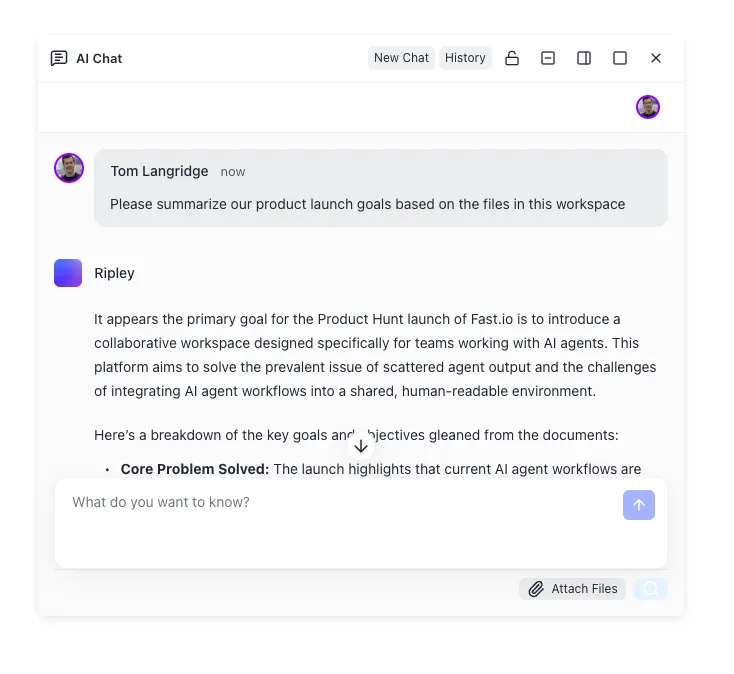
Fast.io's MCP server gives Claude access to shared workspaces with storage included in every plan, built-in semantic search through Intelligence Mode, and full file versioning. An agent can pull reference documents from a shared workspace, process them locally in Cowork, and push the results back for a teammate or client to review. Local storage options like S3 or Google Drive work too, though they require more setup and lack the built-in indexing that makes files immediately searchable.
This pattern works well for teams that want to hand off agent-generated output to humans without emailing files around. The workspace keeps an audit trail of every file change, so you can trace what Claude did, when it did it, and which version of a file it produced.
Sources
References used to verify factual claims in this guide.
-
4.7-star rating with 178,000 ratings on iOS App Store iOS app requires version 18.0 or later, app size 202.3 MB
-
Desktop requires macOS 11 (Big Sur) or higher, Windows 10 or higher
-
Android app requires Android 10 or higher
-
Cowork available on Pro ($20/month), Max ($100-$200/month), Team ($30/user/month), and Enterprise plans
Frequently Asked Questions
Is there a Claude app for iPhone?
Yes. Claude by Anthropic is available for free on the iOS App Store. It requires iOS 18.0 or later, which covers iPhone XS and newer models. The app supports chat, voice input, image analysis, document uploads, and web search with citations. Paid plan features like access to Opus models also work on the mobile app.
How do I download the Claude app?
Go to claude.com/download to find links for every platform. For iPhone, search 'Claude by Anthropic' in the App Store. For Android, search in the Google Play Store. For Mac or Windows, download the installer from the Claude website. You can also skip the download entirely and use claude.ai in any browser.
Is the Claude app free?
The Claude app is free to download and use on all platforms. The free plan gives you access to Claude Sonnet with daily usage limits that reset every few hours. Pro ($20/month) adds Cowork, Claude Code, and access to Opus models. Max ($100 or $200/month) provides the same features with more usage capacity.
Does Claude have an Android app?
Yes. The Claude Android app is on the Google Play Store and requires Android 10 or higher. It includes the same core features as the iOS version: chat, voice input, image analysis, PDF reading, and conversation sync across all your devices.
What is Claude Cowork?
Claude Cowork is an autonomous agent feature exclusive to the Claude desktop app on Mac and Windows. Instead of just chatting, Cowork lets Claude execute multi-step tasks on your computer: reading and writing files, navigating your browser, creating documents, and running scheduled automations. It requires a paid plan (Pro, Max, Team, or Enterprise) and shows you a plan for approval before taking any action.
Can I use Claude on multiple devices at the same time?
Yes. Sign in with the same Anthropic account on any combination of devices and your conversations sync automatically. You can start a chat on your phone, add to it on the web, and continue on desktop. Cowork tasks are tied to the desktop where they run, but the conversation history is visible everywhere.
Does the Claude desktop app support MCP servers?
Yes. Claude Desktop supports Model Context Protocol (MCP) servers, which let Claude connect to local tools, databases, file systems, and external services like Fast.io workspaces. MCP connections are a desktop-only feature and are not available on mobile or the web app.
Related Resources

Stop emailing files between Claude and your team
Connect Claude Desktop to a shared Fast.io workspace through MCP.