Best OpenClaw Workflows for AI Customer Case Study and Success Story Generation
Case studies influence 73% of B2B purchase decisions, yet only 34% of companies produce them consistently. OpenClaw's ClawHub registry includes brw-case-study-builder and supporting workflow skills that automate the most labor-intensive parts of case study production. This guide ranks the top skills for each pipeline stage, from CRM data collection through formatted output, and shows how to chain them into a repeatable workflow.

Why Most B2B Teams Underproduce Case Studies
73% of B2B decision-makers say case studies influence their purchasing decisions. Yet only 34% of companies deploy case studies effectively. That 39-point gap has nothing to do with awareness. Marketing teams know case studies drive pipeline. The bottleneck is production cost.
A single B2B case study requires customer coordination, metric verification, narrative structuring, brand-voice alignment, and formatting for multiple channels before anyone even requests customer approval. Companies that publish high-quality case studies generate 45% more qualified leads on average, but the effort involved means most teams produce fewer than they should.
OpenClaw's skill ecosystem on ClawHub offers purpose-built tools for each stage of case study production. The brw-case-study-builder skill, listed in the VoltAgent/awesome-openclaw-skills repository, handles narrative formatting. Pair it with CRM integration, web research, and voice-consistency skills and you get a pipeline that handles the repetitive stages while keeping human judgment where it matters: story selection, customer relationships, and final sign-off.
This guide covers the OpenClaw skills that handle each stage of case study generation and shows how to chain them into a repeatable workflow.
Related guides
- How to Build Scalable Lead Generation Workflows in ClayWaterfall enrichment increases contact find rates by up to 80%, yet many sales teams fail to scale outbound workflows...
- How to Use DALL-E 3 Image Generation in Clay GTM WorkflowsThe query "dall-e 3 ai image generator" draws about 60,500 monthly US searches at a keyword difficulty of 53 and...
- Best OpenClaw Workflows for AI Storyboard and Scene PlanningOver 1 million professionals use AI storyboarding tools, but most require manual interaction per frame. OpenClaw's...
- Best OpenClaw Workflows for AI Social Media Post CreationOpenClaw social media post creation workflows chain content ideation, copy generation, image creation, and...
- Best OpenClaw Workflows for AI Workflow Automation Builder ToolsClawHub's curated index lists 529 skills across its Browser & Automation and Productivity & Tasks categories, yet most...
- Top OpenClaw Workflows for AI Print-on-Demand Product Design AutomationThe print-on-demand market hit $12.96 billion in 2025, growing at a 24.81% CAGR, yet most sellers still create designs...
More on this subject: OpenClaw Workflows and Integrations (69 guides)
How We Evaluated These Workflows
We evaluated each skill against five criteria: data intake (can it pull structured customer outcomes?), narrative structure (does it produce a recognizable challenge/solution/results format?), brand consistency, output quality, and workflow integration with other OpenClaw skills.
Every skill listed here was verified against ClawHub and the VoltAgent/awesome-openclaw-skills repository on GitHub. Skills without current documentation or active maintenance were excluded.
Skills covered in this guide:
- brw-case-study-builder (brianrwagner): Formats client outcomes into structured case study documents
- sovereign-brand-voice-writer (ryudi84): Maintains brand voice consistency across generated content
- attio-enhanced (capt-marbles): Pulls customer data from Attio CRM with batch operations
- Brave Search: Adds industry benchmarks and competitive context via web research
- Summarize: Distills long transcripts and documents into structured summaries
1. brw-case-study-builder by brianrwagner
Listed in the VoltAgent/awesome-openclaw-skills repository, brw-case-study-builder is a ClawHub skill designed for structured case study formatting. Where most AI writing tools treat case studies as generic long-form content, this skill targets the specific document structure that B2B buyers expect: a problem the reader recognizes, a solution they can evaluate, and results they can compare against their own situation.
Key strengths:
- Structures content around challenge, approach, and results rather than generic article templates
- Outputs formatted for sales and marketing use cases like proposals and website pages
- Purpose-built for B2B social proof narratives
Best for: Sales and marketing teams that already have customer outcomes collected and need consistent, repeatable formatting across verticals.
Limitations: This skill handles narrative structure and formatting. It does not collect customer data or conduct interviews. You need upstream data collection (covered later in this guide) or manual input for the raw material.
Industry-specific case studies boost conversion rates by up to 58%, which means consistent formatting across verticals can be a meaningful competitive advantage when it removes the production bottleneck that limits how many stories your team publishes.


Give your case study pipeline a shared workspace
Your OpenClaw agent writes files through MCP, your sales team finds the right story with a question.
Voice Consistency and Customer Data Collection
Case study quality depends on two inputs that most teams handle manually: a consistent brand voice and accurate customer data. Without voice consistency tooling, case studies written by different people across different quarters start sounding like they came from different companies. On the data side, inaccurate metrics pulled from outdated records can undermine a case study's credibility before it reaches a prospect.
The two ClawHub skills below address one constraint each.

2. sovereign-brand-voice-writer by ryudi84
Brand drift becomes visible when prospects read two of your case studies back-to-back and notice the tonal mismatch. The sovereign-brand-voice-writer skill by ryudi84 addresses this by maintaining voice consistency across generated content. It is designed to learn from your existing published material and apply that voice to new content your OpenClaw agent produces, including output from brw-case-study-builder.
Key strengths:
- Builds a voice profile from your actual content rather than generic templates
- Applies consistently across content generated by other skills in the pipeline
- Helps teams maintain editorial coherence over long production timelines
Best for: Teams producing case studies across multiple writers or over extended periods where voice drift would otherwise accumulate unnoticed.
3. attio-enhanced by capt-marbles
Customer data is the raw material for every case study. The attio-enhanced skill by capt-marbles connects OpenClaw to Attio CRM, providing batch operations for pulling structured customer records. For case study workflows, CRM data is the natural starting point: deal value, implementation timeline, measurable outcomes, and contact details for publication approval requests.
Key strengths:
- Batch operations for pulling data across multiple customer records
- Structured output that downstream skills can consume without reformatting
- Keeps customer information centralized in your CRM
Best for: Teams using Attio CRM that want their case study pipeline to pull outcome data directly rather than copying from deal records by hand. For other CRMs, the workcrm skill by extraterrest provides a lightweight, local-first alternative.
Research Context and Transcript Distillation
A case study that says "our customer reduced costs by 30%" makes a claim. One that adds "compared to the industry average reduction of 8%" makes an argument. These two skills handle the research and distillation stages that turn raw customer data into contextualized stories.
The practical constraint here is source quality. Your CRM contains what the customer told you. Industry benchmarks come from analyst reports, public filings, and trade publications that your team would normally spend hours finding manually. And the raw material for compelling quotes, the actual customer conversations, sits buried in 45-minute call recordings that nobody has time to re-watch. Automating the research and distillation steps is what turns a pipeline from "slightly faster writing" into "fundamentally different production economics."
4. Brave Search
The brave-search skill connects your OpenClaw agent to the Brave Search API for real-time web research, keyword discovery, and competitive analysis. In a case study workflow, it fills the gap between customer-provided metrics and the industry context that makes those metrics persuasive.
Use Brave Search in your case study pipeline to:
- Find industry benchmarks that contextualize your customer's results against market averages
- Research competitor positioning to sharpen your differentiation claims
- Verify third-party statistics before including them in published content
- Discover recent trends or regulatory changes that add timeliness to the story
The skill returns structured results with source citations, so you can trace every external data point back to its origin. That traceability matters when a customer's legal team reviews the case study before approving publication.
5. Summarize
Customer conversations produce material that is too long for a case study but too valuable to discard. Call transcripts, Slack threads, support tickets, and quarterly business reviews all contain the specific outcomes and quotes that make case studies believable. The summarize skill is one of ClawHub's most-installed skills with over 10,900 downloads. It condenses long documents into structured summaries that your formatting skills can consume as input.
Key strengths:
- Distills lengthy transcripts into the three to five talking points that matter for the narrative
- Accepts multiple input formats without requiring manual reformatting
- Active maintenance and high adoption on ClawHub, reducing the risk of abandoned-skill problems
Best for: Teams that record customer calls or collect detailed feedback in long-form documents but need to extract the specific outcomes and quotes that make a case study compelling. Summarize handles the reduction step so brw-case-study-builder gets clean, focused input instead of a 45-minute call transcript.
Chaining Skills Into a Complete Case Study Pipeline
Individual skills handle individual steps. The production efficiency comes from chaining them into a pipeline that moves customer data from CRM through formatting and out to your team without manual handoffs between stages.
A practical five-stage pipeline:
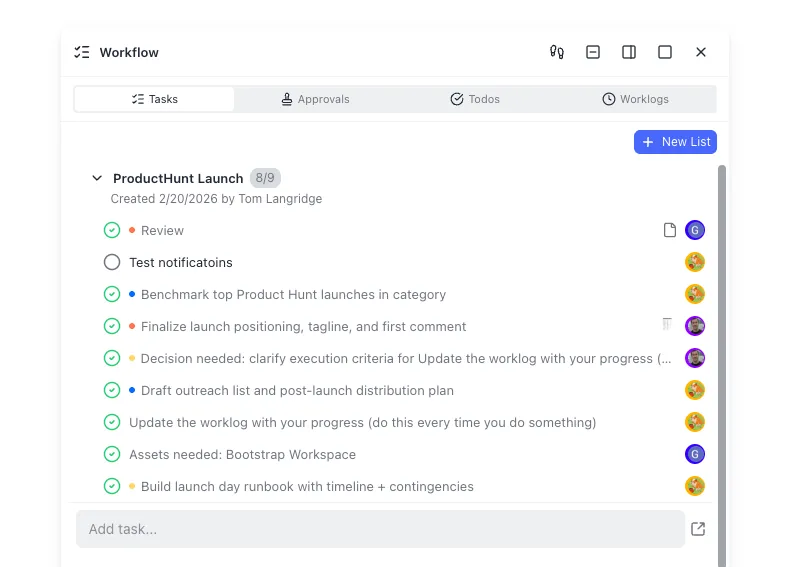
- Collect. Pull customer outcomes from your CRM using attio-enhanced or workcrm. Export deal metrics, implementation timeline, and key contact information for approval requests.
- Research. Use Brave Search to find industry benchmarks and competitive context that frame your customer's results within their market.
- Distill. Run call transcripts or project notes through Summarize to extract the core narrative: what problem existed, what changed, and what the measurable outcome was.
- Format. Feed collected data, research context, and distilled narrative into brw-case-study-builder to produce a structured case study with challenge, solution, and results sections.
- Polish. Apply sovereign-brand-voice-writer to ensure the finished document matches your brand voice before routing it to human review.
Each stage's output becomes the next stage's input. OpenClaw's skill chaining means you configure this sequence once and reuse it for every new customer story your team wants to produce.
Where case study files go after generation
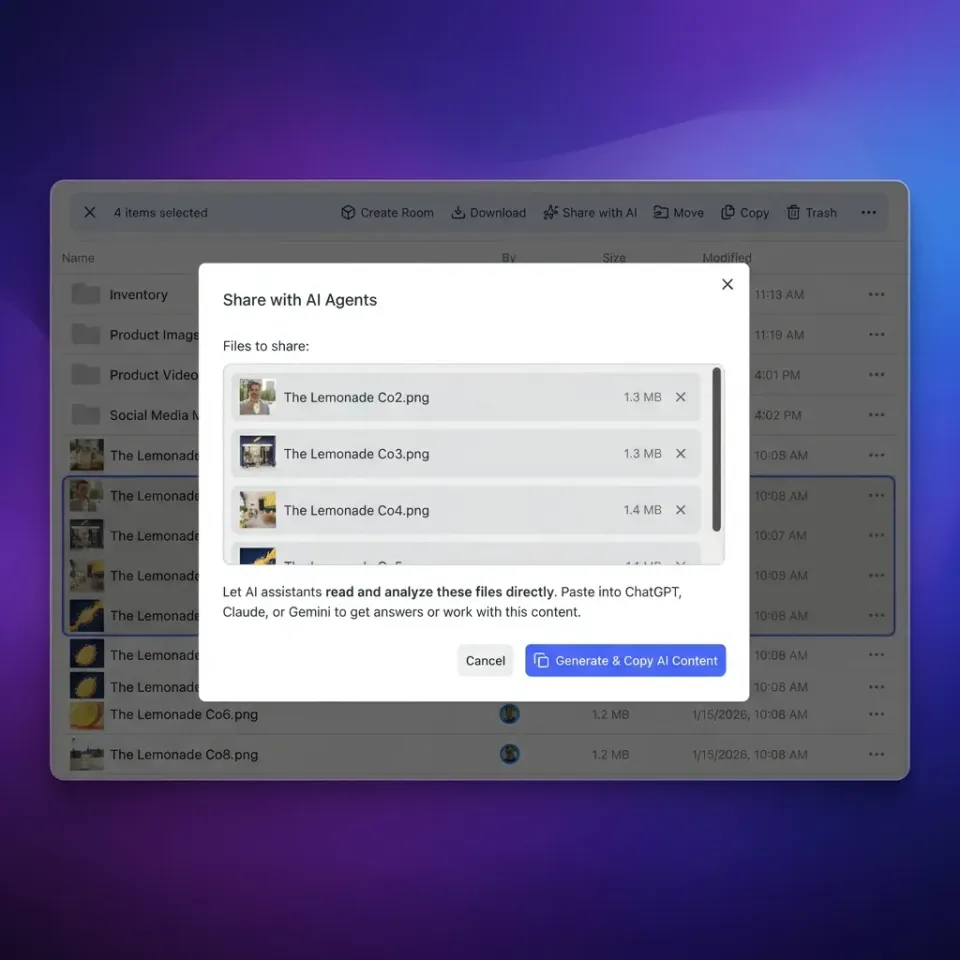
A case study pipeline produces documents that several teams need at the same time. Sales wants PDFs for proposals. Marketing needs web-ready versions for the website. Customer success needs versioned copies they can send to clients for sign-off. Storing generated content in a shared workspace where both your agent and your team can access files keeps everything organized.
Fast.io workspaces let agents and humans collaborate on the same files. Enable Intelligence for the workspace and your entire case study library becomes searchable by meaning, not just filename. Your OpenClaw agent can write finished case studies to a workspace through the Fast.io MCP server, and your sales team can find the right one by asking "case studies from healthcare companies with over 50% cost reduction" instead of browsing folder hierarchies.
For teams coordinating before publishing, Fast.io provides granular permissions, version history, and a detailed activity log of human and agent actions. Team members can leave contextual comments directly on drafts while the agent updates versions, ensuring a complete record of every revision.
Alternatives include Google Drive for simpler sharing needs or S3 for bulk storage at lower cost, though neither provides built-in semantic search across your document library. Fast.io offers a 14-day Business Trial (credit card required) to explore shared workspaces and MCP tooling, with paid plans starting at $9.99/month.
Sources
References used to verify factual claims in this guide.
- 1 The Power of Social Proof: How B2B Case Studies Influence Purchasing Decisions, Heinz Marketing Accessed
73% of B2B decision-makers say case studies influence their purchasing decisions
-
Only 34% of companies deploy case studies effectively Companies publishing high-quality case studies generate 45% more qualified leads Industry-specific case studies boost conversion rates by up to 58%
-
brw-case-study-builder skill turns client wins into formatted case studies
-
Summarize skill has over 10,900 downloads on ClawHub
Frequently Asked Questions
Can OpenClaw generate case studies automatically?
OpenClaw can automate the formatting and structuring stages of case study production using skills like brw-case-study-builder on ClawHub. The skill takes collected customer outcomes and organizes them into a challenge, solution, and results format. Full end-to-end automation still requires human oversight for customer relationship management, metric verification, and final approval before publication.
What is the best AI tool for writing case studies?
For teams already using OpenClaw, brw-case-study-builder by brianrwagner is the most targeted option because it produces structured case study formats rather than generic long-form content. Standalone AI writing tools like Jasper and Copy.ai offer case study templates but lack the skill-chaining workflow that lets you connect data collection, research, and formatting into a single automated pipeline.
How do I automate customer success stories with AI?
Start with a data collection step that pulls outcomes from your CRM using a skill like attio-enhanced. Add a research stage with Brave Search for industry context, a summarization stage to distill raw customer conversations, and a formatting stage with brw-case-study-builder to structure the final document. OpenClaw's skill chaining connects these stages so each one feeds directly into the next without manual copy-paste.
What OpenClaw skill creates formatted case studies?
The brw-case-study-builder skill by brianrwagner on ClawHub is purpose-built for this. It turns client wins into formatted case studies with challenge, solution, and results sections ready for proposals, social proof pages, and sales conversations. The skill is listed in the VoltAgent/awesome-openclaw-skills repository on GitHub.
How long does it take to produce a case study with OpenClaw?
The formatting and structuring stages take minutes rather than the days or weeks a manual process requires. The time investment shifts to upstream work: collecting customer data, getting permission to share specific metrics, and reviewing the final output for accuracy. Most teams find that the customer approval cycle, not the writing itself, is the actual bottleneck in case study production.
How many case studies does a B2B company need?
There is no universal number, but the goal is coverage across your key verticals and use cases. Industry-specific case studies boost conversion rates by up to 58%, so one generic story will not perform as well as targeted stories for each market you sell into. A pipeline that automates the production stages lets you build that library faster without proportionally increasing headcount.
Related Resources

Give your case study pipeline a shared workspace
Your OpenClaw agent writes files through MCP, your sales team finds the right story with a question.