Best OpenClaw Tools for AI Code Debugging and Error Resolution
The openclaw doctor --deep --yes command auto-resolves roughly 80% of reported OpenClaw errors, yet most developers still troubleshoot by scanning raw logs or restarting the gateway. This guide ranks every debugging tool in the OpenClaw ecosystem, from built-in CLI diagnostics through community skills for code review, root-cause analysis, and automated test generation, so you can fix problems faster and prevent them from recurring.

Why a Debugging Toolkit Matters for AI Agent Workflows
A 2026 community survey from Blink found that self-hosting OpenClaw means owning every layer of the error surface, with users spending roughly 15 hours per month on maintenance tasks related to gateway configuration, Docker volumes, and skill permissions. That number drops sharply when you follow the official triage ladder instead of guessing.
OpenClaw's debugging approach works in layers. Built-in CLI commands handle the most common problems automatically. Community skills extend coverage to code-level bugs, security patterns, and test gaps. Workflow-level tools prevent errors from reaching production in the first place. The tools ranked below follow that same order: diagnose first, review second, prevent third.
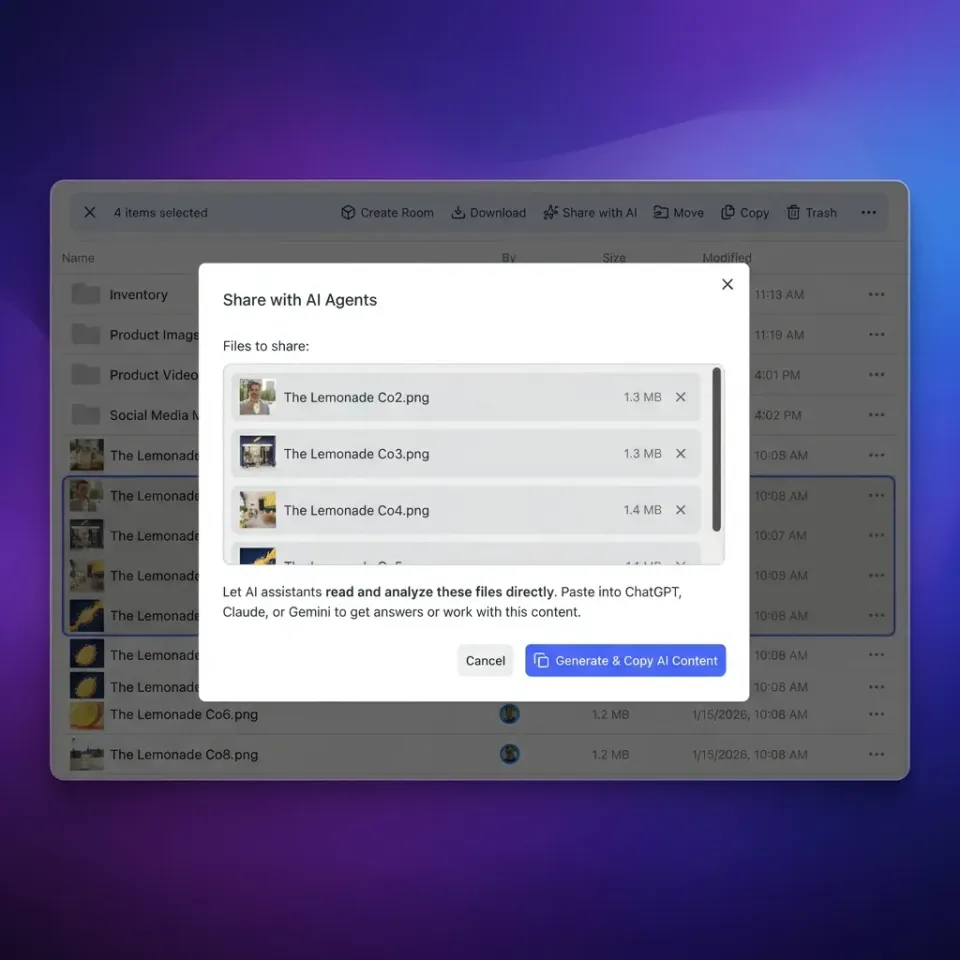
If your agent workflows produce files that need to survive across sessions or get handed off to a human reviewer, persistent storage matters as much as debugging. Fastio workspaces give agents a place to store outputs, organize them into projects, and transfer ownership when the work is done. That means debug logs, generated artifacts, and final deliverables all live in one shared location rather than scattered across local directories.
Related guides
- Best n8n Tools for AI Agents: Top 10 Nodes for 2026n8n changed AI automation with its visual workflow builder. We rank the best nodes and integrations for building...
- Best Tools for CrewAI Agents: Top Picks for 2026CrewAI agents need good tools to be useful. The framework handles coordination, but external integrations let agents...
- Best OpenClaw Tools for AI Code Generation and ScaffoldingClawHub's Coding Agents & IDEs category lists over 1,200 skills, but most handle CI pipelines or project management...
- Top OpenClaw Tools for Coding AgentsOpenClaw tools give coding agents the libraries and access they need to write software. With AI now handling about 45%...
- Best OpenClaw Tools for GitHub Issue Triage and Bug Report AutomationEngineering teams running five or more active repositories spend roughly 14.5 hours each week on manual issue triage...
- 8 Best OpenClaw Skills for No-Code App PrototypingGartner forecasts that 70% of new enterprise apps will use low-code or no-code technologies by 2026. OpenClaw's ClawHub...
More on this subject: OpenClaw Tools (101 guides)
Built-In CLI Diagnostics (The Official Triage Ladder)
OpenClaw ships a five-command diagnostic sequence that covers most problems without installing anything extra. Run them in order:
openclaw status checks whether the runtime is active and reports basic connectivity. Look for "Runtime: running" with "Connectivity probe: ok" in the output.
openclaw gateway probe tests gateway connectivity specifically. The --json flag gives structured output you can pipe to monitoring tools.
openclaw doctor runs configuration and system checks. The --deep flag adds thorough validation, and --yes auto-applies safe fixes. According to the official OpenClaw docs, openclaw doctor --deep --yes auto-resolves approximately 80% of all reported errors.
openclaw channels status --probe verifies connected messaging channels. This catches silent failures where messages get dropped without error logs.
openclaw logs --follow streams real-time logs for anything the previous commands didn't catch. Filter for error-level entries to isolate specific failure patterns before digging into individual stack traces.
The doctor command deserves special attention. It removes invalid config keys, applies legacy renames, normalizes state files, and writes a backup before making changes. Running the doctor command after version upgrades clears stale credentials and catches dependency issues early.

How to Fix the Most Common OpenClaw Gateway Errors
Gateway issues account for the largest share of OpenClaw support questions. The official troubleshooting docs catalog specific error patterns and their fixes:
Port conflicts (EADDRINUSE 18789) happen when an orphan gateway process holds the default port. Run lsof -i :18789 to find the PID, then kill it and restart the gateway.
Protocol mismatches show up as Gateway 4008 errors when your GATEWAY_URL uses ws:// but the server expects wss://, or vice versa. Correct the protocol in your .env file and restart.
Authentication failures (401 Unauthorized) are often caused by trailing whitespace in API keys. Validate with openclaw models test before digging deeper. If the error persists after an update, run openclaw doctor --fix to clear stale credentials.
Rate limiting (429 errors) from model providers can be managed by setting MAX_REQUESTS_PER_MINUTE in your config or configuring fallback models for graceful degradation. For Anthropic-specific 429 errors on long-context requests, switch to a standard context-window model or verify your credential tier.
macOS-specific gateway stalls occur when a laptop sleeps and network interfaces go down. OpenClaw versions 2026.5.26 and newer classify ENETDOWN and ENETUNREACH as benign transient errors, so upgrading is the simplest fix. For older versions, reduce maintenance sleep with sudo pmset -a sleep 0 powernap 0.


Store Debug Artifacts and Agent Outputs in One Workspace
Fastio gives your agents persistent cloud storage with built-in search, workspace organization, and ownership transfer.
Community Skills for Code Review and Error Detection
Built-in diagnostics fix infrastructure problems. Community skills catch bugs in the code your agents write and review. These are the strongest options on ClawHub:
1. autoreview (Official OpenClaw Skill)
OpenClaw's own autoreview skill provides structured code review closeout with a bundled Codex review engine. It supports multiple modes: --mode commit for already-committed work and --mode branch for PR/branch analysis. The skill prints "autoreview clean" when no actionable findings remain.
Best for: CI/PR pipelines and pre-commit quality gates.
Install: npx skills add https://github.com/openclaw/openclaw --skill autoreview
2. smart-pr-review (6-Layer Deep Analysis)
The smart-pr-review skill from fullstackcrew-alpha runs a six-layer review covering Logic, Boundaries, Performance, Security, Maintainability, and Architecture. It includes a Devil's Advocate mode that actively challenges assumptions and stress-tests code against real-world failure scenarios. Findings are tagged MUST FIX, SHOULD FIX, or SUGGESTION.
Best for: Critical codebases where you want opinionated, staff-engineer-level review.
Install: Available on ClawHub and GitHub.
3. astrai-code-review (Cost-Optimized Review)
This skill routes review tasks to different model tiers based on complexity, saving roughly 40% on inference costs compared to always using the most expensive model. Simple style checks go to smaller models while security analysis routes to larger ones.
Best for: Teams running high-volume reviews where cost matters.
4. code-security-audit (OWASP-Focused)
Combines OWASP Top 10 vulnerability scanning with dependency analysis. It checks for SQL injection, XSS, authentication bypasses, and insecure data handling patterns. Findings are grouped by severity: critical, warning, and suggestion.
Best for: Security-conscious teams shipping user-facing applications.
What Root-Cause Analysis Skills Add to Your Debugging Workflow
Code review catches surface-level issues. Root-cause analysis skills prevent the cycle of patching symptoms without understanding the underlying problem.
debug-methodology
This skill enforces a six-step debugging discipline: Reproduce, Isolate, Hypothesize, Instrument, Verify, Fix. It prevents the agent from jumping to fixes before confirming the root cause. The "no fixes without root cause first" principle sounds obvious, but AI agents have a strong tendency to guess-and-patch when left unsupervised.
Best for: Hard bugs and performance regressions where initial attempts at fixing make the problem worse.
exec-error-doctor
Diagnoses command failures across tools, including OpenClaw exec output, shell errors, and GitHub CLI failures. Instead of returning a generic "command failed" message, it parses the error output and suggests specific remediation steps.
Best for: Multi-tool agent workflows where errors cascade between different CLI tools.
error-recovery-automation
Standardizes handling of common OpenClaw errors including gateway restarts and browser service failures. Rather than writing custom recovery logic for each error type, this skill provides a shared error-handling layer.
Best for: Long-running agent sessions where unattended recovery matters.
For debugging workflows that generate large outputs, consider storing intermediate results in a persistent workspace. Fastio's MCP server lets agents write debug artifacts, test results, and analysis reports to cloud storage during the debugging process. When the fix is ready, the agent can transfer the entire workspace to a human reviewer for verification.
Error Prevention Through Automated Testing
The best debugging tool is one you never need to use. These skills catch errors before they reach production:
auto-test-generator
Generates unit and integration tests for OpenClaw skills automatically. It detects your testing framework (Jest, Vitest, Pytest, Go testing) and generates tests that match existing patterns. The strongest benefit is edge-case coverage: null inputs, empty arrays, boundary values, error states, and concurrent access patterns get tested by default.
Best for: Skill authors who want regression coverage without writing every test by hand.
Log Filtering as Prevention
Proactive log monitoring catches problems before users report them. OpenClaw's built-in log filtering supports several useful patterns:
- Filter by error severity:
openclaw logs --level error --since "1h" - Track slow operations:
openclaw logs --follow --json | jq 'select(.duration_ms > 5000)' - Analyze error frequency: pipe logs through
jq -s 'group_by(.error_type) | map({type: .[0].error_type, count: length})'
The raw stream logger (OPENCLAW_RAW_STREAM=1) captures full LLM output before filtering, useful for diagnosing cases where the model's response is correct but gets mangled by post-processing.
Choosing the Right Storage Layer
Agents that generate test artifacts, coverage reports, or debugging logs need somewhere to put them. Local storage works for single-session debugging but fails when you need to share results across team members or preserve outputs between sessions. S3 and Google Drive handle persistence but lack the collaboration features debugging workflows demand. Fastio combines persistent storage with workspace organization, built-in search through Intelligence Mode, and ownership transfer from agent to human, making it practical for teams where debugging is a group activity rather than a solo exercise. A 14-day trial on monthly plans (credit card required) includes storage and AI credits, and plans start at $9.99/mo.
Sources
References used to verify factual claims in this guide.
-
openclaw doctor --deep --yes auto-resolves approximately 80% of all reported OpenClaw errors Self-hosting OpenClaw means owning every layer of the error surface, with users spending approximately 15 hours monthly on maintenance tasks
-
OpenClaw 2026.5.26 and newer classify ENETDOWN and ENETUNREACH as benign transient network errors
-
smart-pr-review runs six-layer analysis: Logic, Boundaries, Performance, Security, Maintainability, Architecture
-
astrai-code-review saves 40%+ vs always using the most expensive model through intelligent model routing
Frequently Asked Questions
How do I debug OpenClaw errors?
Start with the official triage ladder. Run openclaw status, then openclaw gateway probe, then openclaw doctor --deep --yes. The doctor command auto-resolves roughly 80% of common errors. If the problem persists, stream logs with openclaw logs --follow and filter for errors using jq. For code-level bugs, install a community review skill like autoreview or smart-pr-review from ClawHub.
What does openclaw doctor do?
The openclaw doctor command checks your configuration, connectivity, permissions, and Node.js compatibility. With the --deep flag it runs thorough validation, and with --yes it auto-applies safe fixes. It removes invalid config keys, applies legacy renames, normalizes state files, and writes a backup before making changes. Running doctor --fix after updates clears stale OAuth tokens and catches dependency corruption.
What are the best OpenClaw skills for code review?
The top options are autoreview (official OpenClaw skill for structured closeout review), smart-pr-review (six-layer deep analysis with MUST FIX/SHOULD FIX/SUGGESTION severity), astrai-code-review (cost-optimized model routing), and code-security-audit (OWASP Top 10 scanning with dependency analysis). Each targets a different use case, from CI pipelines to security-focused audits.
How do I fix OpenClaw gateway disconnect errors?
Gateway disconnects usually fall into three categories. Port conflicts (EADDRINUSE 18789) are fixed by killing the orphan process with lsof -i :18789. Protocol mismatches (Gateway 4008) require correcting ws:// vs wss:// in your GATEWAY_URL. Authentication failures (401) often trace back to whitespace in API keys, fixable with openclaw models test. On macOS, gateway stalls after sleep are resolved by upgrading to OpenClaw 2026.5.26 or newer.
How do I prevent errors in OpenClaw agent workflows?
Install the auto-test-generator skill to create regression tests that match your framework conventions. Use the debug-methodology skill to enforce root-cause analysis before fixes. Set up proactive log monitoring with openclaw logs --level error --since "1h" to catch problems early. Store test artifacts and debug logs in persistent cloud storage so results survive across sessions and can be shared with team members.
Related Resources

Store Debug Artifacts and Agent Outputs in One Workspace
Fastio gives your agents persistent cloud storage with built-in search, workspace organization, and ownership transfer.