Best OpenClaw Skills for AI Essay Writing and Academic Assistance
A 2025 HEPI survey found 92% of undergraduates now use AI in their academic work, but most rely on generic chatbots that fabricate citations and lose context between sessions. OpenClaw skills offer a different path. This guide ranks seven installable skills by workflow stage, from literature search through citation export, and shows how to chain them into a coherent academic writing pipeline.

Why OpenClaw Skills Work Better Than Generic AI Writers
A 2025 HEPI survey of over 1,000 full-time undergraduates found that 92% now use AI in some form for academic work. Most of that usage runs through general-purpose chatbots like ChatGPT, which handle drafting well but fabricate citations, lose context between sessions, and cannot connect to the databases researchers actually use.
OpenClaw skills solve each of those problems through specialization. A skill is a markdown instruction file that teaches an OpenClaw agent how to perform a specific task, call specific APIs, and use specific tools. ClawHub, the community skill registry, crossed 13,700 entries by February 2026, with a growing cluster focused on academic research and writing.
The difference between a chatbot and an OpenClaw academic workflow is persistence and tooling. OpenClaw connects directly to PubMed, arXiv, and Semantic Scholar. It maintains a three-layer memory system that keeps your thesis statement, source notes, and revision history loaded across sessions that span weeks. And because skills chain together, your agent can research a topic, draft an argument, format citations in APA 7, and export a polished manuscript without you copying text between five different tools.
This guide covers seven skills organized by the stage of writing they support: research, drafting, revision, and citation management. Each entry covers what the skill does, what it pairs well with, and where it falls short.
Related guides
- How to Use Claude Code Skills in ClineAccording to GitHub's Octoverse 2024 report, the number of developers building with generative AI on the platform...
- How to Install and Manage Cline Agent SkillsAI coding agents boost code volume by 180%, but shipped code rises by only 30%, showing a critical gap in development...
- Top OpenClaw Skills for Consultants: Automate Research & ReportsConsultants spend too much time on manual research. OpenClaw skills handle the repetitive tasks so you can focus on...
- Best OpenClaw Skills for AI Long-Form Writing and BloggingOpenClaw skills turn your AI agent into a capable blog writing partner. This guide covers the 7 best ClawHub skills for...
- 10 Best OpenClaw Skills for File ManagementOpenClaw skills are reusable, installable capabilities for Claude Code that add specialized tools for file management,...
- Best OpenClaw Skills for AI Paraphrasing and RewritingOpenClaw paraphrasing skills are installable agent capabilities that transform, rephrase, and rewrite text for...
More on this subject: OpenClaw Skills (109 guides)
How We Evaluated These Skills
We tested each skill against four criteria specific to academic writing:
- Source quality. Does the skill connect to peer-reviewed databases, or does it pull from general web search?
- Context retention. Can the skill maintain a research project's state across multiple sessions, or does each interaction start from scratch?
- Output formatting. Does the skill produce properly structured academic text with correct citation formatting?
- Pipeline fit. How well does the skill chain with other skills to cover more than one stage of the writing process?
We excluded skills that stopped receiving updates before 2026. We also checked the VoltAgent awesome-openclaw-skills repository, which curates 5,400 skills from ClawHub with spam and low-quality entries removed, to confirm that each skill met basic quality thresholds.
1. Academic Deep Research
The academic-deep-research skill targets the earliest phase of academic writing: figuring out what the existing literature says before you commit to a thesis. It takes a broad research question and returns structured findings organized by source, so you spend less time hunting through databases and more time reading the papers that matter.
Most generic AI tools give you a summary paragraph with no way to trace claims back to specific papers. This skill is built for traceability, connecting to academic databases and returning results you can verify. The VoltAgent awesome-openclaw-skills repository includes it in its search-and-research category alongside other source-discovery tools.
Best for: Graduate students scoping a literature review or researchers entering an unfamiliar topic area.
Limitations: This skill covers discovery and organization, not drafting. It helps you find and sort what exists but does not produce manuscript text. Pair it with a drafting skill like academic-writer to move from research notes to prose.



Store your research files where every agent can reach them
Fast.io gives your OpenClaw agents a shared workspace with auto-indexing, semantic search, and MCP access.
2. Literature Manager
The literature-manager skill handles the organizational side of research that most AI tools ignore entirely. Rather than just finding papers, it manages your entire collection.
What it does:
- Searches academic databases and downloads papers into organized collections
- Converts between file formats (PDF to text for processing, text back to structured notes)
- Audits your collection for gaps, flagging missing papers from key citation chains
- Maintains a local index of every paper with extracted metadata, abstracts, and your annotations
Best for: Researchers managing 50+ sources across a dissertation or multi-paper project. If your Zotero library is a mess and you keep losing track of which papers you have actually read, this skill brings order to the chaos.
Limitations: Literature Manager focuses on organization and retrieval, not analysis. It will not summarize papers or extract arguments for you. Combine it with academic-deep-research for a discovery-plus-organization pipeline, or use it alongside the Zotero skill if you need to sync collections with an existing reference manager.
3. Zotero Integration
The zotero skill by terwox connects OpenClaw directly to your Zotero reference library via the Web API. For anyone who already manages citations in Zotero, this skill eliminates the manual export-import cycle between your AI agent and your bibliography.
What it does:
- Searches, lists, and adds items by DOI, ISBN, or PMID with duplicate detection
- Exports references in BibTeX, RIS, and CSL-JSON formats
- Finds missing DOIs via CrossRef and retrieves open-access PDFs when available
- Reformats bibliographies into journal-specific styles including APA 7, MLA 9, Chicago 17, Nature, and Vancouver
- Batch-adds references from files, so you can process an entire reading list in one command
Best for: Any academic writer who uses Zotero as their primary reference manager. The skill turns citation management from a manual chore into something your agent handles in the background while you focus on writing.
Limitations: Requires a Zotero Web API key, which means you need a free Zotero account with web syncing enabled. The skill manages references through the API, so operations depend on Zotero's servers being available. If you use Mendeley or EndNote instead of Zotero, you will need a different skill or a manual workaround.
The Zotero skill pairs naturally with any drafting skill. Write your paper with academic-writer, then use the Zotero skill to format and insert your bibliography in the correct citation style before submission.
4. Academic Writer
The academic-writer skill is a professional LaTeX writing assistant designed for researchers who submit to journals and conferences that require formatted manuscripts.
What it does:
- Generates structured academic text with proper section hierarchy (abstract, introduction, methodology, results, discussion)
- Outputs in LaTeX format with correct environments, commands, and citation macros
- Follows discipline-specific conventions for structure and tone
- Maintains consistency in terminology and notation across long documents
Best for: Researchers submitting to venues that require LaTeX manuscripts. If you are writing for a computer science conference, a physics journal, or any publication with a LaTeX template, this skill produces output that fits directly into your document class.
Limitations: The LaTeX focus means this skill is less useful for writers who work in Word or Google Docs. For general academic writing in prose format, the research-paper-writer skill on ClawHub is a better fit, as it produces clean markdown or plain text that you can paste into any word processor.
One approach that works well: use academic-deep-research to gather sources, draft sections with academic-writer, then run the output through academic-writing-refiner to polish for your target venue.
5. Academic Writing Refiner
The academic-writing-refiner skill is built specifically for computer science researchers targeting top-tier venues like NeurIPS, ICLR, ICML, and AAAI. Where general grammar tools flag comma splices and passive voice, this skill understands what reviewers at these conferences actually care about.
What it does:
- Evaluates clarity, concision, and logical flow against the expectations of top-venue reviewers
- Identifies weak claims, unsupported assertions, and logical gaps in arguments
- Suggests restructuring for sections that bury the key contribution
- Tightens prose without stripping the technical precision that peer reviewers expect
Best for: CS researchers in the weeks before a conference deadline. If you have a complete draft that needs to go from "technically correct" to "argued and well-written," this skill handles the revision pass that most authors struggle to do themselves.
Limitations: The skill is optimized for computer science writing conventions. Humanities and social science papers follow different norms for argumentation, evidence presentation, and prose style. Researchers outside CS will still get value from the clarity and concision feedback, but the venue-specific optimization will not apply.
The revise.net comparison between OpenClaw and ChatGPT for academic writing found that a custom OpenClaw editing skill reduced detectable AI patterns in content by 93%, cutting manual editing time by 80%. That kind of result depends on configuring the skill with your personal style profile, which OpenClaw supports through USER.md and SOUL.md files that store your vocabulary patterns, sentence preferences, and tone markers.
6. AuthorClaw Workflow Packs
AuthorClaw takes a different approach from single-purpose skills. Instead of doing one thing well, it chains 48 automated steps across six production phases to manage the entire writing lifecycle from research through publication.
What it covers:
- Topic validation and outline generation
- Chapter planning with structural consistency checks
- Multi-pass drafting with voice profile enforcement
- Editing, formatting, and publication-ready export (DOCX and EPUB)
The project offers both individual skills and bundled workflow packs organized by writing domain. The academic writing pack covers research question development, literature review structuring, and proposal drafting. ClawAuthor, the associated platform, curates verified skills with stable source links for each one.
Best for: Writers who want a complete pipeline rather than assembling individual skills themselves. One documented case describes a nonfiction author producing a 60,000-word book in six weeks using AuthorClaw's pipeline. The academic workflow pack is less about speed and more about maintaining structural coherence across a long document.
Limitations: AuthorClaw's bundled approach means less flexibility to swap in alternative skills at each stage. If you prefer hand-picking your research skill, drafting skill, and citation manager separately, the individual skill approach gives you more control. AuthorClaw also requires configuring persistent memory (book bible, voice profile, project state), which adds setup time compared to installing a single-purpose skill.
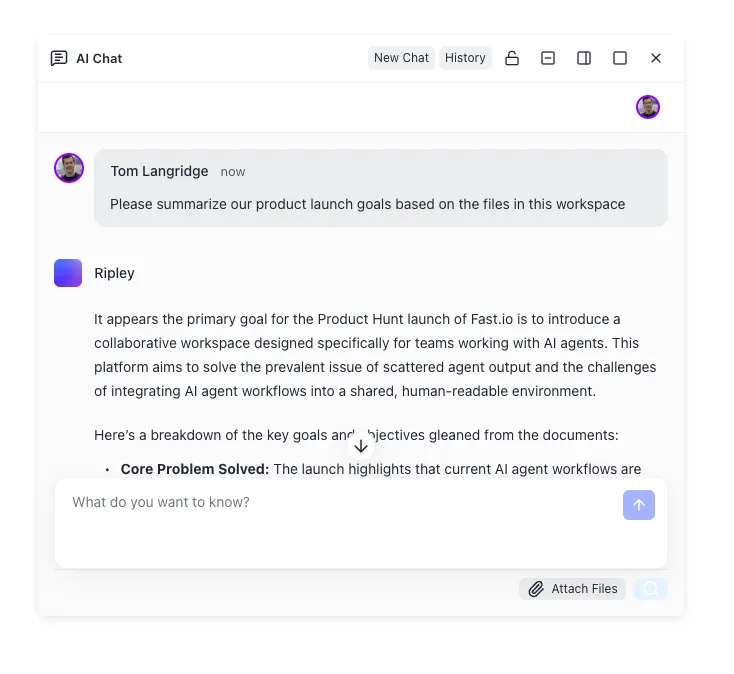
For file storage across sessions, tools like Fast.io provide persistent workspaces where your agent can read, write, and version research files without losing state between runs. Fast.io's Intelligence Mode auto-indexes uploaded papers for semantic search, so your agent can query across your entire reading list. Fastio offers a 14-day Business Trial, card required; see /pricing/. Alternatives like Google Drive or Dropbox work for basic file storage, but lack the built-in semantic search and MCP server access that let your agent query files directly.
7. Multi-Agent Debate for Argument Testing
This is not a single installable skill but a technique built into OpenClaw's architecture that matters specifically for academic writing. Using OpenClaw's session spawning, you create agents with contrasting perspectives and have them debate your thesis before you commit it to paper.
How it works:
- You spawn a "Challenger" agent tasked with finding logical gaps and weak evidence in your argument
- A "Judge" agent evaluates both sides and identifies which objections have merit
- The original writing agent incorporates the strongest counterarguments into the revision
MIT research cited by revise.net found that this multi-agent debate structure boosts accuracy on complex reasoning tasks by 10% to 15%. The tradeoff is cost: each debate cycle runs three to five times the token usage of a standard prompt, roughly $0.03 to $0.05 per cycle.
Best for: Thesis chapters, dissertation arguments, and any academic writing where the strength of your argument matters more than the speed of your draft. The debate technique catches the kind of logical weakness that a single-pass AI draft almost never self-corrects.
Limitations: Multi-agent debate adds latency and API cost. For shorter assignments or writing tasks where the argument structure is straightforward, the overhead is not worth it. Reserve this technique for high-stakes academic work where a reviewer would catch the same gaps.
The persistent memory files that make this technique practical (your thesis context, source notes, and argument map) need somewhere to live between sessions. Fast.io workspaces keep these files versioned and accessible to every agent in the pipeline through a single MCP endpoint, which means your Challenger and Judge agents read the same source material without duplicating uploads.
Building a Complete Academic Writing Pipeline
The real power of OpenClaw skills shows when you chain them together. Here is a practical pipeline that covers the full academic writing workflow:
Stage 1: Research. Install academic-deep-research and literature-manager. Run your research question through the deep research skill to discover relevant papers, then use the literature manager to organize, deduplicate, and index your collection.
Stage 2: Citations. Connect the zotero skill to your Zotero library. As you find sources worth citing, the skill adds them with full metadata and deduplicates against your existing collection.
Stage 3: Draft. Use academic-writer for LaTeX manuscripts or research-paper-writer for general prose. Both skills can reference the sources your research pipeline found, pulling in specific claims and quotations with proper attribution.
Stage 4: Revise. Run the draft through academic-writing-refiner for venue-specific polish. For high-stakes work, follow up with a multi-agent debate session to stress-test your core argument.
Stage 5: Export. Use the Zotero skill to format your bibliography in the required citation style, then export the completed manuscript.
Each stage produces files that the next stage consumes. Storing those files in a shared workspace means every skill and every agent in your pipeline can access the same research notes, drafts, and revision history without manual file shuffling. Fast.io's workspace approach, where uploaded files are automatically indexed for AI search and retrieval, fits this pattern. Your research agent uploads papers, your writing agent queries them by meaning, and your revision agent reads the latest draft, all through the same MCP server.
Local alternatives like a shared folder on your machine work for single-agent setups. For multi-agent pipelines where different agents run across sessions or on different schedules, a cloud workspace with API access avoids the "which version is current?" problem that file syncing tools create.
Sources
References used to verify factual claims in this guide.
-
92% of university students now use AI in some form in their academic work
-
ClawHub crossed 13,729 community skills by late February 2026 Multi-agent debate structure boosts accuracy on complex reasoning by 10-15%
-
VoltAgent awesome-openclaw-skills curates 5,400+ skills filtered from the official registry
-
Custom OpenClaw editing skill reduced AI traces in content by 93%, cutting manual editing time by 80%
-
One nonfiction author produced a 60,000-word book in six weeks using AuthorClaw
Frequently Asked Questions
What OpenClaw skills help with essay writing?
The most relevant skills are academic-deep-research for source discovery, academic-writer for LaTeX manuscript drafting, academic-writing-refiner for polishing papers to meet top-venue standards, and the Zotero skill for citation management. For a complete pipeline, AuthorClaw's workflow packs bundle research, drafting, editing, and formatting into a single automated sequence. ClawHub hosts over 13,700 skills total, with a growing subset focused on academic workflows.
Can OpenClaw write academic papers?
OpenClaw can draft, revise, and format academic papers, but the quality depends on which skills you install and how you configure them. The academic-writer skill produces structured LaTeX manuscripts, while academic-writing-refiner polishes drafts for specific venues like NeurIPS or ICML. OpenClaw's advantage over general chatbots is persistent memory (your project context stays loaded across sessions) and direct connections to academic databases like PubMed and arXiv. You still need to verify citations independently, as no AI tool should be trusted to produce accurate references without human review.
How do you use OpenClaw for research papers?
Start by installing the academic-deep-research skill to break your research question into sub-queries and run them against academic databases. Use the literature-manager skill to organize downloaded papers into indexed collections. Connect the Zotero skill to manage your bibliography. Then draft with academic-writer (for LaTeX) or a general research-paper-writer skill, and polish with academic-writing-refiner. Each skill produces output that the next skill in the chain can consume, creating a pipeline from research question to submission-ready manuscript.
Is OpenClaw free for academic writing?
OpenClaw itself is free and open source. The costs come from the AI model API usage, which typically runs $3 to $15 per month for lighter academic workflows and $40 or more for heavy automation with multi-agent debate sessions. Individual skills from ClawHub are free to install. AuthorClaw's bundled workflow packs may have separate pricing for premium features, but the core skills are open source.
How does OpenClaw compare to ChatGPT for academic writing?
OpenClaw connects directly to academic databases (PubMed, arXiv, Semantic Scholar), maintains persistent memory across sessions, and runs 24/7 with autonomous monitoring. ChatGPT excels at quick drafting and conversational editing with zero setup. A revise.net comparison found that OpenClaw's custom editing skills reduced detectable AI patterns by 93%. The tradeoff is setup time, as OpenClaw requires command-line configuration and API keys, while ChatGPT works immediately in a browser. Many researchers combine both, using OpenClaw for long-running research tasks and ChatGPT for interactive editing.
Related Resources

Store your research files where every agent can reach them
Fast.io gives your OpenClaw agents a shared workspace with auto-indexing, semantic search, and MCP access.