Best OpenClaw Skills for AI Data Cleaning and Preprocessing
Data scientists still spend roughly 40% of their working day on cleaning and formatting before any real analysis begins. OpenClaw's skill ecosystem now includes 28 Data and Analytics skills on ClawHub, covering everything from CSV transformation to anomaly detection. This guide ranks the most useful skills for each stage of the data preprocessing pipeline and shows how to pair them with persistent storage so cleaned datasets survive between agent sessions.

Why Data Prep Still Eats Most of Your Analysis Time
Poor data quality costs the average enterprise $12.9 million per year, according to Gartner's survey of 154 data quality tool customers. That figure comes from organizations already investing in data quality software. For teams without automated cleaning pipelines, the cost is likely higher.
The problem is well understood: analysts spend 60 to 80 percent of their time fixing nulls, resolving duplicates, and standardizing formats before any modeling or reporting can start. Python libraries like pandas and Great Expectations handle individual tasks well, but they require a human to write the script, debug edge cases, and re-run the pipeline when source data changes.
OpenClaw skills take a different approach. Instead of writing cleanup scripts from scratch, you install a skill that gives your agent a specific data capability. The agent reads the skill's documentation, understands the available tools, and applies them autonomously. The data-analyst skill on ClawHub, for instance, gives your agent profiling and cleaning capabilities you would otherwise code by hand.
The ClawHub registry currently lists 28 skills in the Data and Analytics category. That number reflects significant curation: the VoltAgent awesome-openclaw-skills project cataloged over 5,400 skills filtered from the full registry, removing spam, duplicates, and low-quality entries to surface skills worth installing.
Related guides
- How to Use Claude Code Skills in ClineAccording to GitHub's Octoverse 2024 report, the number of developers building with generative AI on the platform...
- How to Install and Manage Cline Agent SkillsAI coding agents boost code volume by 180%, but shipped code rises by only 30%, showing a critical gap in development...
- Best OpenClaw Skills for AI Chatbot Training Data Curation and AnnotationClawHub crossed 13,700 community-built skills in early 2026, yet fewer than 30 target the specific problem of preparing...
- Best OpenClaw Skills for Web ResearchWeb research skills let OpenClaw agents find and read information on the live web. Without them, your AI is stuck with...
- Top 7 OpenClaw Skills for Growth HackersThese top OpenClaw skills help growth hackers automate experimentation and analytics. They scale campaigns faster. Real...
- How to Automate Infrastructure: Top OpenClaw Skills for Network EngineersNetwork automation used to require writing complex Python scripts or wrestling with Ansible playbooks. Today, OpenClaw...
More on this subject: OpenClaw Skills (109 guides)
How to Evaluate OpenClaw Skills for Data Work
Not every skill on ClawHub is production-ready. Before installing a data cleaning skill, check three things.
First, read the skill's documentation. Well-maintained skills describe exactly what data operations they support, what inputs they expect, and what outputs they produce. If the description is vague ("helps with data stuff"), skip it. Look for skills that specify supported file formats, cleaning operations, and any external dependencies.
Second, check the skill's execution model. Skills that call external APIs need API keys and network access. Skills that run code need a sandboxed runtime. Some skills, like openclaw-plus, provide their own isolated execution environment with common data libraries pre-installed. A data cleaning skill that runs inside a sandbox is safer than one that executes arbitrary shell commands on the host.
Third, look at the skill's scope. A narrow skill that does one thing well (CSV schema validation, for instance) is more reliable than a broad skill that promises to handle "all data tasks." The best data preprocessing setups chain multiple focused skills together rather than relying on one monolithic skill.
Top Skills for Each Stage of the Data Cleaning Pipeline
The data preprocessing pipeline has distinct stages: profiling, validation, cleaning, transformation, and output. Here are the ClawHub skills that handle each stage, based on verified registry listings and documented capabilities.
1. Data Profiling and Exploration: data-analyst
The data-analyst skill (by oyi77) converts your agent into a full-featured analyst. It handles SQL queries against databases, spreadsheet processing for CSV and Excel files, data visualization with charts and dashboards, statistical analysis including descriptive stats and correlations, and data cleaning for missing values, outliers, and formatting issues.
Best for: Initial exploration of unfamiliar datasets. Point your agent at a CSV and ask "profile this dataset" to get null percentages, dtype distributions, and outlier flags without writing any code.
Install: clawhub install data-analyst
2. CSV and JSON Transformation: csv-pipeline
The csv-pipeline skill specializes in processing, transforming, analyzing, and reporting on CSV and JSON data. Where data-analyst is broad, csv-pipeline focuses specifically on tabular file manipulation.
Best for: ETL preparation, format conversion, and batch processing of tabular files. Use it when you need to normalize column names, merge files, or filter rows based on conditions.
Install: clawhub install csv-pipeline
3. SQL-Based Analysis: duckdb-en
DuckDB runs analytical SQL queries directly on CSV, Parquet, and JSON files without a database server. The duckdb-en skill gives your agent a DuckDB CLI specialist for SQL analysis and data processing.
Best for: Complex joins, aggregations, and window functions across local files. Faster than pandas for datasets over 100MB because DuckDB uses columnar execution.
Install: clawhub install duckdb-en
4. Data Lineage and Provenance: data-lineage-tracker
The data-lineage-tracker skill tracks data origin and transformations. When your agent cleans a dataset, this skill records what changed, when, and why.
Best for: Audit trails and reproducibility. If a downstream model produces unexpected results, lineage tracking lets you trace back to the specific cleaning step that altered the data.
Install: clawhub install data-lineage-tracker
5. Spreadsheet Operations: skywork-excel
The skywork-excel skill provides AI-powered spreadsheet operations for creating, analyzing, and generating reports from Excel files. It handles the formatting and formula work that trips up general-purpose data skills.
Best for: When your input data lives in Excel workbooks with multiple sheets, merged cells, or embedded formulas. Also useful for generating formatted output reports that non-technical stakeholders can open directly.
Install: clawhub install skywork-excel
6. Lead and Contact Data Enrichment: data-enricher
The data-enricher skill enriches lead records with email addresses and formats data for CRM import. While narrower than general-purpose cleaning, it solves a common preprocessing problem: normalizing messy contact lists.
Best for: Sales and marketing data pipelines where you need to deduplicate contacts, validate email formats, and standardize company names before loading into a CRM.
Install: clawhub install data-enricher
7. Sandboxed Python Execution: openclaw-plus
Not a cleaning skill on its own, but openclaw-plus provides the sandboxed Python runtime that many data skills depend on. It ships with pandas, numpy, scikit-learn, and DuckDB pre-installed.
Best for: Custom cleaning logic that no existing skill covers. When you need to write a one-off deduplication script or apply domain-specific validation rules, openclaw-plus gives your agent a safe execution environment.


Give your data cleaning agent persistent storage
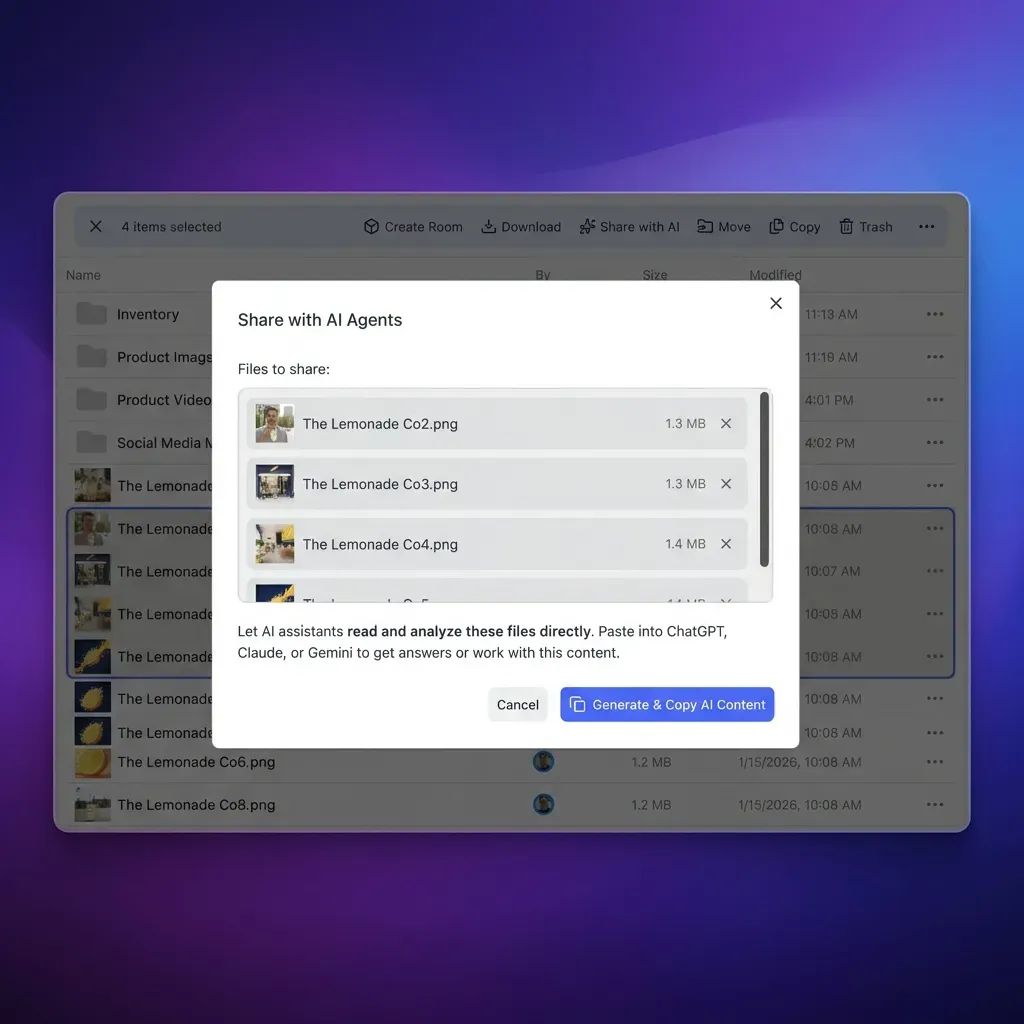
Upload cleaned datasets to a workspace where agents and humans both have access. generous storage, MCP-ready endpoint for your agent's reads and writes.
Building a Data Cleaning Workflow With Chained Skills
Individual skills are useful, but the real productivity gain comes from chaining them into a pipeline. Here is a practical workflow that combines several of the skills above.
Stage 1: Profile the raw data. Install data-analyst and point your agent at the source files. Ask it to report null percentages per column, identify duplicate rows, flag outliers using IQR or z-score methods, and summarize data types. This gives you a quality report before any cleaning starts.
Stage 2: Transform and normalize. Use csv-pipeline to standardize column names, convert date formats, split or merge columns, and filter invalid rows. For complex transformations that need SQL, switch to duckdb-en for joins and aggregations across multiple files.
Stage 3: Validate the cleaned output. Run schema validation to confirm that every column matches the expected type, required fields are populated, and value ranges fall within acceptable bounds. The data-analyst skill's statistical analysis can verify distributions have not shifted unexpectedly after cleaning.
Stage 4: Track what changed. The data-lineage-tracker skill records each transformation step. This is especially important when multiple agents or team members contribute to the same dataset, because you need to know which cleaning rules were applied and in what order.
Stage 5: Store the cleaned dataset. This is where most OpenClaw data workflows fall short. Skills run in your agent's session, and when the session ends, local files can disappear. You need persistent storage that survives between sessions and is accessible to other agents and team members.
Local filesystems work for single-user prototyping. S3 or Google Cloud Storage work for teams with DevOps resources to manage buckets and IAM policies. For teams that want persistent, shareable storage without infrastructure management, Fastio provides generous storage with workspaces that both agents and humans can access through the same interface. Enable Intelligence on a workspace and your cleaned datasets are automatically indexed for semantic search, so you can later ask questions about the data without re-running analysis scripts.
Storing and Sharing Cleaned Datasets
A cleaned dataset only has value if other people and systems can find and use it. Most OpenClaw data cleaning guides stop at the transformation step. They don't address what happens after.
The persistence problem is real. OpenClaw agents process files in a session context. When you close the session, files written to the agent's working directory may not persist. Even if they do persist locally, they are not accessible to other agents, team members, or downstream pipelines.
There are several ways to solve this.
Local filesystem with version control. Git works for small CSV files under a few megabytes. For larger datasets, Git LFS or DVC (Data Version Control) add large file tracking. The downside: everyone needs CLI access and Git knowledge, and there is no built-in search or preview.
Cloud object storage. S3, GCS, and Azure Blob Storage are the standard choices for data teams. They scale well and works alongside most ETL tools. The tradeoff is setup complexity: you need bucket policies, IAM roles, and typically a metadata catalog to make files discoverable.
Workspace-based storage. Fastio workspaces give agents and humans the same file access through a UI, API, or MCP server. Upload a cleaned CSV to a workspace and it is immediately previewable, searchable, and shareable. The MCP server exposes storage and AI tools so your OpenClaw agent can upload results directly after cleaning.
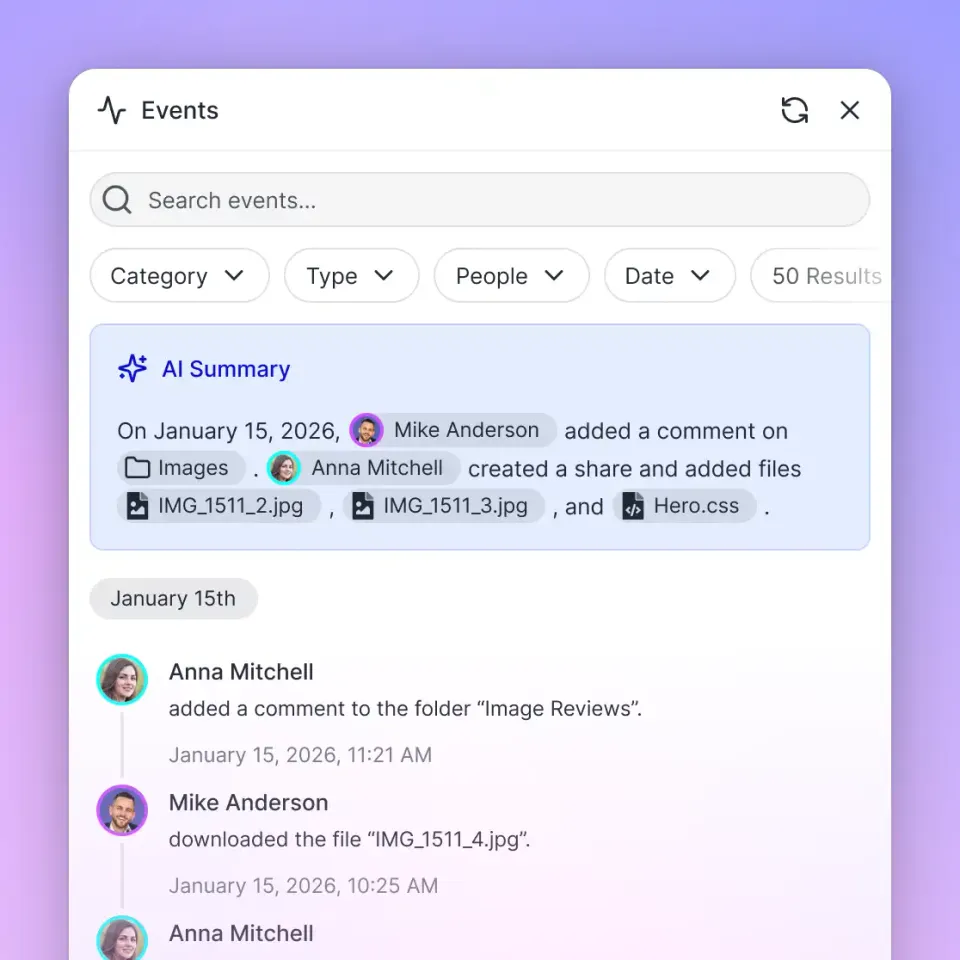
Fastio offers a 14-day Business Trial, with paid plans starting at $9.99/mo for Starter (see pricing). For data cleaning workflows, the key features are file version history (keep every iteration of a cleaned dataset), an audit log (track who changed what), and Intelligence Mode (files are indexed once enabled for RAG-powered search and Q&A).
When your agent finishes a cleaning run, it can upload the output to Fastio, enable Intelligence on the workspace, and hand off to a human reviewer. The reviewer sees the cleaned dataset in a browser, can ask questions about it through AI chat, and can access it for downstream use without touching the command line.
Practical Tips for Reliable Data Cleaning Agents
Running data cleaning skills in production teaches you things that documentation does not cover. Here are patterns that reduce debugging time.
Pin skill versions. ClawHub skills update independently. A skill that works today might change behavior next week. Copy the skill to your workspace's skills/ directory to lock a known-good version, then update deliberately when you are ready to test changes.
Validate before and after. Run schema validation on the raw input and again on the cleaned output. Cleaning scripts can introduce new problems: a regex that strips phone number formatting might also strip valid data from another column. Comparing before/after schemas catches regressions.
Log cleaning decisions, not just results. The data-lineage-tracker skill helps here, but even without it, have your agent write a summary of what it changed and why. "Removed 342 duplicate rows based on email + timestamp composite key" is useful context six months later. "Cleaned the data" is not.
Handle encoding issues early. CSV files from different systems come in UTF-8, Latin-1, Windows-1252, and occasionally Shift-JIS. If your agent encounters decode errors, the fix is to detect encoding before processing, not to retry with different encodings until one works. The chardet library in the openclaw-plus Python environment handles detection.
Test with messy data, not clean samples. The skills listed above all work fine on well-formatted test CSVs. The real test is a 50,000-row export from a legacy CRM with inconsistent date formats, embedded newlines in address fields, and Unicode characters in company names. Build your validation checks around the ugliest data you expect to see.
Set up persistent storage before you start. Decide where cleaned files go before running the pipeline. Discovering that your agent wrote results to a temporary directory after a two-hour cleaning run is a problem that is entirely avoidable.
Sources
References used to verify factual claims in this guide.
-
Poor data quality costs the average enterprise $12.9 million per year
-
Data scientists spend 40% of their working day on data cleaning EDA on a 100K-row CSV reduced from roughly 2 hours to 4 minutes with OpenClaw automation
-
28 Data and Analytics skills on ClawHub, filtered from 13,729 total
Frequently Asked Questions
Can OpenClaw clean messy data automatically?
Yes. Skills like data-analyst and csv-pipeline give your OpenClaw agent the ability to detect and fix common data quality issues including missing values, duplicate rows, inconsistent formatting, and outliers. The agent reads the skill instructions and applies cleaning logic autonomously. For custom cleaning rules, the openclaw-plus skill provides a sandboxed Python environment where your agent can write and execute one-off scripts.
What OpenClaw skills handle data preprocessing?
The ClawHub registry lists 28 skills in the Data and Analytics category. The most relevant for preprocessing are data-analyst (profiling, cleaning, statistical analysis), csv-pipeline (CSV/JSON transformation), duckdb-en (SQL-based analysis on local files), data-lineage-tracker (transformation provenance), skywork-excel (Excel workbook operations), and data-enricher (contact data normalization). Install any of them with clawhub install followed by the skill slug.
How do I automate CSV cleaning with OpenClaw?
Install the csv-pipeline skill with clawhub install csv-pipeline. Then instruct your agent to process your CSV file with specific cleaning rules: standardize column names, remove duplicates, fix date formats, filter invalid rows. For more complex transformations involving joins or aggregations, add the duckdb-en skill to run SQL queries directly against CSV files. Chain both skills in a single agent session for a complete cleaning pipeline.
How do cleaned datasets persist between OpenClaw sessions?
OpenClaw agents process files in a session context, and local files may not survive between sessions. For persistence, you can use Git (for small CSVs), cloud object storage like S3 (for larger datasets), or a workspace platform like Fastio that provides both storage and automatic indexing. Fastio's MCP server lets your agent upload cleaned files directly, and once Intelligence is enabled on the workspace, files become searchable without additional setup.
Is OpenClaw better than pandas for data cleaning?
They solve different problems. Pandas is a Python library you write code against. OpenClaw is an agent framework where skills provide data capabilities that run autonomously. The data-analyst skill uses pandas internally but removes the need for you to write the script. For one-off cleaning of a specific file, pandas is fine. For repeated cleaning of changing data sources where you want an agent to handle the work, OpenClaw skills reduce manual effort.
Related Resources

Give your data cleaning agent persistent storage
Upload cleaned datasets to a workspace where agents and humans both have access. generous storage, MCP-ready endpoint for your agent's reads and writes.