Best Generative AI Tools in 2026, Ranked by Output Type
The generative AI market hit $69.85 billion in 2026, nearly doubling year over year, yet most users still default to ChatGPT for everything. This guide ranks 13 tools across five output categories so you can pick the right one for text, images, video, audio, and code.

The Generative AI Landscape in 2026
The generative AI market reached $69.85 billion in 2026, an 84% jump from $37.89 billion in 2025. Despite that explosive growth across dozens of product categories, ChatGPT still holds 60.6% of US chatbot market share as of May 2026. That lopsided adoption means most users default to one general-purpose tool when specialized alternatives produce better output in images, video, audio, and code.
Meanwhile, 65% of organizations now use generative AI in at least one business function, according to McKinsey's latest survey. The gap between individual adoption and organizational deployment is shrinking fast. The question is no longer whether to use these tools, but which combination to use for which output types.
We evaluated 13 tools across five categories, scoring each on output quality, pricing, workflow integration, and specialization depth. Here are the top picks by category.
Quick picks:
- Text: ChatGPT for breadth, Claude for depth and analysis
- Images: Midjourney V8 for quality, Stable Diffusion for local control
- Video: Google Veo 3.1 for all-around quality, Runway for creative control
- Audio: Suno v5 for music, ElevenLabs for voice
- Code: Claude Code for complex tasks, GitHub Copilot for team adoption
Related guides
- Best AI Tools for Work in 2026, Sorted by What You Actually DoSeventy-eight percent of knowledge workers who use AI at work bring their own tools, creating fragmented workflows and...
- Best AI Websites in 2026: 14 Platforms Across Every CategoryChatGPT doubled its user base to 900 million weekly users in a single year, but it represents just one entry in a much...
- Best AI Comic Generators in 2026: 8 Tools Tested and RankedThe AI-generated comic book market hit $2.01 billion in 2026, up 32% year over year, largely because character...
- Best AI Study Tools in 2026: 10 Apps Ranked by How They Help You LearnA meta-analysis of 31 classroom experiments found that distributed practice, the scheduling method behind most AI study...
- Best AI for Market Research in 2026: 10 Tools Ranked by Research Stage67% of market research suppliers now embed generative AI in client deliverables, but brand-side satisfaction sits at...
- 13 Best AI Tools for Business in 2026, Ranked by FunctionSixty-five percent of organizations now use generative AI in at least one business function, according to McKinsey's...
More on this subject: AI Tool Directories and Comparisons (231 guides)
Best Text Generators for Writing and Analysis
Three platforms dominate general-purpose text generation in 2026. Each has carved out a distinct strength, and the best choice depends on what you write most.
1. ChatGPT
ChatGPT remains the default generative AI tool for most users, now powered by GPT-5.5 (launched April 2026). It handles text, image generation via GPT Image 2, file analysis, voice conversations, and web browsing in a single interface.
Key strengths:
- Broadest feature set: text, images, voice, code, research, and agent mode in one app
- GPT-5.5 delivers stronger reasoning and multimodal understanding than any previous OpenAI model
- Massive plugin and integration ecosystem across thousands of third-party apps
Limitations:
- 60.6% market share means everyone's outputs sound similar without careful prompting
- Plus plan ($20/month) still enforces usage caps on advanced features like deep research
Best for: Teams that need one tool covering the most ground across output types.
Pricing: Free tier available. Plus at $20/month. Pro at $200/month.
2. Claude
Claude, built by Anthropic, is the fastest-growing chatbot in the market with 14% quarterly growth. The current model lineup includes Sonnet 4.6 as the default and Opus 4.7 as the most capable option.
Key strengths:
- Strongest long-document analysis with up to 1 million tokens of context
- Excels at careful, nuanced writing that requires fewer edits before publishing
- Claude Code provides terminal-native agentic coding with 80.8% on SWE-bench
Limitations:
- Smaller integration ecosystem than ChatGPT
- Opus 4.7 access is limited on the $20/month Pro plan
Best for: Writers, analysts, and developers who prioritize accuracy and depth.
Pricing: Free tier available. Pro at $20/month. Max at $100/month or $200/month.
3. Google Gemini
Gemini 2.5 Pro made Google a serious contender in 2026. Its deep integration with Google Workspace, Search, and YouTube gives it a unique advantage for users who already live inside Google's ecosystem.
Key strengths:
- Native integration with Gmail, Docs, Sheets, and Google Search
- Strong multimodal understanding across text, images, audio, and video inputs
- Generous free tier through the Gemini app with competitive paid upgrades
Limitations:
- Creative writing tends to be more formulaic than ChatGPT or Claude
- Advanced features require Google One AI Premium ($19.99/month) or AI Ultra ($249.99/month)
Best for: Google Workspace users who want AI built into their existing tools.
Pricing: Free tier available. AI Premium at $19.99/month. AI Ultra at $249.99/month.

Best Image Generators for Design and Creative Work
Image generation saw two major shifts this year: Midjourney V8's complete engine rewrite and OpenAI's replacement of DALL-E 3 with GPT Image 2 inside ChatGPT. If you only need occasional image generation, ChatGPT now handles it well. For dedicated image work, these two tools cover opposite ends of the spectrum.
4. Midjourney V8
Midjourney V8 launched in March 2026 with a completely rewritten engine. It generates images roughly 5x faster than V7 and produces native 2K output by default.
Key strengths:
- Highest aesthetic quality among dedicated image generators
- 5x speed improvement over V7 with native 2K resolution
- Strong community and prompt-sharing ecosystem
Limitations:
- No free tier since 2024; Basic plan starts at $10/month
- Discord-first interface feels clunky for production workflows
Best for: Designers and creatives who need the highest-quality AI-generated images.
Pricing: Basic at $10/month. Standard at $30/month. Pro at $60/month. Mega at $120/month.
5. Stable Diffusion
Stable Diffusion remains the only major AI image generator you can run entirely on your own hardware with no subscription, no credits, and no usage limits.
Key strengths:
- Fully open source with zero ongoing cost after hardware investment
- Complete control over models, fine-tuning, and output ownership
- Massive community of custom models and extensions on Civitai and Hugging Face
Limitations:
- Requires a capable GPU (8GB+ VRAM minimum) and technical setup
- Default output quality trails Midjourney V8 without custom fine-tuning
Best for: Technical users who want full control and zero recurring costs.
Pricing: Free and open source. Hardware is the only cost.
Best Video and Audio Tools for Content Production
Video generation matured in 2026. OpenAI sunsetted Sora in April 2026, while Google's Veo 3.1 emerged as the quality leader. On the audio side, Suno and ElevenLabs split the market between music and voice.
6. Google Veo 3.1
Veo 3 was the first major AI video model to generate audio natively alongside video. The 3.1 update improved temporal consistency, text rendering, camera controls, and character consistency.
Key strengths:
- Native audio generation synced to video content, a first for the category
- Strongest all-around video quality among current generators
- Available through Gemini, Google AI Studio, and the Vertex AI API
Limitations:
- Full consumer access requires Google AI Ultra ($249.99/month) or Vertex API billing
- Maximum clip length of 8 seconds limits long-form production use
Best for: Creators who want the best output quality with built-in audio.
Pricing: Limited free access via AI Studio. Veo 3.1 Lite API at ~$0.05/second.
7. Runway Gen-4.5
Runway remains the professional favorite for video generation. Gen-4.5 offers granular creative controls: camera moves, motion brush, and reference-driven character consistency across clips.
Key strengths:
- Most precise creative controls for camera movement, motion, and character reference
- Editor-first product designed for production workflows
- Reference image support keeps brand consistency across generated clips
Limitations:
- Credits deplete quickly on higher-quality generation settings
- Less photorealistic than Veo 3.1 for open-ended prompts
Best for: Video professionals and marketers who need precise creative control over generated footage.
Pricing: Free tier with limited credits. Paid plans from $12/month.
8. Suno v5
Suno is the dominant AI music platform in 2026, with roughly 2 million paid subscribers and $300 million in annual recurring revenue. Suno v5 produces studio-quality audio with vocals realistic enough to fool casual listeners.
Key strengths:
- Highest audio fidelity and vocal realism among AI music generators
- Full stem editing and an integrated audio workstation
- Broad genre coverage from classical to electronic to hip-hop
Limitations:
- Commercial licensing terms are less clear-cut than ElevenLabs
- Individual song generations are limited to a few minutes per clip
Best for: Musicians, content creators, and producers who need full songs with realistic vocals.
Pricing: Free tier with limited credits. Pro and Premier plans from $10/month.
9. ElevenLabs
ElevenLabs started as a voice cloning and text-to-speech platform and expanded into music generation in 2025. Its core strength remains voice synthesis: the most natural-sounding AI speech available today.
Key strengths:
- Most realistic AI voice synthesis for narration, dubbing, and voice-over work
- Commercially licensed output from day one, reducing legal risk
- Voice cloning from short audio samples for consistent brand voices
Limitations:
- Music generation is newer and less mature than Suno's offering
- Voice cloning raises ethical questions that require clear usage policies
Best for: Podcasters, video producers, and businesses needing professional-quality voice content.
Pricing: Free tier available. Paid plans from $5/month.
Best Code and Marketing Assistants for Teams
Code generation and marketing content are the two areas where generative AI delivers the most measurable productivity gains. Developers report shipping features faster, and marketing teams produce more content with fewer writers. Here are the leaders in each lane.
10. Claude Code
Claude Code is a terminal-native coding agent built on Opus 4.6, which scored 80.8% on SWE-bench. It handles complex multi-file refactors, test generation, and codebase analysis across up to 1 million tokens of context.
Key strengths:
- 80.8% on SWE-bench, the highest score of any coding agent at time of launch
- 1 million token context window for analyzing entire codebases at once
- Agent Teams for parallel refactoring with deep git integration
Limitations:
- Terminal-only interface with no graphical IDE
- Requires an Anthropic subscription (Pro at $20/month or Max plans)
Best for: Developers tackling complex refactors, test generation, and codebase-wide changes.
Pricing: Included with Claude Pro ($20/month) and Max plans.
11. GitHub Copilot
GitHub Copilot from Microsoft remains the most widely adopted AI coding tool in 2026, with native extensions for VS Code, JetBrains, and Neovim.
Key strengths:
- Lowest-friction setup: install the extension and start getting suggestions immediately
- Deep GitHub integration with issues, pull requests, and Actions
- Copilot Workspace for natural-language task planning and multi-file edits
Limitations:
- Weaker on complex multi-file refactors compared to Claude Code or Cursor
- Suggestion quality varies by programming language
Best for: Teams already on GitHub who want broadly adopted, low-friction AI coding assistance.
Pricing: Individual at $10/month. Business at $19/seat/month. Enterprise at $39/seat/month.
12. Cursor
Cursor is an AI-native IDE that has become the most credible alternative to VS Code plus Copilot. Its agent mode lets you describe complex changes in natural language and execute them across multiple files.
Key strengths:
- Agent mode for natural-language multi-file editing and refactoring
- Codebase-wide context awareness through indexing your entire project
- Built-in Composer for coordinating changes across files
Limitations:
- $20/month is double GitHub Copilot Individual's price
- Requires switching IDEs if your team standardized on something else
Best for: Developers who want the most capable AI IDE and are willing to switch from VS Code.
Pricing: Free tier with limited completions. Pro at $20/month. Business at $40/seat/month.
13. Jasper
Jasper is a marketing-focused AI writing platform with 50+ content templates, brand voice customization, and campaign generation from a single brief.
Key strengths:
- Brand voice controls ensure consistent tone across blog posts, email, social, and ads
- Campaign mode generates coordinated multi-channel content from one brief
- SEO optimization built into the writing workflow
Limitations:
- Expensive compared to general-purpose tools (Creator starts at $39/month)
- Overkill for teams that only need occasional AI-assisted writing
Best for: Marketing teams producing high-volume, brand-consistent content across channels.
Pricing: Creator at $39/month. Pro at $59/month. Business pricing is custom.
How to Connect Your Generative AI Stack
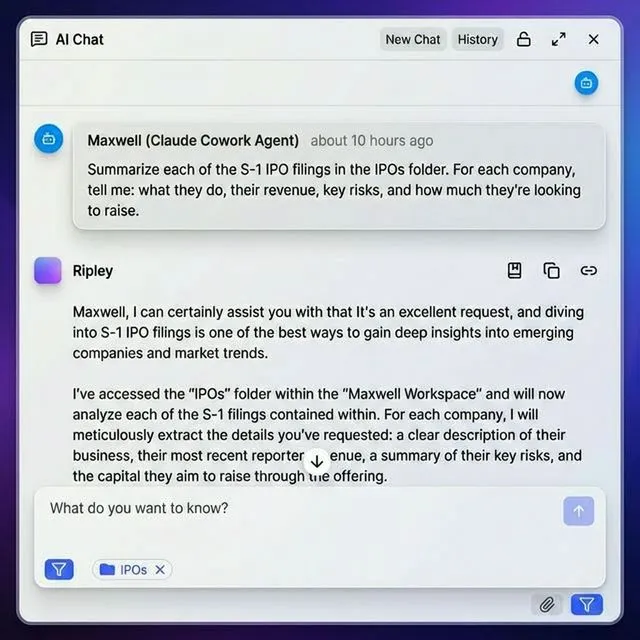
The biggest gap in most generative AI setups is not the tools. It is what happens between them. You generate text in Claude, images in Midjourney, video in Runway, and music in Suno. Then you have files scattered across four platforms with no shared search, no version history, and no way to hand a complete project to a colleague or client.
Choosing the right combination
Most teams get the best results from two to four tools:
- A text generator for writing and analysis (ChatGPT, Claude, or Gemini)
- A visual generator matching your output type (Midjourney for images, Veo 3.1 or Runway for video)
- A code assistant if your team ships software (Claude Code, Copilot, or Cursor)
Start with free tiers. ChatGPT, Claude, Gemini, Stable Diffusion, and Suno all offer functional free plans. Upgrade when you hit limits or need team features like brand controls and shared workspaces.
Sources
References used to verify factual claims in this guide.
-
Generative AI market reached $69.85 billion in 2026, up from $37.89 billion in 2025
-
ChatGPT holds 60.6% of US chatbot market share as of May 2026 Claude AI growing at 14% quarterly, fastest among major chatbots
-
65% of organizations now use generative AI in at least one business function
-
Suno has roughly 2 million paid subscribers and $300 million in annual recurring revenue as of February 2026
-
Midjourney V8 generates images roughly 5x faster than V7 with native 2K output
-
Claude Code scored 80.8% on SWE-bench with Opus 4.6
Frequently Asked Questions
What are the best generative AI tools right now?
The best generative AI tools in 2026 depend on output type. ChatGPT with GPT-5.5 leads for general text with 60.6% US market share. Midjourney V8 produces the highest-quality AI images. Google Veo 3.1 is the strongest all-around video generator with native audio. Suno v5 sets the benchmark for AI music. Claude Code leads coding benchmarks at 80.8% on SWE-bench. Most teams get better results by combining two or three specialized tools rather than relying on one general-purpose option.
What is the most popular generative AI tool?
ChatGPT is the most popular generative AI tool by a wide margin, holding 60.6% of the US chatbot market as of May 2026. Google Gemini follows at 15.1%, Microsoft Copilot at 12.5%, Perplexity at 5.4%, and Claude at 5.0%. ChatGPT's lead has narrowed from 76.4% in January 2024, with Claude growing fast at 14% per quarter and Gemini at 12%.
Which generative AI tool is best for business?
The best business tool depends on your primary use case. ChatGPT Team or Enterprise works well for general productivity across departments. Jasper excels at marketing content with brand voice controls and multi-channel campaign generation. GitHub Copilot is the most proven option for development teams. Google Gemini integrates natively with Google Workspace. Evaluate based on your existing tool stack and the output types your team produces most frequently.
Are there free generative AI tools?
Several strong generative AI tools offer free tiers. ChatGPT's free plan includes GPT-5.5 with usage limits. Claude provides free access to Sonnet 4.6. Google Gemini is free through the Gemini app. Stable Diffusion is entirely free and open source, running on your own hardware with no usage limits. Suno offers a free tier with limited music generation credits.
Can different generative AI tools work together in one workflow?
Yes, and combining tools by output type often produces better results than using one tool for everything. A common workflow: draft text in Claude or ChatGPT, generate accompanying images in Midjourney, create video clips with Veo 3.1 or Runway, and produce voice-over with ElevenLabs.