10 Best AI Tools for Teachers in 2026: Reviewed and Compared
Purpose-built AI tools for teachers now handle lesson planning, grading, reading differentiation, and student engagement with FERPA compliance built in. This guide reviews 10 options that save real classroom time, with honest assessments of pricing, privacy, and practical fit.


How We Evaluated These Tools
We tested each tool against five criteria that matter in a real classroom: FERPA and COPPA compliance (or transparent data handling policies), a free tier that works beyond a two-week trial, integration with Google Classroom or a major LMS, measurable time savings on repetitive tasks, and fit within a specific teaching workflow.
Teachers using AI weekly report saving roughly 5.9 hours per week. But that number only holds when the tool matches their actual workflow. Adding another platform that requires manual copy-pasting between apps eats into those savings fast.
Here is how the 10 tools break down by teaching workflow:
Lesson Planning and Content Creation
- MagicSchool AI: 80+ education-specific tools for planning, differentiation, and IEPs
- Diffit: Adapts any text to multiple reading levels with vocabulary and comprehension questions
- Canva for Education: Visual resource creation with AI-powered design and activity templates
Grading, Feedback, and Assessment
- Brisk Teaching: Chrome extension embedding 30+ AI tools inside Google Docs and Classroom
- Gradescope: AI-assisted grading that groups similar answers for batch feedback
- CoGrader: Rubric-based essay scoring aligned to state standards
Student Engagement and Tutoring
Related guides
- MagicSchool AI Review 2026: What Teachers Actually Get From 80+ AI ToolsMagicSchool AI has quietly become the most-deployed AI platform in US K-12, with over 5 million educators signed up...
- Best AI for Math in 2026: 9 Solvers, Tutors, and Chatbots ComparedPhotomath has 220 million downloads, but pointing your phone at a math problem won't help when you need to understand...
- 11 Best AI Tools for Language Learning in 2026: Features and Pricing ComparedDuolingo reported 140.6 million monthly active users in the second quarter of 2026, yet drills alone do not teach you...
- Best AI Study Tools in 2026: 10 Apps Ranked by How They Help You LearnA meta-analysis of 31 classroom experiments found that distributed practice, the scheduling method behind most AI study...
- Brainly AI Review 2026: Features, Pricing, and Accuracy TestedBrainly has grown from a student Q&A forum into an AI-powered learning platform with over 350 million registered users....
- Answer AI Review 2026: Features, Pricing, and 5 AlternativesAnswer AI is an AI tutoring app used by over 6 million students to get step-by-step homework solutions across math,...
More on this subject: AI Tool Directories and Comparisons (231 guides)
Lesson Planning and Content Creation
The tools in this category handle the task that consumes the most teacher prep time: building lesson plans, worksheets, and differentiated materials from scratch.
1. MagicSchool AI
MagicSchool is the most widely adopted AI platform built specifically for education, used in nearly every US school district and across 160 countries. It offers 80+ tools covering lesson plans, worksheets, IEP drafts, email templates, quiz generation, and presentation creation.
Key Strengths:
- 80+ purpose-built tools covering daily planning and administrative tasks in one platform
- enterprise security standards certified with FERPA and COPPA compliance built into the infrastructure
- Integrates directly with Google Classroom, Canvas, and Schoology
Limitations:
- Output often needs significant editing, especially with generic prompts
- Free tier saves only your last five outputs
Best For: Teachers who want a single platform for daily planning and administrative tasks.
Pricing: Free with monthly limits. Plus at $11.99/month or $99.96/year. Enterprise pricing available for districts.
2. Diffit
Diffit takes any text, URL, or topic and rewrites it at specified reading levels while preserving the core meaning. Each adapted version comes with key vocabulary, a summary, comprehension questions, discussion prompts, and a critical thinking extension.
Key Strengths:
- Supports 60+ languages, making it practical for multilingual classrooms
- Auto-generates reading-level-appropriate vocabulary and comprehension questions
- First-year teachers get free access through June 2026
Limitations:
- Strongest for ELA and social studies content; less useful for STEM subjects
- Pro tier at $14.99/month feels steep for a single-purpose tool
Best For: ELA teachers differentiating reading materials across mixed-ability classrooms.
Pricing: Free core features with standard usage limits. Pro at $14.99/month.
3. Canva for Education
Canva's education tier gives verified K-12 teachers the full platform for free, including AI features like Magic Write for text generation, Magic Design for layout suggestions, and Magic Activities that turn topics into interactive classroom materials.
Key Strengths:
- Completely free for verified K-12 teachers, no paywall on AI features
- Thousands of education templates for presentations, worksheets, infographics, and posters
- works alongside Google Classroom, Drive, Teams, and LTI-compatible platforms
Limitations:
- A design tool first, not a teaching tool; you still need another platform for structured lesson planning
- AI-generated text needs review for curriculum alignment and factual accuracy
Best For: Teachers who regularly create visual resources, presentations, and handouts.
Pricing: Free for verified K-12 educators. No paid tier required.

Grading, Feedback, and Assessment
Grading eats more teacher hours than almost any other task. These three tools target the bottleneck directly, whether you are scoring essays, problem sets, or coding assignments.
4. Brisk Teaching
Brisk embeds 30+ AI tools directly inside the Chrome browser, adding feedback, assessment, and planning capabilities to Google Docs, Slides, Forms, and Classroom without switching platforms. Its "Inspect Writing" feature replays how students composed their work, helping teachers spot AI-generated submissions.
Key Strengths:
- Works inside the apps teachers already use, eliminating copy-paste between platforms
- Holds a 93% Common Sense Privacy Rating, the highest among AI teacher tools
- Certified across FERPA, COPPA, enterprise security standards, privacy requirements, and EdSafe AI
Limitations:
- Chrome and Edge browsers only; no Firefox or Safari support
- Free tier usage limits are not publicly documented, making it hard to plan around them
Best For: Teachers deep in the Google ecosystem who want AI assistance without leaving their workflow.
Pricing: Free core tools. Pro plan for advanced features (check briskteaching.com for current pricing).
5. Gradescope
Gradescope uses AI to group similar student answers together, letting you write feedback once and apply it to every variation of that response. It handles handwritten work through OCR, typed submissions, and code in Python, Java, and C++.
Key Strengths:
- Batch grading shifts the process from student-by-student to question-by-question
- Anonymous grading mode reduces unconscious bias in scoring
- Supports handwritten work through OCR, not just typed submissions
Limitations:
- Better suited for STEM and higher education than K-12 humanities classes
- Per-student pricing adds up quickly for large course sections
Best For: College instructors and high school STEM teachers grading problem sets or coding assignments.
Pricing: Limited free tier. Paid plans from $1 to $15 per student depending on institution size.
6. CoGrader
CoGrader scores essays against rubrics aligned to state standards including TEKS, B.E.S.T., and CAASPP. Beyond individual scores, it generates class-level analytics that highlight which skills need reteaching across all submissions.
Key Strengths:
- Scores within three points of human graders 73% of the time
- State-specific rubric templates cut hours off initial setup
- Class analytics reveal patterns you would miss grading one paper at a time
Limitations:
- Free tier caps at 100 submissions monthly, which a single class can exhaust in one assignment
- Non-standard or creative assignments require custom rubric configuration
Best For: English and writing teachers grading essays against state standards.
Pricing: 100 free submissions/month. $15/month for unlimited grading.
Student Engagement and Tutoring
These tools put AI directly in front of students, whether for guided tutoring, interactive class activities, or open-ended exploration within safety guardrails.
7. Khanmigo
Khanmigo is Khan Academy's AI teaching assistant and student tutor. Instead of giving direct answers, it uses Socratic questioning to nudge students toward understanding through guided prompts and follow-up questions.
Key Strengths:
- Free for all US educators and students, with no paywall on teacher tools
- 20+ teacher-facing tools including lesson hook generators, exit ticket builders, and rubric creators
- FERPA and COPPA compliant with student progress tracking dashboards
Limitations:
- Strongest in math and science; humanities coverage is noticeably thinner
- Student access requires a school or district partnership, not individual teacher signup
Best For: Math and science teachers who want an AI tutor that guides reasoning rather than providing answers.
Pricing: Khanmigo for Teachers is free worldwide. Student and parent access at $4/month or $44/year.
8. Curipod
Curipod generates interactive lesson decks from a topic, existing PowerPoint, or PDF. The resulting presentations include polls, quizzes, word clouds, open-ended questions, SEL check-ins, and drawing activities, all with real-time student responses visible to the teacher.
Key Strengths:
- Turns passive slide decks into active participation with live response features
- "Glow and Grow" AI feedback gives students specific praise alongside improvement suggestions
- Works with existing PowerPoint and PDF files, so you do not have to rebuild lessons from scratch
Limitations:
- Built for synchronous whole-class instruction; less useful for asynchronous or independent work
- Interactive features can overwhelm younger students if activities are not structured carefully
Best For: Teachers who want every student visibly participating during direct instruction.
Pricing: Free standard tier. Pro at $7.50/month (annual billing) or $9/month.
9. SchoolAI
SchoolAI gives students access to AI within a controlled environment where teachers define the guardrails: what topics the AI can discuss, what it should avoid, and how it should respond. Full conversation transcripts let teachers review every student interaction after class.
Key Strengths:
- Teacher-defined guardrails control the AI's scope, tone, and subject focus
- Complete conversation transcripts allow real-time monitoring and post-session review
- FERPA, COPPA, enterprise security standards, and 1EdTech certified; used in over 1 million classrooms across 400+ districts
Limitations:
- Free tier caps at 50 student sessions daily, which limits adoption in larger schools
- Building effective custom AI "spaces" takes real setup time to get right
Best For: Schools that want student-facing AI with full teacher oversight and verified data compliance.
Pricing: Free for 50 sessions/day. $14.99/month for unlimited sessions and advanced customization.
Organizing and Sharing AI-Generated Materials
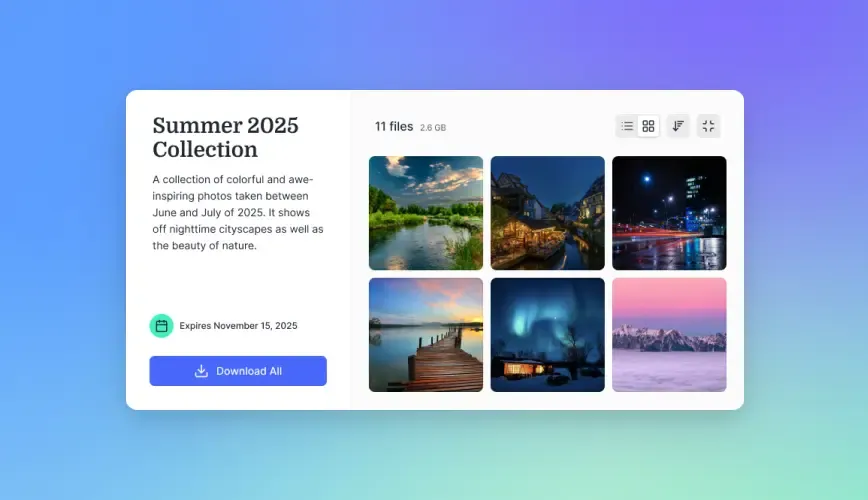
Once you are generating lesson plans, rubrics, and differentiated handouts with the tools above, the next problem is practical: where does it all go? Teachers in a single department can produce hundreds of AI-generated files per semester, and finding the right resource six weeks later is where most organizational systems break down.
10. Gemini Notebook (formerly NotebookLM)
Google's Gemini Notebook (formerly NotebookLM) grounds every AI response in documents you upload. It never pulls from external training data. Upload curriculum guides, lesson plans, or research papers and the AI answers strictly from those sources, with citations pointing back to the exact passage.
Key Strengths:
- Zero hallucination risk since all outputs trace directly to your uploaded source materials
- Audio Overviews turn documents into podcast-style summaries students can listen to
- Free tier includes 100 notebooks with 50 sources each
Limitations:
- Only as good as the documents you feed it; gaps in your sources become gaps in its answers
- Three Audio Overview generations per day on the free tier
Best For: Teachers building study guides, review packets, or reference materials grounded in specific course documents.
Pricing: Free with generous limits. Also included with Google AI Pro for Education.
How to Stay FERPA and COPPA Compliant
COPPA's updated rules took full effect in April 2026, tightening requirements around parental consent and how AI platforms handle children's data. Before adding any tool to your classroom, check three things.
First, does the vendor have a signed Student Data Privacy Agreement with your district? Tools like MagicSchool, Brisk, and SchoolAI all offer district-level agreements. Second, is the tool listed on your state's approved vendor list? Most states maintain searchable databases of vetted education technology. Third, does the vendor explain what student data it collects, how long it retains it, and whether it uses that data to train AI models?
Among the tools reviewed here, Brisk Teaching holds the strongest documented privacy position with a 93% Common Sense Privacy Rating plus certifications across FERPA, COPPA, enterprise security standards, privacy requirements, and EdSafe AI. SchoolAI and MagicSchool also carry FERPA and COPPA compliance with enterprise security standards certification. General-purpose tools like ChatGPT and Google Gemini require more caution: verify your district's data sharing agreements before use and never enter student names or identifiable information into a general-purpose AI prompt.
A practical rule: use compliant, education-specific tools for anything involving student data, and reserve general-purpose AI for your own lesson prep where no student information enters the prompt.
Which Tool Should You Start With?
If you are choosing one tool today, pick the one that targets your biggest time sink. Spending hours on essay grading? Start with Brisk or CoGrader. Struggling to differentiate reading materials across ability levels? Diffit was built for exactly that. Want one platform that covers most daily tasks? MagicSchool's breadth is hard to beat at the free tier.
Most of these tools offer free tiers that hold up in a real classroom, not just a 14-day trial window. Try two or three before committing to a paid plan. The biggest predictor of whether AI actually saves you time is not the tool itself. It is whether the tool fits the workflow you already have, rather than asking you to build a new one around it.
Sources
References used to verify factual claims in this guide.
-
Teachers using AI weekly report saving approximately 5.9 hours per week CoGrader scores within three points of human graders 73% of the time SchoolAI is used in over 1 million classrooms across 400+ districts ChatGPT free for verified US K-12 educators through June 2027
-
MagicSchool is used in nearly every US school district and across 160 countries
-
Brisk Teaching holds a 93% Common Sense Privacy Rating, the highest among AI teacher tools
-
COPPA updated rules required full compliance by April 2026
Frequently Asked Questions
What AI tools are best for teachers?
The best tool depends on your specific workflow. MagicSchool AI covers the widest range of daily tasks with 80+ tools. Brisk Teaching is the strongest option for grading and feedback inside Google Workspace. Khanmigo offers free AI tutoring for math and science. Diffit specializes in reading differentiation across ability levels. For student-facing AI with safety controls, SchoolAI gives teachers full guardrail and transcript access.
How can teachers use AI in the classroom?
Teachers use AI across four main workflows: generating lesson plans and differentiated materials (MagicSchool, Diffit), scoring and providing feedback on student work (Brisk, Gradescope, CoGrader), running interactive engagement activities during instruction (Curipod), and providing guided AI tutoring with Socratic questioning (Khanmigo). The common thread is reducing time on repetitive tasks so teachers can spend more time on direct instruction and student relationships.
Are there free AI tools for teachers?
Yes. Khanmigo is completely free for US educators. Canva for Education gives verified K-12 teachers the full platform at no cost. MagicSchool, Brisk Teaching, Curipod, SchoolAI, CoGrader, and Gemini Notebook all offer free tiers with enough capacity for regular classroom use. ChatGPT also provides free access for verified US K-12 educators through June 2027.
What AI tools are FERPA compliant?
Among purpose-built education tools, Brisk Teaching, MagicSchool AI, SchoolAI, and Khanmigo all carry FERPA and COPPA compliance. Brisk holds the highest documented privacy rating at 93% from Common Sense Media, with additional enterprise security standards, privacy requirements, and EdSafe AI certifications. Always verify that your district has a signed Student Data Privacy Agreement with any vendor before using the tool with student data.
Will AI replace teachers?
No. AI tools handle repetitive tasks like generating first drafts of lesson plans, scoring rubric-aligned essays, or adapting reading levels. They do not handle the parts of teaching that matter most: reading a room, building student relationships, making judgment calls about when a student needs encouragement versus accountability, and adapting on the fly when a lesson is not landing. AI works best as a time-saving assistant that frees teachers to focus on the human side of the job.
How much do AI tools for teachers cost?
Most education AI tools offer functional free tiers. Paid plans typically range from $5 to $15 per month for individual teachers. MagicSchool Plus costs $11.99/month, Curipod Pro is $7.50/month on annual billing, CoGrader is $15/month, and SchoolAI is $14.99/month. Canva for Education and Khanmigo for Teachers are completely free. District and enterprise plans are priced separately and usually negotiated per seat.