MagicSchool AI Review 2026: What Teachers Actually Get From 80+ AI Tools
MagicSchool AI has quietly become the most-deployed AI platform in US K-12, with over 5 million educators signed up across 160 countries. This review breaks down what that adoption actually looks like in practice, from the free plan's limits to district-level analytics, student safety guardrails, and how MagicSchool compares to using ChatGPT directly.


5 Million Teachers Signed Up, but Adoption Tells a Bigger Story
MagicSchool AI crossed 5 million educator sign-ups in early 2026 and now operates in over 13,000 schools across 160 countries. Those numbers came after a $45 million Series B round led by Valor Equity Partners in February 2025, which represented 72.5% of all AI-in-education funding that quarter. The concentration tells you something: investor conviction in education AI is narrow, and MagicSchool captured most of it.
The platform was built by Adeel Khan, a former teacher, specifically for the workflows educators repeat every week. Instead of giving teachers a blank chatbot and hoping they figure out useful prompts, MagicSchool ships 80+ pre-built tools for lesson planning, assessment creation, IEP drafting, rubric generation, and parent communication. Teachers report saving 7 to 10 hours per week on these tasks. That time savings is the core pitch, and it explains why adoption spread through word of mouth in faculty lounges before most districts had formal AI policies.
The real question is not whether MagicSchool works for individual teachers. It does for many. The question is whether it holds up under district-level scrutiny: data privacy, admin controls, content moderation, and cost at scale. This review covers all of it.
Related guides
- 10 Best AI Tools for Teachers in 2026: Reviewed and ComparedPurpose-built AI tools for teachers now handle lesson planning, grading, reading differentiation, and student...
- Brainly AI Review 2026: Features, Pricing, and Accuracy TestedBrainly has grown from a student Q&A forum into an AI-powered learning platform with over 350 million registered users....
- 11 Best AI Tools for Language Learning in 2026: Features and Pricing ComparedDuolingo reported 140.6 million monthly active users in the second quarter of 2026, yet drills alone do not teach you...
- Best AI Study Tools in 2026: 10 Apps Ranked by How They Help You LearnA meta-analysis of 31 classroom experiments found that distributed practice, the scheduling method behind most AI study...
- Answer AI Review 2026: Features, Pricing, and 5 AlternativesAnswer AI is an AI tutoring app used by over 6 million students to get step-by-step homework solutions across math,...
- Best AI for Math in 2026: 9 Solvers, Tutors, and Chatbots ComparedPhotomath has 220 million downloads, but pointing your phone at a math problem won't help when you need to understand...
More on this subject: AI Tool Directories and Comparisons (231 guides)
Top 10 Tools Worth Using
MagicSchool bundles 80+ teacher tools and 50+ student tools into one platform. Not all of them are equally useful. Here are the 10 that consistently save the most time based on educator feedback and platform usage patterns.
1. Lesson Plan Generator
Input your topic, grade level, and standards, and get a complete, standards-aligned lesson plan with objectives, activities, and assessments. It handles differentiation automatically for multiple proficiency levels.
2. Multiple Choice Quiz Maker
Creates quizzes aligned to specific standards and Depth of Knowledge levels. You can specify the number of questions, difficulty distribution, and format. Exports directly to Google Forms.
3. IEP and 504 Plan Generator
Special education teachers spend disproportionate time on documentation. This tool generates draft IEPs and 504 plans from student data, present levels, and goals, cutting what used to be hours of writing into minutes of editing.
4. Rubric Generator
Builds rubrics tailored to any assignment type. Specify the criteria, proficiency levels, and descriptors, and the tool produces a rubric you can immediately share with students or attach to your LMS.
5. Class Writing Feedback
Teachers review AI-suggested comments grounded in their rubric, personalize them, and send feedback directly into students' Google Docs. This is the closest MagicSchool gets to changing how grading actually works, not just speeding it up.
6. Unit Plan Builder
Generates multi-week unit plans with scope and sequence, daily breakdowns, and assessment checkpoints. Particularly useful at the start of a semester when you're mapping out an entire course.
7. Text Rewriter and Leveler
Takes existing content and rewrites it for a different reading level. Useful for differentiating materials across an entire class without creating separate worksheets from scratch.
8. YouTube Video Questions
Paste a YouTube link and get comprehension questions aligned to your learning objectives. Saves the 20 minutes teachers typically spend watching a video and writing questions manually.
9. Custom Chatbot Builder
Create AI chatbots scoped to specific content or topics. Teachers use this for study companions, review sessions, or interactive content exploration where students can ask questions within guardrails.
10. AI Slides Generator
Produces presentation slides from a topic or lesson plan. The output is basic, but it provides a starting structure that teachers can refine rather than building from a blank deck.
The pattern across these tools is consistent: MagicSchool is strongest when it eliminates repetitive documentation work. The AI output is a starting point, not a finished product. Teachers who expect to hit "generate" and walk away will be disappointed. Those who treat it as a first draft that needs 5 to 10 minutes of editing will save significant time.

How MagicSchool Protects Students After the Raina Redesign
MagicSchool's student-facing product went through a significant redesign in February 2026. The company retired the "Raina" persona from its student AI chatbot, replacing it with a neutral AI Learning Assistant. The change removed anthropomorphic elements like a named character and personality-driven language that could blur the line between an AI tool and a human relationship.
The redesign reflects a broader concern in education AI: companionship risk. When students interact with a chatbot that has a name, a personality, and conversational warmth, some develop parasocial attachment. MagicSchool decided the educational value of a friendly persona was not worth the risk, especially for younger students.
The student experience now works through teacher-created "Rooms." Teachers set up a room, choose which of the 50+ student tools are available, define learning goals, and monitor engagement in real time. Students cannot access tools outside of what their teacher has enabled. Every interaction is logged and visible to both the teacher and school administrators.
On the compliance side, MagicSchool holds enterprise security standards certification and complies with FERPA, COPPA, and privacy requirements. It earned a 95% privacy rating from Common Sense Media, up from 93% the previous year. Both Anthropic and OpenAI have certified that MagicSchool operates with zero data retention, meaning student prompts and outputs are not stored by the underlying AI providers and are never used for model training.
Content moderation runs automatically on all student interactions. District administrators can set custom moderation rules and receive real-time alerts for high-risk content. This is one area where MagicSchool outperforms using ChatGPT directly: the guardrails are built for minors, not bolted on.

Pricing: Free, Plus, and Enterprise Compared
MagicSchool runs three pricing tiers that target different segments of the education market.
Free Plan
The free tier gives individual teachers access to the core tool library and no trial expiration. You get lesson planning, assessment creation, differentiation tools, and basic student tools. For a teacher who uses AI a few times a week for planning, this is genuinely sufficient. The limitations show up in usage caps and missing features like output history and advanced editing.
Plus Plan ($8.33/month billed annually, $12.99/month billed monthly)
Plus removes usage limits and adds unlimited AI generations, output history so you can revisit and reuse past work, AI editing capabilities, the full AI Slides generator, 1-click exports to Google and Microsoft platforms, and access to MagicSchool Labs for early features. At roughly $100 per year, Plus targets the teacher who uses MagicSchool daily and needs the workflow to be frictionless.
Enterprise Plan (custom pricing)
Enterprise is built for schools and districts. It includes everything in Plus, along with district-wide admin dashboards, single sign-on through Google, Microsoft, Clever, or ClassLink, centralized tool management and permissions, custom AI tools aligned to district standards and curriculum, advanced usage analytics with hourly data updates, content moderation with real-time alerts, Student Room Insights for monitoring active sessions, and dedicated implementation support.
Enterprise also supports integrations with Canvas, Schoology, and Google Classroom, so the platform slots into existing LMS infrastructure rather than requiring a separate login destination.
For districts evaluating cost, the question is whether centralized AI access through MagicSchool is cheaper than the alternative: teachers individually subscribing to ChatGPT Plus at $20/month, with no admin visibility, no student guardrails, and no compliance guarantees.
MagicSchool vs. ChatGPT for Classroom Use
The most common comparison teachers make is MagicSchool versus just using ChatGPT. Both are useful, but they solve different problems.
ChatGPT is a general-purpose AI with far more raw capability. It handles complex reasoning, creative writing, code generation, and open-ended research better than MagicSchool's tools. If you are a teacher who is comfortable writing detailed prompts and wants maximum flexibility, ChatGPT (especially with the Plus plan) will produce higher-quality output on many tasks.
MagicSchool wins on three dimensions that matter specifically in schools.
First, speed for common tasks. Generating a standards-aligned lesson plan in MagicSchool takes about 30 seconds: pick the tool, fill in three fields, click generate. Doing the same in ChatGPT requires writing a prompt that specifies grade level, subject, standards, format, differentiation needs, and assessment alignment. The MagicSchool version is faster because the prompt engineering is already done.
Second, student safety. ChatGPT does not comply with FERPA or COPPA by default. It gives students a blank canvas with minimal content filtering. MagicSchool's student tools run inside supervised Rooms with teacher-controlled access, real-time monitoring, and content moderation designed for minors. For any school that lets students interact with AI directly, this distinction is not optional.
Third, admin visibility. A principal or district IT director has zero insight into how teachers and students are using ChatGPT. MagicSchool's Enterprise plan provides usage analytics, moderation alerts, and centralized policy enforcement. When a school board asks "what are our students doing with AI?", MagicSchool provides an answer. ChatGPT does not.
Most experienced educators use both. MagicSchool handles the repetitive planning and documentation tasks. ChatGPT handles the edge cases where you need the AI to think deeply about a specific problem. They complement each other rather than compete directly.
What District Administrators Get From MagicSchool Enterprise
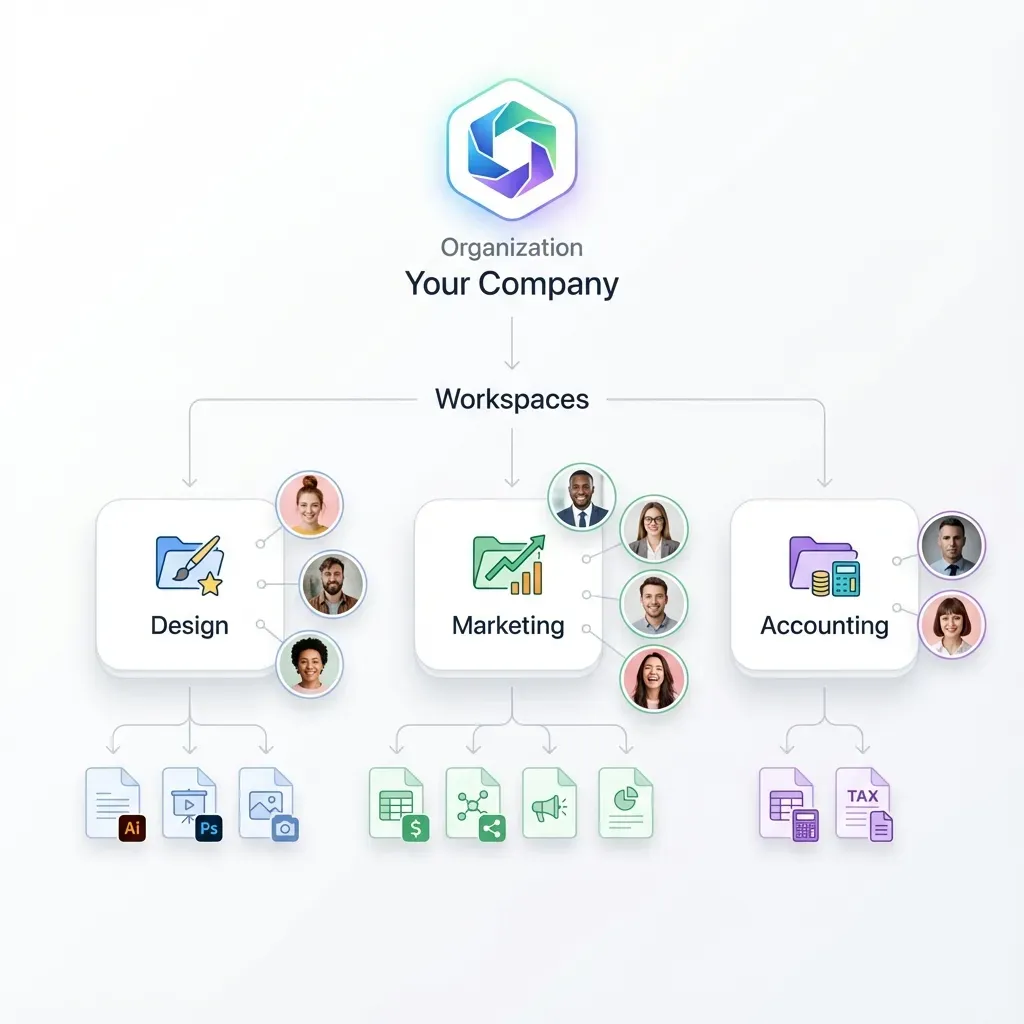
District-level deployment is where MagicSchool has invested most heavily in 2026. The Enterprise plan includes a set of admin features that go well beyond what any individual teacher plan offers.
Custom Enterprise Tools let administrators modify any existing tool or build new ones aligned to district curriculum and standards. Admins can pre-fill fields, attach curriculum documents, hide options that do not apply, and test tools internally before rolling them out district-wide. As of June 2026, this capability extends to student-facing tools as well, giving districts full control over which AI experiences students have access.
Usage Analytics provide hourly-updated dashboards showing adoption trends, tool usage patterns, and engagement metrics across the entire district. This data supports board-level reporting and helps identify which schools or departments are getting value from the platform and which need additional training or support.
Content Moderation includes real-time alerts for flagged content, customizable moderation rules, and audit trails for student interactions. Administrators can review flagged sessions without waiting for a teacher to report a concern.
Single Sign-On through Google, Microsoft, Clever, and ClassLink means students and teachers access MagicSchool with their existing school credentials. No separate account creation, no password management overhead.
LMS Integration with Canvas, Schoology, and Google Classroom connects MagicSchool to the systems teachers already use daily. Generated content can be pushed directly into courses without manual copy-paste workflows.
The platform currently supports 24 interface languages and can translate content into 98 languages, which matters for districts serving multilingual student populations. The translation capability is built into the tools rather than requiring a separate step.
Sources
References used to verify factual claims in this guide.
-
MagicSchool AI has over 5 million educator sign-ups across 160 countries and 13,000 schools
-
$45 million Series B round led by Valor Equity Partners, representing 72.5% of all AI-in-education funding in Q1 2025
-
MagicSchool earned a 95% privacy rating and the Common Sense Privacy Program Verified Seal
-
Raina persona retired from student chatbot in February 2026 in favor of neutral AI Learning Assistant
-
Both Anthropic and OpenAI certify zero data retention for MagicSchool
-
MagicSchool Plus pricing at $8.33/month billed annually or $12.99/month billed monthly
-
June 2026 update allows Enterprise district admins to create custom student AI tools
Frequently Asked Questions
Is MagicSchool AI free for teachers?
Yes. MagicSchool offers a free plan and no trial expiration. The free tier includes core tools for lesson planning, assessment creation, differentiation, and communication. For teachers who use the platform a few times per week, the free plan is sufficient. The Plus plan at $8.33/month (billed annually) removes usage limits and adds features like output history, AI editing, and 1-click exports.
Is Magic AI safe for students?
MagicSchool is designed specifically for K-12 safety. It complies with FERPA, COPPA, and privacy requirements, holds enterprise security standards certification, and earned a 95% privacy rating from Common Sense Media. Student data is never used to train AI models. Both Anthropic and OpenAI certify zero data retention for MagicSchool. Students access tools only through teacher-supervised Rooms, and all interactions are logged and visible to educators and administrators.
What can Magic AI do?
MagicSchool provides 80+ teacher tools and 50+ student tools. Teacher tools cover lesson planning, quiz generation, rubric creation, IEP drafting, text leveling, presentation slides, parent communication, and writing feedback. Student tools include AI tutoring, study bots, writing feedback, and research assistants, all accessible through supervised environments. The platform also supports 24 interface languages and can translate content into 98 languages.
How does MagicSchool AI compare to ChatGPT for education?
MagicSchool is faster for common classroom tasks because the prompt engineering is pre-built into each tool. ChatGPT offers more flexibility and deeper reasoning for complex or open-ended tasks. The key differences for schools are safety and compliance: MagicSchool is FERPA and COPPA compliant with supervised student access, content moderation, and admin analytics. ChatGPT lacks these protections by default. Most educators use both: MagicSchool for repetitive planning tasks, ChatGPT for ad-hoc research and creative work.
Does MagicSchool AI work for district-wide deployment?
Yes. MagicSchool's Enterprise plan includes admin dashboards, SSO through Google, Microsoft, Clever, and ClassLink, LMS integration with Canvas, Schoology, and Google Classroom, custom tool creation aligned to district standards, usage analytics with hourly updates, and content moderation with real-time alerts. Over 13,000 schools currently use the platform, and the June 2026 update added the ability for district admins to create custom student-facing AI tools.
Can MagicSchool AI write lesson plans?
The Lesson Plan Generator is one of MagicSchool's most popular tools. Input your topic, grade level, and standards, and it produces a complete lesson plan with objectives, activities, differentiation strategies, and assessments in about 30 seconds. The output is a solid first draft that typically needs 5 to 10 minutes of teacher editing. It also works alongside Google and Microsoft platforms for 1-click export on the Plus plan.