Best AI Tools for Proposal Writing in 2026
The average RFP response takes 33 hours to complete, according to Loopio's 2026 benchmarks report. AI proposal tools cut that time dramatically, but picking the right one depends on whether you're responding to enterprise RFPs, sending sales proposals, or writing grant applications. This guide compares 8 tools across those categories with real pricing and use-case recommendations.


Why Proposal Teams Are Turning to AI
The average RFP response takes 33 hours to complete. Dedicated proposal teams spend even longer, averaging 36 hours per response, according to Loopio's 2026 RFP Trends and Benchmarks Report surveying 1,533 professionals across 17 industries. That is nearly a full work week per proposal, before factoring in review cycles and stakeholder approvals.
AI proposal tools attack different parts of this time sink. Some generate first drafts from a content library. Others manage compliance matrices, track reviewer assignments, or handle e-signatures after the proposal ships. The tools in this guide fall into three broad categories:
- RFP response platforms that maintain a knowledge base of approved answers and use AI to match questions to prior responses (Loopio, Responsive, Inventive AI)
- Sales proposal builders that create polished, trackable documents with pricing tables and e-signatures (PandaDoc, Proposify, Qwilr, Better Proposals)
- Grant writing tools that guide applicants through funder-specific requirements (GrantBoost)
The right choice depends on your proposal volume, team size, and how much of the process you want to automate versus keep manual.
Related guides
- 15 Best AI Tools for Creative Teams in 2026AI tools for creative teams go beyond image generators. The strongest ones handle design, video production, asset...
- Best AI Tools for Musicians in 2026: 8 Tested Across the Full Workflow87% of musicians now use AI somewhere in their creative process, but most limit it to post-production tasks like...
- Best AI Music Generators in 2026: 10 Tools Tested and ComparedAI music generators have matured past the novelty stage. Tools like Suno, Udio, and AIVA now produce tracks that pass...
- Best AI Tools for Script Writing in 2026The screenwriting software market is growing at 14.4% annually, driven by AI tools built for specific script formats...
- Best AI for Creative Writing in 2026: 7 Tools for Fiction, Poetry, and StorytellingAI creative writing has split from business copywriting into its own tool category. Dedicated platforms like Sudowrite...
- Best AI for Writing Books in 2026: 8 Tools Compared for AuthorsMost AI writing tool roundups focus on blog posts and marketing copy. Book-length projects need different capabilities:...
More on this subject: AI Content and Media Generation (46 guides)
How We Evaluated These Tools
We tested and researched each tool against five criteria that matter most to proposal teams.
AI draft quality. Does the tool produce usable first drafts, or does every response need heavy rewriting? We looked at how each tool handles context, tone matching, and technical accuracy.
Content library and reuse. Proposal teams answer many of the same questions across RFPs. Tools that maintain a searchable, version-controlled knowledge base save the most time on repeat responses.
Collaboration and review workflows. Enterprise proposals typically involve 5 to 10 contributors. We evaluated assignment routing, approval chains, commenting, and real-time co-editing.
Integrations. CRM connections (Salesforce, HubSpot), cloud storage, Slack notifications, and e-signature support all reduce context switching during the proposal lifecycle.
Pricing transparency. Some tools publish clear per-seat pricing. Others require a sales call and custom quotes. We noted both the entry price and the likely cost at scale so you can compare before committing to a demo.
The 8 Best AI Proposal Writing Tools
1. Loopio
Loopio is an RFP response platform built around a centralized content library. Its Magic AI feature matches incoming RFP questions against your approved answer database and generates draft responses using that context. The platform integrates with Salesforce and Slack and is widely used by enterprise teams managing large RFP volumes.
Key strengths:
- Deep content library with tagging, version control, and freshness tracking
- AI-assisted response matching that improves as your library grows
- Strong reporting on win rates, response times, and library health
Key limitations:
- Pricing starts around $25,000/year and scales to $150,000+ for enterprise deployments
- Magic AI can struggle with complex or novel requirements that fall outside your content library
Best for: Enterprise teams responding to 20+ RFPs per year who can invest in building a comprehensive content library.
Pricing: Custom, starting around $25,000/year.
2. Responsive (formerly RFPIO)
Responsive offers structured workflow management for large proposal teams. The platform routes sections to subject matter experts, tracks approvals, and maintains a governed content library. Its AI drafting layer learns from completed responses over time, getting more accurate with each submission.
Key strengths:
- Workflow orchestration for teams with 10+ contributors per proposal
- Version-controlled content repository with granular access controls
- Integrations with Salesforce, Microsoft 365, and major CRMs
Key limitations:
- Complex setup and onboarding process that can overwhelm smaller teams
- AI drafting works best after you have built a mature, well-tagged content library
Best for: Enterprise organizations handling high volumes of commercial RFPs with structured contributor management needs.
Pricing: Custom, contact sales.
3. Inventive AI
Inventive AI is a newer platform built specifically around AI-native proposal generation. Its agents analyze the full RFP context before generating responses, rather than just matching keywords to a content library. The platform includes automatic conflict detection that flags stale or contradictory content across your knowledge sources.
Key strengths:
- AI agents that read the full RFP context before drafting responses
- Automatic conflict and staleness detection across knowledge sources
- Designed for teams that want AI to handle more than keyword matching
Key limitations:
- No public pricing, which makes budgeting harder before the sales call
- Smaller customer base than Loopio or Responsive, so fewer community resources
Best for: Proposal teams competing on response quality in high-stakes RFPs who want the deepest AI-native drafting available.
Pricing: Custom, contact sales.
4. PandaDoc
PandaDoc is a document automation platform focused on sales proposals, contracts, and quotes. It covers the full lifecycle from creation through e-signature and payment collection. AI features suggest content, flag errors before you send, and provide predictive analytics on when prospects are likely to sign.
Key strengths:
- End-to-end document workflow covering drafting, e-signature, and payment
- Predictive analytics on prospect engagement with your proposal
- Free plan available with unlimited seats for basic usage
Key limitations:
- Not designed for complex RFP responses with compliance matrices or contributor routing
- Per-seat pricing adds up for larger teams on the Business plan
Best for: Sales teams sending proposals, quotes, and contracts that need e-signature and payment built into the same tool.
Pricing: Free plan available. Starter at $19/seat/month, Business at $49/seat/month (billed annually). Enterprise pricing on request.


Centralize your proposal library and deliver with tracking
Shared workspaces with file versioning, branded delivery portals, and AI-powered search across your past proposals.
More Tools Worth Considering
5. Proposify
Proposify focuses on the approval and tracking side of proposal management. You build proposals from a template library, route them through internal approvals, and track exactly when and how prospects interact with each page. The analytics show which sections get the most attention and where prospects drop off.
Key strengths:
- Detailed viewer analytics showing time spent per proposal section
- Approval management with role-based permissions
- Interactive pricing tables with optional line items
Key limitations:
- AI generation capabilities are limited compared to dedicated RFP platforms
- Template library can feel restrictive for highly custom proposals
Best for: Teams that care more about tracking prospect engagement and managing internal approvals than AI-generated first drafts.
Pricing: Starter at $29/month for 2 users. Team at $49/month. Business at $65/month for 10+ users.
6. Qwilr
Qwilr creates web-based, interactive proposals rather than static PDFs. Prospects receive a URL instead of an attachment, and the proposal can include embedded videos, interactive pricing calculators, and accept payments at the point of signature. The AI proposal creator helps draft initial content that fits the web format.
Key strengths:
- Interactive, web-based format that stands out from standard PDF proposals
- Embedded video, dynamic pricing, and in-proposal payment acceptance
- HubSpot integration that syncs proposal status back to your CRM pipeline
Key limitations:
- Not suitable for formal RFP responses that require specific document formats
- Enterprise plan requires a 10-seat minimum
Best for: B2B sales teams sending modern, interactive proposals where visual presentation is a differentiator.
Pricing: Business at $35/user/month. Enterprise at $59/user/month (10-seat minimum).
7. Better Proposals
Better Proposals is the most accessible option on this list, starting at $13/user/month with a library of 160+ templates. The platform covers proposal creation, tracking, and basic e-signatures. The NUDGE add-on automates follow-up sequences when prospects go quiet on your proposal.
Key strengths:
- Low entry price with a 14-day free trial
- 160+ pre-built templates across industries and proposal types
- Automated follow-up workflows via the NUDGE add-on ($10/user/month)
Key limitations:
- AI-assisted drafting is basic compared to dedicated RFP platforms
- Fewer enterprise integrations than competitors like PandaDoc or Proposify
Best for: Freelancers and small teams that need polished proposals without enterprise complexity or pricing.
Pricing: Starter at $13/user/month. Premium at $21/user/month. Enterprise at $42/user/month.
8. GrantBoost
GrantBoost is purpose-built for grant writing. It guides users through surveys about their organization and project, then generates proposal drafts aligned to funder requirements. The platform includes grant opportunity tracking, collaborative workspaces, and a template library designed for nonprofit and academic teams.
Key strengths:
- Grant-specific AI that understands funder language and compliance requirements
- Step-by-step guided workflow for organizations without dedicated grant writers
- Collaborative workspace for team-based grant applications
Key limitations:
- Not useful for sales proposals or commercial RFPs
- AI output still needs significant editing for competitive grant applications
Best for: Nonprofits, academic institutions, and small organizations applying for grants without a dedicated grant writing team.
Pricing: Free plan with 40 monthly AI boosts. Starter at $24.99/month. Pro at $44.99/month. Teams at $59.99/month per user.
Managing Proposal Files Across Reviewers and Clients
Writing the proposal is only half the job. The other half is organizing source material, managing versions across reviewers, and delivering the final document to clients or evaluation committees. Most proposal teams cobble this together with email, shared drives, and file naming conventions like proposal_v3_FINAL_revised2.pdf.
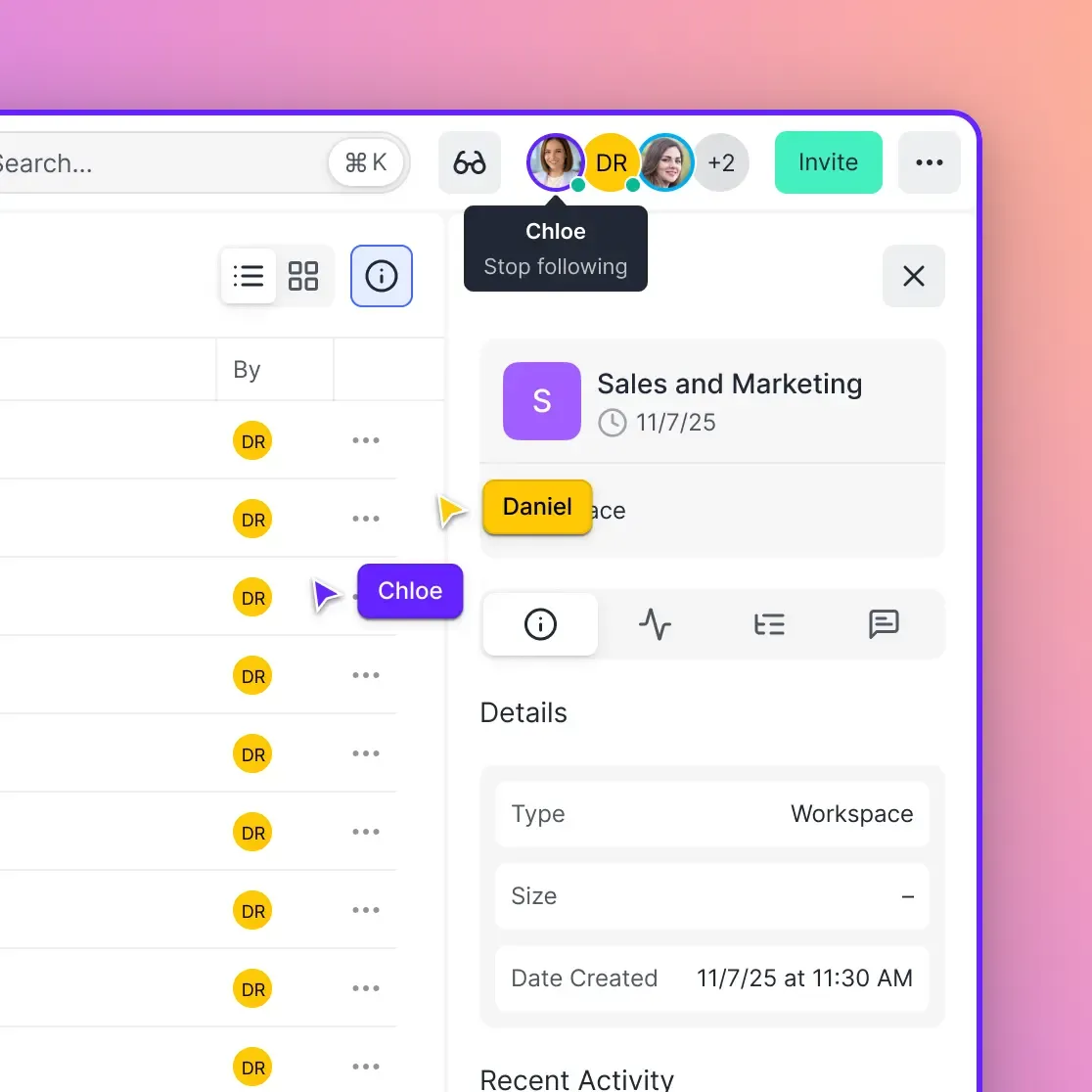
A file workspace adds value alongside your proposal tool. Fast.io provides shared workspaces with file versioning, granular permissions, and branded file delivery through Send, Receive, and Exchange shares. Proposal teams can store reference materials, past submissions, and template libraries in organized workspaces, then share final proposals through branded portals with download tracking and audit trails.
For teams using AI agents in their proposal workflow, Fast.io's MCP server lets agents read source documents, write draft files, and hand off completed proposals to human reviewers in the same workspace. Once Intelligence Mode is enabled for the workspace, it auto-indexes uploaded documents for semantic search, so agents or humans can ask questions about past proposals and get answers with citations.
Plans start at $9.99/mo (Starter, 250 GB) with a 14-day Business Trial, giving proposal teams ample capacity to centralize their reference library and delivery workflow. See pricing.
Which Tool Should You Choose?
The right tool depends on what kind of proposals you write and how many people are involved in each one.
If you respond to enterprise RFPs regularly, start with Loopio or Responsive. Both maintain governed content libraries that compound in value over time. Inventive AI is worth evaluating if you want more aggressive AI drafting and conflict detection, though the lack of public pricing makes comparison harder.
If you send sales proposals and need e-signatures, PandaDoc gives you the broadest feature set at a reasonable per-seat price. Qwilr is a strong choice when interactive, web-based proposals fit your sales motion. Proposify wins on approval tracking and prospect engagement analytics.
If you're a freelancer or small team, Better Proposals offers the best value at $13/user/month with enough templates to cover most industries and proposal types.
If you write grants, GrantBoost is the only dedicated option on this list and handles the funder-specific requirements that general proposal tools ignore.
If your bottleneck is file management and delivery rather than drafting, a workspace like Fast.io fills the gap between creating proposals and getting them to clients with version control and tracking intact.
No single tool covers every proposal type. Most productive teams pair an AI drafting tool with a separate workspace for file organization and client delivery.
Sources
References used to verify factual claims in this guide.
-
The average RFP response takes 33 hours to complete, and dedicated proposal teams spend 36 hours per response
-
Survey of 1,533 response management professionals across 17 industries
Frequently Asked Questions
Can AI write a business proposal?
AI can generate a strong first draft of a business proposal, but it works best when you provide context about your company, the client, and the project scope. Tools like PandaDoc and Proposify use templates and your past proposals to produce drafts that match your brand voice. Dedicated RFP platforms like Loopio and Responsive go further by matching incoming questions against your approved answer library. Expect to spend 20 to 40 percent of the original writing time on editing and customization, depending on how well-maintained your content library is.
What is the best AI for RFP responses?
For enterprise RFP responses, Loopio and Responsive are the most established options with deep content library and workflow management features. Inventive AI offers more aggressive AI-native drafting with context-aware response generation. The best choice depends on your team size and RFP volume. Teams responding to fewer than 10 RFPs per year may not recoup the investment in an enterprise platform and could start with a general proposal tool like PandaDoc instead.
Is there a free AI proposal writer?
PandaDoc offers a free plan with unlimited seats that includes basic proposal creation and e-signature. GrantBoost has a free tier with 40 monthly AI boosts for grant writing. Better Proposals provides a 14-day free trial. For general AI writing, tools like ChatGPT or Claude can draft proposal content, but they lack proposal-specific features like content libraries, compliance tracking, template management, and e-signatures that dedicated platforms provide.
How do you use AI to write a grant proposal?
GrantBoost is the most focused tool for this use case. It works by collecting information about your organization and project through guided surveys, then generating proposal sections aligned to the funder's requirements. You can also use a general AI writing tool to draft sections, but you will need to handle formatting, compliance checklists, and budget narratives yourself. Either way, have someone with grant writing experience review the final submission. AI tends to produce generic language that experienced grant reviewers can identify.
How long does it take to write a proposal with AI?
AI tools typically reduce first-draft creation from days to hours. According to Loopio's 2026 benchmarks, the average RFP response takes 33 hours without dedicated AI assistance. Teams using AI drafting tools report cutting initial draft time by 50 to 80 percent, though review, customization, and stakeholder approvals still add significant time. A straightforward sales proposal might take 30 minutes to generate and an hour to refine. A complex RFP response with 200+ questions will still take a full day or more, even with AI doing the first pass.
Related Resources

Centralize your proposal library and deliver with tracking
Shared workspaces with file versioning, branded delivery portals, and AI-powered search across your past proposals.