Best AI Email Marketing Tools in 2026
Marketers who apply AI to email personalization report 41% higher revenue, but most tool guides only cover the same four ESPs. This guide evaluates 10 tools across campaign platforms, standalone AI add-ons, cold outreach automation, and creative asset management to help you build a complete email AI stack for 2026.


What AI Email Marketing Tools Do and How We Tested
Marketers who apply AI to email personalization report 41% higher revenue and 13.4% better click-through rates, according to Statista and HubSpot data compiled by DemandSage. Email still returns $36 to $40 for every dollar spent. AI amplifies those returns by optimizing the parts of email campaigns that humans are slowest at: subject line testing, send-time prediction, per-recipient personalization, and deliverability monitoring.
Yet most "best AI email tools" roundups list the same four ESPs and call it a day. They skip the standalone add-ons that work with any ESP, the deliverability tools that keep your domain healthy, and the creative asset layer where marketing teams lose hours hunting for templates in scattered folders and Slack threads. This guide covers all of it.
AI email marketing tools use machine learning to optimize different parts of the campaign lifecycle: subject line generation, send-time prediction, audience segmentation, content personalization, and deliverability scoring. Some handle the entire workflow. Others specialize in one area and plug into whatever ESP you already use.
We evaluated each tool on five criteria:
AI depth: Does the tool learn from your account data, or just run a generic language model?
Integration flexibility: Can it work with your existing ESP and CRM, or does it require a platform switch?
Pricing transparency: What does it actually cost once you scale past the free tier?
Deliverability impact: Does the AI improve inbox placement, or just generate more emails?
Time to value: How quickly can a two-person marketing team start seeing results?
Related guides
- 7 Top Tools for Building Marketing AI Agents in 2026Building marketing AI agents requires more than a chatbot script. You need a complete stack: a brain to reason, a...
- Best AI Character Generators in 2026: 8 Tools Tested for ConsistencyThe AI image generator market hit $15.18 billion in 2026, but generating the same character consistently across poses...
- Best AI Tools for Agriculture in 2026AI agriculture tools have moved from research demos to working fields, but most comparison guides skip the options that...
- Best Generative AI Tools in 2026, Ranked by Output TypeThe generative AI market hit $69.85 billion in 2026, nearly doubling year over year, yet most users still default to...
- Best AI Mastering Tools in 2026Professional mastering sessions still cost $50 to $200 per track. AI services now deliver streaming-ready masters for...
- Best Free AI Tools in 2026: What's Actually Free and Worth UsingMost free AI tool lists include 14-day trials that quietly start charging you. This guide covers 11 tools that are free...
More on this subject: AI Tool Directories and Comparisons (231 guides)
Full-Stack Campaign Platforms with Built-In AI
These four platforms handle the entire email workflow, from list management to delivery. Their AI features sit inside the campaign builder, so you do not need additional tools to get started.
1. ActiveCampaign
ActiveCampaign wraps advanced automation around AI-powered sending and scoring. Its Active Intelligence engine learns from your specific account data, not just generic benchmarks, to improve predictions over time.
Key strengths:
- AI Campaign Builder generates complete automation sequences from a text prompt
- Predictive sending delivers each email at the recipient's peak engagement window
- Win probability scoring helps sales teams prioritize leads
- 94.2% average inbox placement rate, well above the industry average of roughly 83%
Limitations:
- ActiveCampaign has no free plan, only a 14-day trial
- Advanced automation features require a learning curve
Best for: SMBs with sales teams that need behavior-driven automation.
Pricing: Starter from $15/mo, scales by contact count.
2. Klaviyo
Klaviyo is built for e-commerce. Its predictive analytics forecast customer lifetime value, churn probability, and next expected purchase date, then use those predictions to trigger automated flows.
Key strengths:
- Native Shopify, WooCommerce, and BigCommerce integrations with real-time data sync
- Predictive CLV and churn scoring drive automated win-back campaigns
- Product recommendation engine personalizes email content per recipient
Limitations:
- Pricing climbs steeply above 1,000 contacts
- Feature depth is overkill for non-e-commerce use cases
Best for: DTC and e-commerce brands running product-driven email flows.
Pricing: Free up to 250 contacts, then from $20/mo.
3. HubSpot Marketing Hub
HubSpot ties email marketing to its CRM, giving every email access to contact history, deal stages, and website behavior. Breeze AI, its copilot feature, drafts emails, suggests send times, and scores leads inside the same interface.
Key strengths:
- CRM and email share the same database with no syncing required
- Breeze Copilot generates drafts and subject line variants from prompts
- Outcome-based agent pricing at $0.50 per resolved conversation
- Free tier includes 2,000 email sends per month
Limitations:
- Full marketing automation requires the Professional tier at $800+/mo
- Contact-based pricing penalizes large databases
Best for: B2B companies that already use or plan to adopt HubSpot CRM.
Pricing: Free CRM with 2,000 sends/mo, Starter from $15/seat/mo.
4. Brevo
Brevo (formerly Sendinblue) stands out for its pricing model: you pay by email volume, not contact count. That makes it the most affordable option for teams with large lists but moderate send frequency.
Key strengths:
- Free tier includes 300 emails per day with unlimited contacts
- Multichannel native: email, SMS, WhatsApp, and push notifications in one platform
- AI-powered send-time optimization and subject line generation
- Transactional email built into the same platform
Limitations:
- Automation depth trails ActiveCampaign
- Less specialized for e-commerce than Klaviyo
Best for: Budget-conscious teams that need multichannel reach.
Pricing: Free (300 emails/day), Starter from $9/mo.

Standalone AI Add-Ons That Work with Any ESP
These tools plug into your existing email platform. They focus on one capability and do it well: writing better copy, coaching your tone, optimizing subject lines at enterprise scale, or timing your sends per recipient.
5. Jasper
Jasper is an AI writing platform with over 100 marketing-specific templates, including email subject lines, body copy, and CTAs. It enforces your brand voice across everything it generates, so outputs match your team's style.
Key strengths:
- Brand Voice feature trains on your style guide and past content
- Works with any ESP: generate copy in Jasper, paste into your campaign builder
- Handles full campaign narratives, not just individual lines
Limitations:
- Not an ESP, so there is no sending, segmentation, or analytics
- $49/mo per seat adds up for larger teams
Best for: Marketing teams whose bottleneck is writing speed, not sending infrastructure.
Pricing: Creator from $49/mo/seat.
6. Lavender
Lavender is a real-time email coaching tool that runs as a Gmail and Outlook sidebar. It scores every email from 0 to 100, then suggests specific changes to subject lines, tone, reading level, and mobile formatting before you hit send.
Key strengths:
- Scores emails on length, tone, personalization, and CTA quality in real time
- Surfaces prospect data so you can personalize without switching tabs
- Optimizes for mobile devices, where over 80% of emails are first opened
Limitations:
- Sales-focused, designed for outbound emails rather than marketing campaigns
- Free tier caps at 5 emails per month
Best for: Sales reps and SDRs writing individual outbound emails.
Pricing: Free (5/mo), Starter $29/mo, Pro $49/mo, Teams $69/user/mo.
7. Jacquard (formerly Phrasee)
Jacquard uses natural language generation trained on your brand's historical performance data. It creates hundreds of subject line and copy variations, tests them through multivariate experiments, and learns which language patterns drive opens for your specific audience.
Key strengths:
- Custom language model trains on your brand voice and past campaign results
- eBay documented a 15.8% open rate lift using Jacquard's subject line system
- Multivariate testing goes well beyond simple A/B splits
Limitations:
- Enterprise pricing puts it out of reach for small teams
- Requires campaign volume to train the model effectively
Best for: Enterprise brands running high-volume campaigns where a 1% open rate improvement means significant revenue.
Pricing: Enterprise only, contact for quote.
8. Seventh Sense
Seventh Sense analyzes per-recipient engagement patterns and delivers each email at the individual's peak attention window. It plugs directly into HubSpot or Marketo, so you keep your existing campaign workflow.
Key strengths:
- Personalized send times based on each contact's historical engagement behavior
- Frequency optimization reduces unsubscribes by adapting to individual preferences
- Email throttling prevents bulk sends from triggering spam filters
Limitations:
- Only integrates with HubSpot or Marketo, no other ESPs
- Requires enough historical engagement data to generate predictions
Best for: HubSpot or Marketo users who want better engagement without switching platforms.
Pricing: From $80/mo (HubSpot), $450/mo (Marketo), billed annually.


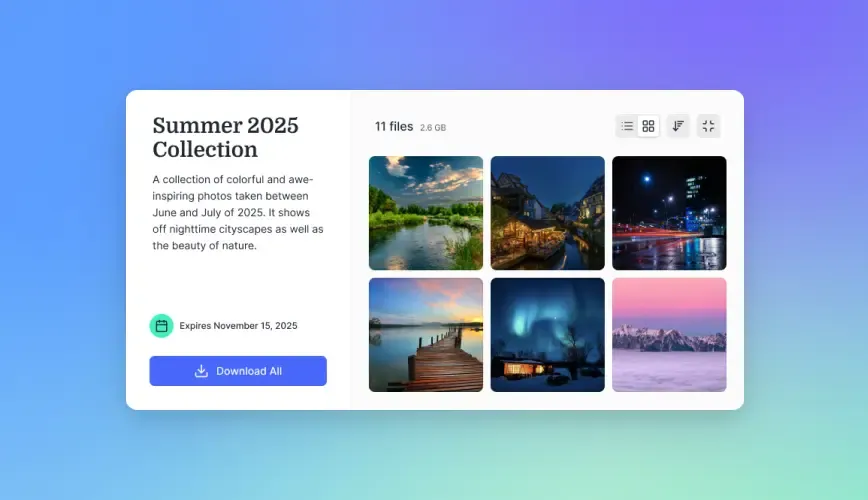
Organize Your Email Creative Assets in One Searchable Workspace
Shared workspaces with AI-powered search. Version your templates, share assets through branded portals, and stop digging through scattered folders before every campaign.
Outreach AI and Creative Asset Management
The last two tools address gaps that pure ESPs leave open: scaling cold outreach with deliverability controls, and organizing the creative assets that feed every email campaign.
9. Instantly
Instantly combines cold email sequencing with built-in deliverability tools. It connects unlimited email accounts, warms them automatically, and uses AI to personalize outreach at scale while monitoring inbox placement.
Key strengths:
- Unlimited email account connections with automatic warmup
- AI Copilot drafts personalization variables inside the campaign builder
- Built-in B2B lead database for prospecting
- Automated out-of-office detection reschedules follow-ups
Limitations:
- Cold email focused, not suited for newsletters or marketing campaigns
- Full feature access costs $180 to $475/mo once you add lead database and deliverability modules
Best for: B2B sales teams scaling cold outreach while protecting domain reputation.
Pricing: Growth from $30/mo (email only), 14-day free trial.
10. Fastio
Most email marketing guides overlook the creative asset layer entirely. Where do you store email templates, brand images, copy documents, and design files so your entire team can find them? Fastio is a workspace platform that versions files, indexes them for AI search, and lets you share approved assets through branded portals.
Key strengths:
- Once Intelligence is enabled for a workspace, uploaded files are indexed for semantic search so you can ask "find the Q1 product launch email template" instead of digging through folders
- Metadata Views extract structured data from email briefs, creative decks, and campaign reports without manual tagging
- Version history and audit trails track who changed which template and when
- Branded sharing portals let you send approved creative assets to external agencies or freelancers
Limitations:
- Not an ESP: no email sending, campaign management, or subscriber analytics
- Best suited for teams already using a separate email platform
Best for: Marketing teams managing email templates, images, and creative briefs across multiple campaigns and collaborators.
Pricing: Plans start at $9.99/mo (Starter) up to $199.99/mo (Enterprise), with a 14-day Business Trial. See plans.
How to Build Your AI Email Stack
No single tool covers every AI email capability. The right combination depends on where your current workflow breaks down.
Starting from scratch: Pick one full-stack platform. ActiveCampaign for automation depth, Klaviyo for e-commerce, HubSpot for CRM integration, or Brevo for budget flexibility. Use its built-in AI features for six months before adding standalone tools. Built-in AI handles subject line suggestions, send-time optimization, and basic personalization without additional cost.
Open rates plateaued: Add a specialized subject line tool. Jasper works for teams that need better copy across the board. Jacquard fits enterprise brands with enough send volume to train a custom language model. AI-optimized subject lines lift open rates by roughly 26% over unpersonalized alternatives.
Team wastes time finding assets: Set up a shared creative workspace. Store email templates, approved images, and copy documents in one searchable location so every campaign does not start with a hunt through Drive folders and Slack threads. Once Intelligence is enabled, Fastio makes those files searchable by meaning, not just filename. Other options include Brandfolder for dedicated DAM, or a well-organized Google Drive with strict naming conventions.
Running cold outreach: Instantly handles sequencing and warmup. Pair it with Lavender for per-email coaching before you scale send volume.
Using HubSpot or Marketo: Seventh Sense is the easiest upgrade. It drops directly into your existing campaign workflow without changing how you build or segment emails.
The common thread across all these scenarios: start with the AI built into your ESP, measure where performance stalls, then add the standalone tool that addresses your specific bottleneck. Stacking three AI tools on day one creates more complexity than value.
Sources
References used to verify factual claims in this guide.
-
Marketers who use AI for email personalization report 41% higher revenue and 13.4% better click-through rates Email marketing returns $36 to $40 for every dollar spent
-
AI-personalized subject lines lift open rates by 26% over unpersonalized alternatives
-
ActiveCampaign reports 94.2% inbox placement rate versus industry average of roughly 83%
-
eBay documented 15.8% open rate lift using Jacquard (formerly Phrasee) AI subject lines
Frequently Asked Questions
What is the best AI tool for email marketing?
It depends on your workflow. ActiveCampaign is the strongest all-in-one platform for automation. Klaviyo wins for e-commerce brands. For teams that need better copy without switching ESPs, Jasper works as a standalone writing tool. There is no single best option because each tool addresses a different part of the email campaign lifecycle.
How do you use AI in email marketing?
AI applies to five areas of email marketing: writing subject lines and body copy, predicting the best send time per recipient, segmenting audiences based on behavior, personalizing content for individual subscribers, and monitoring deliverability. Most ESPs now include basic AI for at least one of these. Standalone tools like Jasper (copy), Lavender (coaching), and Seventh Sense (timing) offer deeper optimization in their specific areas.
Can AI write marketing emails?
Yes. Jasper generates full email drafts including subject lines, body copy, and CTAs based on your brand voice and campaign goals. HubSpot's Breeze Copilot and ActiveCampaign's AI Campaign Builder also draft emails within their platforms. The output still needs human review for accuracy and brand alignment, but AI writing tools cut first-draft time significantly.
What AI tools improve email open rates?
Subject line optimizers have the most direct impact. Jacquard (formerly Phrasee) uses natural language generation trained on your brand data to test hundreds of variations. Seventh Sense improves opens by delivering emails when each individual recipient is most likely to check their inbox. AI-personalized subject lines lift open rates by roughly 26% over generic alternatives, according to Campaign Monitor research.
Are there free AI email marketing tools?
Several tools offer functional free tiers. Brevo provides 300 emails per day with unlimited contacts. Klaviyo is free up to 250 contacts. HubSpot includes 2,000 sends per month on its free CRM plan. Lavender offers 5 AI-coached emails per month at no cost. Fastio provides a 14-day Business Trial with AI-powered search for managing email creative assets.
What is the difference between an ESP with AI and a standalone AI email tool?
An ESP with AI (ActiveCampaign, Klaviyo, HubSpot, Brevo) handles your entire email workflow from list management to delivery, with AI features built into the platform. A standalone AI tool (Jasper, Lavender, Seventh Sense) specializes in one capability and connects to your existing ESP. Standalone tools tend to outperform built-in AI at their specific function, but they add another subscription and require integration setup.
Related Resources

Organize Your Email Creative Assets in One Searchable Workspace
Shared workspaces with AI-powered search. Version your templates, share assets through branded portals, and stop digging through scattered folders before every campaign.