Best AI CRM Tools in 2026, 8 Platforms Compared
The AI-in-CRM market is growing three times faster than the broader CRM market. This guide ranks eight platforms on the four capabilities that actually differentiate them: lead scoring accuracy, email draft quality, forecasting precision, and conversation intelligence. Each entry includes real pricing, honest limitations, and the team size where the platform fits best.


Where the AI CRM Market Stands in 2026
The AI-in-CRM segment reached $10.5 billion in 2023 and is projected to hit $40.2 billion by 2028, a 30.8% compound annual growth rate that triples the broader CRM market's 10% growth (MarketsandMarkets). That three-to-one gap tells you where the money is going: not into new CRM platforms, but into the AI layer on top of existing ones.
Salesforce Einstein alone generates over 1 trillion predictions per week across its customer base. HubSpot shipped five Breeze AI agents in the past 18 months. Zoho packed 22 Zia AI capabilities into its standard license at no extra charge. The question is not whether your CRM gets AI. It is which platforms deliver AI that sales teams actually use instead of quietly ignoring.
This guide ranks eight platforms on the four AI capabilities that matter most for closing deals: lead scoring accuracy, email draft quality, deal forecasting, and conversation intelligence. Each entry includes real pricing, honest limitations, and the team size where that platform fits best.
Here is the short version, ranked by team fit:
- Salesforce Einstein: best for enterprise (250+ reps)
- HubSpot Breeze AI: best for marketing-sales alignment
- Freshsales Freddy AI: best value under $40/user
- Zoho CRM Zia: best budget AI with no add-on fees
- Pipedrive AI: best for small sales teams
- Monday CRM: best for project-driven sales
- Attio: best for startups wanting a modern data model
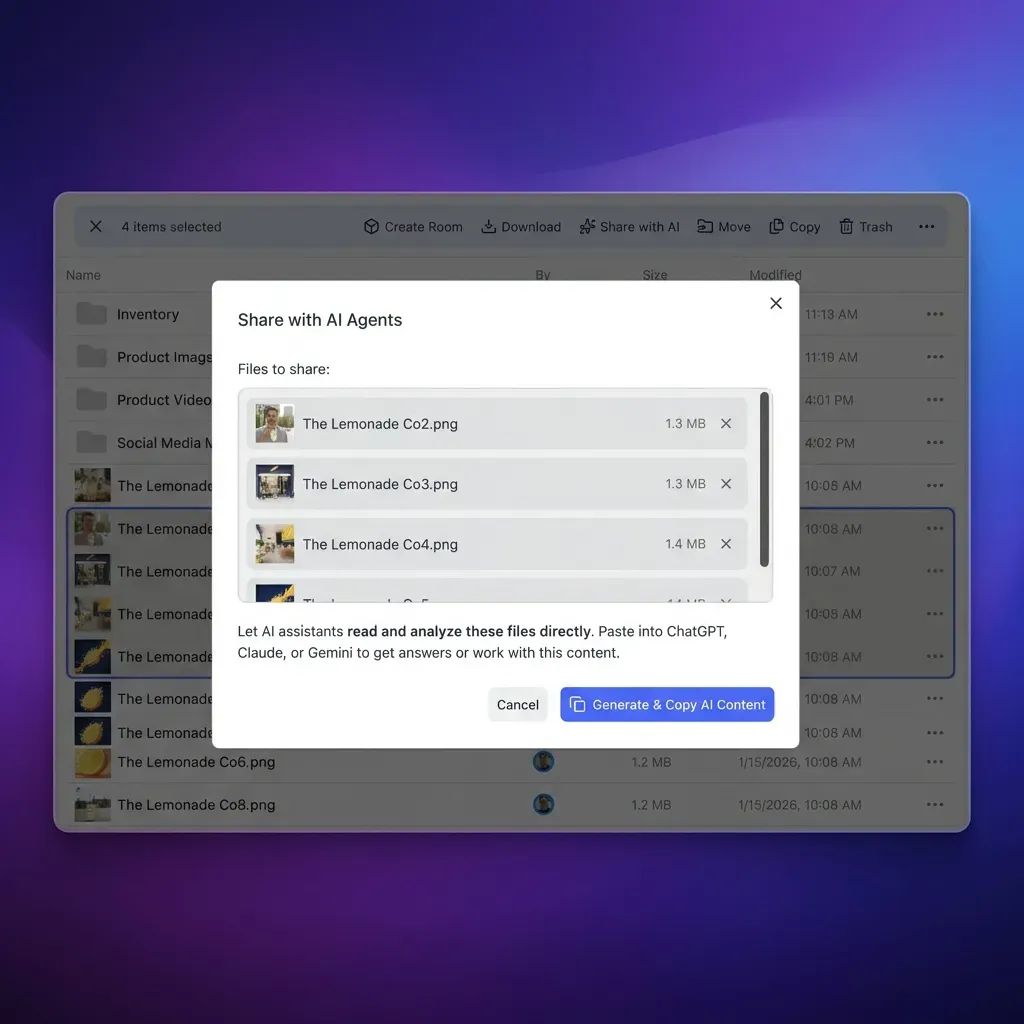
- Fastio: best AI workspace layer for CRM data
Related guides
- Best AI Logo Generators in 2026: 8 Tools Tested and ComparedAI logo generators can produce usable brand marks in minutes, but the quality gap between tools is wide. We tested...
- 10 Best AI Tools for Teachers in 2026: Reviewed and ComparedPurpose-built AI tools for teachers now handle lesson planning, grading, reading differentiation, and student...
- 11 Best AI Tools for Language Learning in 2026: Features and Pricing ComparedDuolingo reported 140.6 million monthly active users in the second quarter of 2026, yet drills alone do not teach you...
- Best AI Summarizers in 2026: 10 Tools Tested and ComparedKnowledge workers spend 1.8 hours every day just searching for information, according to McKinsey. AI summarizers cut...
- Best AI Text-to-Speech Tools 2026: Pricing, Latency, and Quality ComparedLeading TTS providers now stream audio in under 100ms, fast enough for real-time conversation. This guide ranks 8...
- Best AI for Insurance in 2026: 9 Tools Compared by FunctionInsurance executives report scaling AI across multiple business functions at record rates, yet only 13% have reached...
More on this subject: AI Tool Directories and Comparisons (231 guides)
8 AI CRM Platforms Ranked for 2026
1. Salesforce Einstein
Salesforce Einstein is the AI layer inside the world's largest CRM platform. It predicts deal outcomes, scores leads, summarizes calls, and drafts emails, all grounded in your existing Salesforce data.
Key strengths:
- Lead scoring assigns 1-99 scores using your historical conversion data, updating in real time as new signals arrive
- Einstein Copilot generates personalized emails, call summaries, and action plans using generative AI tied directly to CRM records
- Forecasting models analyze pipeline velocity, historical close rates, and rep activity to produce deal-level win probability scores
Key limitations:
- AI add-ons start at $75/user/month on top of Sales Cloud licensing, pushing total cost above $200/user/month for full access
- Configuration requires Salesforce admin expertise; out-of-the-box AI is limited compared to the setup-heavy advanced features
- Data quality issues in your CRM directly degrade prediction accuracy
Best for: Enterprise sales organizations (250+ reps) already running Salesforce that want predictive AI built into their existing workflows.
Pricing: Sales Cloud starts at $25/user/month. Einstein AI add-ons start at $75/user/month. Full Einstein 1 Platform runs $300/user/month or higher.
2. HubSpot Breeze AI
HubSpot Breeze AI is the unified intelligence layer across its CRM, covering marketing, sales, and service in one platform. It includes Breeze Agents (specialized AI teammates), Breeze Assistant (an in-app copilot), and over 100 embedded AI features across all hubs.
Key strengths:
- Breeze Assistant is free on every HubSpot plan, including the free CRM tier, giving every team member an AI copilot with full CRM context
- Five specialized Breeze Agents handle prospecting, customer service, company research, data enrichment, and customer health scoring
- Tight marketing-sales integration means AI predictions draw from both marketing engagement and sales activity data
Key limitations:
- Advanced AI features like predictive lead scoring and forecasting require Sales Hub Professional ($90/user/month) or higher
- Breeze Agents consume AI credits, and heavy usage can require purchasing additional credit packs
- Enterprise teams with complex deal structures often find the customization ceiling too low compared to Salesforce
Best for: Mid-market companies (50-250 employees) that want marketing and sales AI in one platform without managing separate tools.
Pricing: Free CRM with Breeze Assistant included. Sales Hub Starter at $15/user/month. Professional at $90/user/month with predictive AI features.
3. Freshsales Freddy AI
Freshsales by Freshworks pairs a clean, sales-focused CRM with Freddy AI, an assistant that handles lead scoring, deal insights, and email generation at a price point well below Salesforce and HubSpot.
Key strengths:
- Freddy AI learns from your historical sales data to score leads and predict deal outcomes, improving as more interaction data flows through the system
- Built-in phone, email, and chat mean Freddy has access to every customer interaction without requiring third-party integrations
- Generative email drafting and auto-enrichment of contact profiles from public data sources come standard on Pro plans
Key limitations:
- AI lead scoring and predictive insights require the Pro plan ($39/user/month); the free and Growth plans include basic automation only
- Reporting is functional but lacks the depth of Salesforce or HubSpot for teams needing custom analytics
- Marketing automation requires Freshmarketer, a separate Freshworks product
Best for: Growing sales teams (10-100 reps) that want practical AI without enterprise pricing or lengthy setup.
Pricing: Free plan for up to 3 users. Growth at $9/user/month. Pro with full Freddy AI at $39/user/month. Enterprise at $59/user/month.
4. Zoho CRM Zia
Zoho CRM's AI assistant Zia packs 22 distinct AI capabilities into plans that cost a fraction of Salesforce. Lead scoring, churn prediction, voice transcription, natural-language analytics, and generative content tools are all included without per-feature surcharges.
Key strengths:
- All 22 AI capabilities are included in standard Enterprise and Ultimate plans with no AI-specific add-on fees
- Lead and deal scoring uses your historical patterns to assign 1-100 scores, with separate churn prediction identifying at-risk accounts
- Ask Zia turns plain-language questions ("top 5 reps by closed-won this month") into real charts and reports
Key limitations:
- AI features are only available on Enterprise ($40/user/month) and Ultimate ($52/user/month) plans
- The Zoho ecosystem works best when you use multiple Zoho products; standalone CRM users miss some integration advantages
- Interface design feels dated compared to newer platforms like Attio
Best for: Budget-conscious organizations that want comprehensive AI without paying AI surcharges, especially those already using other Zoho products.
Pricing: Standard at $14/user/month. Professional at $23/user/month. Enterprise with full Zia AI at $40/user/month. Ultimate at $52/user/month.
5. Pipedrive AI
Pipedrive is a sales-focused CRM built around a visual Kanban pipeline. Its AI features handle deal prioritization, email drafting, and sales reporting through a clean interface that new reps can learn in minutes.
Key strengths:
- AI Sales Assistant analyzes pipeline patterns and recommends which deals to prioritize based on win probability
- AI email drafting and summarization save time on daily communication, with output personalized to the deal context
- Visual pipeline with drag-and-drop deal management requires almost no training
Key limitations:
- AI scope is narrower than Salesforce, HubSpot, or Zoho, with no AI churn prediction or sentiment analysis
- Pipedrive has no free plan; a 14-day trial is the only way to test before committing
- Custom reporting and some AI features are locked behind higher-tier plans
Best for: Small sales teams (2-25 reps) that prioritize pipeline visibility and want AI that works without configuration.
Pricing: Lite at $14/user/month. Growth at $39/user/month. Premium at $49/user/month. Ultimate at $79/user/month. All billed annually.
6. Monday CRM
Monday CRM combines project management with sales CRM, adding AI agents and automation blocks that handle lead sourcing, deal scoring, and meeting transcription. It works well for teams where sales overlaps with project delivery.
Key strengths:
- AI Sales Agents autonomously source and qualify leads based on your ideal customer profile, then hand off to a human for follow-up
- AI Blocks let you build custom automations (sentiment detection, info extraction, text summarization) without writing code
- Notetaker joins meetings to transcribe conversations and generate structured summaries with action items
Key limitations:
- AI features consume credits; heavy users will burn through their monthly allocation and need to purchase more
- CRM depth is thinner than dedicated sales platforms, with limited forecasting and territory management
- Minimum 3-seat requirement on all plans, scaling in multiples of 5
Best for: Project-driven sales teams (10-50 people) where deal management and project delivery happen on the same platform.
Pricing: Basic at $12/user/month. Standard at $17/user/month. Pro at $28/user/month. Enterprise pricing is custom. All billed annually with 3-seat minimum.
7. Attio
Attio is the most architecturally modern CRM on this list. Built with a flexible data model that feels closer to a database than a pipeline tool, it treats AI as a native data layer rather than a bolted-on assistant.
Key strengths:
- AI Attributes let you add custom AI-powered fields to any record: auto-classify contacts by ICP tier, summarize account histories, or run web research to fill in funding stage and headcount
- Flexible data model supports custom objects and relationships without requiring admin expertise
- Call Intelligence on Pro plans transcribes and analyzes sales calls for patterns
Key limitations:
- Younger platform with a smaller integration ecosystem compared to Salesforce or HubSpot
- Enterprise features like advanced permissions and audit logs require the $119/user/month tier
- Automation credits are limited on lower plans; AI-heavy workflows may hit usage ceilings
Best for: Startups and modern sales teams (5-50 people) that want a CRM built around data flexibility rather than rigid pipelines.
Pricing: Free plan for up to 3 seats. Plus at $29/user/month. Pro at $59/user/month. Enterprise at $119/user/month.
8. Fastio
Fastio is not a CRM. It is an intelligent workspace platform that gives your CRM a persistent storage and document intelligence layer. If your sales team runs AI agents that pull data from Salesforce, HubSpot, or any other CRM on this list, Fastio is where those agents store, organize, and hand off their work.
Key strengths:
- Once enabled, Intelligence Mode indexes uploaded files for semantic search and AI chat, turning CRM exports and deal documents into a queryable knowledge base
- MCP server with a consolidated MCP toolset lets AI agents read, write, and organize files programmatically across workspaces
- Branded shares let sales teams send deal rooms, proposals, and client portals from their own domain
- 14-day Business Trial to test persistent workspaces and agent integrations
Key limitations:
- Not a CRM: no pipeline management, lead scoring, or deal tracking; it complements your CRM rather than replacing one
- AI features focus on document intelligence and file management, not sales-specific predictions
- Best suited for teams already running AI agent workflows that need persistent file storage between sessions
Best for: Sales teams running AI agent workflows alongside their CRM that need a shared workspace for documents, proposals, and CRM data exports.
Pricing: Plans start at $9.99/mo (Starter) up to $199.99/mo (Enterprise), with a 14-day Business Trial. See fast.io/pricing.
What AI Capabilities Actually Matter in a CRM
Every CRM vendor now lists "AI-powered" on their feature page. The difference between useful AI and marketing copy comes down to four specific capabilities.
Lead scoring that learns from your data. Generic scoring assigns points based on job title and company size. Useful AI scoring trains on your closed-won deals to surface patterns you would not spot manually. Salesforce Einstein, Zoho Zia, and Freshsales Freddy all build custom models from your historical data. Pipedrive's scoring is simpler but still behavior-based.
Email drafting grounded in deal context. Every CRM now offers "write an email for me." The useful version pulls in deal stage, recent activity, and contact history to produce a draft that fits the situation. HubSpot Breeze and Salesforce Einstein Copilot both do this well. Freshsales Freddy drafts from the full contact timeline.
Forecasting that updates in real time. Static pipeline snapshots tell you where deals are. Predictive forecasting tells you where they are going. Salesforce and Zoho build forecasts from win probability, deal velocity, and seasonal patterns. Monday CRM and Attio offer lighter forecasting that works for smaller pipelines.
Conversation intelligence that finds patterns. Recording calls is table stakes. Useful conversation AI transcribes, summarizes, extracts action items, and identifies which talk tracks correlate with closed deals. HubSpot, Salesforce, and Attio include this at higher tiers. Freshsales captures it through built-in telephony.
If you are comparing platforms, test each of these four capabilities with your own data during the trial period. A demo with clean sample data will always look impressive. Real performance depends on how well the AI handles your actual pipeline.
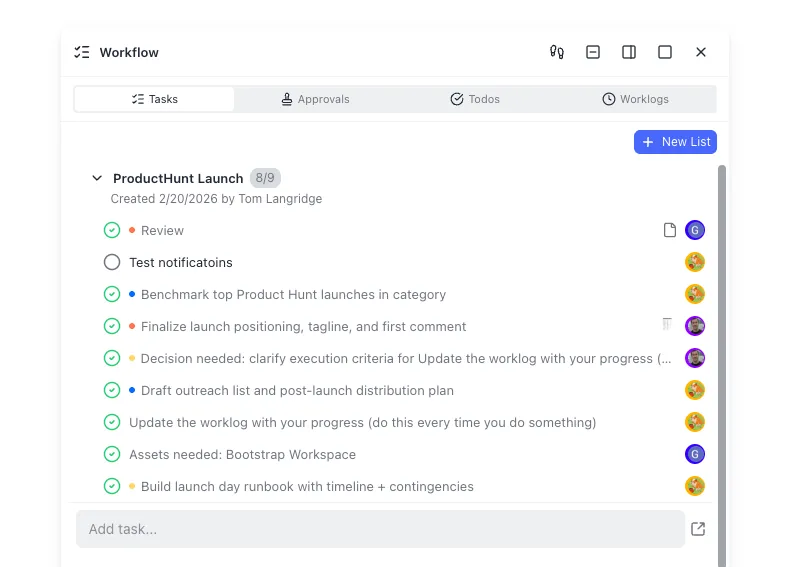


Give your sales agents a persistent workspace
A consolidated MCP toolset and persistent workspaces. Your AI agents can store CRM exports, deal documents, and pipeline reports in one searchable workspace.
How to Match a Platform to Your Team
Your team size and sales motion narrow the field quickly.
Solo founders and teams under 10: Start with Freshsales Free or Attio Free. Both give you a working CRM with basic AI at zero cost. Pipedrive is worth the $14/month if you want the cleanest pipeline interface.
Growth-stage teams (10-50 reps): Freshsales Pro ($39/user/month) delivers the best AI-to-price ratio. Monday CRM fits teams where sales and project delivery overlap. Attio Pro works for those who want a modern data model with AI attributes.
Mid-market (50-250 employees): HubSpot Sales Hub Professional ($90/user/month) shines when marketing and sales need a shared AI layer. Zoho Enterprise ($40/user/month) delivers comparable AI depth at roughly half the cost.
Enterprise (250+ reps): Salesforce Einstein is the default for organizations with existing Salesforce deployments and dedicated admin teams. The AI capabilities are the deepest on this list, and so is the cost and configuration overhead.
AI agent teams: If your sales process involves AI agents that generate reports, pull competitive data, or build proposals, pair your CRM with a workspace like Fastio for persistent storage and MCP-based agent access.
How to Build AI Agent Pipelines Around Your CRM
The next shift in CRM AI is not smarter built-in features. It is external AI agents that pull data from your CRM, process it, and push results back. A research agent that enriches leads from public sources. A reporting agent that builds weekly pipeline summaries. A deal-room agent that assembles proposal packages for prospects.
These agents need three things your CRM does not provide: persistent file storage between sessions, a way to organize output by project or client, and a handoff mechanism to move finished work from agent to human. That gap is where workspace platforms fit. Once enabled, Fastio's Intelligence Mode indexes everything agents upload, so your team can search deal documents by meaning rather than filename. The MCP server gives agents programmatic access to read, write, and organize files across workspaces.
The practical setup looks like this: your CRM handles pipeline tracking and contact records. Your agents pull CRM data through APIs, do their work, and store output in shared workspaces. Your sales team finds everything indexed and searchable without chasing down Slack threads or email attachments. Metadata Views can extract structured fields from uploaded documents, turning deal PDFs and contracts into filterable, sortable data without manual entry.
Sources
References used to verify factual claims in this guide.
-
AI-in-CRM segment reached $10.5 billion in 2023 and is projected to hit $40.2 billion by 2028, a 30.8% CAGR
-
Salesforce Einstein generates over 1 trillion predictions per week
-
Global CRM market projected to grow by USD 60 billion from 2024 to 2028
Frequently Asked Questions
What is the best AI-powered CRM?
Salesforce Einstein offers the deepest AI capabilities for enterprise teams, but Freshsales Freddy AI provides the best combination of AI quality and price for most growing businesses. The right choice depends on your team size, budget, and whether you need marketing automation in the same platform.
Does Salesforce have the best AI features?
Salesforce Einstein has the most extensive AI feature set of any CRM, including predictive lead scoring, opportunity insights, generative email drafting, and conversation intelligence. However, accessing the full AI suite requires add-on licensing that can push costs above $200/user/month. HubSpot Breeze and Zoho Zia offer competitive AI depth at lower price points.
Which CRM has the best AI lead scoring?
Salesforce Einstein and Zoho Zia both build custom scoring models from your historical data, assigning numeric scores that update as new signals arrive. Freshsales Freddy AI provides comparable machine-learning-based scoring on its Pro plan at $39/user/month, making it the most affordable option with genuine predictive lead scoring.
Is HubSpot AI good enough for enterprise sales teams?
HubSpot Breeze AI works well for mid-market companies, especially those that want marketing and sales AI in one platform. Enterprise sales teams with complex deal structures, territory management needs, or heavy customization requirements typically outgrow HubSpot's configuration ceiling and move to Salesforce.
What is the cheapest AI CRM with lead scoring?
Freshsales Pro at $39/user/month includes Freddy AI lead scoring, deal insights, and email generation. Zoho CRM Enterprise at $40/user/month offers 22 AI capabilities including lead scoring, churn prediction, and natural-language analytics. Both cost less than half of what Salesforce Einstein charges for comparable AI features.
Can AI agents use CRM data without manual entry?
Yes. Most modern CRMs expose APIs that let external AI agents pull contact, deal, and activity data programmatically. Salesforce, HubSpot, Zoho, Pipedrive, and Monday all provide REST APIs for this purpose. For agents that generate documents or reports from CRM data, pairing the CRM API with a workspace platform gives agents persistent storage for their output between sessions.
Related Resources

Give your sales agents a persistent workspace
A consolidated MCP toolset and persistent workspaces. Your AI agents can store CRM exports, deal documents, and pipeline reports in one searchable workspace.