How to Choose a File Management Platform for Paralegals
Guide to paralegal file management platform: Paralegals organize case documents, share securely with clients, and retrieve files quickly in busy law firms. They handle thousands of files yearly but lose time to searches and reorganization. Fastio workspaces include AI search, granular permissions, and audit logs to reduce admin and boost billable hours.


What Is a Paralegal File Management Platform?
A paralegal file management platform is a centralized, secure system where paralegals organize, store, and retrieve case documents. It replaces the sprawl of shared network drives, desktop folders, and attachments in client emails every day. A disorganized setup creates the conditions for missed deadlines and compliance slips, not because paralegals are careless, but because bad infrastructure makes careful people slower. Clio's 2025 Legal Trends Report found top-performing law firms grow revenue four times faster than headcount, and efficient file organization is one of the administrative levers driving that gap.
Over 50% of clients now use AI tools before contacting a lawyer, per the same report. That shift puts pressure on firms to have their own documents well-organized and retrievable, because the conversation clients arrive with is more specific than it used to be.
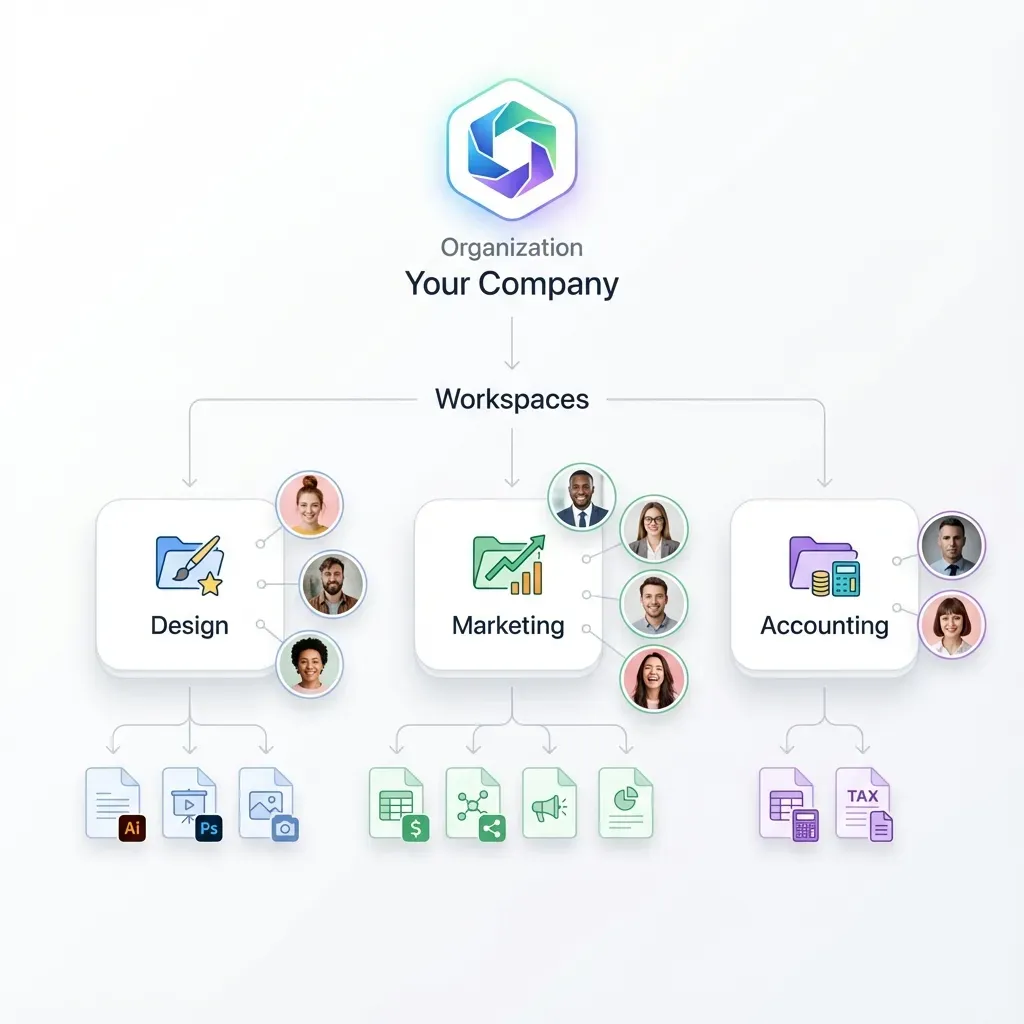
Good platforms give files a workspace structure that maps to how cases actually progress. Folders and tags make filtering fast. Attorneys and paralegals can review drafts together without chasing email attachments. Small firms get the same structure as large ones without paying for enterprise seats.
Fastio ties workspaces to the organization account, not to individual users. Files stay intact if a paralegal leaves, which is a simple thing that prevents a category of serious problems.
See also: Fastio Workspaces, Fastio Collaboration, Fastio AI.
Related guides
- Legal File Management: Best Practices for Organizing Law Firm FilesLegal file management requires a structured approach that unifies matter-centric folder organization, standardized file...
- How to Set Up Paralegal AI Agent WorkspaceParalegal AI agent workspaces let paralegals and agents share documents, case files, and client materials. Fastio adds...
- How to Build eDiscovery Document Review WorkflowsDocument review typically consumes up to 70% of total eDiscovery spend, presenting a significant financial hurdle for...
- Cloud Storage for Lawyers: Matter Workspaces and Case File ManagementCloud storage for lawyers provides encrypted, remote-accessible digital workspaces configured with matter-level...
- Clio Document Management: Best Practices & WorkflowsClio reports that legal document automation software can reduce routine legal drafting by 80%, but firms only capture...
- Google Drive Alternatives for Law Firms: Secure Document ManagementFinding secure google drive alternatives for law firms is essential to protect client confidentiality and organize case...
More on this subject: Legal Teams (211 guides)
What to check before scaling paralegal file management platform
Permissions and audit logs are table stakes for legal work, not differentiators. Every view, edit, download, and permission change should be logged and exportable for e-discovery or compliance review. If a platform can't tell you who opened a file and when, it's not the right tool for this context.
AI semantic search matters more than it sounds. Being able to type "Q3 Acme Corp contract" and get cited results, rather than navigating a folder tree, cuts retrieval time from minutes to seconds on complex matters. Branded client portals with expiration dates, passwords, and download limits give paralegals a clean way to share documents externally without losing control of access.
Mobile previews for PDFs, scans, and emails that work in a browser (without downloading extra apps) are worth checking during any trial, since paralegals increasingly review documents outside the office.
Audit logs and compliance support
Full logs capture uploads, downloads, and permission changes, and can be exported to CSV for audits. Fastio also logs workspace joins and individual file views with IP address and session duration.
Scalable workspaces
Plans include 5, 50 or 200 workspaces, so each case or client can have its own space. Private team workspaces and external shares can coexist under the same org account.
Comparison of Top Legal File Systems
Leading platforms compared. Fastio adds agentic automation missing from most.
Fastio plans include 3, 10 or 30 seats. RAG and agent tools provide advanced AI older systems lack.
In short: NetDocuments and iManage are solid on email integration and enterprise security but carry high setup costs and steep learning curves. Worldox syncs well to desktop but shows its age on cloud workflows. Clio Manage is a full practice management suite, but its 100MB file limit and basic search make it a poor fit for document-heavy matters. Fastio is newer, so it requires more workflow adjustment upfront, but built-in agent automation makes it the better fit for firms where document volume is growing faster than headcount.



Get Started with Fastio
Secure AI workspaces with audit logs and generous pooled storage. 14-day Business Trial.
Fastio's Unique Advantages for Legal Teams
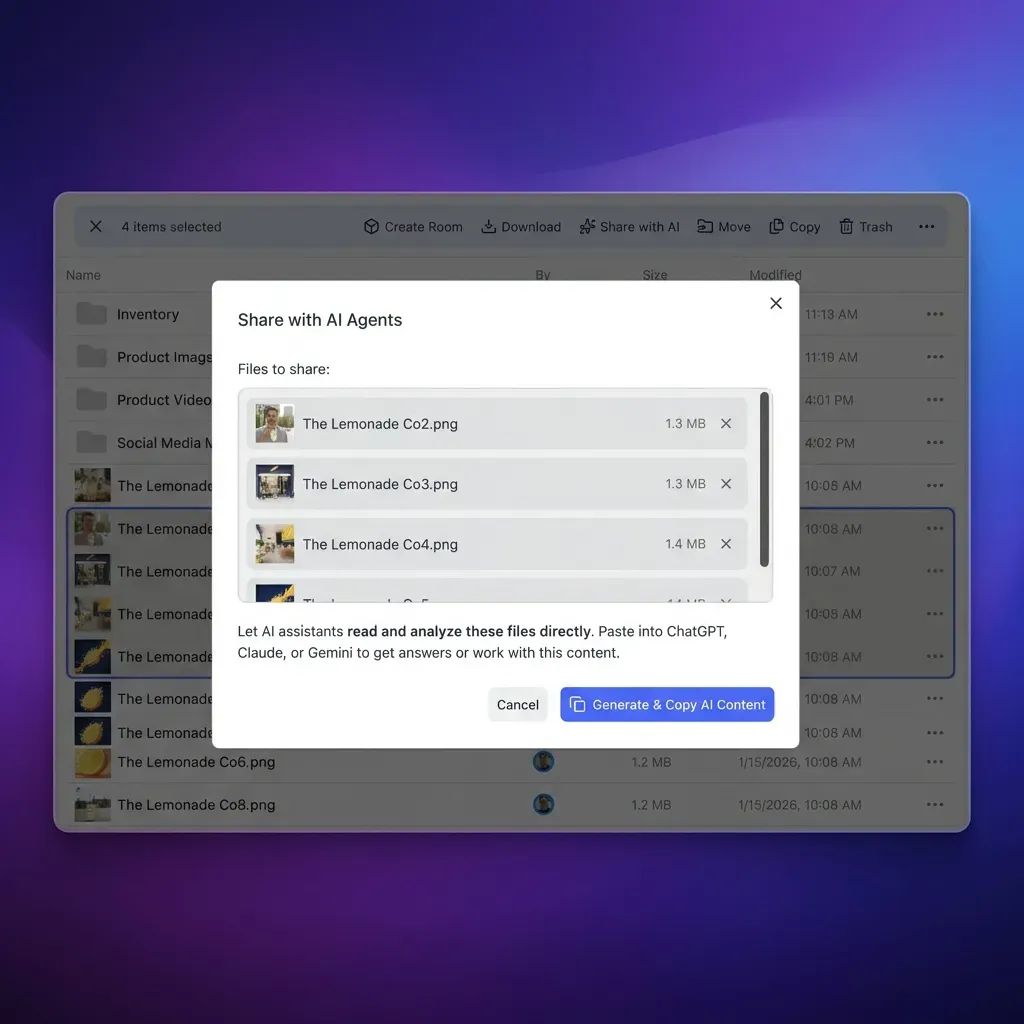
Intelligence Mode does more than index files. Turn it on and every upload is processed for natural language queries with citations. A paralegal working a document-heavy matter can ask "summarize breach risk in these contracts" and get a sourced answer without opening a single file manually.
Data rooms track client engagement by default. Branded portals carry your firm's logo, and ownership transfer means a paralegal can hand off a case room to a client or senior attorney without any file migration. Clients and co-counsel join shares as guests, so they do not take a seat. Encryption at rest and in transit covers the security requirements most law firms need. MCP tools let AI agents handle filing operations directly, which the traditional legal DMS market doesn't offer.
A small litigation firm using Intelligence Mode to query deposition exhibits found they could retrieve specific witness statements in under 10 seconds versus the 20-minute average from manual folder searches. The constraint to account for: files must be text-readable, so scanned PDFs need OCR processing before indexing, which adds a one-time prep step for older case archives. Once the index is built, paralegals report handling significantly more matters per week without adding headcount.

Practical Tips for Paralegal File Organization
The folder structure that works most consistently in practice: top-level folder by case number and parties (2026-001-Smith-v-Jones), with subfolders for pleadings, discovery, and correspondence. Add status tags (active, closed, privileged) for quick filtering across matters. A weekly 30-minute cleanup to flag duplicates and check for orphaned files keeps the structure from degrading over months.
Activity feeds can alert the team on new uploads, and agents can be set up to sort incoming emails directly into the right workspace folders.
Use a naming format like YYYY-CaseNumber-ClientLastName-DocumentType (e.g., 2026-042-Smith-Deposition.pdf) from day one; retrofitting names on an active matter mid-case causes missed documents and version confusion. Start by standardizing one practice area's folder template, measure retrieval time before and after, then roll the format to other groups once you have a clean before-and-after comparison to share with skeptical partners.
Filling the agentic automation gap
NetDocuments, iManage, and Worldox handle permissions and logs well, but they're built around manual workflows. Filing, tagging, and retrieval all require a person to do them. Fastio adds agentic automation through its MCP server, so those steps can run without a paralegal touching each file.
In practice: an agent can scan incoming emails, pull attached PDFs, classify them by case and document type, apply the right tags, and file them into the correct workspace folder. This uses MCP tools over Streamable HTTP for upload, search, tag, and permission operations. Realtime event feeds trigger the sorting pipeline when new files arrive. Ownership transfer hands the organized workspace to a paralegal for review.
Clio's productivity data consistently shows that administrative time is one of the biggest drags on paralegal output. Automating the filing layer directly addresses that. Agents should have clearly defined fallback behavior for when an upload or dependency is unavailable, so failures surface as notifications rather than silent gaps in the filing record.
Get Started with Fastio for Paralegals
Start a 14-day Business Trial (credit card required; see pricing), create an organization account, and set up one workspace per active matter. Upload your files and toggle on Intelligence Mode to start indexing. From there: invite the team with appropriate roles, set up client data rooms for any matters with external sharing, use chat queries to pull summaries directly from the case file, and check audit logs weekly for compliance review.
Retrieval time drops measurably once the index is in place. The per-matter workspace model also makes scaling straightforward; adding new cases doesn't mean reorganizing an existing folder structure.
Start with one paralegal and one active matter type (e.g., real estate closings or contract reviews) before rolling out firm-wide. The key constraint is that agents need clear fallback behavior when an upload or network call fails: define what happens so the paralegal gets a notification rather than a silent error. Firms that track document retrieval time and filing errors per matter before and after rollout have the clearest case for expanding the workflow to all practice groups.
Sources
References used to verify factual claims in this guide.
-
top-performing law firms grow their revenue 4x faster than their headcount over 50% of clients now turn to AI first technology reduces mental strain by up to 25%
Frequently Asked Questions
What are the top paralegal file platforms?
NetDocuments, iManage, Worldox, Clio, Fastio stand out. Fastio brings AI automation on plans with seats included.
What are good paralegal file organization tips?
Case-number folders, status tags, AI search. Agent sorting. Regular audits.
Does Fastio support legal compliance?
Yes. Full audit logs, granular permissions, and encryption help firms meet documentation standards. Verify against specific regulations.
How does AI help paralegals?
Semantic search drops retrieval to seconds. Summaries spotlight sections.
What's the pricing for law firms?
Starter ($9.99/mo), Business ($49.99/mo), and Enterprise ($199.99/mo) plans include pooled storage, and monthly plans can start with a 14-day Business Trial.
Related Resources

Get Started with Fastio
Secure AI workspaces with audit logs and generous pooled storage. 14-day Business Trial.