How to Build a Torrent Seedbox on Raspberry Pi with OpenClaw
A Raspberry Pi running Transmission makes an effective always-on seedbox that draws under 12 watts at full load. Most setup guides stop at installation, leaving you to manually monitor ratio targets, clean up completed downloads, and figure out how to get finished files off the Pi. This guide covers Transmission's RPC API, OpenClaw's command execution tools, and Fastio share links to build a download station that manages itself.

Why Your Pi Seedbox Needs More Than a Web UI
Transmission's RPC specification defines 24 distinct methods for programmatic torrent control, covering everything from per-torrent bandwidth limits to queue positioning and automatic post-completion scripts. Most Raspberry Pi seedbox tutorials stop at sudo apt install transmission-daemon and a screenshot of the web interface. That leaves the vast majority of the client's automation surface untouched.
The result is predictable. You set up Transmission on a Pi, add a few torrents through the web UI at port 9091, and everything works. A week later, you have 30 completed downloads sitting in the default directory with no organization. Your upload ratio on private trackers has drifted because you forgot to adjust seeding priorities. Disk space on your SSD is running low, but you are not sure which files are safe to remove because some are still seeding and some finished days ago.
This is a management problem, not a hardware problem. The Pi itself is well suited to running a seedbox. A Raspberry Pi 5 draws between 2.7W at idle and 12W under sustained load, according to testing by Tom's Hardware. That translates to roughly $1-2 per month in electricity for an always-on download station. Compare that to a desktop PC pulling 60-100W idle, costing $5-10 monthly just in power.
The gap is in the software layer between Transmission's capable API and your ability to use it consistently. Checking torrent status, adjusting bandwidth schedules, moving completed files into organized directories, removing torrents that have met ratio targets: these are all things you could script manually with cron jobs and bash. Each individual script is simple enough. The problem is maintaining a dozen of them, handling edge cases when they interact, and debugging silent failures at 3 AM.
OpenClaw changes that equation. It runs as a lightweight gateway on the Pi itself, sending your requests to a cloud LLM for reasoning and executing the resulting commands locally through its built-in exec and process tools. You send a Telegram message like "pause anything below a 1.0 ratio that has been seeding for less than a day" and the agent translates that into the right sequence of Transmission RPC calls. No custom scripts to maintain. No cron jobs to debug when they silently fail. The Pi handles downloading and seeding. OpenClaw handles the operational thinking.

Related guides
- How to Build a Hermes Agent AI Code CheckerThe proportion of copy-pasted code in repositories rose from 8% in 2020 to 12% in 2024, representing a 48% relative...
- How to Build AI Agents with the Claude Agent SDKThe Claude Agent SDK is Anthropic's toolkit for building AI agents that can read files, run commands, search the web,...
- How to Build an OpenClaw Telegram Bot Agent on Raspberry PiA Raspberry Pi running OpenClaw gives you a personal AI agent that responds to Telegram messages around the clock,...
- How to Run Node.js on Raspberry Pi for IoT and Agent ProjectsThe Raspberry Pi 5 scores 764 on Geekbench 6.2 single-core, a 2.4x improvement over Pi 4. That kind of performance...
- How to Set Up Samba File Sharing on Raspberry Pi with an OpenClaw AgentSamba turns a Raspberry Pi into a network file server that Windows, macOS, and Linux clients can access natively, but...
- How to Run an FTP Server on Raspberry Pi with an OpenClaw Agentvsftpd served 4,000 concurrent downloads on a single 1GB machine in Red Hat's stress tests, yet most Raspberry Pi FTP...
More on this subject: OpenClaw on Raspberry Pi (192 guides)
Hardware and Software You Need
The hardware list for a Pi seedbox is short and cheap. Here is what you need.
Raspberry Pi:
- Pi 5 with 4GB or 8GB RAM. The 4GB model handles Transmission and OpenClaw comfortably, since OpenClaw's minimum requirement is just 1GB RAM and 500MB disk according to the official installation guide. The 8GB model gives headroom if you plan to run other services alongside the seedbox
- Pi 4 with 4GB works as a budget option, though you lose the PCIe slot for NVMe storage and get a slower quad-core Cortex-A72 instead of the Pi 5's Cortex-A76
- Official 27W USB-C power supply for Pi 5 (or 15W for Pi 4)
- A case with passive or active cooling. Under sustained download workloads, an uncooled Pi 5 will throttle from 2.4 GHz down to roughly 1.8 GHz
Storage:
- NVMe SSD via M.2 HAT+ for Pi 5. The official Raspberry Pi M.2 HAT+ supports 2230 and 2242 form factor drives. Sequential reads reach approximately 443 MB/s on the stock PCIe Gen 2 connection, which saturates a gigabit Ethernet link with headroom to spare
- USB 3.0 SSD as an alternative if you skip the NVMe route. Cheaper and still dramatically faster than an SD card for sustained random I/O
- Avoid running a seedbox from an SD card. The constant small writes from torrent piece verification and Transmission's database updates will wear it out within months
Network:
- Ethernet cable. WiFi adds latency, drops connections under sustained download loads, and cuts your effective throughput. The Pi 5's gigabit Ethernet port is the right choice for any always-on workload
Software stack:
- Raspberry Pi OS Lite (64-bit). No desktop environment needed since the Pi runs headless
- Transmission (installed via apt). Lightest torrent client available, purpose-built for low-power hardware
- Node.js 24 (required by OpenClaw, installed via NodeSource)
- An LLM API key from Anthropic, OpenAI, Google, or OpenRouter. OpenClaw delegates all reasoning to cloud models because running local inference on Pi hardware is impractical
- A messaging bot token for Telegram, Discord, WhatsApp, or Signal if you want to control your seedbox over chat instead of SSH
Total hardware cost for a new Pi 5 setup with case, power supply, and a 256GB NVMe drive runs $90-130. If you already have a Pi sitting unused, you are looking at $15-30 for the SSD alone. Ongoing costs are the electricity (negligible) and LLM API usage, which typically runs $1-3 per month for a personal seedbox with daily queries.
How to Install Transmission and Enable RPC Access
Transmission is the default torrent client for Pi seedboxes for good reason. It runs comfortably within 50-100MB of RAM, starts automatically as a systemd service, and exposes a full JSON-RPC 2.0 API that gives you programmatic control over every aspect of torrent management. Install it with:
sudo apt update
sudo apt install transmission-daemon -y
Stop the daemon before editing the configuration. Transmission overwrites its settings file on shutdown, so changes made while it is running get lost:
sudo systemctl stop transmission-daemon
Edit the settings file at /etc/transmission-daemon/settings.json. The critical changes for agent-driven management are:
- Set
rpc-enabledtotrue(this is the default) - Set
rpc-authentication-requiredtotrueand choose a username and password for API access - Set
rpc-whitelist-enabledtofalseif you want access from anywhere on your local network, or add your Pi's subnet to the whitelist - Point
download-dirto a path on your SSD, not the SD card - Set
incomplete-dir-enabledtotrueand pointincomplete-dirto a separate directory so you can tell at a glance which downloads are finished
Transmission also supports three script hooks that fire automatically on specific events:
script-torrent-added-filenameruns when a new torrent enters the queuescript-torrent-done-filenameruns when a download completesscript-torrent-done-seeding-filenameruns when a torrent finishes seeding to its configured ratio target
These hooks are the backbone of automated file management. When a download finishes, the hook can trigger a move to an organized directory structure. When seeding completes, it can trigger cleanup. Start the daemon again:
sudo systemctl start transmission-daemon
Verify the RPC endpoint is responding:
curl -u your_username:your_password http://localhost:9091/transmission/rpc
You will get an HTTP 409 response containing an X-Transmission-Session-Id header. That is Transmission's CSRF protection working correctly. Every RPC request must include this session ID. The client grabs it from the initial 409 response and attaches it to subsequent calls. This is standard HTTP header handling that OpenClaw's exec tooling manages without extra configuration.
The RPC API gives you methods for every torrent operation: torrent-get to query status and metadata, torrent-set to adjust bandwidth limits and ratio targets, torrent-add to enqueue new downloads by URL or magnet link, and queue management methods like queue-move-top and queue-move-bottom to prioritize downloads. Session-level methods like session-set let you adjust global speed limits and scheduling. This is the surface area that makes agent-driven management possible.
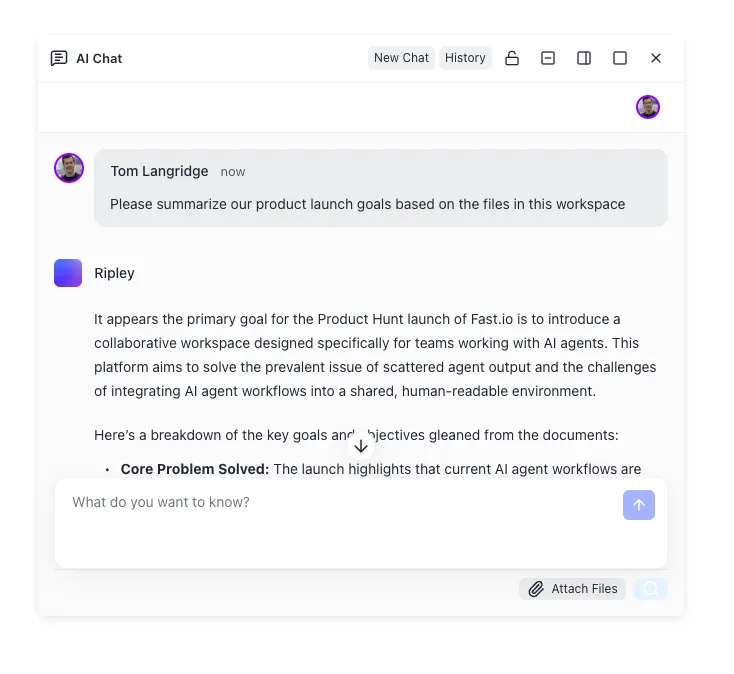


Give your seedbox a cloud workspace for finished downloads
Cloud workspace storage with remote MCP access for your OpenClaw agent to manage and share finished files.
Adding OpenClaw for Agent-Driven Download Management
With Transmission running and its RPC API accessible, the next step is installing OpenClaw to act as the management layer. The official Raspberry Pi installation guide at docs.openclaw.ai starts with Node.js:
curl -fsSL https://deb.nodesource.com/setup_24.x | sudo -E bash -
sudo apt install nodejs -y
Then install OpenClaw itself:
curl -fsSL https://openclaw.ai/install.sh | bash
openclaw onboard --install-daemon
The onboarding process walks you through connecting your LLM API key and optionally linking a messaging channel like Telegram. Once complete, OpenClaw runs as a systemd service that starts automatically on boot. The gateway process is lightweight, consuming a small fraction of the Pi's resources and leaving the rest for Transmission and your downloads.
OpenClaw's value for seedbox management comes from three built-in tool categories. The exec and process tools let it run shell commands and manage processes directly on the Pi. The cron and heartbeat tools let it schedule recurring checks without external cron configuration. The file operation tools (read, write, edit) let it inspect and modify Transmission's configuration or any other file on the system.
In practice, this means the agent calls Transmission's RPC API using curl, parses the JSON responses, and takes action based on what it finds. Ask it to check which torrents have hit their ratio target and it sends the appropriate torrent-get request, filters the results, and reports back with names and stats. Ask it to remove completed torrents that have been seeding for over 48 hours and it chains torrent-get with torrent-remove, confirming the action before executing.
The scheduling capabilities handle recurring maintenance without manual cron setup. You can ask OpenClaw to check disk space every few hours and pause new downloads when free space drops below a threshold you specify. Or have it enforce a ratio policy by redistributing upload bandwidth: pausing uploads on torrents that have already exceeded 2.0 while others are still below 1.0, concentrating bandwidth where it matters most for tracker standing.
For file organization after downloads complete, the agent can watch Transmission's completed directory and sort files into subdirectories by content type, tracker, or any naming scheme you describe in natural language. Combined with Transmission's script-torrent-done-filename hook, organization can happen immediately when a download finishes rather than during periodic sweeps.
Interaction happens through whatever messaging channel you connected during onboarding. From Telegram, you might send "what is downloading right now?" and get back a formatted list of active torrents with progress percentages and ETAs. Or "add this magnet link and put it at the top of the queue" and the agent handles the torrent-add call followed by queue-move-top. The cloud LLM interprets your intent, and OpenClaw's local tools execute it against Transmission's API.
Delivering Finished Downloads Off the Pi
A seedbox that downloads and seeds files is only half useful. You also need to get those files to the devices where you actually want them. The traditional approaches each have real tradeoffs.
SFTP or SCP works if you are comfortable with terminal file transfers. You SSH into the Pi and pull files to your laptop. Fine for one person, but it breaks down when you want to share a file with someone who does not have SSH access to your network.
Samba or NFS shares make the Pi's download directory accessible as a network drive. Fast on the local network, zero setup for LAN clients. Useless outside your home without a VPN tunnel.
Syncthing provides real-time folder sync between the Pi and your other devices. Good for automated delivery, but it requires installing a client on every target device and managing folder pairs. Each new device means more configuration.
Cloud storage services like Google Drive or Dropbox give you remote access from anywhere. But uploading large files from a Pi over a residential upload connection can take hours. And once files are on someone else's servers, you lose fine-grained control over access and expiration.
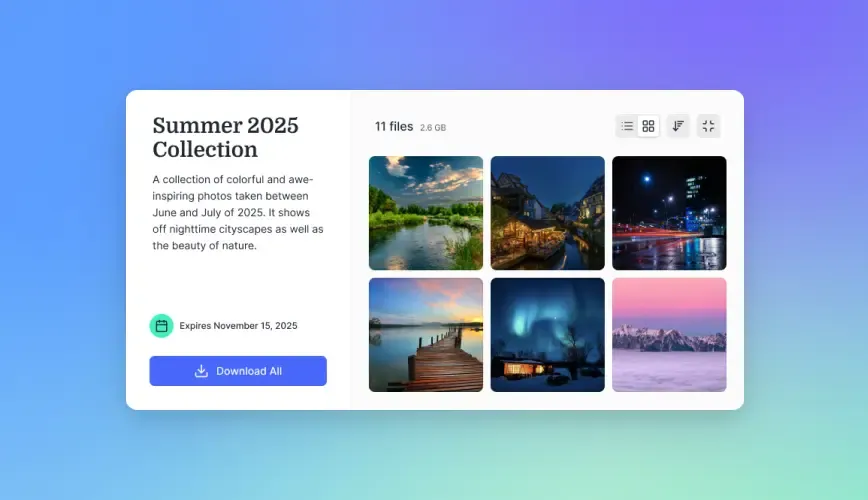
Fastio fills a specific gap here. Connect OpenClaw to the remote Fastio MCP server and the agent gains cloud workspace tools for uploading files, creating branded share links with password protection and expiration dates, and managing workspaces. When a download finishes, the agent can upload the completed file and generate a share URL you can open from your phone, send to a friend, or bookmark for later. No port forwarding, no dynamic DNS, no exposing your home network.
Fastio offers paid plans starting with Starter at $9.99/mo, along with a 14-day Business Trial at pricing. For a personal seedbox producing finished downloads, that covers a comfortable rotating buffer of recent files. Once Intelligence Mode is enabled on the workspace, uploaded files get auto-indexed for semantic search, so you can find downloads by content rather than remembering exact filenames.
For larger volumes, you might combine approaches. Keep the last week of downloads on Fastio for convenient remote access and use Syncthing to mirror everything to a local NAS for long-term archival. The OpenClaw agent can manage both workflows: uploading to Fastio immediately on completion and checking Syncthing sync status on a schedule.
The end result is a download station that runs unattended on $1-2 of electricity per month, manages its own torrent queue through Transmission's RPC API, organizes completed files automatically, and delivers them wherever you need them. The Pi handles the downloading and seeding. OpenClaw handles the operational decisions. And a cloud workspace handles the last mile of getting files into your hands.
Sources
References used to verify factual claims in this guide.
-
A Raspberry Pi 5 draws between 2.7W at idle and 12W under sustained load
-
Transmission's RPC specification defines 24 distinct methods for programmatic torrent control
-
Sequential reads reach approximately 443 MB/s on the Pi 5 stock PCIe Gen 2 connection
-
OpenClaw minimum requirements are 1GB RAM, 1 CPU core, and 500MB free disk
Frequently Asked Questions
Can a Raspberry Pi be used as a seedbox?
A Raspberry Pi makes a capable seedbox for personal use. The Pi 5 draws under 12W at full load, costs roughly $1-2 per month in electricity to run continuously, and handles Transmission without issues. The main constraint is storage. An SD card wears out quickly under torrent workloads, so you need a USB SSD or NVMe drive via the M.2 HAT+. With an NVMe drive, the Pi 5 delivers approximately 443 MB/s sequential reads on its stock PCIe Gen 2 connection, which is more than enough to saturate a gigabit Ethernet link during file transfers.
What is the best torrent client for Raspberry Pi?
Transmission is the best choice for most Pi seedbox setups. It uses the least RAM of any major torrent client (typically 50-100MB), runs reliably as a background daemon, and exposes a comprehensive JSON-RPC API with 24 methods for programmatic control. qBittorrent is a solid alternative if you prefer a more feature-rich web interface, though it uses more memory. Deluge offers a plugin system but is heavier still. For an agent-managed seedbox where API access matters more than the web UI, Transmission is the clear pick.
How do I set up a download server on Raspberry Pi?
Install Raspberry Pi OS Lite (64-bit) on your Pi, connect an SSD for storage, then install Transmission with apt. Edit the configuration file at /etc/transmission-daemon/settings.json to set your download directory on the SSD, enable RPC authentication, and configure network access. The web UI is available at port 9091 by default. For agent-driven management, install OpenClaw using the official one-line installer and connect it to a cloud LLM API. For remote access to finished downloads without exposing the Pi to the public internet, pair it with a cloud storage service or set up a VPN.
Can I share downloaded files from Raspberry Pi remotely?
Several options work depending on your needs. Samba and NFS handle local network sharing but require a VPN for remote access. Syncthing syncs folders to other devices automatically but needs client software installed on each one. For sharing with people outside your network, upload finished downloads to a cloud workspace like Fastio and generate password-protected share links with expiration dates. An OpenClaw agent can automate this entire workflow, uploading completed files and sending you the share URL over Telegram, Discord, or WhatsApp.
How much does it cost to run a Raspberry Pi seedbox per month?
Hardware is a one-time cost of $90-130 for a new Pi 5 with case, power supply, and NVMe SSD. Monthly electricity runs about $1-2 at typical US residential rates for continuous operation. If you use OpenClaw with a cloud LLM for automated management, expect $1-3 per month in API costs depending on query frequency. Fastio provides a 14-day Business Trial to test cloud workspace storage. Total ongoing cost remains very low compared to $10-30 for a commercial seedbox hosting provider.
Related Resources

Give your seedbox a cloud workspace for finished downloads
Cloud workspace storage with remote MCP access for your OpenClaw agent to manage and share finished files.