OpenClaw Documentation: Complete Guide to Every Docs Section
OpenClaw's official docs span over 400 pages across more than 30 categories. Most guides jump straight to installation and leave you to find everything else on your own. This guide maps every major docs section by workflow stage, from first install to plugin development, so you can go directly to the page you need.

Why OpenClaw's Docs Need a Map
OpenClaw's machine-readable docs index at docs.openclaw.ai/llms.txt lists over 400 individual pages spread across more than 30 categories. For a project with 373,000 GitHub stars under an MIT license, that volume of documentation is expected. But it also means that finding the right page when you need it often takes longer than solving the actual problem.
The documentation covers everything from basic Node.js installation to Kubernetes deployment manifests, from Discord bot setup to custom plugin SDKs, from voice activation on mobile devices to formal threat model verification. It serves beginners running their first install and contributors building provider plugins. There is no single reading order that works for everyone.
Most OpenClaw tutorials start with installation and stop there. The deeper docs sections on gateway operations, plugin architecture, and provider configuration only surface when you already know what to search for. This guide organizes the entire docs site by workflow stage: what you need when installing, when configuring, when connecting, and when extending. Bookmark the sections relevant to your current work and skip the rest.
Here is the top-level map:
- Get Started (docs.openclaw.ai/start/): Installation, onboarding wizard, and first-run setup (about 10 pages)
- Gateway & Ops (docs.openclaw.ai/gateway/): Core runtime configuration, security, and diagnostics (60+ pages, the largest section)
- Channels (docs.openclaw.ai/channels/): 30+ messaging platform integrations (41 pages)
- Tools & Capabilities (docs.openclaw.ai/tools/): Code execution, search, browser, media generation (45 pages)
- ClawHub (docs.openclaw.ai/clawhub/): Community skill marketplace (11 pages)
- Plugins (docs.openclaw.ai/plugins/): Runtime extensions and SDK documentation (38 pages)
- Providers (docs.openclaw.ai/providers/): 60+ AI model backend configurations
- Nodes (docs.openclaw.ai/nodes/): Mobile device pairing for voice, camera, and location
- Platforms (docs.openclaw.ai/platforms/): Native apps for macOS, iOS, Android, Windows, Linux (25 pages)
- Concepts (docs.openclaw.ai/concepts/): Architecture, memory, sessions, and internal design (46 pages)
- CLI Reference (docs.openclaw.ai/cli/): 49 command pages
- Automation (docs.openclaw.ai/automation/): Hooks, standing orders, scheduled tasks, and task flows
- Help (docs.openclaw.ai/help/): FAQs, troubleshooting, and debugging
- Reference (docs.openclaw.ai/reference/): Templates, API costs, and deep dives
Related guides
- Hermes Agent Docs: The Complete Reference GuideWhile standard session-based AI chatbots are confined to a single browser tab, the official Nous Research Hermes Agent...
- Devin AI Docs: Map of Official DocumentationCognition publishes 537 documentation entries at docs.devin.ai, and more than half of that index is API reference...
- How to Read the OpenClaw Changelog and Track Every UpdateOpenClaw tagged at least six releases in April 2026 alone, and the pace has not slowed into June. Each version carries...
- How to Download OpenClaw: Every Installation Method ExplainedOpenClaw passed 500,000 running instances in early 2026, but choosing the right installation method still trips up...
- How to Set Up OpenClaw with Google Gemini ModelsOpenClaw's Gemini integration connects your agent to Google's full model family, including Gemini 3.1 Pro for chat,...
- How to Set Up ClawHub for OpenClawClawHub is the public skill registry for OpenClaw, with over 13,000 community skills available. This guide walks...
More on this subject: OpenClaw Setup and Guides (199 guides)
How to Find the Right Installation Path
The Getting Started section at docs.openclaw.ai/start/ is your entry point. About ten pages walk through prerequisites, your first install, and initial configuration. OpenClaw requires Node.js 24 (recommended) or 22.19+, plus an API key from a supported model provider such as Anthropic, OpenAI, or Google.
The quickest install on macOS or Linux is a one-line shell script available at openclaw.ai, with a PowerShell equivalent for Windows. After installation, an onboarding wizard walks you through model provider selection, API key storage, and Gateway configuration. The whole process takes about two minutes.
From there, the Installation section at docs.openclaw.ai/install/ covers every deployment method. The most common paths:
Node.js (default): Direct install on your machine. This is the simplest path and what most tutorials assume.
Docker and Docker Compose: The most popular deployment method in the community. Dedicated pages cover single-container setup and multi-service Compose configurations.
Cloud platforms: Dedicated pages exist for Azure, GCP, DigitalOcean, Fly.io, Railway, Render, Hetzner, Oracle Cloud, Northflank, and Hostinger. Each page covers platform-specific setup, environment variables, and deployment commands.
Raspberry Pi: A detailed guide covers hardware requirements, OS configuration, and performance tuning for ARM devices. OpenClaw runs well on Pi 4 and Pi 5 hardware.
Kubernetes: Production-grade deployment with scaling configuration and pod management.
The Installation section also covers release channels (stable, beta, and alpha tracks), migration guides for users coming from other AI assistants, and update procedures for pulling new versions without losing configuration. OpenClaw ships releases on a near-daily cadence, so knowing which channel you follow matters.
How to Configure and Operate the Gateway
The Gateway is OpenClaw's core runtime process. It receives messages, routes them to the right model, executes tools, and sends responses back through your connected channels. After a successful install, you can verify the Gateway is running with openclaw gateway status. The Gateway section at docs.openclaw.ai/gateway/ is the largest in the docs, with over 60 pages.
Core configuration starts with pages covering the primary config file, a complete settings reference with defaults and accepted values, and annotated examples for common setups like multi-model routing, channel-specific personas, and tool restrictions. Separate pages break out agent configuration, channel configuration, and tools/provider configuration.
Security and access control covers authentication tokens, secrets management (how OpenClaw stores and injects credentials for model providers and external services), and operational safety including allowlists and audit checks.
Operations and monitoring pages help you keep a running Gateway healthy. Topics include remote access via SSH tunnels and Tailscale, health monitoring and heartbeat checks, an automated diagnostic tool that checks configuration and connectivity, common troubleshooting solutions, and observability integrations for Prometheus metrics and OpenTelemetry export.
Advanced features include running multiple Gateway instances for high availability, gateway lock to prevent conflicts, sandboxing for safe tool execution, and local model hosting with tools like Ollama, LM Studio, or vLLM. If you run OpenClaw agents that produce files or need persistent storage between sessions, you will need a storage layer beyond local disk. Cloud workspaces like Fastio give agents persistent storage with built-in search and MCP access, so output from one session stays available in the next.
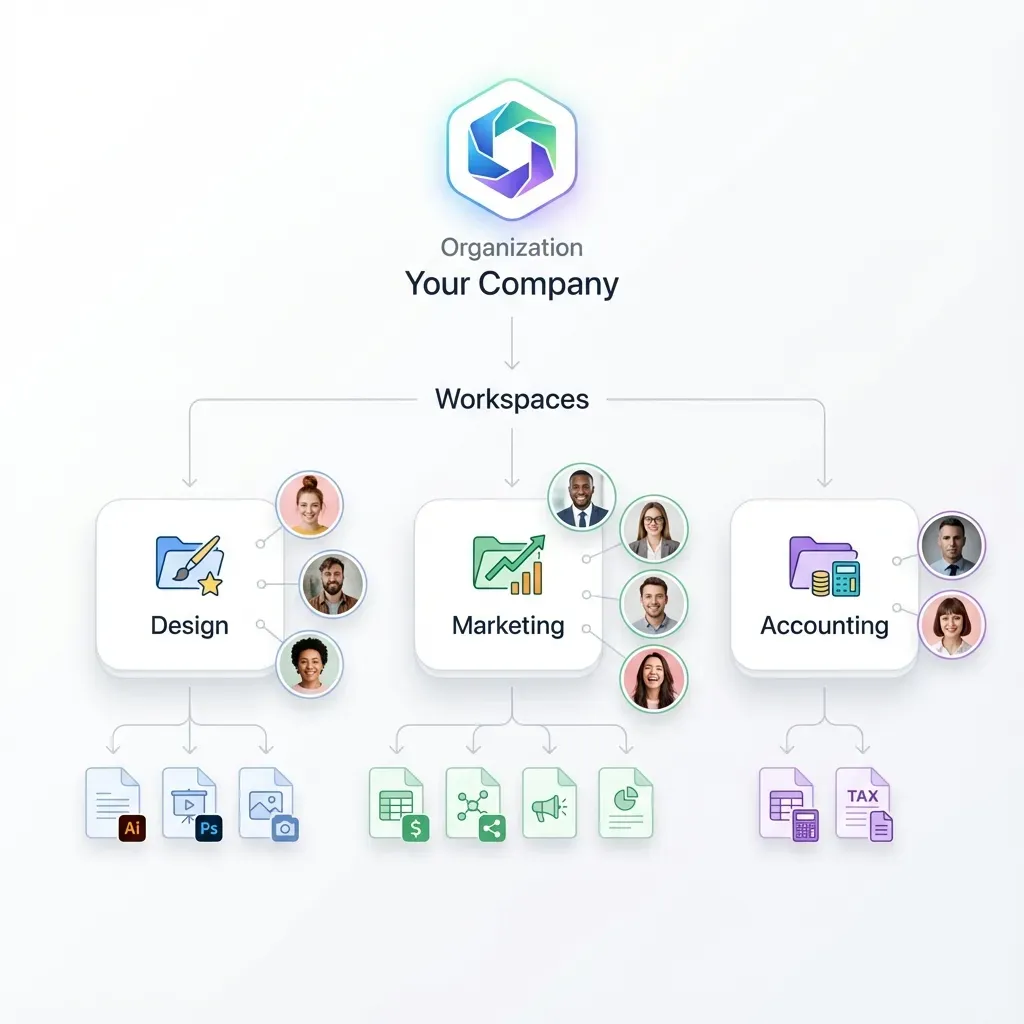


Persistent storage for your OpenClaw agent
Generous storage workspace with MCP access. Store files your OpenClaw agent creates, search them with built-in RAG, and hand off results to teammates.
Channels, Nodes, and Platform Apps
OpenClaw connects to over 30 messaging platforms. The Channels section at docs.openclaw.ai/channels/ gives each one a dedicated setup page across 41 documentation pages total.
Major platforms have the most detailed coverage:
- Discord: Bot creation, server permissions, and slash commands
- Slack: App setup, OAuth scopes, and workspace configuration
- Microsoft Teams: Azure bot registration and tenant setup
- Telegram: BotFather setup and automation hooks
- WhatsApp: Business API integration, plus a separate page for group messages
- Signal: CLI-based setup and message handling
- iMessage: macOS-only, with a migration path from BlueBubbles
- Matrix: Self-hosted chat, with additional pages covering migration and push rules
Additional channels include Google Chat, IRC, Mattermost, Nextcloud Talk, WeChat, LINE, Feishu, Zalo, QQ Bot, Twitch, Nostr, and others. Each follows the same format: prerequisites, credentials, config snippet, and verification steps.
Cross-cutting channel features cover routing (how OpenClaw decides which agent handles a message when multiple channels are active), access groups (permission boundaries for who can interact with your agent), and broadcast groups for sending messages to multiple recipients at once.
Nodes at docs.openclaw.ai/nodes/ cover mobile device pairing for iOS and Android. Pages cover audio, voice notes, voice wake (trigger-word activation), camera capture, image handling, location commands, and Talk Mode for real-time voice conversation.
Platform Apps at docs.openclaw.ai/platforms/ document 25 pages of native client coverage. macOS is the deepest, with pages covering the bundled Gateway, Canvas visual workspace, voice overlay, and inter-process communication. iOS, Android, Windows, and Linux each have their own pages covering installation and platform-specific behavior.
How Tools, Skills, and Plugins Extend OpenClaw
The Tools section at docs.openclaw.ai/tools/ documents what OpenClaw can do beyond conversation, spread across 45 pages. This is where you learn about code execution, search, browser automation, media generation, and agent coordination.
Code and execution pages cover sandboxed code running, shell command execution, and the approval flow that gates dangerous operations. A sub-agents page explains how to spawn child agents for parallel work.
Search and web tools go beyond basic web search. OpenClaw supports several search providers out of the box, including Brave, DuckDuckGo, Exa, Tavily, and Perplexity, each with a dedicated configuration page. Browser control pages cover headless browsing and managed sessions for scraping and interaction.
Media tools include image generation, video generation, music generation, text-to-speech, and PDF handling. Each has its own configuration page and provider setup.
ClawHub at docs.openclaw.ai/clawhub/ is the community skill marketplace, documented across 11 pages. The docs cover installing skills, the skill format specification, soul format (personality packages that shape how your agent speaks), publishing skills for community use, and programmatic API access for listing, searching, and installing skills.
Plugins at docs.openclaw.ai/plugins/ go deeper than skills. While skills are prompt-and-tool packages, plugins modify OpenClaw's runtime itself. The Plugin SDK spans 38 pages covering setup, runtime helpers, entry points, testing, channel plugins, provider plugins, and agent-use plugins. A community plugins page and full inventory help you find existing extensions before building your own.
Model Providers at docs.openclaw.ai/providers/ list 60+ supported AI backends. Cloud providers include Anthropic, OpenAI, Google, Mistral, Groq, DeepSeek, xAI, Together AI, and OpenRouter. Local inference pages cover Ollama, LM Studio, vLLM, and SGLang. Regional providers cover Alibaba, Qianfan, Qwen, Moonshot, Volcengine, and Tencent. Each page covers API key setup, model selection, and provider-specific configuration.
When your OpenClaw agent generates files or needs persistent storage between sessions, local disk works for single-machine setups. For agents that hand off work to humans or run across devices, cloud workspaces like Fastio provide persistent storage with built-in search and MCP access. Fastio offers a 14-day Business Trial (card required; see /pricing/), so files your agent creates stay organized and retrievable without manual file management.

What to Check When Something Breaks
When something goes wrong, or when you need to understand how OpenClaw works internally, three documentation sections provide the answers.
CLI Reference at docs.openclaw.ai/cli/ documents 49 commands. Running openclaw dashboard launches the Control UI in your browser for visual configuration and monitoring. The openclaw gateway status command verifies your Gateway is operational, and openclaw gateway restart applies configuration changes. The CLI reference covers everything from agent management and backup creation to automation hooks configuration and scheduled jobs.
Concepts at docs.openclaw.ai/concepts/ is a 46-page deep dive into internal architecture. Key topics include:
- Active Memory: How OpenClaw persists information across conversations, including the built-in memory engine and third-party integrations
- Context Engine: How context is assembled from system prompts, memory, channel metadata, and conversation history
- Session Management: Conversation lifecycle, isolation, and pruning
- Compaction: How long conversations get compressed to stay within model context limits
- Multi-Agent Routing: Directing messages to different agents based on workspace, sender, or channel
- Model Failover: Automatic switching between providers when one fails or hits rate limits
Automation at docs.openclaw.ai/automation/ covers scheduled and event-driven workflows: recurring tasks, event-trigger hooks, standing orders for persistent agent instructions, and multi-step task flows.
Help at docs.openclaw.ai/help/ organizes troubleshooting by problem type, splitting FAQs into first-run setup and model/auth topics, with general troubleshooting guides, a debugging guide for inspecting Gateway internals, and an environment variables reference.
Security documentation includes a threat model mapped to the MITRE ATLAS framework, formal verification documentation, and network proxy configuration.
One resource worth bookmarking: docs.openclaw.ai/llms.txt. This machine-readable index lists every documentation page with its URL and title, formatted for LLM consumption. If you use an AI coding assistant, pointing it at this file gives it a complete map of the OpenClaw docs without loading every page individually.
Sources
References used to verify factual claims in this guide.
-
Over 400 individual documentation pages across more than 30 categories
-
373,000 GitHub stars under an MIT license
-
Node.js 24 recommended, 22.19+ minimum requirement
Frequently Asked Questions
Where is the OpenClaw documentation?
The official OpenClaw documentation lives at docs.openclaw.ai. The full site includes over 400 pages organized into sections for Getting Started, Installation, Gateway, Channels, Tools, ClawHub, Plugins, Providers, Nodes, Platforms, Concepts, CLI Reference, Automation, Help, and Reference. A machine-readable index of every page is available at docs.openclaw.ai/llms.txt.
How do I navigate OpenClaw docs?
Start with docs.openclaw.ai/start/ for installation and initial setup. From there, follow the workflow stages: configure your gateway (docs.openclaw.ai/gateway/), connect channels (docs.openclaw.ai/channels/), add tools and skills (docs.openclaw.ai/tools/ and docs.openclaw.ai/clawhub/), then reference the CLI and troubleshooting pages as needed. The sidebar navigation groups pages by category, and the llms.txt index provides a flat list of every page.
What documentation does OpenClaw provide?
OpenClaw provides documentation covering installation across 20+ deployment methods, gateway configuration and operations across 60+ pages, 30+ messaging channel integrations, 60+ model provider setups, a plugin SDK with 38 reference pages, CLI reference for 49 commands, automation workflows, security documentation including a MITRE ATLAS threat model, and architecture concept pages covering memory, sessions, context, and multi-agent routing.
Is there an OpenClaw API reference?
Yes. The Gateway section documents an OpenAI-compatible Chat Completions endpoint and a Tools Invoke API for programmatic tool execution. The CLI reference at docs.openclaw.ai/cli/ documents command-line access to all Gateway features, and a full OpenAPI specification is available in the docs.
How often is OpenClaw documentation updated?
OpenClaw ships releases on a near-daily cadence across stable, beta, and alpha channels. Documentation updates ship alongside code changes in the same GitHub repository, so docs stay current with each release. The release channels page under the Installation section explains how to follow the channel that matches your stability needs.
What is llms.txt and how do I use it?
The file at docs.openclaw.ai/llms.txt is a machine-readable index of every documentation page, listing each URL and title. It follows the llms.txt convention designed for AI assistant consumption. Point your coding assistant or agent at this URL to give it a complete map of the OpenClaw documentation without loading hundreds of individual pages.
Related Resources

Persistent storage for your OpenClaw agent
Generous storage workspace with MCP access. Store files your OpenClaw agent creates, search them with built-in RAG, and hand off results to teammates.