Neos Legal Software: A Comprehensive Pricing & Feature Guide
Assembly Software's Neos legal software starts at $109 per user per month for its Essentials plan, while its Premium and Platinum plans cost $139 and $189 per user per month. This guide breaks down the features included in each subscription tier, outlines user reviews and criticisms, and evaluates how it compares to collaborative cloud workspaces.


How to Compare Neos Legal Software Subscription Tiers
Assembly Neos starts at $109 per user, per month for its Essentials plan, while its Premium and Platinum tiers cost $139 and $189 per user, per month respectively. This pricing structure forms the basis of Assembly Software's cloud-based platform, which is designed to help personal injury and plaintiff law firms migrate from legacy systems like Needles or TrialWorks. However, because Assembly Software generally requires firms to contact sales for custom quotes, many buyers struggle to find a concrete breakdown of what is actually included at each price point before committing to an annual subscription.
Understanding these pricing tiers is essential for legal operations managers who are responsible for budgeting and system deployment. The features included in each plan dictate how a firm manages document intake and case administration:
- Neos Essentials. The entry-tier plan provides core case management, standard intake forms, email and calendar synchronization, and general dashboard reporting. This plan serves as a functional foundation for smaller practices that need basic cloud migration but do not require advanced file analysis tools.
- Neos Premium. This tier adds advanced document processing tools. These include Optical Character Recognition, Bates stamping, PDF editing, text highlighting, and document redaction. Firms handling a high volume of medical records or complex litigation discovery typically select this plan to avoid paying for separate PDF editing licenses.
- NeosAI Platinum. This plan embeds NeosAI capabilities directly into the platform, allowing teams to generate document summaries, extract specific data points automatically, and track case cost recovery. It also includes Neos Premium Texting and advanced analytics.
Firms should note that these prices reflect the starting rate per seat and require an annual commitment. When estimating the total cost of ownership, operations teams must also account for variable costs. These include one-time data migration fees, which can run into thousands of dollars depending on the size of the legacy database, implementation consulting, staff training packages, and third-party connector fees.
Related guides
- Legal Case Management Software Features: Buyer's Evaluation ChecklistLegal case management software features determine how a law firm organizes matters, retrieves critical documents, and...
- How to Evaluate CARET Legal: Features, Pricing, and ReviewsChoosing the right legal case management software requires balancing practice management features against deployment...
- Lawcus Review: Features, Pricing, and Legal Document WorkflowsLawcus is a cloud-based legal practice management software designed around visual Kanban matter pipelines, automated...
- The Best Legal Document Management Software for Mac UsersMac-based law firms face unique challenges with traditional document management systems that lack native desktop...
- Caret Legal Pricing Guide: Plans, Features, and OptionsCompare CARET Legal pricing tiers, features, and billing options. Learn how to navigate gated software quotes and...
- Legal Practice Management Software: A Tooling GuideA comprehensive guide to evaluating and selecting legal practice management software for your firm. Analyze the core...
More on this subject: Legal Teams (197 guides)
What Are the Core Features of Neos?
A practice management system must do more than store client contact details. For personal injury and plaintiff firms, the primary benefit of Neos by Assembly Software lies in its custom tabs, matter-centric organization, and document automation. By keeping all client communications, scheduling, and evidence files in a single browser-based interface, the platform aims to reduce administrative overhead and improve team coordination.
The core features of the platform focus on three key operational areas:
Intake Management. The software provides configurable intake forms that capture client details during the initial consultation. The system can immediately generate retainer agreements and authorization letters, allowing paralegals to convert inquiries into active matters without manual data re-entry.
Document Generation. Law firms generate thousands of form letters, medical record requests, and complaints. Neos uses document templates that pull case data, such as party names, addresses, and case numbers, directly from the matter files. Legal assistants can generate documents in batches, saving hours of manual drafting.
Calendaring and Microsoft Office Sync. The platform syncs with Microsoft Office 365, mapping hearings, depositions, and statute of limitations deadlines directly to the firm calendar. This synchronization helps prevent missed court dates and coordinates schedules across the entire legal team.
These case management features are designed to keep files organized by matter. However, the efficiency of these tools depends on consistent data entry. Legal teams must spend significant time defining custom fields, designing templates, and training staff to ensure that data flows correctly from intake forms to document templates.
Why Legal Teams Report Usability Hurdles in User Reviews
While Assembly Neos is highly regarded for its customization, user reviews on directories like Capterra and G2 highlight several recurring advantages and functional challenges. Analyzing these reviews helps firms prepare for the practical realities of deploying the software.
Reviewers frequently praise the clean, modern interface of the cloud-based system. Attorneys and paralegals appreciate the ability to access case files from any location, a significant improvement over legacy server-based systems. The embedded NeosAI tools are also highlighted as a powerful addition, helping users summarize long medical reports and extract case metadata quickly.
However, reviews also note several common criticisms and limitations:
High Price Points. The cumulative cost of seat licenses, data migration, and training packages can be prohibitive for solo practitioners and smaller partnerships. Adding advanced document tools or AI features quickly drives the per-user price up.
Workflow Configuration Complexity. Although the platform allows firms to automate sequences of administrative steps, configuring these custom flows is complex. Operations leads often need to hire specialized consultants or dedicate internal IT resources to design and test the automated rules before they can be used.
System Reliability and Update Bugs. Some reviews report performance lags during peak usage times, which can slow down document generation and search. Users also note that software updates occasionally introduce bugs that require support tickets to resolve, temporarily disrupting active workflows.
Integration Quirks. While Neos integrates with common business tools, users report occasional frustration with the Outlook email integration. Emails do not always sync reliably to the correct matter folder, forcing staff to upload correspondence manually.
By understanding these common user experiences, law firms can plan their implementation strategy, allocate sufficient training time, and evaluate whether they need separate collaboration tools to handle document exchange.
Organizing Matter Files and Portals for Secure Client Delivery
Personal injury case files are massive, often containing high-definition deposition videos, medical record scans, and thousands of pages of discovery documents. Managing, sharing, and receiving these files is a constant challenge for legal operations. While practice management tools organize case details, they are not optimized for heavy file collaboration or secure external delivery.
Firms often default to standard cloud storage solutions like Google Drive, Dropbox, or Box to share files with clients and co-counsel. However, these generic services present friction. Clients must often create accounts to access folders, and link expiration controls are hard to manage. Furthermore, generic storage lacks professional branding, which can impact a firm's reputation.
A specialized document portal solves this delivery challenge. Using Fastio, law firms can organize files into secure, matter-centric workspaces. Instead of sending email attachments, attorneys distribute files using custom-branded client portals with expiring access links. This allows clients to view and download case documents without creating a Fastio account.
Secure file collection is also streamlined. Using Receive shares, firms can create inbound folders where clients drag and drop tax forms, medical records, and ID verifications directly into the secure workspace folder. This eliminates unsecured email attachments and keeps all incoming files organized within the matter workspace.
Fastio also preserves full file version history. If co-counsel updates a motion or a client uploads a new medical record, the workspace preserves the full history of changes. Attending lawyers always see the current version, while retaining an immutable log of edits.
For large-scale media assets, Fastio utilizes an adaptive streaming engine. Deposition videos and trial exhibits stream instantly in the browser without requiring massive file downloads. This speeds up review times for attorneys and clients alike, making case preparation more efficient.
Every organization starts with a 14-day free trial, which requires a credit card. Plans are Starter at $9.99/mo, Business at $49.99/mo, and Enterprise at $199.99/mo.
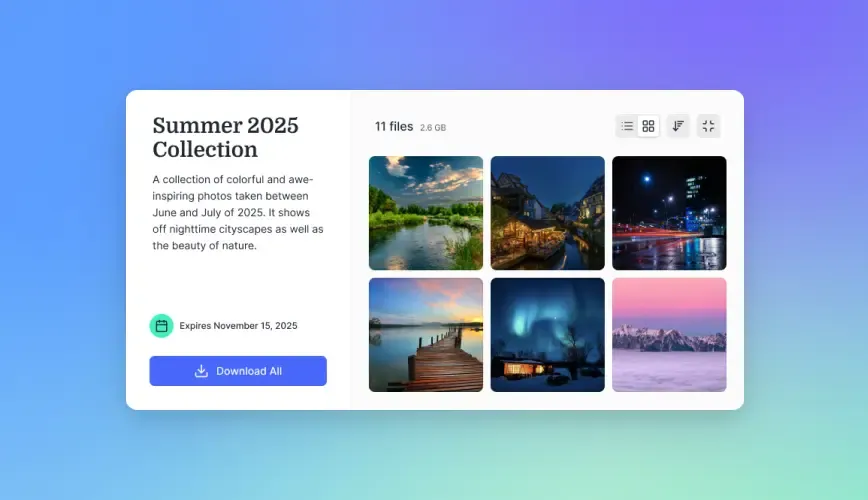


Simplify matter file sharing and client collection
Create dedicated workspaces for each legal matter. Securely share files with clients using custom-branded portals, complete with version history and automatic metadata extraction. Starts with a 14-day free trial.
Collaborative Legal Workspaces Built for AI and Human Teams
Modern legal operations are transitioning to intelligent workspaces where human professionals and AI agents collaborate on the same files. Fastio supports this agentic workflow by exposing a unified Model Context Protocol server. This allows AI tools to read and analyze documents securely alongside human team members.
When Intelligence Mode is enabled on a workspace, files are indexed automatically upon upload. Attorneys and paralegals can run hybrid search, combining exact keyword matches for contract numbers, names, or dates with semantic search to find documents based on meaning. This is a critical advantage when searching through thousands of pages of medical records or deposition transcripts.
To extract structured data from files, Fastio provides Metadata Views. Operations teams describe the specific columns they need in plain English, such as the effective date, counterparties, or billing totals. The AI designs a typed schema and extracts the data from PDFs, scanned images, and handwritten notes, populating a spreadsheet database without manual data entry.
Attorneys and AI writing assistants can also collaborate on documents in real time using Collaborative Notes. Notes are indexed automatically, ensuring that case summaries, witness lists, and deposition prep briefs remain connected to the workspace intelligence layer.
To automate document processing, developers can connect custom AI agents to the workspace. By using the Fastio MCP server, agents access files securely, allowing operations leads to connect their custom AI pipelines directly.
Finally, Fastio supports client handoff. If an IT consultant or legal tech vendor sets up the initial matter workspace and portal organization, they can transfer the organization to the firm's partners using the built-in ownership transfer mechanism. This ensures a clean transition of administration while protecting case file confidentiality.
Sources
References used to verify factual claims in this guide.
-
Assembly Neos starts at $109 per user, per month for its Essentials plan, while its Premium and Platinum tiers cost $139 and $189 per user, per month respectively.
Frequently Asked Questions
How much does Neos legal software cost?
Assembly Neos starting price is $109 per user, per month for the Neos Essentials plan. The Neos Premium plan costs $139 per user, per month, and the NeosAI Platinum plan costs $189 per user, per month. These plans require an annual commitment, and firms may incur additional costs for data migration, template setup, and third-party integrations.
Is Neos legal software cloud based?
Yes, Assembly Neos is a cloud-based case management platform that users access via a web browser. This allows attorneys and paralegals to access matter files, documents, calendars, and tasks remotely from any device with internet connectivity.
Who owns Neos legal software?
Assembly Software owns Neos. Assembly Software is a legal technology company that also owns legacy legal case management brands Needles and Trialworks. The company specializes in case management and document automation for personal injury and plaintiff-focused law practices.
Related Resources

Simplify matter file sharing and client collection
Create dedicated workspaces for each legal matter. Securely share files with clients using custom-branded portals, complete with version history and automatic metadata extraction. Starts with a 14-day free trial.