Docker File Server vs. Agent Rooms: Persistent Storage for Sandboxed Agents
Self-hosting a Docker file server for containerized coding agents requires managing port forwarding, custom permission models, and volume backups. In contrast, cloud-hosted Agent Rooms connect sandboxed agents with zero networking configuration using a remote Model Context Protocol endpoint. This article compares the two storage approaches, highlighting the RAG indexing, webhook event streams, and version controls needed for autonomous developer workflows.

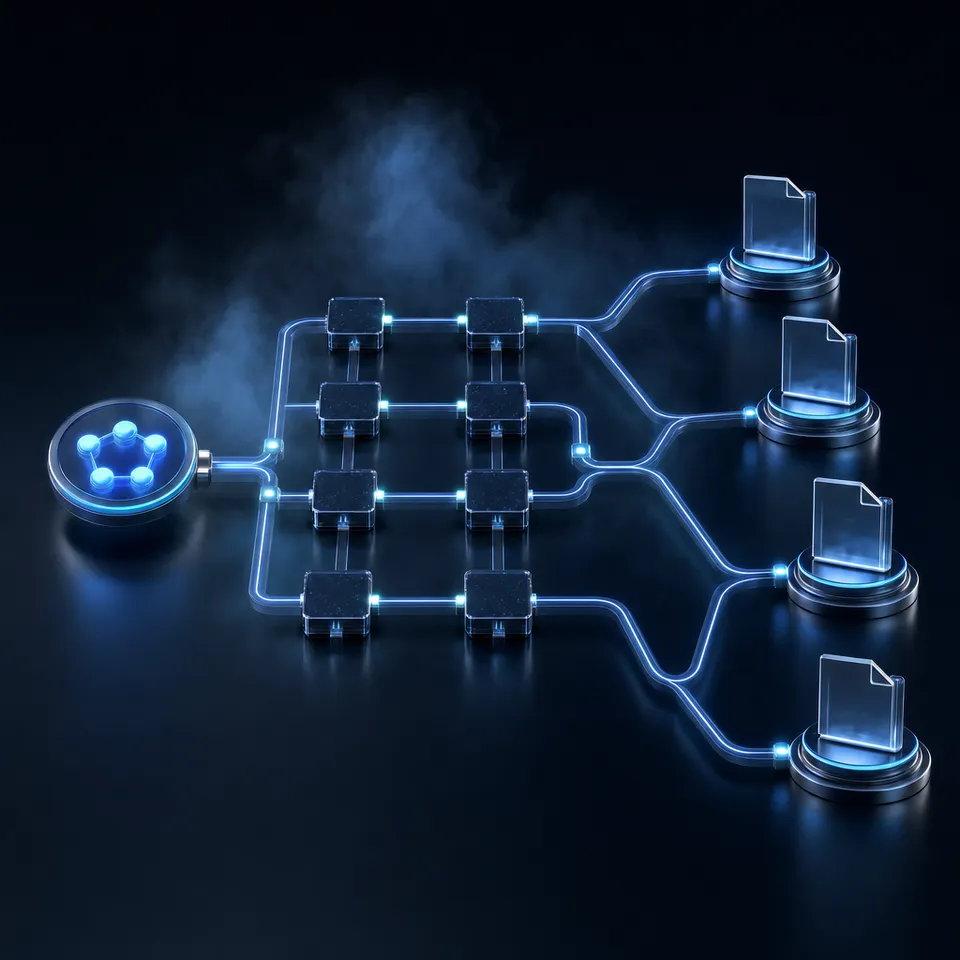
Why Containerized AI Agents Need Persistent Shared Storage
Two autonomous developer agents working inside sandboxed containers will easily overwrite each other's output, unaware of the conflict until the runtime crash occurs. Traditional docker file server setups lack the state synchronization, automatic retrieval-augmented generation (RAG) indexing, and event webhooks required for multi-agent workflows. When developers run autonomous agents across isolated host machines or container instances, directories hosted on a traditional local disk remain invisible to large language model context windows. Without an active coordinate layer, an agent cannot inspect directories, search file content, or write outputs without running exhaustive local script loops that waste tokens.
Since containerized host systems run on Linux, the environment is common: in the 2024 Stack Overflow Developer Survey, Ubuntu was used by 27% of developers for professional use. When configuring developer workspaces, developers have historically relied on a few common alternatives to share files with agents, including raw local folder mounts, Amazon S3 buckets, and traditional cloud syncing folders. However, local folders cannot scale across multiple physical machines, while Amazon S3 requires managing complex API access policies and provides no visual interface for human teammates. Traditional cloud storage folders frequently struggle with concurrent agent read and write operations, which can trigger API throttling and version conflicts.
To solve this persistence issue, developers can connect their AI coding agents to persistent, shared cloud workspaces. Fast.io serves as a central coordinate layer where developers and autonomous agents share the same files, notes, and workflows. When you enable a Fast.io workspace, agents can read and write files directly to a persistent cloud repository. This setup ensures that your agent's files and artifacts remain accessible across different machines, IDE sessions, and team collaborations.
Related guides
- Modernizing File Server Resource Manager for Agentic WorkflowsModernizing File Server Resource Manager configurations for agentic workflows allows teams to transition from rigid...
- How to Manage AI Agent Artifacts: Persistent Storage for Agent OutputsAI agent artifacts are the tangible outputs created during agent tasks: code, documents, data visualizations, and...
- Multi-Agent File Sharing: Patterns, Storage & CodeHow multiple AI agents share, read, write, and collaborate on files in production systems. Covers storage...
- ChatGPT Plus File Limit: Upload Caps, Attachment Counts & StorageThe ChatGPT Plus file limit permits users to upload up to `10` files per prompt, with each file capped at `512 MB` and...
- Modernizing Windows File Server for AI Agent WorkspacesBridging legacy Windows file server infrastructure to AI agent workspaces requires resolving key protocol and security...
- Perplexity Spaces File Limit: Upload Caps, Supported Formats, and Storage WorkaroundsPerplexity Spaces enforces a 25MB per-file upload limit and a 50-document ceiling per project on Pro accounts. While...
More on this subject: Agent File and Document Workflows (325 guides)
How to Configure a Self-Hosted Docker File Server
Setting up a local file server container is the standard starting point for coordinating development storage. FileBrowser provides a lightweight, open-source file manager that exposes host directories through a web interface. You can spin up this setup using Docker Compose to define the container, ports, and volume mounts.
The following Compose configuration file maps a local host directory to the container directory, allowing you to access files via the web interface:
services:
  file-server:
    image: filebrowser/filebrowser:latest
    container_name: filebrowser-server
    ports:
      - "8080:80"
    volumes:
      - /opt/docker/file-server/data:/srv
      - /opt/docker/file-server/config/database.db:/database.db
      - /opt/docker/file-server/config/settings.json:/config/settings.json
    environment:
      - FB_BASEURL=/files
    restart: unless-stopped
When you run this compose stack, any file written to the host directory /opt/docker/file-server/data is immediately mounted inside the container. This setup addresses common developer questions about container file management.
How do you share files between Docker containers? Setting up a named volume lets multiple containers mount the same folder. By mounting a single volume to multiple worker containers, you establish a shared local workspace.
What is the best Docker container for a file server? FileBrowser provides a lightweight GUI wrapper, while Nginx serves simple static pages. For standard networking protocols, Samba or SFTP containers are better suited.
What Are the Operational Tolls of Managing Host Mounts?
While running a containerized file server works well for local coding, it introduces a high operational burden when scaling to production workloads. Self-hosting a Docker file server requires managing port forwarding, SSH keys, and volume backups. To allow remote agents or distributed teammates to access the share, you must configure network routing, setup dynamic DNS, and manage firewalls, exposing your local hardware to security risks.
Beyond networking, permission mismatches between the host operating system and the container runtime frequently halt agent operations. When a container runs under a specific user identifier, it may lack write permissions to host-mounted folders, resulting in permission denied errors that abort agent runs. Solving these UID and GID conflicts requires modifying host directory ownership, which can compromise security boundaries on the host machine.
The main limitation of a raw Docker file server is the absence of an intelligence layer. A standard directory only stores raw bytes; it does not automatically index files for semantic search, parse metadata values, or support natural language Q&A. If a coding agent needs to retrieve context from a 200-page manual stored on the server, it must download and parse the entire file, consuming massive token budgets and hitting context window limits. Exposing files directly through a dedicated cloud bridge resolves this barrier, turning a standard directory into an active, indexable workspace.
Establishing Neutral Ground inside Managed Agent Workspaces
To bypass local networking hurdles, developers can connect their containers to cloud workspaces. Fast.io connects agent containers with zero networking configuration via secure API and MCP. The remote MCP server operates at https://mcp.fast.io/mcp/code over Streamable HTTP, with interactive clients signing in through OAuth in the browser as detailed in the setup documentation. Instead of running a local server on your desktop, you map your local directories to a persistent cloud workspace.
For developers using Cline, you can register the Fast.io remote endpoint inside the extension settings file. Note that VS Code declares MCP servers under a top-level servers key in mcp.json, while Cline uses mcpServers in cline_mcp_settings.json. A config block with the wrong key silently fails to load:
{
  "mcpServers": {
    "fastio-storage": {
      "type": "streamableHttp",
      "url": "https://mcp.fast.io/mcp/code"
    }
  }
}
When files land in the workspace, Fast.io's Intelligence Mode automatically indexes them. The files are parsed for keyword and semantic search, allowing agents to execute RAG queries across the entire folder structure. Because indexing occurs in the cloud, agents do not need to download entire file sets or hit context limits during search tasks. They simply run queries through the remote MCP toolset, retrieving only the precise context blocks and citation references they need.
This coordination model ensures that the entire lifecycle of agent outputs remains auditable and secure. Fast.io logs every file operation in a detailed activity log and preserves a detailed, per-file version history. If an agent writes a bug or overwrites a critical file, you can restore previous versions with a single click. Humans and agents can also co-edit requirements and task scopes using Collaborative Notes. Fast.io Notes brings Google-Docs-style real-time co-editing to every workspace with live multiplayer cursors, placing human developers and agents on the same active canvas.
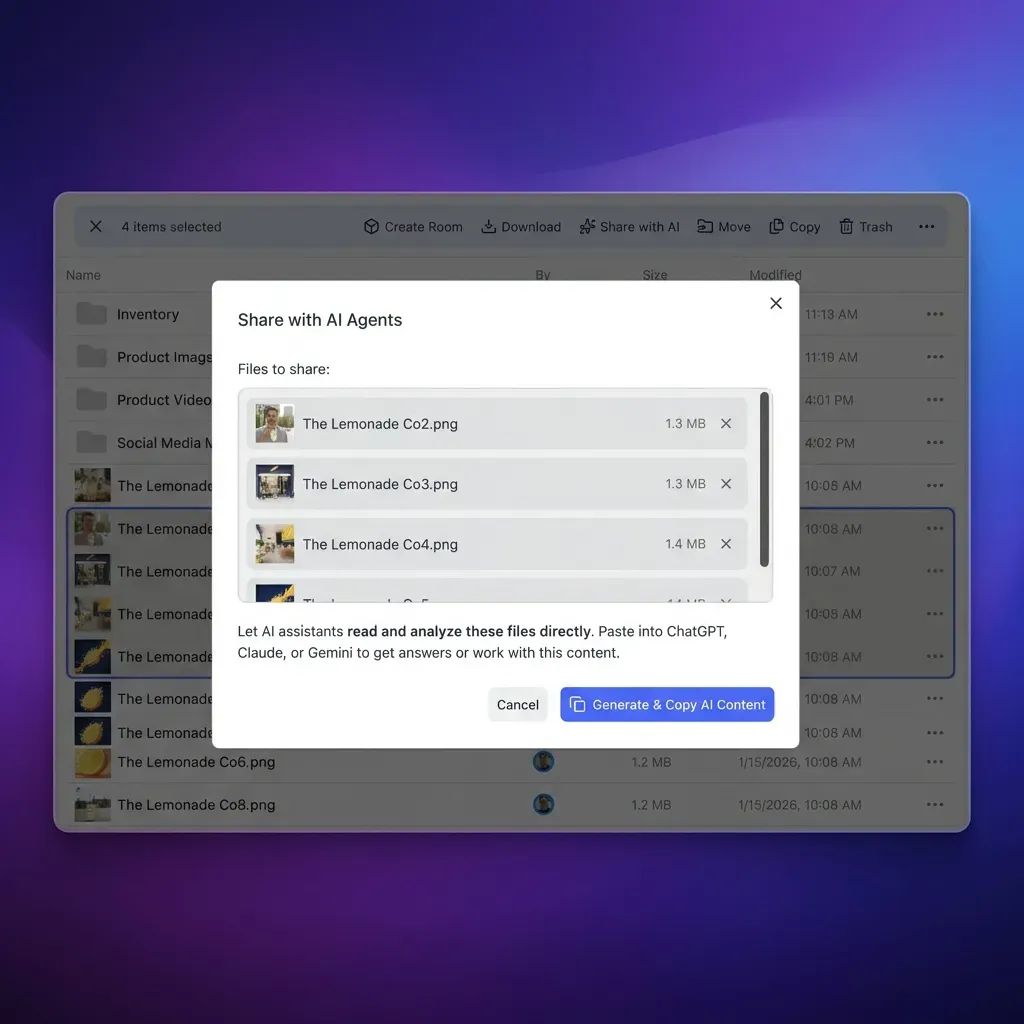


Connect your sandboxed agents to persistent workspaces
Establish an active cloud room for your coding agents with an MCP-ready remote endpoint, featuring per-file version history, built-in RAG search, and branded portals. Monthly plans start with a trial of up to 14 days.
Compare Container Volumes to Cloud Workspaces
Evaluating container volumes against cloud workspaces highlights different trade-offs for developer teams. Local Docker setups are excellent for fast, single-host code cycles but fall short when coordinating across distributed agents, sandboxed environments, and human teammates.
A comparison of the two approaches reveals clear distinctions:
Docker File Server. Managed locally. Best for single-host development. Requires manual configuration for port forwarding, backups, and user access. No indexing, semantic search, or webhook triggers.
Fast.io Workspaces. Managed in the cloud. Best for distributed teams and multi-agent coordination. Offers per-file version history, built-in RAG indexing, Collaborative Notes, and secure client delivery via branded portals.
To turn unstructured folder data into a structured spreadsheet database, teams can use Metadata Views. This feature allows humans and agents to extract structured data from files using natural language. For example, if your agent writes dozens of test reports, you can describe the columns you want (such as Test Date, Pass Rate, and Failed Modules) in plain English. The AI then suggests a typed schema using Text, Integer, Decimal, Boolean, URL, JSON, or Date & Time field types, matches files in the workspace, and populates a spreadsheet grid. Learn more about document data extraction by reviewing the Metadata Views overview.
Once the agent completes its deployment, you can transfer ownership of the organization or workspace to a human administrator. Fast.io plans include seats, storage and monthly AI credits, and extra storage, bandwidth and credits beyond the allowance are billed by use. The developer-agent flow allows an agent to sign up, construct the workspaces, and then hand over the organization to a human who joins and chooses a plan.
Pricing options are Starter at $9.99/mo | Business at $49.99/mo | and Enterprise at $199.99/mo. Plan capacities include Starter at 250 GB | Business at 5 TB | and Enterprise at 25 TB. Monthly plans start with a trial of up to 14 days (credit card required); annual plans have no trial. This structure allows developers to build and test pipelines before handing control to the client or organization admin. Get started with persistent workspaces by visiting the Fast.io pricing page.
Sources
References used to verify factual claims in this guide.
-
Ubuntu is used by 27% of developers for professional use.
Frequently Asked Questions
How do you share files between Docker containers?
You can share files between Docker containers by configuring shared Docker volumes or host bind mounts. A named volume can be mounted by multiple containers simultaneously, allowing them to read and write to the same filesystem directory path in real time.
What is the best Docker container for a file server?
The best Docker container for a file server depends on your access requirements. FileBrowser is a popular lightweight choice that provides a web-based file management interface, while Samba or SFTP containers are standard for network file sharing protocols.
How do Agent Rooms differ from a Docker file server?
A Docker file server hosts raw files on a containerized volume, which requires manual configuration for networking, permissions, and backups. Agent Rooms provide cloud-hosted, AI-indexed workspaces that support remote MCP access, semantic RAG search, webhooks, and secure client portals.
Related Resources

Connect your sandboxed agents to persistent workspaces
Establish an active cloud room for your coding agents with an MCP-ready remote endpoint, featuring per-file version history, built-in RAG search, and branded portals. Monthly plans start with a trial of up to 14 days.