Cline Security Model and Safe Agent Practices
Cline Enterprise documents four security-by-design claims: client-side execution, no data exfiltration, no codebase indexing, and no training on your code. Most reviews stop there. This guide operationalizes the harder layer: Auto Approve scope, MCP trust boundaries, and safe handoff of agent outputs to teammates and external parties.


What Cline's security model actually guarantees
Cline Enterprise documents four security-by-design claims: client-side execution, no data exfiltration, no codebase indexing, and no model training on your code. That quartet is the right place to start any Cline security review, because it answers the first privacy question teams ask when an agent can read a monorepo and run shell commands.
In plain terms, the model is local-first. Cline runs inside your environment (IDE extension or CLI), processes workspace context on the client side, and does not claim to upload your repository into a vendor-side index or train models on your prompts and code. Enterprise documentation also stresses bring-your-own inference: you connect providers such as AWS Bedrock, Google Vertex AI, Azure OpenAI, Anthropic, OpenAI, Cerebras, or OpenAI-compatible endpoints, so model traffic follows contracts and network paths you already control.
That architecture is strong, and it is incomplete as a full security story. Local execution reduces one class of risk (bulk vendor-side storage of your tree). It does not remove:
- Model providers receiving the context you send for inference
- Terminal and file tools that can delete, overwrite, or exfiltrate data if approved carelessly
- MCP servers that run with the credentials you put in their environment
- The moment agent outputs leave the IDE and land in Slack DMs, Drive folders, or untracked zip files
Search interest for the phrase "cline security" is still small compared with broader AI coding queries, which is why thin comparison posts dominate results. The operational gap is larger than the query volume. Teams need a practical Cline security model that covers approvals, MCP allowlists, ignore and secret hygiene, enterprise governance when you scale past personal API keys, and a controlled path for sharing deliverables.
Treat Cline data privacy as two layers:
- Product claims about what the agent platform does and does not store or train on
- Your operating rules for tools, secrets, models, and handoffs
The rest of this guide focuses on layer two, grounded in official Auto Approve and MCP guidance, plus durable storage patterns for agent output.
Related guides
- OpenClaw Best Practices for Setup, Security, and Agent ManagementSecurity researchers found over 42,000 OpenClaw Gateway instances exposed on the public internet in early 2026, most...
- Hermes Agent Security: Container Isolation, Authorization, and Safe DeploymentHermes Agent ships with a seven-layer security model that covers command approval, user authorization, container...
- What Is Cline? Open-Source AI Coding Agent ExplainedCline reports 8.0M+ installs across platforms and ships as Apache 2.0 open source, which is why developers keep asking...
- Cline VS Code Extension: MCP Setup and Shared WorkspacesWhile individual developers benefit from local autonomous agents, engineering teams struggle with knowledge silos. By...
- How the Cline Coding Agent Operates: Prompts, Context Loops, and File ModificationsThe Cline coding agent has recorded over 4.5 million installs on the Visual Studio Code Marketplace, showing a shift...
- How to Use Cline Plan Mode EffectivelyCline Plan mode is read-only by design. Official docs separate thinking from doing, with three task-size paths and...
More on this subject: Cline (105 guides)
Human approvals, Auto Approve scope, and YOLO mode
Cline's default posture is human-in-the-loop: the agent proposes tool use, and you approve or deny. That is the core of day-to-day Cline security for individual developers. The failure mode is not usually "Cline bypassed me." It is "I auto-approved a broader surface than I meant to."
Official Auto Approve docs evaluate permissions per tool call, across categories such as reading project files, editing project files, running terminal commands, browser use, and MCP tools. Settings also distinguish workspace scope from broader machine scope. "Read all files" and "Edit all files" only extend the base toggles. If the base toggle is off, the "all files" option does nothing.
A conservative default from Cline's own recommendations:
- Enable Read project files so exploration is less interrupt-heavy
- Leave edits, commands, browser, and MCP off until you have a reason
- Prefer Checkpoints (or version control) before turning on edit auto-approve
Terminal handling needs care. Cline does not publish a fixed shell allowlist. The model marks commands with a requires_approval flag based on the command and arguments. Commonly treated as safer examples include read-only or build/test style commands such as git status, ls, cat package.json, npm test, or npm run build. Commonly flagged examples include dependency installs, recursive deletes, moves that can overwrite, and in-place edits. Treat those labels as guidance, not guarantees. Always read the actual command before you click approve.
YOLO mode is an intentional escape hatch, not a production default
YOLO mode auto-approves file operations anywhere on the system, terminal commands (including destructive ones), browser actions, MCP tools, and mode transitions. Official docs warn that this disables safety checks and that Cline can delete files, change system settings, call external services, overwrite config, install packages, or commit and push without asking.
Use YOLO only for:
- Throwaway prototypes and sandboxes
- Repeated tasks you already validated under manual approval
- Demos where interruption is worse than risk
Do not enable YOLO on laptops that hold production credentials, customer data, or the only copy of uncommitted work. If you need speed without that risk, tighten Auto Approve categories instead of flipping the global kill switch.
Practical approval hygiene
- Review each tool call's path and arguments, not just the summary label
- Deny commands that touch secrets directories, cloud credentials, or production config
- Keep notifications on if you enable longer auto-approved terminal runs
- Pair broader edit permissions with git branches and frequent commits
- Revisit Auto Approve after installing a new MCP server. New tools expand blast radius even if old settings felt safe
MCP trust boundaries and how to limit server access
MCP (Model Context Protocol) is where Cline security becomes operationally hard. Built-in tools are relatively visible. MCP servers add external tools and data sources, local or remote, with whatever privileges their process and credentials hold.
Official MCP overview security basics are short and worth treating as policy:
- Only install servers you trust
- Store secrets in environment variables
- Limit
autoApproveto safe tools - Review tool calls before approval
Config examples in Cline docs show local STDIO servers (command + args + env) and remote Streamable HTTP servers (type: streamableHttp, url, optional headers). Both shapes include an autoApprove array. Empty arrays mean you still approve tool calls. Filling that array with high-impact tools is the MCP equivalent of YOLO mode.
How to limit Cline MCP server access in practice
- Inventory first. List every configured server, transport (STDIO vs remote), and whether it is enabled. CLI users can manage servers through the MCP wizard (
cline mcp) or inspect config non-interactively withcline config mcp/cline config mcp --json. - Prefer remote shared services when the alternative is copying long-lived keys into every laptop. Hosted endpoints with scoped tokens are easier to rotate than secrets scattered across developer machines.
- Scope credentials. Give each MCP server the narrowest token that still works. A storage MCP should not inherit cloud-admin keys. A docs MCP should not hold production database passwords.
- Keep
autoApproveempty for write, delete, network, and payment-adjacent tools. Auto-approve only tools that are read-only and low sensitivity if you auto-approve anything at all. - Disable or delete unused servers. Disabled servers are safer than "maybe we need it later" entries still holding env secrets.
- Review tool descriptions on first connect. If a server exposes broad filesystem or shell tools, treat it like granting a new agent identity, not like installing a plugin icon.
Configuration sketch for a remote server with no auto-approved tools (pattern from official docs; replace URL and token with your values):
{
  "mcpServers": {
    "team-storage": {
      "type": "streamableHttp",
      "url": "https://example.com/mcp",
      "headers": {
        "Authorization": "Bearer your-token"
      },
      "disabled": false,
      "autoApprove": []
    }
  }
}
For local STDIO servers, put API keys in env, not in chat transcripts or committed JSON if your repo is shared. Confirm whether your team stores MCP config in home directory files versus project-scoped files before you commit anything.
Trust is not only about malware
Even a well-intentioned MCP server can:
- Over-fetch files into the model context
- Write outside the directory you expected
- Log prompts and tool arguments on a remote host
- Share one token across every developer, destroying attribution
When teams ask "is Cline secure," MCP is often the real answer: Cline can be careful about local execution and still become risky if every engineer installs unreviewed servers with broad auto-approve.



Keep Cline outputs in a workspace you control
Store agent deliverables in a shared Fast.io workspace with MCP access, version history, permissioned shares, and a detailed activity log. Start with a 14-day free trial, then hand ownership from agent setup to a human admin when you are ready.
Safe handoff of Cline outputs beyond the IDE
Competitor writeups rarely operationalize what happens after Cline finishes a task. Local edits and terminal output stay on one machine until someone copies them somewhere else. That informal path is where secrets leak, versions diverge, and client deliverables lose a clear audit trail.
Common default handoffs and their tradeoffs:
- Git only. Best for source of truth, weak for large binaries, client-facing packages, and reviewers who are not on the repo.
- Object storage (S3 and similar). Durable and cheap, thin on human review UX, permissions, and branded external sharing.
- Consumer cloud drives (Google Drive, Dropbox, OneDrive). Familiar for people, easy to overshare folders, weak agent identity model.
- Chat attachments. Fast, almost never the right archive for regulated or long-lived work.
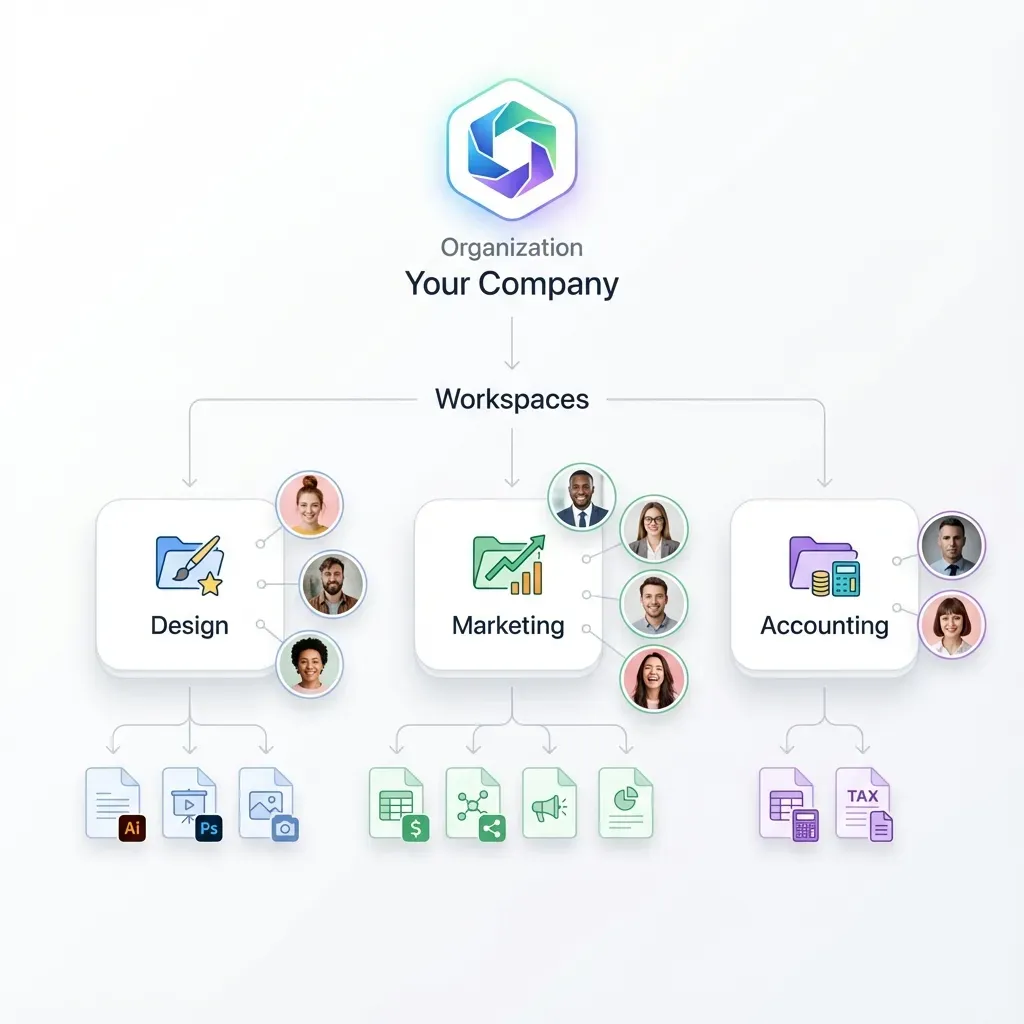
A safer pattern is a dedicated handoff workspace with its own permissions, version history, and share policy. Local disk remains the execution environment. Shared storage becomes the review and delivery layer.
Fast.io fits that middle layer for agentic teams. Agents and humans share org-owned workspaces with per-file version history, granular permissions at org/workspace/folder/file scope, and a detailed activity log. Cline is not a built-in Fast.io product. You treat it as the coding agent and connect storage through MCP or upload/sync paths your team already trusts.
Practical handoff controls:
- Restrict the agent identity to a
/handoff(or similarly named) folder with write access, not the entire company tree - Enable Intelligence Mode when reviewers need semantic search and citation-backed questions over deliverables
- Use branded Send/Receive/Exchange shares with expiration and per-recipient access for external parties instead of permanent public links
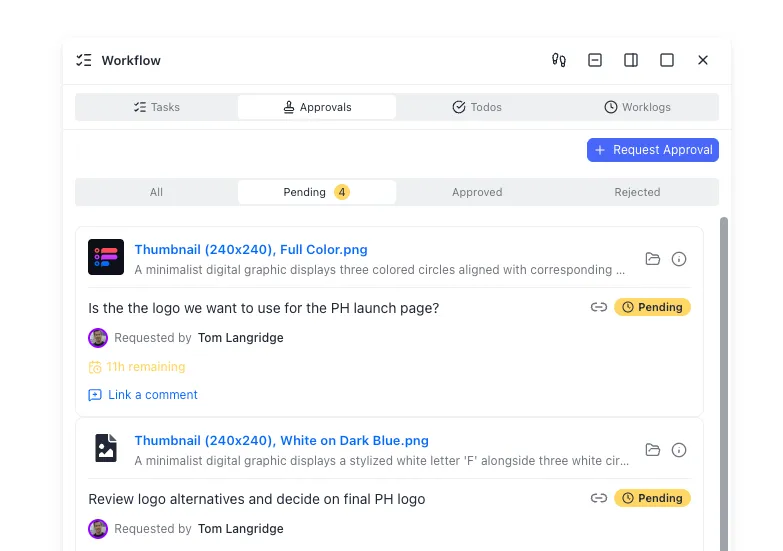
- Have a person review finished packages in the workspace before clients see them
- Prefer ownership transfer when an agent scaffolds the workspace and a human should own billing and policy afterward
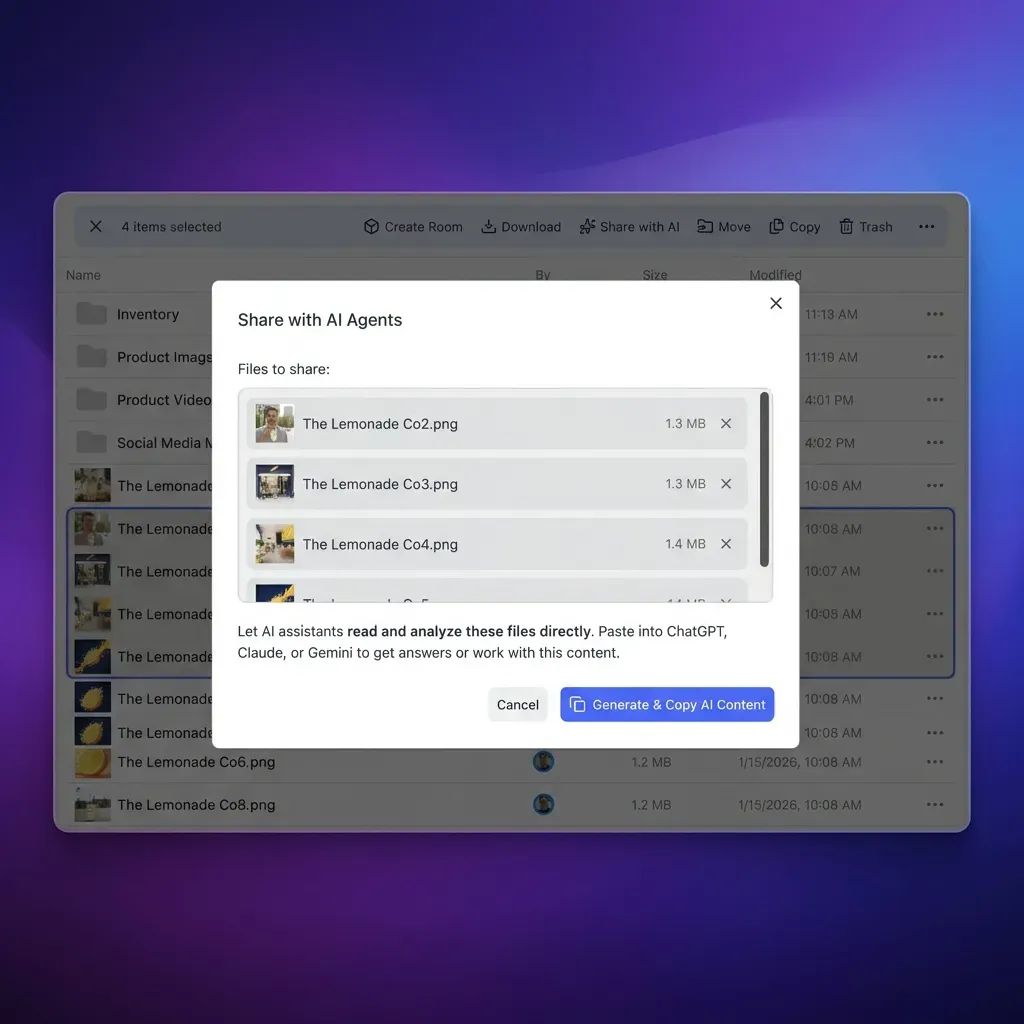
Fast.io exposes MCP over Streamable HTTP at /mcp and legacy SSE at /sse. See the agent storage guide for how agents connect. That path lets Cline call consolidated MCP tools for workspace operations without inventing a second file pipeline. Creating a user account is free, but real org work runs on paid subscriptions on the pricing page: Starter, Business, or Enterprise, each with a 14-day free trial that requires a credit card. An agent can create a user account, prepare structure, then hand ownership to a human who starts the trial.
If you already standardize on S3 or Drive, keep them for bulk archive. Add a collaboration workspace when multiple reviewers, clients, or agents need the same files with clearer identity and share boundaries.
Company rollout checklist for Cline on private code
Is Cline secure for company code? It can be, when product claims and team policy align. Use this checklist as a minimum bar before wide deployment.
Privacy and model path
- Confirm developers understand that inference still sends context to the model provider you configure, even when Cline does not index the codebase on a vendor server
- Prefer company-negotiated providers (Bedrock, Vertex, Azure, and similar) over personal consumer keys for production repos
- Document which models are allowed for which data classifications
- Does Cline train on my code? Enterprise docs state your code and prompts are not used for training under the security-by-design claims. Still verify the terms of your chosen model provider, because training policy and logging policy are not the same question
Local workstation controls
- Keep secrets out of the repo. Use env vars and secret managers, not committed
.envfiles Cline might open - Maintain ignore rules so agent context excludes credential stores, customer dumps, and proprietary datasets that do not belong in prompts
- Start Auto Approve at read-only for project files; expand slowly
- Ban YOLO mode on machines with production access
- Patch Cline to the actively supported release line. Upstream security policy states they actively patch only the most recent minor release
MCP and tools
- Maintain an allowlist of approved MCP servers for company use
- Require empty or tightly limited
autoApprovefor MCP tools - Rotate tokens when people leave or servers are removed
- Prefer remote MCP with scoped tokens over copying powerful local secrets to every laptop
Enterprise governance when you outgrow personal keys
Cline Enterprise adds central governance on the same local architecture: corporate credential login instead of scattered personal API keys, role-based access (Member/Admin/Owner), model and tool controls, remote configuration, and usage observability with OpenTelemetry export to stacks such as Datadog, Grafana, or Splunk. That layer matters when "is Cline secure" becomes an org question rather than a single-developer preference.
Output and external sharing
- Define where finished artifacts must live (repo, handoff workspace, or both)
- Prohibit shipping client packages solely as chat attachments
- Use expiring, permissioned shares for outsiders
- Keep an audit trail of who approved what left the company boundary
Vulnerability handling
Cline publishes a security policy and accepts reports through a Bugcrowd vulnerability disclosure program, with security@cline.bot as an escalation path. Track advisories for the products you actually run (extension, CLI, related services). Local agent security still depends on you applying updates promptly.
What "good" looks like after 30 days
- Every engineer can explain Auto Approve settings on their machine
- MCP inventory matches the official allowlist
- No production credentials in chat logs or committed MCP configs
- Handoffs to QA, security, or clients go through a shared workspace with version history
- Security review can point to enterprise (or team) policy docs that match real settings, not aspirational wiki pages
Cline security is not a yes/no brand claim. It is a configuration and workflow discipline: local agent execution, human approval for tools, careful MCP trust boundaries, optional enterprise governance, and deliberate handoff of outputs so code and secrets stay under your control.

Sources
References used to verify factual claims in this guide.
-
Cline Enterprise documents four security-by-design claims: client-side execution, no data exfiltration, no codebase indexing, and no model training on customer code.
-
Cline MCP security basics recommend trusting servers carefully, storing secrets in environment variables, limiting autoApprove, and reviewing tool calls.
-
Cline Auto Approve evaluates permissions per tool call and recommends enabling read project files while leaving edits, commands, browser, and MCP off by default. YOLO mode auto-approves all file operations, terminal commands, browser actions, MCP tools, and mode transitions, and official docs warn it is dangerous.
-
Cline security policy actively patches only the most recent minor release and accepts vulnerability reports via Bugcrowd with escalation to security@cline.bot.
-
Fast.io organizations start with a 14-day free trial that requires a credit card, with Starter, Business, and Enterprise paid plans.
Frequently Asked Questions
Is Cline secure for company code?
Cline can be appropriate for company code when you keep execution local, restrict Auto Approve, allowlist MCP servers, route model traffic through company-approved providers, and control how outputs leave the machine. Enterprise docs claim client-side execution, no data exfiltration, no codebase indexing, and no training on your code. Residual risk still includes model-provider context, approved tool actions, and informal sharing paths.
Does Cline train on my code?
Cline Enterprise security-by-design materials state that your code and prompts are not used for model training, and that repositories are not indexed or cached by Cline for that purpose. Always pair that product claim with the training and retention terms of the inference provider you connect (Bedrock, Vertex, Azure OpenAI, Anthropic, OpenAI, and others).
How do I limit Cline MCP server access?
Install only trusted servers, store secrets in environment variables, keep autoApprove empty or limited to low-risk read-only tools, disable unused servers, and review every tool call before approval. Prefer scoped tokens on remote Streamable HTTP servers over broad local credentials, and maintain a team allowlist instead of letting each developer install arbitrary MCP packages.
What is the safest Auto Approve setup for daily work?
Cline's own guidance is a good default: enable Read project files, and leave edits, commands, browser, and MCP auto-approve off until you have a specific reason. Expand one category at a time after you trust the workflow, and keep YOLO mode off outside sandboxes.
Where should Cline put deliverables for clients or teammates?
Keep source control for code, but put review packages and client-facing artifacts in a shared workspace with permissions, version history, and expiring shares. Local folders, raw S3 buckets, and chat attachments are common but weak for auditability. Platforms such as Fast.io add agent-friendly MCP access, branded shares, and ownership transfer when a human needs to take over the workspace.
How does Cline handle security vulnerabilities?
Upstream security policy supports active patching on the most recent minor release and accepts vulnerability reports through Bugcrowd, with email escalation to security@cline.bot. Track advisories for the Cline components you run and update promptly.
Related Resources

Keep Cline outputs in a workspace you control
Store agent deliverables in a shared Fast.io workspace with MCP access, version history, permissioned shares, and a detailed activity log. Start with a 14-day free trial, then hand ownership from agent setup to a human admin when you are ready.