How to Use Cline with Ollama for Local AI Coding
Cline reports 4,672,635 Visual Studio Marketplace installs, yet many teams still send proprietary code to cloud APIs when official docs support Ollama at http://localhost:11434. This guide walks through local setup, model choice for multi-step agent tasks, LM Studio and OpenRouter fallbacks, and where to store the files Cline produces so humans can review them.

Why run Cline on local models instead of cloud APIs
Cline reports 4,672,635 installs on the Visual Studio Marketplace as of mid-2026 [Visual Studio Marketplace]. That install base sits next to a quieter demand signal: US search volume for "cline ollama" is about 90 queries per month [DataForSEO]. The gap is the point of this guide. Plenty of developers already run Cline as an agent inside the editor, but far fewer wire it to a fully local runtime even though Cline's own documentation documents Ollama, LM Studio, and Atomic Chat as first-class local providers.
Cline is a provider-agnostic coding agent for VS Code and related editors. It can read the repo, edit files, run terminal commands, and use MCP tools, with you approving steps along the way. Official Cline docs describe three common auth paths: Cline usage-billing, ClinePass subscription access, and bring-your-own-key (BYOK) providers that include both cloud APIs and local runtimes. Local runtimes need no API key; you only need the runtime process listening on a base URL.
Teams choose Ollama when three constraints collide. First, code privacy: agent sessions include file contents, diffs, and terminal output that many orgs refuse to send off-box. Second, cost control: multi-step agent loops burn tokens faster than chat autocomplete, so cloud bills climb during long refactors. Third, offline or air-gapped work: once the model weights live on disk, Cline keeps working without an internet path for inference.
Local does not mean "as strong as frontier cloud models on every hard task." Hosted APIs still lead on long-horizon multi-file work. What local does well is scoped daily coding on private repos: tests, small features, refactors, and doc generation where tool loops stay short and you control the hardware. Official Cline guidance for local inference is practical rather than magical: enable Use Compact Prompt, keep tasks focused, and start a new task when context grows too large.

Related guides
- How to Set Up OpenClaw with Ollama for Local AI AgentsOpenClaw's Ollama integration lets you run a fully autonomous AI agent powered by local models, with a single command...
- How to Run Hermes Agent with Ollama and Local LLMsHermes Agent from Nous Research can run entirely on your own hardware using Ollama as the inference backend, with no...
- How to Use OpenRouter with ClineCline lists OpenRouter as a first-class BYOK provider, and OpenRouter routes hundreds of models through one key. This...
- Cline vs Continue: Which AI Coding Tool Should You Use?US search volume for "cline vs continue" is about 140 queries per month, but most writeups still treat the two as the...
- VS Code Profiles Guide for Cline: How to Isolate Agent EnvironmentsUsing a single global configuration for Cline in VS Code can result in credential leaks, conflicting system prompts,...
- How to Sync Cline Rules Across Teams in VS CodeSyncing Cline rules enables development teams to enforce consistent coding standards, architectural bounds, and agent...
More on this subject: Cline (105 guides)
Install Ollama, pull a model, and point Cline at localhost
Official Cline docs reduce local setup to five moves: install a local runtime, start the server, select the matching provider in Cline Settings, pick a model, and enable compact prompts. The numbered path below matches that flow for Ollama, which is the most common CLI-first choice.
1. Install Ollama
Download the installer for your OS from ollama.com. On macOS and Linux you can also use the official install script from that site. Launch Ollama once so the background service is running.
2. Pick and pull a coding model
Browse the Ollama catalog at ollama.com/search. Filter by size and recent updates, open a model page, then run the pull command shown there:
ollama pull <model-name>
ollama run <model-name>
Confirm the model appears with ollama list. Until the model is pulled, Cline's dropdown stays empty or incomplete even if the base URL is correct.
3. Install Cline in your editor
In VS Code, open Extensions, search for Cline, and install the official extension (publisher listing: saoudrizwan / claude-dev on the Marketplace). Open the Cline panel from the Activity Bar, then open Settings with the gear icon.
4. Select the Ollama provider
In Cline Settings:
- Set API Provider to Ollama.
- Set Base URL to
http://localhost:11434(the value documented in Cline's local models guide). - Choose your pulled model from the model dropdown.
- Under Features, enable Use Compact Prompt.
Official Cline authorization docs state that local Ollama and LM Studio setups do not need an API key. If the connection fails, verify the URL in a browser or with a quick request against the Ollama host, and make sure Ollama is running before you send the first Cline prompt.
5. Smoke-test with a tiny task
Open a non-critical file and ask Cline to add a docstring or rename a local helper. Approve the plan, watch one tool call cycle complete, and confirm the edit lands. If Cline stalls, loops, or "forgets" earlier files after a few steps, the usual cause is context pressure: the system prompt, tool history, and file reads fill a small default context window. Keep tasks narrow, enable compact prompts, and prefer a model large enough for multi-step tool use on your hardware.
Official hardware guidance from Cline's local models page is RAM-based rather than GPU-branded: 16-32GB for small or quantized models, 32-64GB for mid-size coding models, and 64GB+ for larger models with bigger context windows. Treat that as a planning floor. Quantized weights still need headroom for the KV cache while Cline streams tool results.
Choose models that survive multi-step agent loops
Most "Cline + Ollama" walkthroughs stop at connection success. That is only half the job. Autocomplete needs a model that predicts the next few tokens. Cline needs a model that follows tool schemas, keeps a plan across turns, and still behaves after several file reads and command outputs land in the transcript.
Start from hardware, not brand names. On lighter machines in the small or quantized tier from Cline's RAM guidance, stick to compact coder models and accept narrower tasks: single-file edits, tests for one module, short explanations. On mid-size hardware you can step into larger coding models that hold more of a feature branch in context. Above that, bigger open weights become realistic for multi-file refactors, with the cost paid in VRAM and latency.
Prefer models marketed for code instruction or agent-style tool use over pure chat models. In the Ollama catalog, look at recent coder or instruct tags, read the model card for context length, and test tool calling on your own repo instead of trusting a leaderboard screenshot. Two evaluation prompts catch most weak models quickly:
- Tool fidelity: "List files in this folder, open the two most relevant ones, then propose a three-step fix. Do not invent paths."
- Edit discipline: "Change only function X. Leave neighboring helpers untouched. Summarize the diff before applying."
If the model invents paths, rewrites unrelated files, or drops the plan after the first tool result, switch models or shrink the task. Raising context size in the local runtime helps only when the model can use that context. Infinite context settings on a weak model still produce weak plans.
Runtime tuning matters as much as the pull tag. Keep Ollama running while Cline works so the model stays loaded across tool turns. Restarting the runtime mid-task forces cold starts and wipes local cache behavior. When sessions get heavy, follow Cline's local guidance: compact prompts, focused tasks, new task when history balloons. That discipline often improves results more than swapping to a slightly larger model.
For privacy-sensitive work, decide what must stay local versus what can leave the box. Secrets, production dumps, and unreleased IP stay on local inference. Public docs, open-source patches, and generic boilerplate are fine on cloud models when you need higher reasoning quality. That split is the foundation of the hybrid pattern in the next section.



Share Cline outputs without leaving local inference behind
Keep day-to-day coding on Ollama, then drop review packs into a Fast.io workspace with MCP access, version history, and Intelligence Mode search. Monthly plans start with a 14-day trial.
Add LM Studio and OpenRouter as hybrid fallbacks
Cline can run against local models through Ollama or LM Studio, or against multi-model cloud providers like OpenRouter, using BYOK-style provider settings. Treat those three as complementary, not competing, options.
LM Studio for GUI-managed local models
Official Cline docs cover LM Studio as a parallel local path:
- Install LM Studio from lmstudio.ai.
- Download a model from Discover that fits your hardware.
- Open the Developer tab and start the local server (default base URL
http://localhost:1234). - In Cline Settings, select provider LM Studio, keep the base URL at
http://localhost:1234, and pick the loaded model.
Troubleshooting mirrors Ollama: server must be running, a model must be loaded, and the base URL must match. LM Studio is a good fit when you want a visual model browser, GGUF management, and per-session server controls without living in the terminal. Ollama remains the better CLI automation story (pull, run, scripting).
Atomic Chat is a third local option documented by Cline for macOS Apple Silicon, with an OpenAI-compatible default around http://127.0.0.1:1337/v1. Use it when that stack matches your machine; the configuration pattern is the same provider + base URL + model selection flow.
OpenRouter when local quality is not enough
OpenRouter gives Cline one API key and a catalog of cloud models. Official setup:
- Create an API key at openrouter.ai/keys.
- In Cline Settings, choose OpenRouter.
- Paste the key and select a model from the dropdown.
- Leave custom base URL blank unless you have a deliberate proxy requirement.
OpenRouter pricing follows the underlying model. Caching depends on the model; Cline's OpenRouter guide notes that Gemini models via OpenRouter need the manual "Enable Prompt Caching" checkbox because of caching behavior differences, while most other models do not need that extra toggle.
A practical hybrid pattern
Run day-to-day private work on Ollama or LM Studio. When a task stalls (broken tool loops, weak architecture proposals, stubborn multi-file bugs), switch the provider to OpenRouter or a direct cloud key for that task only, complete the hard slice, then switch back to local for the rest. This keeps most tokens and code on-device while still giving you an escape hatch.
Document the switch rule for your team so people do not default to cloud for every prompt. Example policy: local for refactors under N files, OpenRouter for greenfield design or unfamiliar stack debugging. Pair that with secret scanning and a ban on pasting credentials into either path.
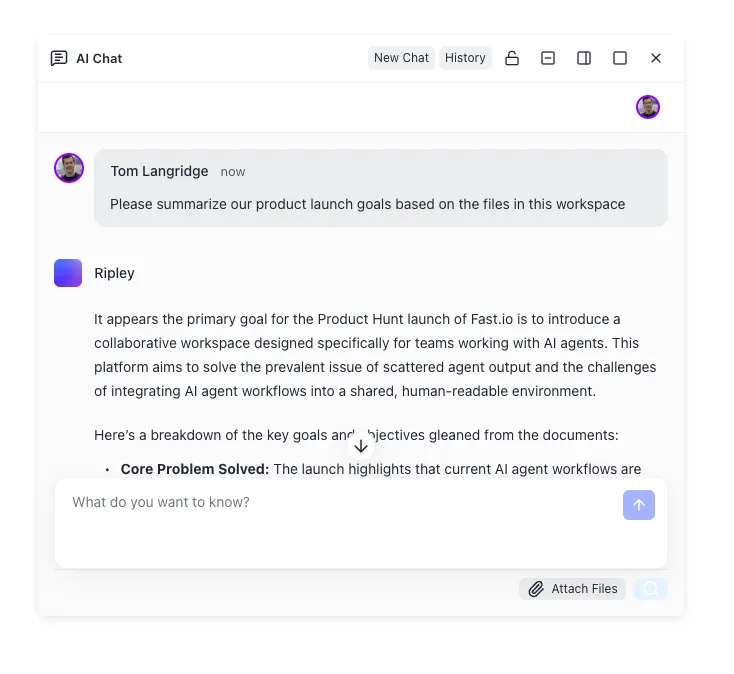
Keep Cline outputs in a workspace humans can open
Local inference solves where tokens run. It does not solve where files live after the agent finishes. By default, Cline edits the project on disk in front of you. That is fine for solo work on one laptop. It breaks down when you switch machines, need a teammate to review artifacts, or want an agent-readable store that is not a random folder on /tmp.
Common storage options each have tradeoffs. Plain local disks stay private but do not travel. Git is excellent for source history, yet it is a poor live drop zone for intermediate agent dumps, design notes, and binary fixtures. Object storage such as Amazon S3 holds blobs well but needs extra work for previews, permissions, and human review. Consumer drives (Google Drive, Dropbox) are familiar, but they are not built as an MCP-native coordination layer for agents that upload, search, and hand off continuously.
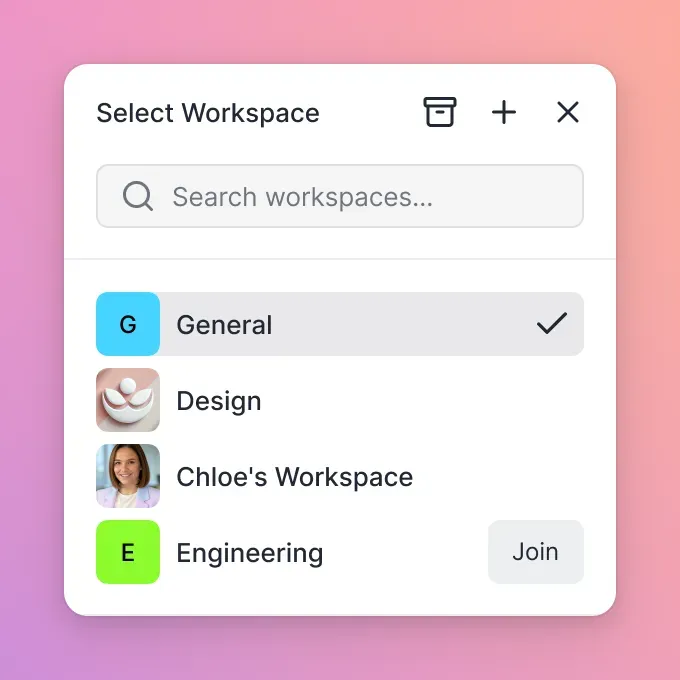
Fast.io sits in that coordination layer. It is a shared, organization-owned workspace where humans use the UI and agents use the API or MCP server. Enable Intelligence Mode so files are indexed for hybrid search and citation-backed chat. Use per-file version history when Cline or a teammate overwrites a draft. For structured extraction from PDFs or spreadsheets the agent collects, use Metadata Views rather than hand-built OCR pipelines.
Cline can reach external tools through MCP. Fast.io exposes Streamable HTTP at /mcp and legacy SSE at /sse. Point Cline's MCP configuration at the Fast.io server so the agent can write reports, patches, and exports into a durable workspace instead of only the local tree. Humans then open the same workspace in the browser, comment on files, and take ownership when the agent is done. Ownership transfer is the product path when an agent bootstraps an org and a person claims it.
Pricing is usage-based across Starter ($9.99/mo), Business ($49.99/mo), and Enterprise ($199.99/mo) plans. Monthly plans start with a trial of up to 14 days (credit card required); annual plans have no trial. Production work runs on a paid org subscription after the trial. For agent-oriented onboarding, including MCP connection details, start from /storage-for-agents/.
A clean end-to-end loop looks like this:
- Run Cline against Ollama for private edits in the local repo.
- Ask Cline (via MCP) to upload release notes, diagrams, or review packs to a Fast.io workspace.
- Teammates review with version history and comments; Intelligence Mode answers "what changed?" with citations.
- Escalate only the hardest coding slice to OpenRouter, then return to local for the rest.
That pattern keeps inference local when privacy matters, cloud when quality matters, and storage shared when collaboration matters.
Sources
References used to verify factual claims in this guide.
-
Cline reports 4,672,635 installs on the Visual Studio Marketplace.
-
US monthly search volume for the keyword "cline ollama" is about 90.
-
Cline documents Ollama base URL as http://localhost:11434 and LM Studio default as http://localhost:1234. Official Cline local hardware guidance: 16-32GB RAM for small or quantized models, 32-64GB for mid-size coding models, 64GB+ for larger models and bigger context windows.
-
Local Ollama and LM Studio providers do not require an API key; OpenRouter is configured with a BYOK API key in Cline Settings.
-
OpenRouter is configured in Cline by selecting the OpenRouter provider, pasting an API key, and choosing a model; Gemini via OpenRouter may need manual prompt-caching enablement.
-
Fast.io Starter is $9.99/mo, Business $49.99/mo, Enterprise $199.99/mo; monthly plans have a 14-day trial that requires a credit card.
Frequently Asked Questions
Can Cline use Ollama?
Yes. Official Cline documentation lists Ollama as a local provider. Install Ollama, pull a model, open Cline Settings, select the Ollama provider, set the base URL to http://localhost:11434, and choose the model. No API key is required for local runtimes.
What is the best Ollama model for Cline?
There is no single best model for every machine. Official Cline docs point you at the Ollama catalog and size guidance by RAM: smaller quantized models on 16-32GB systems, mid-size coding models on 32-64GB, larger models above that. Prefer recent coder or instruct tags, then validate tool calling on a real multi-step task in your repo before standardizing a team default.
How do I connect Cline to LM Studio?
Install LM Studio, download a model, start the Developer server (default http://localhost:1234), then in Cline Settings select the LM Studio provider, keep that base URL, and pick the loaded model. If the connection fails, confirm the server is running and a model is loaded.
Why is Cline not listing my Ollama models?
Usually Ollama is not running, the base URL is wrong, or the model was never pulled. Verify http://localhost:11434, run ollama list, and re-pull the model if it is missing. Restart the Cline panel after the runtime is healthy so the dropdown can refresh.
Should I use OpenRouter together with local models?
Yes, as a hybrid fallback. Keep Ollama or LM Studio for private day-to-day agent work, then switch Cline's provider to OpenRouter with your BYOK API key when a task needs stronger cloud models. Official OpenRouter setup is provider selection, API key, and model choice in Cline Settings.
Do local Cline models need an API key?
No. Cline's authorization guide states that local runtimes such as Ollama and LM Studio do not need a key. You only need the runtime running and the correct base URL. Cloud providers and OpenRouter still use keys under the BYOK path.
Where should Cline store files for team review?
Local disk and Git cover solo source control. For shared review, persistent handoff, and agent-readable search, put durable artifacts in a shared workspace. Fast.io provides org-owned workspaces, version history, Intelligence Mode search, and MCP access so humans and agents work on the same files.
Related Resources

Share Cline outputs without leaving local inference behind
Keep day-to-day coding on Ollama, then drop review packs into a Fast.io workspace with MCP access, version history, and Intelligence Mode search. Monthly plans start with a 14-day trial.