9 Best Character AI Alternatives for Roleplay, Chat, and Creative Writing
Character.AI's $2.7 billion Google licensing deal in August 2024 sent its co-founders back to Google and left 28 million monthly users wondering what comes next. Content filters tightened, features stalled, and a wave of alternatives rushed to fill the gap. We tested nine platforms across character memory, conversation quality, customization depth, and creative freedom to find which ones actually hold up.


Why People Are Leaving Character AI
In August 2024, Google paid $2.7 billion to license Character.AI's technology and rehire co-founders Noam Shazeer and Daniel De Freitas. The deal was structured as a non-exclusive license to avoid antitrust scrutiny, but the DOJ opened a probe anyway. For users, the fallout was more immediate: tighter content filters, slower feature development, and growing uncertainty about the platform's direction.
Character.AI still pulls roughly 180 million monthly visits and generates around 10 billion messages per month. But the complaints have piled up. Long-term users report that character memory degrades faster than it used to, conversations hit content walls mid-scene, and new character creation tools haven't shipped in months. The platform's core audience, roleplay and creative writing enthusiasts, started looking elsewhere.
The alternatives worth considering vary wildly depending on what you actually need. Some prioritize emotional continuity. Others give you raw control over the underlying model. A few focus on narrative structure rather than open-ended chat. Here's how we evaluated them.
Related guides
- Best AI Roleplay Apps and Character Chat Platforms in 2026Character.AI alone serves over 20 million monthly active users who spend an average of 75 minutes per day in...
- PolyBuzz AI: Features, Pricing, and Best Alternatives in 2026PolyBuzz AI draws 550,000 monthly US searches with a library of 20 million AI characters, but its tiered pricing,...
- DeepSearch AI: Features, Use Cases, and Best Alternatives in 2026ChatGPT holds roughly 60% of AI search traffic, yet its Deep Research mode caps free users at five queries per month....
- Linky AI Review 2026: Features, Pricing, and Better AlternativesAn NLP analysis of 7,435 combined Linky AI reviews found 67% negative user sentiment despite a 4.4-star App Store...
- Phrasly AI Review 2026: Features, Accuracy, and AlternativesPhrasly AI claims over 3 million users and 99.8% detection accuracy, but independent tests in 2026 tell a more...
- 7 Best Gemini Alternatives Worth Switching To in 2026Google's switch to compute-based usage limits at I/O 2026 pushed many paying Gemini subscribers to look elsewhere. This...
More on this subject: AI Tool Directories and Comparisons (251 guides)
How We Evaluated These Alternatives
Most listicles recycle the same five apps and call it done. We tested nine platforms across six criteria that matter for roleplay, character chat, and creative writing:
- Character memory: Does the AI remember details from 50 messages ago, or does it forget your character's name mid-conversation?
- Conversation quality: Are responses contextually aware, or do they feel like generic chatbot filler?
- Customization depth: Can you define backstories, speaking styles, personality traits, and world rules?
- Creative freedom: Does the platform let you explore mature themes, or do filters cut conversations short?
- Multi-character support: Can you run group chats or scenes with multiple AI characters?
- Pricing transparency: What does the platform actually cost after free-tier limits?
Here's the ranked list:
- SillyTavern: best for power users who want full control
- Janitor AI: best free alternative with the largest character library
- NovelAI: best for long-form storytelling and narrative roleplay
- Kindroid: best for emotional companionship and voice interaction
- DreamGen: best for multi-character creative writing
- Replika: best for casual companionship and mood tracking
- Chai: best mobile-first character chat experience
- Talkie: best for voice-driven roleplay on mobile
- Poe: best for testing characters across different AI models
What Each Alternative Does Best
1. SillyTavern
SillyTavern is an open-source frontend that connects to any AI backend you choose: OpenAI, Anthropic, local LLaMA models, or dozens of other providers. It's not a hosted service. You install it on your own machine and bring your own API key or local model.
That setup requirement is also its biggest advantage. You pick the model, control the content filters (or lack thereof), and configure memory however you want. The Character Card system lets you define personality descriptions, backstories, speaking styles, and behavioral rules in detail. The Lorebook (World Info) feature stores facts about your fictional world that the AI references automatically when relevant topics come up.
Group Chat is where SillyTavern stands apart from every hosted alternative. You can put multiple AI characters in the same conversation, each with their own personality card, and watch them interact with each other and with you. The 2026 updates added DeepSeek tool calling, MiniMax TTS speech synthesis, and Gemini 2.5 Pro integration.
Key strengths:
- Connect any LLM backend, swap models mid-conversation
- Lorebooks and character cards give the deepest customization available
- Group chats with multiple distinct AI characters
- Completely free and open source, runs on Windows, macOS, Linux, and Android via Termux
Limitations:
- Requires technical setup (Node.js, API keys, or a local model)
- No mobile app (Termux on Android works but isn't polished)
- Quality depends entirely on which model you connect
Best for: Power users who want maximum control over model choice, memory, and content filtering.
2. Janitor AI
Janitor AI is the closest direct replacement for Character.AI if what you want is a large library of pre-made characters and low-effort setup. The platform hosts over 32,000 community-created characters spanning anime, fantasy, sci-fi, romance, and original fiction. With 8.7 million monthly active users and 15.3 million registered accounts, the community is large enough that you'll find characters for niche interests.
The platform runs on a dual-mode system. "Limited" mode enforces family-friendly content filters similar to Character.AI. "Limitless" mode removes those restrictions for users who want uncensored roleplay. You can use Janitor AI's own models for free, or bring your own API key (OpenAI, OpenRouter) for better response quality.
Character creation supports up to 3,200 tokens for descriptions, which is enough for detailed backstories, personality rules, and example dialogues. Lorebooks and Scripts add persistent world-building on top of individual characters.
Key strengths:
- 32,000+ pre-made characters, active community creating more daily
- Dual-mode content filtering (Limited and Limitless)
- Bring-your-own-API option for premium model quality
- Free tier with built-in models
Limitations:
- Built-in models produce lower quality responses than API-connected options
- Interface can feel cluttered with ads on the free tier
- Character memory is decent but not as persistent as dedicated platforms
Best for: Users who want Character.AI's library experience with fewer content restrictions and no mandatory subscription.
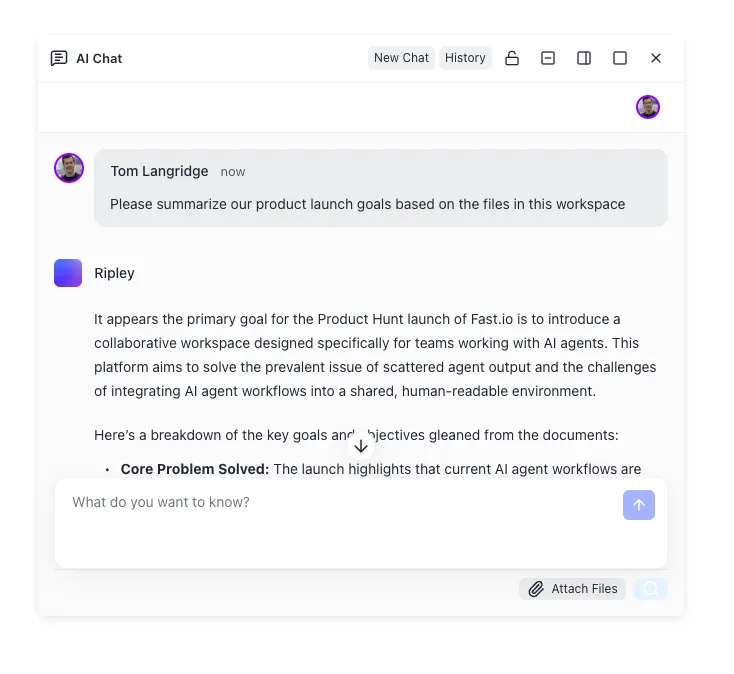


Organize your character files and creative assets in one workspace
Persistent workspaces for character cards, lorebooks, and story drafts. File versioning, semantic search across your creative library, and shareable folders for co-writers.
Storytelling and Companionship Alternatives
3. NovelAI
NovelAI approaches character interaction from a different angle than most chat platforms. It's a storytelling tool first, with roleplay as one of several modes. Text Adventure mode gives you parser-style interaction with AI characters. Storyteller mode lets you co-write in third person with full narrative control. Both modes share the same underlying model and memory system.
The standout feature is context length. NovelAI's 2026 models support a 128,000-token context window, which means the AI can reference details from thousands of messages back. For writers working on long stories or extended roleplay campaigns, that's a practical advantage no other platform on this list matches.
Privacy is handled differently here too. All data is encrypted client-side before it reaches NovelAI's servers. The company can't read your stories, even if compelled to. For users who write sensitive or personal content, that's a meaningful guarantee.
The built-in image generator specializes in anime, furry, and semi-realistic styles, letting you visualize characters and scenes without leaving the platform.
Key strengths:
- 128k token context window for genuine long-term memory
- Client-side encryption, NovelAI cannot read your content
- Dual-mode storytelling (Text Adventure and Storyteller)
- Integrated anime-style image generation
Limitations:
- NovelAI has no free tier beyond 50 text generations per month
- The writing-first interface takes adjustment if you're used to chat-style apps
- Models are fine-tuned for fiction, not general conversation
Pricing: Tablet ($10/mo), Scroll ($15/mo), Opus ($25/mo). Paid plans include unlimited text generation.
Best for: Writers and worldbuilders who want long-form narrative roleplay with privacy guarantees.
4. Kindroid
Kindroid focuses on emotional depth over breadth of features. The platform's five-tier memory system is its core selling point: it tracks your preferences, relationship history, emotional states, personal habits, and conversation patterns across every interaction. The result is an AI companion that feels meaningfully different after 100 conversations than it did after 10.
You design companions by writing backstories, defining personality traits, and pinning key memories. The AI builds on that foundation over time, referencing past conversations naturally rather than just reacting to whatever you said last. Voice calls and AI-generated selfies add multimodal dimensions that text-only platforms lack.
Kindroid's free tier includes 2 AI characters, basic long-term memory, and limited daily messages. The Standard plan at $13.99/month unlocks unlimited characters, enhanced memory, unlimited messages, voice calls, and the selfie feature. Ultra ($24.99/mo) and MAX ($59.99/mo) tiers expand memory capacity and response speed.
Key strengths:
- Five-tier memory system that genuinely improves over time
- Voice calls with realistic speech synthesis
- AI selfie generation for visual companion interaction
- Free tier available
Limitations:
- Single-character focus, no group chat or multi-character scenes
- Smaller community than Janitor AI or Character.AI
- Higher tiers get expensive for the feature set
Best for: Users who want deep, persistent emotional companionship with a single AI character that remembers and grows.
5. DreamGen
DreamGen splits your experience into two distinct modes. Roleplay Mode handles dialogue and character voice, keeping conversations in-character with consistent personality. Story Mode shifts to third-person prose for plot progression, scene transitions, and narrative framing. You can switch between modes mid-session, which is something no other platform on this list offers natively.
Multi-character support runs natively. You can stage scenes with multiple AI characters who maintain distinct voices without bleeding into each other. The platform uses custom fine-tuned open-source models (Lucid V1 and Opus-v1) trained specifically for creative writing, and the V2.7 update in 2026 improved group chat dynamics.
Scenario codexes let you define plot rules, character relationships, and world constraints that the AI follows across sessions. It's closer to running a tabletop RPG with an AI game master than having a casual chat.
Key strengths:
- Dual-mode (Roleplay and Story) with mid-session switching
- Native multi-character scenes with distinct AI voices
- Custom models fine-tuned for creative fiction
- Scenario codexes for structured worldbuilding
Limitations:
- Free tier limited to a 4,000-token context window
- Smaller character library compared to Janitor AI or Character.AI
- Learning curve for scenario codex setup
Pricing: Free tier available. Paid plans start at $7.99/month with longer context windows and higher daily limits.
Best for: Creative writers who want structured multi-character scenes with narrative control, not just open-ended chat.

Mobile and Multi-Model Options
6. Replika
Replika has been in the AI companion space since 2017, which gives it the longest track record on this list. The platform's persistent memory system remembers your preferences, important life events, and emotional patterns across conversations. A January 2026 update improved voice call latency, making real-time spoken conversations feel more natural.
The free tier covers basic text chat with limited customization. Pro ($19.99/month or $69.99/year) adds voice calls, AR interactions, coaching activities, and advanced personality settings. Replika added an Ultra tier at $29.99/month with priority responses and expanded features.
Replika's strength is consistency. The AI companion feels stable and familiar over time, which matters for users who want routine interaction rather than novelty. The mood tracking and coaching features also differentiate it from pure roleplay platforms.
Key strengths:
- Longest-running AI companion platform with proven memory persistence
- Real-time voice calls with improved latency
- Mood tracking and coaching features beyond chat
- Available on iOS, Android, and web
Limitations:
- Heavier content filtering than most alternatives on this list
- Pro subscription is relatively expensive for the feature set
- Less customization depth for character creation compared to Janitor AI or SillyTavern
Best for: Users who want a stable, long-term AI companion for daily conversation and emotional support, not primarily roleplay.
7. Chai
Chai is built mobile-first. The app prioritizes quick, swipeable interactions over deep worldbuilding. With over 500,000 community-created characters and a 4.5-star rating across 730,000+ Google Play reviews, the user base is active and growing. Chai reported approximately $70 million in annual recurring revenue by early 2026, which suggests a sustainable business behind the app.
Anyone can create and publish AI characters, which keeps the library diverse. The tradeoff is quality control. Community characters vary widely, and finding well-crafted ones requires browsing. Character memory is basic compared to platforms like Kindroid or NovelAI, so long conversations lose context faster.
Key strengths:
- Mobile-first design built for smartphone interaction
- 500,000+ community-created characters
- Easy character creation and publishing tools
- Strong accessibility features including voice-over support
Limitations:
- Ad-heavy free experience
- Character memory is shallow compared to dedicated platforms
- Desktop experience is an afterthought
Best for: Casual mobile users who want quick character chats without setup or commitment.
8. Talkie
Talkie's biggest differentiator is voice. The platform supports text-to-speech in 95 languages with realistic voice synthesis, so your AI characters actually speak to you. Buds (branded voice characters) and the Mini-Theater system for scripted scenarios add layers of immersion that text-only platforms can't match.
Soul Cards let you pin character traits and key memories, giving you some control over personality persistence. Chat inspirations auto-generate reply suggestions when you're stuck. The app ranks in the top ten for AI entertainment in app stores across 100+ countries.
Talkie+ Standard costs $9.99/month (or $49.99 for the first year). The free tier exists but is ad-heavy, and tightening content policies in 2026 have frustrated some of the roleplay community.
Key strengths:
- Voice synthesis in 95 languages for spoken character interactions
- Mini-Theater system for immersive scenario playback
- Soul Cards for pinning character traits and memories
- Strong mobile app with 730,000+ reviews
Limitations:
- Tightening content filters in 2026
- Free tier is heavily ad-supported
- Character depth is moderate compared to SillyTavern or NovelAI
Best for: Mobile users who want voice-driven character interactions and immersive scenario playback.
9. Poe
Poe is not a roleplay platform. It's a multi-model interface built by Quora that gives you access to GPT-4, Claude, LLaMA, Gemini, and other AI models in one place. You can create custom bots with personality prompts and compare how different models handle the same character or scenario.
That comparison capability makes Poe useful for roleplay experimentation. Run the same character description through Claude and GPT-4, see which model captures the voice better, then build your workflow around the winner. You can also use community-created bots, though the library is smaller and less roleplay-focused than Janitor AI or Chai.
Poe's free tier gives daily access with limits. Premium at $19.99/month unlocks higher usage caps and priority access to premium models.
Key strengths:
- Access to multiple AI models (GPT-4, Claude, Gemini, LLaMA) in one interface
- Side-by-side model comparison for roleplay testing
- Custom bot creation with personality prompts
- Clean, fast interface
Limitations:
- No roleplay-specific features (character cards, lorebooks, avatars)
- Content policies follow each model provider's rules
- No persistent memory across conversations
- Limited free tier for premium models
Best for: Users who want to test character concepts across different AI models before committing to a platform.
How to Organize Your AI Creative Assets
If you're writing across multiple platforms, you'll accumulate character cards, lorebooks, story drafts, scenario codexes, and conversation exports. Keeping these organized matters more than most guides acknowledge.
Local folders work until you collaborate or switch devices. Cloud storage platforms let you access character files from anywhere and share them with co-writers. Fast.io handles this well for creative teams: shared workspaces with file versioning mean you can iterate on character cards without losing previous versions, and granular permissions let you share specific characters or worlds without exposing everything.
For AI-heavy workflows, Fast.io's Intelligence Mode auto-indexes uploaded files for semantic search. Upload your lorebooks and character files, enable Intelligence on the workspace, and you can search across all your creative assets by meaning rather than filename. If you use agents to help with character development or story generation, the MCP server gives AI tools direct access to read and write files in your workspace.
A 14-day Business Trial (card required; see /pricing/) gives you full workspace access, which is enough to evaluate organizing a substantial library of creative writing assets.
Other options worth considering: Google Drive works for basic storage and real-time collaboration on character documents. Notion handles structured worldbuilding well with its database features. And if you're using SillyTavern, its character card format (.json and .png with embedded data) is portable across most platforms.
Sources
References used to verify factual claims in this guide.
-
Google paid $2.7 billion to license Character.AI's technology and rehire co-founders
-
Character.AI has over 28 million monthly active users and generates approximately 10 billion messages monthly Over 180.7 million people visited Character AI in April 2026
-
Global AI companion market projected to reach USD 317.96 billion by 2033, growing at 31% CAGR
-
Janitor AI has 15.3 million registered users and 8.7 million monthly active users
-
Chai reported approximately $70 million in annual recurring revenue by early 2026
Frequently Asked Questions
What is the best free alternative to Character AI?
Janitor AI is the strongest free alternative. It hosts over 32,000 community-created characters, offers both filtered and unfiltered chat modes, and doesn't require a credit card. SillyTavern is also free and open source, but requires technical setup and your own API key or local model.
Is there an AI chat app with no filter?
SillyTavern gives you complete control over content filtering since you choose the backend model and configure the system yourself. Janitor AI's Limitless mode removes Character.AI-style restrictions. DreamGen and Kindroid also offer fewer content restrictions than Character.AI on their paid tiers.
What AI apps let you create custom characters?
Every platform on this list supports character creation to some degree. SillyTavern and NovelAI offer the deepest customization with character cards, lorebooks, and world-building tools. Janitor AI supports up to 3,200 tokens for character descriptions. Kindroid focuses on emotional depth through its five-tier memory system rather than upfront character definition.
Is Chai better than Character AI?
Chai is better for quick mobile interactions with its swipeable interface and 500,000+ character library. Character.AI still has stronger character memory and a larger community. The choice depends on whether you prioritize mobile convenience (Chai) or conversation depth (Character.AI, or better yet, one of the more capable alternatives like NovelAI or SillyTavern).
Which Character AI alternative has the best memory?
NovelAI leads with a 128,000-token context window that can reference details from thousands of messages back. Kindroid's five-tier memory system tracks emotional states, preferences, and relationship history across every conversation. SillyTavern's lorebook system provides unlimited persistent world knowledge, though it requires manual setup.
Can I use my own AI model for roleplay?
SillyTavern is the primary option for bring-your-own-model roleplay. It connects to OpenAI, Anthropic, local LLaMA instances, and dozens of other backends through API keys. Janitor AI also supports external API keys from OpenAI and OpenRouter. Poe gives access to multiple models but through its own interface rather than direct API connection.
Related Resources

Organize your character files and creative assets in one workspace
Persistent workspaces for character cards, lorebooks, and story drafts. File versioning, semantic search across your creative library, and shareable folders for co-writers.