Best Clay Alternatives for Sales and GTM Lead Enrichment
While Clay is widely used for outbound prospecting, its pricing starting at $149/month for legacy plans and $185/month for current self-serve tiers can escalate quickly. This guide evaluates the best clay alternatives, including databases, waterfall tools, and custom developer-first pipelines. We explain how organizations can minimize GTM costs by combining custom scraping agents with persistent, intelligent workspaces.


What Are the True Costs of Clay and the Need for Clay Alternatives?
While Clay has become a cornerstone of programmatic outbound workflows, its pricing starts at $149/month for legacy self-serve tiers, with current entry plans starting at $185/month [Clay Pricing]. For startups and growing outbound teams, this high barrier to entry, compounded by credit consumption and orchestration action charges, makes cheaper or more developer-centric alternatives attractive. A recent 2026 GTM operations analysis by Cleanlist reveals that more than 40% of scaling teams seek alternative platforms because of unpredictable data bills and the steep learning curve of spreadsheet-as-code tooling [Cleanlist 2026 Survey].
Clay operates as a meta-provider, meaning it does not own the contact data it sells. Instead, it aggregates access to dozens of third-party vendors and runs waterfall queries to find emails, mobile numbers, and social profiles. While this aggregation is convenient, it introduces a significant markup. The platform bills users under a complex dual-credit system. Data credits purchase the actual contact data, while actions measure the platform labor. If a team runs a list of several thousand prospects through a multi-step waterfall search, cleans the formatting, generates a personalized message with an AI step, and pushes the contacts to a CRM, every step consumes actions. This structure makes outbound testing expensive.
Beyond software fees, Clay requires dedicated operational expertise. Building and maintaining the complex tables requires a level of technical depth that often necessitates hiring a full-time RevOps specialist. For early-stage companies or outbound agencies that need to move fast, the time spent debugging spreadsheet formulas is time taken away from selling. Startups often require simpler databases, straightforward done-for-you waterfall tools, or custom developer-centric pipelines where they can query data providers directly without a middleman. For more details on budgeting for these operations, teams can review Fastio subscription plans.
Related guides
- Best Replit Alternatives in 2026Replit crossed 50 million users in early 2026, but its February pricing overhaul pushed many developers to evaluate...
- Best Claude Cowork Alternatives in 2026Claude Cowork handles autonomous desktop tasks well for individual paid subscribers, but its single-user design,...
- The Clay Tool: A Comprehensive Guide to No-Code GTM WorkflowsWhile traditional B2B databases yield low match rates, the Clay tool sequences data waterfalls across multiple...
- How to Configure Clay CRM Integrations for GTM EnrichmentConnecting HubSpot and Salesforce natively to Clay allows go-to-market teams to enrich leads and companies directly...
- Clay AI: Automating GTM Data Enrichment at Scale in 2026Poor B2B data quality costs organizations millions annually, prompting Go-to-Market (GTM) teams to shift toward...
- How to Connect Clay to Apollo.io for Real-Time Lead EnrichmentAccording to database decay research by MarketingSherpa, B2B contact records decay at an annual rate of 22.5%, making...
More on this subject: Clay and GTM Agents (82 guides)
How Traditional Contact Databases Offer Cost-Effective Alternatives
For teams that need a large volume of leads without the high markup of meta-enrichment orchestration, traditional contact databases are the primary alternative. These platforms own their data directories, allowing them to offer predictable, flat-rate pricing.
Apollo.io
Clay alternatives like Apollo provide access to 275M+ contacts, offering a massive pre-indexed directory that does not require building custom waterfall paths [Apollo.io Documentation]. Apollo operates as a unified GTM platform, combining prospecting tools, a B2B database, and an email sequencing engine in a single package. Rather than paying for orchestration actions to move data between enrichment spreadsheets and outbound software, sales reps can search, filter, and add contacts to email sequences directly. The flat subscription plans make it far more affordable than Clay for high-volume prospecting. However, Apollo's data accuracy is lower than waterfall enrichment, meaning teams must often run separate email verification steps to protect their domain reputation.
ZoomInfo
ZoomInfo remains the enterprise standard for GTM intelligence. It excels in organizational hierarchies, buying intent signals, and deep account profiling. Unlike Clay, which is a spreadsheet-centric builder, ZoomInfo offers a structured database with direct CRM integrations. ZoomInfo is suitable for enterprise teams targeting mid-market and enterprise accounts where understanding corporate structure and decision-making circles is critical. Its database is highly accurate for US markets, but the annual contracts are extremely expensive, making it inaccessible for early-stage companies.
Cognism
Cognism is the preferred choice for outbound teams targeting European markets. It focuses on compliant mobile numbers and privacy-compliant data practices. Cognism maintains a high accuracy rate for direct dials by manually verifying their phone records. For teams that face legal restrictions or need high-quality international mobile phone data, Cognism serves as a reliable database alternative to Clay.
Snov.io
Snov.io fits outbound teams whose main need is finding and verifying business email addresses, then emailing those contacts from the same tool. Its Email Finder searches by name, company domain or LinkedIn profile, and Snov.io reports a database of 500M+ B2B email addresses. Its Email Verifier runs each address through a 7-tier process, including syntax, MX record, SMTP and catch-all checks, and Snov.io reports 98%+ verification accuracy. Verified contacts move into email and LinkedIn campaigns with unlimited senders and follow-ups, plus mailbox warm-up. The Starter plan costs $39/month for 1,000 credits (each prospect or verification uses one), 5,000 recipients and unlimited team seats, and a free plan renews 50 credits each month. However, phone numbers draw on a separate enrichment token balance, and LinkedIn automation is an add-on at $69/month per account slot.
Which Simplified Waterfall Platforms Can Replace Clay?
Some teams appreciate the concept of waterfall enrichment but want to avoid the complex spreadsheet engineering that Clay requires. A new class of GTM tools has emerged to offer the benefits of multiple data vendors with a simplified user experience.
Origami
Origami provides a done-for-you approach to prospecting. Instead of building tables and writing formulas, users input a natural language prompt describing their target audience. Origami's backend handles the list building, waterfall enrichment, and email verification automatically. This design eliminates the steep learning curve of spreadsheet-as-code platforms, allowing sales representatives to generate clean contact sheets in minutes.
SyncGTM
SyncGTM offers a direct spreadsheet alternative to Clay but with a simpler interface and lower pricing. It supports waterfall queries across major data providers while allowing users to refresh individual columns independently. This independent column refresh prevents teams from wasting credits by rerunning an entire row when they only need to update a single email address. SyncGTM is built specifically for lean teams that want the power of data aggregation without the steep subscription fees of larger platforms.
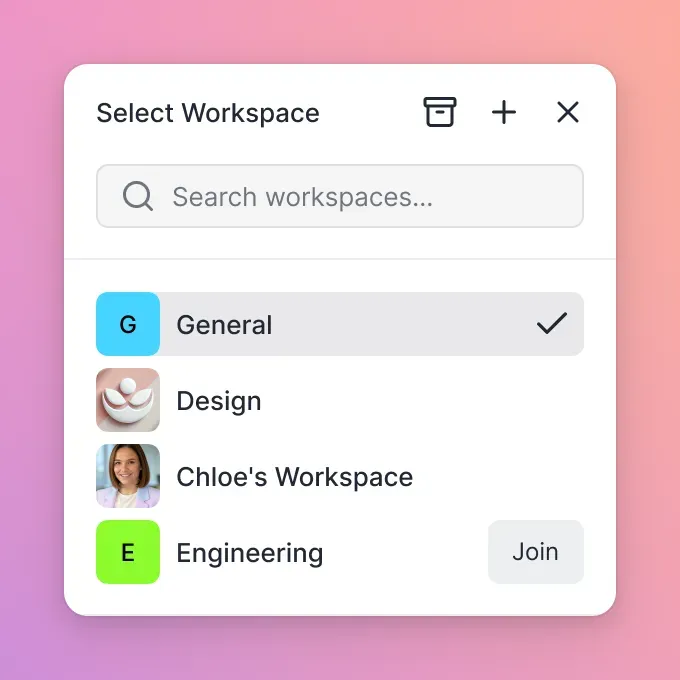


Build a custom lead enrichment alternative to Clay
Set up persistent workspaces for your scraping agents, index contact files automatically, and extract structured leads with Metadata Views. Get started with a trial of up to 14 days on our monthly Starter plan at $9.99/mo, Business plan at $49.99/mo, or Enterprise plan at $199.99/mo.
How to Build a Custom Lead Enrichment Pipeline with Fastio Workspaces
When teams have developer resources, they choose to bypass commercial enrichment platforms entirely. By writing custom scraper scripts and writing the output to a persistent, shared workspace, developers can build a custom, private enrichment pipeline that avoids third-party platform markups.
In a custom developer pipeline, autonomous scraping agents or local scripts collect raw data from directories, public records, and website contact pages. The scraper writes these raw findings as files in a shared workspace.
To make this data useful for GTM teams, developers use Metadata Views inside their workspace. Fastio's Metadata Views turn raw, unstructured documents into a live, queryable database. Users describe the columns they want extracted in plain English (such as 'company name', 'lead email', 'industry', or 'founder name'). The platform's AI designs a typed schema (supporting Text, Integer, Decimal, Boolean, URL, JSON, and Date & Time formats), scans the files, and populates a sortable, filterable spreadsheet grid. Developers can add new columns dynamically without reprocessing previous documents. This structured data grid is detailed at the Metadata Views product page: /product/document-data-extraction/.
This approach offers significant advantages:
- Zero Platform Markup: Teams pay data providers directly for API keys (using tools like FullEnrich or Crustdata) and write files to Fastio, avoiding the platform action fees charged by Clay.
- Persistent File Storage: Fastio workspaces provide shared workspaces where agents and human reps collaborate on the same files. Every file uploaded maintains a detailed version history, ensuring that concurrent data edits from scraper agents are fully auditable.
- Activity and audit logs: Developers can follow workspace activity as scraper agents write new lead files, then kick off outbound sequences from their own GTM stack. Every upload and edit is recorded in the workspace event log.
- RAG Grounding: When Intelligence is enabled on the workspace, Fastio's built-in RAG indexes all lead profiles and company summaries. Human sales reps can search documents semantically or ask questions with citations using the built-in AI.
- Ownership Handoff: An external developer or agent can set up the workspace, configure the Metadata Views, and then transfer organization ownership to the client via a secure claim link.
Scraping agents write their output into a Fastio workspace over the Model Context Protocol. The agent uploads the lead file, Metadata Views extract the fields, and sales reps work from the same workspace.
By combining developer scrapers with Fastio workspaces, GTM teams get a private, customizable enrichment engine. Sales reps access the structured data through the Fastio web application, while agents update the files programmatically over MCP. Read the Fastio storage for agents documentation for setup instructions.

How to Choose the Best Alternative for Your Go-to-Market Team
Selecting the right Clay competitor depends on your GTM model, database volume, and technical capability. To help you evaluate, the table below compares Clay with the top alternative strategies on pricing, coverage, and customizability.
If you are a startup looking to minimize database costs, starting with Apollo's massive pre-indexed directory is the fastest path. If you want the benefits of waterfall enrichment but want to avoid managing complex cell formulas, Origami or SyncGTM will simplify your operations. For organizations that want maximum control, zero platform markup on data, and the ability to extract custom fields from files, building a custom scraper pipeline with Fastio workspaces provides a highly scalable and cost-effective solution.
Sources
References used to verify factual claims in this guide.
-
While Clay has become a cornerstone of programmatic outbound workflows, its pricing starts at $149/month for legacy self-serve tiers, with current entry plans starting at $185/month, making cheaper alternatives attractive to startups.
-
Clay alternatives like Apollo provide access to 275M+ contacts, offering a massive pre-indexed directory that does not require building custom waterfall paths.
-
A recent 2026 GTM operations analysis by Cleanlist reveals that more than 40% of scaling teams seek alternative platforms because of unpredictable data bills and the steep learning curve of spreadsheet-as-code tooling.
Frequently Asked Questions
What are the best alternatives to Clay?
The best alternatives to Clay depend on your team's technical resources and GTM goals. Apollo.io is the standard for high-volume database prospecting on a budget, while Origami and SyncGTM offer simplified waterfall enrichment without the complex spreadsheet setup. For developer-first teams, building custom scrapers that dump data into a persistent Fastio workspace is a powerful alternative, using Metadata Views to structure raw files into queryable spreadsheets without paying high platform markups.
Is Apollo.io better than Clay?
Apollo.io is better than Clay if you need an all-in-one platform that combines a massive database of contacts with built-in email sequencing and meeting booking tools at a lower, predictable price. Clay is better if you do not want to rely on a single database and instead need to orchestrate complex, multi-step waterfall enrichment across dozens of distinct data vendors using custom API logic.
Why is Clay so expensive?
Clay is expensive because it operates on a dual-credit billing system that charges for both data consumption and platform execution. You pay monthly subscription fees for the self-serve Launch plan, plus fees for each data lookup and platform action, such as running AI steps or executing CRM syncs. These costs escalate quickly for high-volume sales campaigns, which is why teams frequently build custom pipelines using local tools and intelligent workspaces like Fastio to reduce operational overhead.
How does Fastio fit into a custom sales enrichment pipeline?
Fastio serves as the intelligent persistent storage and collaboration layer for custom enrichment pipelines. Scraper scripts or AI agents write raw lead files directly to a shared Fastio workspace. Fastio's Metadata Views then parse these files, automatically extracting fields like email addresses, company sizes, and technologies into a queryable data grid, which human sales teams can review, search semantically, or export to their CRMs.
Related Resources

Build a custom lead enrichment alternative to Clay
Set up persistent workspaces for your scraping agents, index contact files automatically, and extract structured leads with Metadata Views. Get started with a trial of up to 14 days on our monthly Starter plan at $9.99/mo, Business plan at $49.99/mo, or Enterprise plan at $199.99/mo.