AI Model Comparison 2026: Claude vs GPT vs Gemini vs Open Source
The Artificial Analysis Intelligence Index ranks 381 AI models across ten benchmarks as of June 2026, and the gap between the top proprietary and open-weights models has narrowed to 11 points. This comparison covers current benchmark scores, API pricing, context windows, and practical recommendations across Claude, GPT, Gemini, Grok, DeepSeek, Qwen, and Llama.


The State of AI Models in Mid-2026
The Artificial Analysis Intelligence Index tracks 381 AI models across ten benchmarks as of June 2026. Claude Fable 5 holds the top position with a composite score of 65, but Kimi K2.6, an open-weights model from Moonshot AI, scores 54. That 11-point gap puts the best freely available model within 17% of the proprietary ceiling. Meanwhile, API pricing for a 1M-token context window spans a 71x range, from $0.14 on DeepSeek V4 Flash to $10.00 on Claude Fable 5.
This convergence changes how teams should think about model selection. The raw capability differences between the top five models are smaller than they were at the start of the year. The real decision comes down to which combination of speed, cost, context length, and tool-calling reliability fits your workload. A team running batch document classification probably doesn't need the same model as a team building an agentic coding assistant, even if both teams could afford the most expensive option.
Context windows have also expanded dramatically. Thirteen models now ship with 1M+ token windows, and Llama 4 Scout offers a 10M-token context for self-hosted deployments. These windows are large enough to process entire codebases, legal contracts, or financial reports in a single call, though effective context (measured by retrieval accuracy at depth) still falls short of advertised maximums on every model tested. That gap between advertised and effective context is something to test against your own data before committing to a context-length strategy.
Pricing tells an equally important story. The cheapest option (DeepSeek V4 Flash at $0.14 per million input tokens) can process roughly 71 times more text for the same dollar as Claude Fable 5. For many workloads, a model that scores 10% lower on benchmarks but costs 50x less is the better engineering decision.
This guide compares models across four proprietary providers and the open-source ecosystem, with every benchmark score and price cited from primary sources updated within the last 30 days.
Related guides
- Best AI Model Comparison Tools in 2026Artificial Analysis now indexes 523 distinct language models, and the price spread between API providers for equivalent...
- Gemini vs ChatGPT: Features, Pricing and Best Use Cases ComparedChatGPT's market share dropped from 77.6% to 53.7% in twelve months while Gemini nearly quadrupled its share. This...
- Perplexity vs Gemini: Which AI Search Tool Wins in 2026?Perplexity now handles over 780 million queries per month, while Gemini 3.1 Pro processes inputs across five modalities...
- Perplexity vs ChatGPT: Which AI Search Tool Is Better in 2026?Perplexity indexes over 50 billion web pages and cites every claim inline. ChatGPT has 900 million weekly users and a...
- DeepSeek AI Review 2026: Models, Pricing, and Developer VerdictDeepSeek AI ships open-weight models that match frontier benchmarks at a fraction of the cost, but the tradeoffs around...
- Best ChatGPT Alternatives Worth Trying in 2026ChatGPT hit 900 million weekly active users in early 2026, but its share of the AI chat market is shrinking as...
More on this subject: AI Tool Directories and Comparisons (231 guides)
How We Scored These Models
The Artificial Analysis Intelligence Index aggregates ten benchmarks into a single composite score. These benchmarks span mathematics (AIME), scientific reasoning (GPQA Diamond), coding (SWE-bench Verified, SWE-bench Pro, Terminal-Bench Hard), agentic tasks (GDPval-AA, tau-squared-Bench), instruction following (IFBench), knowledge breadth (AA-Omniscience), and general intelligence (Humanity's Last Exam). The platform runs eight measurements per day for individual requests and two per day for parallel requests, with performance metrics calculated from the most recent 72 hours of live data.
No single benchmark tells the full story. A model that scores 95% on SWE-bench Verified might underperform on GPQA Diamond, and vice versa. The composite approach catches this by weighting breadth of capability over peak performance in any one area.
Beyond the Intelligence Index, we tracked three additional dimensions for this comparison:
- Speed: output tokens per second, measured by Artificial Analysis across standardized hardware
- Price: per-million-token costs for both input and output, pulled from official API pricing pages
- Context window: maximum advertised context length, with notes on effective retrieval depth where available
These four dimensions (intelligence, speed, price, context) are the ones that matter when you're choosing between models for production work. Vibes and Twitter discourse are not reliable selection criteria.

Frontier Models: Claude, GPT, Gemini, and Grok
Four companies are shipping frontier-class models with distinct strengths. The differences between them are less about raw intelligence scores and more about where each model excels in practice: coding accuracy, reasoning depth, tool-calling reliability, ecosystem integration, and cost at scale.
A practical way to evaluate these is to run the same prompt through each model's API and compare outputs side by side. Services like Artificial Analysis automate this with standardized benchmarks, but nothing replaces testing against your own production data. A model that scores 5% lower on a public benchmark might handle your specific document format or coding style better than the leader.
One constraint worth noting: pricing tiers shift frequently. OpenAI, Anthropic, and Google all adjusted prices at least once in Q1 2026. Pin your cost estimates to a specific date and recheck before signing annual commitments.
Anthropic Claude
Anthropic's Claude family dominates the Intelligence Index top five. Claude Fable 5, released June 9, 2026, scores 95.0% on SWE-bench Verified, the highest coding benchmark of any model. Claude Opus 4.8 follows at 88.6% on SWE-bench Verified and 69.2% on SWE-bench Pro. For teams that need strong coding performance at a lower price, Claude Sonnet 4.6 delivers roughly 79.6% of Opus-level coding accuracy at 80% less cost.
Pricing:
- Claude Fable 5: $10.00 input / $50.00 output per 1M tokens
- Claude Opus 4.8: $5.00 input / $25.00 output per 1M tokens
- Claude Sonnet 4.6: $3.00 input / $15.00 output per 1M tokens
All three models support 1M-token context windows and 128K output tokens. Anthropic's prompt cache offers a 90% discount on cache hits, which reduces costs for applications that reuse system prompts or reference documents across requests. For agentic applications that send the same tool definitions and system context on every call, caching can cut effective input costs by more than half.
The Claude family also leads on tool-calling reliability. Claude Opus 4.7 scored 79.1% on MCP-Atlas (versus GPT-5.5's 75.3%), and Fable 5 continues that trend. If you're building agents that call external APIs or interact with file systems through protocols like MCP, Claude models produce fewer malformed tool calls and handle complex multi-step tool chains more reliably than the competition.
Best for: coding tasks, agentic workflows, long-form reasoning. The price-performance sweet spot is Claude Opus 4.8, which delivers 93% of Fable 5's coding accuracy at half the cost.
OpenAI GPT
GPT-5.5 is OpenAI's current flagship. It scores 100% on AIME 2026 and holds an Arena Elo of 1,561, the highest human-preference score on the leaderboard. On SWE-bench Pro, it trails Claude Opus 4.7 by 5.7 points (58.6% versus 64.3%), but it leads on agentic workflows and multimodal tasks.
Pricing:
- GPT-5.5: $5.00 input / $30.00 output per 1M tokens
- GPT-5.5 Pro: $30.00 input / $180.00 output per 1M tokens
The standard model supports a 1,050,000-token context window with 128K max output. Prompts over 272K input tokens are billed at 2x input and 1.5x output rates, so plan carefully if your use case involves long inputs. At scale, those surcharges add up quickly.
GPT-5.5 also benefits from the broadest third-party integration ecosystem. Most AI tooling, from LangChain to LlamaIndex to proprietary enterprise platforms, supports OpenAI's API format natively. If you're choosing a model for a team that wants plug-and-play compatibility with existing tools, that ecosystem advantage is worth factoring in.
Best for: multimodal tasks, math-heavy workloads, applications where human-preference alignment or ecosystem compatibility matters most. The Pro tier is expensive but delivers higher accuracy on complex reasoning chains.
Google Gemini
Gemini 3.1 Pro hits 94.3% on GPQA Diamond, the highest reasoning benchmark score of any model. It also ships natively inside Google Workspace, which makes it the default choice for teams already embedded in Google's ecosystem.
Pricing:
- Gemini 3.1 Pro: $2.00 input / $12.00 output per 1M tokens
- Gemini 2.5 Pro: $1.00 input / $10.00 output per 1M tokens
- Gemini 3.1 Flash-Lite: $0.10 input / $0.40 output per 1M tokens
Both Pro models support 1M-token context windows. Flash-Lite offers the cheapest proprietary API pricing for applications where speed matters more than peak intelligence.
Best for: scientific reasoning, large-document analysis, Google Workspace integration. Gemini's 1M-token window at $2.00 input pricing is the most cost-effective frontier-class option for context-heavy workloads.
xAI Grok
Grok 4.3, released April 30, 2026, gained over 300 Elo points on GDPval-AA versus its predecessor, a significant jump in agentic task performance. It scores 53 on the Artificial Analysis Intelligence Index, competitive with top open-weights models.
Pricing:
- Grok 4.3: $1.25 input / $2.50 output per 1M tokens
- Grok 4.1 Fast: $0.20 input / $0.50 output per 1M tokens
Grok 4.3 supports a 1M-token context window. Grok 4.1 Fast extends that to 2M tokens at a fraction of the cost, making it one of the cheapest ways to process long documents through a proprietary API.
Best for: cost-sensitive production deployments, long-context processing. Grok 4.3 is 58% cheaper on input and 83% cheaper on output compared to its predecessor Grok 4.
Which Open-Source Models Can Replace Proprietary APIs?
Open-source and open-weights models have reached a point where they compete directly with proprietary options on most benchmarks. The trade-off is infrastructure: you either self-host (with the associated GPU costs and operational overhead) or use a hosted API provider like Together, Fireworks, or Replicate.
Self-hosting gives you full control over data residency, latency, and per-token cost at scale, but it introduces operational complexity. A single A100 GPU can serve Qwen 3.5 or DeepSeek V4 Flash at reasonable throughput, but running Llama 4 Maverick's full parameter count requires multi-GPU setups. Hosted API providers remove that burden at a markup. For teams that want open-weights pricing without managing GPUs, providers like Together AI and Fireworks AI offer pay-per-token access to most of the models below, typically at 2x to 5x the self-hosted cost but with zero infrastructure overhead.
The licensing landscape also matters. Apache 2.0 (Qwen, Mistral) allows unrestricted commercial use. Meta's Llama license adds a 700M monthly active user threshold. DeepSeek uses an MIT license. Check the specific terms before building a product on any open model, especially if you plan to fine-tune and redistribute.
DeepSeek V4
DeepSeek V4 is the strongest open-source coder available. DeepSeek V4 Pro scores 83.7% on SWE-bench Verified, closing in on Claude Opus 4.6 and beating most proprietary models. The Flash variant is built for cost efficiency.
Pricing (hosted API):
- DeepSeek V4 Pro: $0.44 input / $3.48 output per 1M tokens
- DeepSeek V4 Flash: $0.14 input / $0.28 output per 1M tokens
Both support 1M+ token context windows. DeepSeek V4 scores 52 on the Artificial Analysis Intelligence Index, ranking first among open-weights models for agentic work.
Best for: coding, agentic pipelines where cost per task matters. At $0.14 per million input tokens, the Flash variant makes large-scale batch processing economically viable for workloads that would be prohibitive on frontier APIs.
Qwen 3.5
Alibaba's Qwen 3.5 leads open-source scientific reasoning with 88.4% on GPQA Diamond, competitive with all but the top frontier models. Under an Apache 2.0 license, it offers the broadest combination of reasoning, coding, and multilingual capability in the open ecosystem.
Qwen 3.5 397B-A17B is a mixture-of-experts model, meaning it activates only a fraction of its parameters per token. This keeps inference costs lower than the parameter count would suggest.
Best for: scientific research, multilingual applications, teams that need Apache 2.0 licensing for compliance reasons.
Meta Llama 4
Llama 4 Scout advertises the longest context window of any model at 10M tokens. No other model, proprietary or open, comes close to this for single-pass processing of massive document sets. Llama 4 Maverick scores 85.5% on MMLU, the highest among open models for general knowledge.
Self-hosted pricing through API providers runs approximately $0.82 to $0.87 per million tokens, competitive with DeepSeek and Qwen.
Best for: ultra-long context workloads (entire codebases, book-length documents), self-hosted deployments where Meta's licensing terms fit.
Kimi K2.6 and Mistral
Kimi K2.6 from Moonshot AI holds the highest open-weights Intelligence Index score at 54, ahead of DeepSeek V4 Pro (52) and Qwen 3.6. Its strength is breadth across all ten benchmarks rather than dominance in any single category.
Mistral Medium 3.5 occupies a different niche. It is the go-to choice for European deployments where data residency matters, and it ships under a strict Apache 2.0 license. Its benchmark scores are competitive but not chart-topping. The value is regulatory fit and deployment flexibility.
Best for: Kimi K2.6 for balanced general-purpose work; Mistral for EU-hosted deployments and strict open-source licensing requirements.


Test AI models against your own documents
Fast.io gives any AI model MCP access to your files, semantic search, and shared workspaces.
How to Pick the Right Model for Your Use Case
The right model depends on what you're building. Here are concrete recommendations by use case.
Coding and software engineering: Claude Fable 5 (95.0% SWE-bench Verified) is the top performer, but Claude Opus 4.8 at $5/$25 per million tokens hits 88.6% for less than half the price. DeepSeek V4 Pro (83.7%) is the open-source alternative at $0.44/$3.48. For budget-constrained coding pipelines, DeepSeek V4 Flash handles routine tasks at $0.14/$0.28.
Scientific reasoning and research: Gemini 3.1 Pro leads with 94.3% on GPQA Diamond at $2/$12 per million tokens. Qwen 3.5 (88.4% GPQA Diamond) is the open-source option for teams that need to self-host.
Long-context document processing: Llama 4 Scout's 10M-token window is unmatched for single-pass processing. For proprietary options, Gemini 3.1 Pro and Grok 4.1 Fast both offer 1M+ windows at competitive prices ($2/$12 and $0.20/$0.50 respectively).
Cost-sensitive batch processing: DeepSeek V4 Flash ($0.14/$0.28) and Grok 4.1 Fast ($0.20/$0.50) deliver usable intelligence at prices that make million-document processing feasible. Gemini 3.1 Flash-Lite ($0.10/$0.40) is even cheaper for simpler classification or extraction tasks.
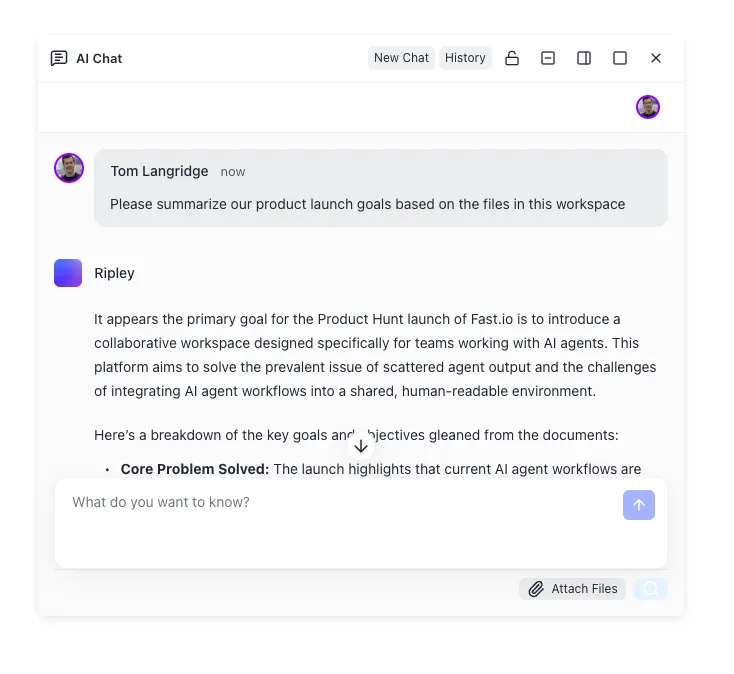
Agentic workflows with file access: Agent performance depends on the model and the infrastructure it connects to. Most teams building agents need persistent file storage, tool-calling reliability, and a way to hand results off to humans. The model handles reasoning; the workspace handles state. Fast.io provides this layer through its MCP server, giving agents built on any model access to shared workspaces, file versioning, semantic search, and ownership transfer. A 14-day Business Trial requires a credit card; see /pricing/ for plan details.
For tool-calling specifically, Claude Opus 4.7 scores 79.1% on MCP-Atlas versus GPT-5.5's 75.3%, making the Claude family the strongest option for agents that rely heavily on external tool integrations.
General-purpose applications: GPT-5.5 at $5/$30 with an Arena Elo of 1,561 is the safest default. It scores well across every category and has the broadest third-party integration ecosystem. Claude Opus 4.8 at $5/$25 is the main competitor, with stronger coding performance and slightly lower output costs.
Sources
References used to verify factual claims in this guide.
-
Artificial Analysis Intelligence Index tracks 381 AI models; Claude Fable 5 scores 65, Kimi K2.6 scores 54
-
Claude Fable 5 scores 95.0% on SWE-bench Verified
-
Claude Opus 4.8 scores 88.6% on SWE-bench Verified and 69.2% on SWE-bench Pro
-
GPT-5.5 achieves 100% on AIME 2026 and Arena Elo 1,561; priced at $5/$30 per million tokens with 1,050,000-token context
-
DeepSeek V4 Pro scores 83.7% on SWE-bench Verified; V4 Flash costs $0.14/$0.28 per million tokens
-
Gemini 3.1 Pro scores 94.3% on GPQA Diamond; priced at $2.00/$12.00 per million tokens
-
Qwen 3.5 scores 88.4% on GPQA Diamond, best-in-class for open weights
-
Grok 4.3 priced at $1.25/$2.50 per million tokens with 1M context; gained 300+ Elo on GDPval-AA
-
Filling a 1M-token window costs $0.14 on DeepSeek V4 Flash and $10.00 on Claude Fable 5, a 71x spread
-
Claude Fable 5 priced at $10/$50 per million tokens; Opus 4.8 at $5/$25; Sonnet 4.6 at $3/$15
Frequently Asked Questions
Which AI model is the best in 2026?
Claude Fable 5 leads the Artificial Analysis Intelligence Index with a composite score of 65 across ten benchmarks. However, 'best' depends on your use case. GPT-5.5 leads human preference scoring (Arena Elo 1,561), Gemini 3.1 Pro has the highest reasoning score (94.3% GPQA Diamond), and Claude Opus 4.8 offers the best balance of coding performance and cost at $5/$25 per million tokens.
How do Claude and GPT compare?
Claude models lead on coding benchmarks. Claude Opus 4.8 scores 88.6% on SWE-bench Verified versus GPT-5.5's lower placement on the same test. GPT-5.5 leads on math (100% AIME 2026) and human preference (Arena Elo 1,561). On pricing, Claude Opus 4.8 is slightly cheaper for output ($25 versus $30 per million tokens). Both support 1M+ token context windows.
What is the difference between GPT-5.5 and Claude Opus 4.8?
GPT-5.5 excels at multimodal tasks, mathematical reasoning, and human-preference alignment. Claude Opus 4.8 is stronger at coding (88.6% versus lower on SWE-bench Verified), tool-calling (79.1% on MCP-Atlas for the Claude family), and costs less on output tokens ($25 versus $30 per million). GPT-5.5 Pro offers higher accuracy at $30/$180 for demanding workloads, but has no direct Claude equivalent at that price tier.
Which open-source LLM is closest to frontier models?
Kimi K2.6 scores 54 on the Artificial Analysis Intelligence Index, the highest of any open-weights model and within 11 points of Claude Fable 5's leading score of 65. For coding specifically, DeepSeek V4 Pro scores 83.7% on SWE-bench Verified. For scientific reasoning, Qwen 3.5 reaches 88.4% on GPQA Diamond.
How much does it cost to run AI models via API?
Prices range over 70x. DeepSeek V4 Flash costs $0.14 per million input tokens and $0.28 per million output tokens. At the other end, Claude Fable 5 costs $10.00/$50.00 and GPT-5.5 Pro costs $30.00/$180.00. Most production workloads can run on mid-tier models like Gemini 3.1 Pro ($2.00/$12.00) or Claude Sonnet 4.6 ($3.00/$15.00) without meaningful quality loss for standard tasks.
What context window size do I need?
For typical chatbot or summarization tasks, 128K to 256K tokens is sufficient. For processing entire codebases, legal contract sets, or book-length documents, you need 1M+ tokens. Llama 4 Scout offers the largest window at 10M tokens for self-hosted deployments. Keep in mind that effective retrieval accuracy drops at depth in every model, so test with your actual data before committing to a context-length strategy.
Related Resources

Test AI models against your own documents
Fast.io gives any AI model MCP access to your files, semantic search, and shared workspaces.