How to Set Up Agentic Customer Success War Rooms with Shared Context
Agentic customer success war rooms give AI agents and human teams a shared workspace to tackle client issues together. By connecting scattered data, teams can cut resolution times by multiple% in enterprise settings. This also helps push root cause analysis accuracy from multiple% to over multiple%. This guide shows how to manage agents and humans in one workspace to turn reactive fire-fighting into proactive account management.

What is an Agentic Customer Success War Room?
An agentic customer success war room is a virtual workspace where AI agents and human advocates use live, shared data to fix client problems. Traditional support tickets often lock information away. War rooms change that by giving everyone, agents and humans alike, access to the same live files and history. War rooms used to be physical command centers for emergencies. Today, they are digital spaces where AI models act as teammates rather than just search tools.
In practice, an AI agent can monitor a high-priority account and detect a service outage. It can then automatically spin up a dedicated workspace. The agent populates this space with logs, ticket history, and diagnostic data. When a human manager joins the room, they don't need a briefing. Everything they need to know is already indexed and waiting. This collaborative setup speeds up response times by removing the manual work of gathering information. It turns support from a series of messages into a focused project.
Helpful references: Fastio Workspaces, Fastio Collaboration, and Fastio AI.
The Critical Role of Shared Context in CS Incident Response
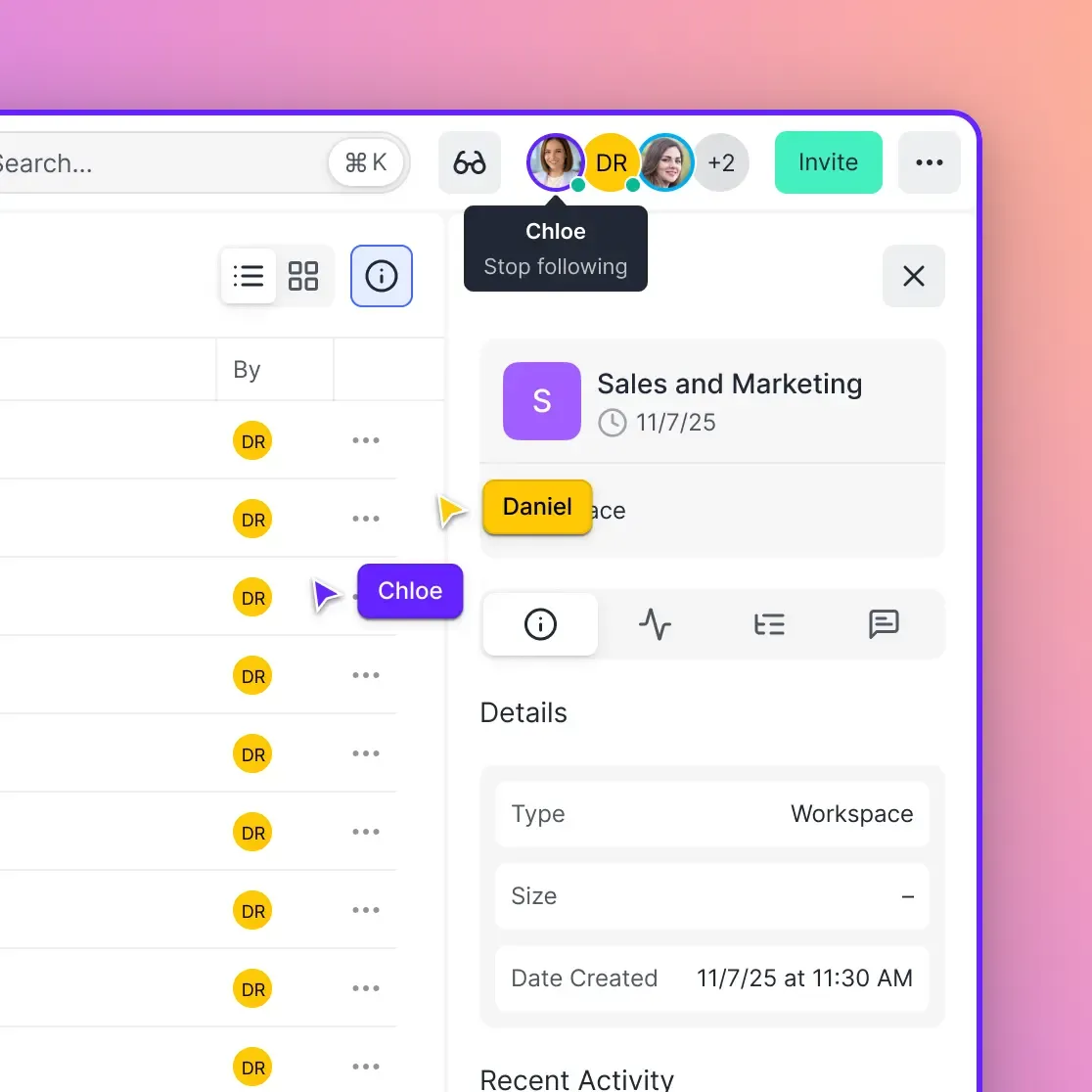
Shared context isn't just about sharing files. It's about having a real-time view of the customer's state, goals, and the status of any fixes. Without this, AI agents often give bad advice because they don't know what's actually happening on the ground. A persistent context layer ensures every action an agent takes is based on reality.
If a human advocate changes a setting, the agent sees the update in the workspace index right away. This prevents conflicting actions. Research on enterprise AI shows that this level of shared context cuts resolution times by multiple% for global providers. AI can also cut the time spent reviewing logs by up to multiple%, helping teams find failures much faster.
This setup also helps with long-term learning. Every interaction in the war room is logged and indexed, so the system can use that data to prevent the same issue from happening again. The workspace becomes a living memory of how the team solves problems. Organizations get more resilient as agents learn from the successful fixes of human experts.
The Impact of Unified Data
When agents and humans use the same data pool, clarity comes much faster. Instead of asking what happened, the team can focus on how to fix it. This is key to scaling customer success in fast-growing companies where human teams are often stretched thin.
Traditional Support Tickets vs. Agentic War Rooms
To see why agentic war rooms matter, it helps to compare them to traditional tickets. Most support platforms focus on one-to-one messages, which creates bottlenecks during big incidents.
The war room model treats an incident as a project rather than a list of tasks. This allows for parallel work. An agent might analyze logs while a human advocate talks to the client, all within the same environment.
How to Build Your Virtual War Room with Fastio
Building an agentic war room needs a workspace that's easy for both people and agents to use. Fastio makes this possible by combining storage with built-in AI.
Set Up a Dedicated Workspace: Create a workspace for each client or incident. It keeps data organized and makes sure only the right people have access. 2.
Turn on Intelligence Mode: Enable Intelligence Mode to automatically index all files, logs, and transcripts. This creates a searchable knowledge base in real-time. 3.
Connect Agents via MCP: Use the Model Context Protocol (MCP) to link your AI agents. Fastio offers multiple MCP tools that let agents read and analyze files as if they were local. 4.
Import History: Use the URL Import tool to pull in data from Google Drive or Dropbox. This gives agents the history they need to find patterns or recurring issues. 5.
Coordinate Revisions: In a multi-agent setup, agents can acquire an advisory file lock before writing so other agents see active work and wait, while version history preserves every change. 6.
Monitor Activity Feeds: Poll the realtime activity feed or connect to WebSocket events to notify agents the moment a new log is added. This ensures the AI is always working with the latest data.
The workspace then acts as the brain for the incident. Agents can use built-in RAG to answer questions with specific citations, making their work transparent.



Collaborate on Files with Your Team
Set up your first agentic war room today. Get generous storage and a consolidated MCP toolset with the 14-day Business Trial (card required; see /pricing/). Built for shared context war rooms.
Orchestrating the Human-Agent Handover
AI often feels like a "black box" where people can't see what's happening. Shared war rooms solve this with transparent logging. When an agent finishes a task, like a root cause report, it saves the file directly to the workspace. The human advocate can then review the work and add comments.
Because the agent and human use the same multiple tools, there is no need for a translation layer. Once the issue is fixed, the agent can hand over the entire workspace to the human lead. This keeps administrative control with the person while the agent remains a helpful collaborator.
This joint debugging process improves accuracy. If an agent suggests a fix that the human knows is wrong, the human can upload a correction. The agent will re-index that info and adjust its future advice. This creates a feedback loop that improves the system every time you use it.
Conflict Resolution in Shared Workspaces
When things get busy, multiple agents might try to edit the same report. Agents can acquire an advisory file lock before writing; any other agent trying to lock the file gets an HTTP 409 and can wait. If concurrent writes still land, file version history keeps every version while the audit log records who made each change.
Measuring Success: Metrics and Evidence
You need the right metrics to prove the value of a war room. Traditional numbers like first response time matter less than resolution time and accuracy. Evidence shows that war room collaboration increases accuracy by giving a broader view of the system. Instead of looking at one log, the agent sees the whole customer journey.
AI-driven analysis can push root cause accuracy beyond multiple%, a big jump from the multiple% typical of manual systems. This reduces "ping-pong support" where tickets bounce between teams. Teams using this model usually see resolution times drop sharply. A tricky incident that once took six hours might now take less than four. The AI handles the data work while the human focuses on strategy and client relationships.
What the Metrics Show
Tracking agent-led vs. human-led resolutions gives a clear benchmark for efficiency. As the shared context gets richer, agents can handle or prepare more issues for the team. This lets you scale without needing a massive increase in headcount.
Frequently Asked Questions
What is a customer success war room?
A customer success war room is a centralized, virtual workspace where teams and AI agents collaborate in real-time to resolve high-priority customer issues or outages.
How do you share context between support agents?
Context is shared through a unified workspace that indexes all data, like logs and ticket history. Using MCP allows AI agents to access this data with the same depth as a human.
What are the benefits of using AI agents in a war room?
AI agents can process large volumes of data faster than humans, finding patterns in logs that lead to a multiple% reduction in resolution time and better root cause analysis.
How does Fastio help with customer success orchestration?
Fastio provides the storage layer where humans and agents share tools. With multiple MCP tools and built-in RAG, it ensures everyone works from a single source of truth.
Is it difficult to set up an agentic war room?
No, it starts with a shared workspace. Once Intelligence is enabled for the workspace and agents connect via MCP, you can turn a storage folder into an intelligent war room in minutes.
Related Resources

Collaborate on Files with Your Team
Set up your first agentic war room today. Get generous storage and a consolidated MCP toolset with the 14-day Business Trial (card required; see /pricing/). Built for shared context war rooms.