Top OpenClaw Workflows for AI Online Course Creation and Curriculum Design
AI tools have cut specific course creation tasks by roughly 50% in time, according to creator surveys cited by Ruzuku, but most of those gains come from ad hoc prompting rather than structured automation. OpenClaw workflows chain education-specific skills into repeatable pipelines that handle the content creation side of course building: curriculum mapping, lesson plan generation, assessment design, reading guide compilation, and course announcements.


Why Course Creators Need Structured Workflows, Not Chat Windows
The AI-in-education market reached $7.57 billion in 2025 and is growing at 35% annually, according to Ruzuku's State of Online Courses 2026 report. Yet most course creators still use AI the same way they did in 2023: paste a prompt into a chat window, copy the output, and manually format it for their LMS. That approach saves time on individual tasks but leaves the end-to-end pipeline untouched.
Building a single online course module involves at least five distinct content types: a syllabus section, lesson plans with activities and time allocations, assessments aligned to learning objectives, reading lists with annotated sources, and announcements for students. Producing these individually through chat prompts means context resets between each task. The agent forgets what it generated two prompts ago.
OpenClaw workflows solve this by chaining skills into pipelines where each stage's output feeds the next. A curriculum map becomes the input for lesson plan generation, which produces the objectives that drive assessment creation. The agent maintains context across the entire sequence because each skill reads from files the previous skill wrote.
The result is not just faster content, but more consistent content. Learning objectives stay aligned from syllabus through final quiz because the same data flows through every stage.
Related guides
- How to Build Claude Cowork WorkflowsAgentic workflows handle repetitive data processing, but setting them up requires structure. Learn how to build Claude...
- Best Storage Solutions for Base44 WorkflowsAccording to the Flexera 2025 State of the Cloud Report, 84% of organizations identify managing cloud spend and...
- Top 5 OpenClaw Workflows for AI Essay Grading and Rubric AssessmentTeachers spend nearly 10 hours a week on grading, and three-quarters say they would adopt AI tools that cut that load...
- Best OpenClaw Workflows for AI Music Video and Lyric Video CreationOpenClaw 2026.4.5 shipped music_generate and video_generate as built-in tools, but most guides cover them in isolation....
- 6 Best OpenClaw Workflows for Newsletter Content CurationNewsletter creators using AI tools save one to three hours per week, but most of that comes from ad hoc prompting...
- Best OpenClaw Workflows for AI Product Demo Video and Walkthrough CreationOpenClaw's ecosystem includes a dedicated demo-video skill that records browser walkthroughs through CDP screencast, a...
More on this subject: OpenClaw Workflows and Integrations (69 guides)
How We Evaluated These Workflows
We assessed each workflow against five criteria specific to course creation:
Curriculum alignment
Does the workflow maintain consistency between learning objectives, lesson content, and assessments? Workflows that pass objectives forward as structured data score higher than those that require manual copy-pasting between stages.
Output quality
Are the generated materials specific enough to use with minimal editing? Lesson plans with generic filler ("discuss the topic in groups") score lower than plans with concrete activities, time allocations, and differentiation options.
LMS readiness
Can the output go directly into Canvas, Moodle, Google Classroom, or a comparable platform without extensive reformatting? Workflows that produce structured formats (markdown with consistent heading levels, or quiz-ready question banks) score higher.
Skill availability
Is each component available on ClawHub or as a documented skill file? ClawHub hosts over 13,729 published skills as of early 2026, and we prioritized workflows built from installable components over custom-coded solutions.
Pipeline fit
How well does each workflow connect with other stages? A great lesson plan generator that cannot accept curriculum map output forces manual handoff, which defeats the point of automation.
Here is a quick comparison of all seven workflows:
Content Planning Workflows
The first two workflows handle the front half of the course creation pipeline: defining what to teach and structuring how to teach it. Getting these right determines whether downstream workflows produce aligned content or require constant manual correction.
A 12-module course, for example, needs roughly 36 learning objectives before a single lesson plan can be generated. If those objectives are inconsistent or vaguely worded, every downstream stage inherits the problem. The workflows below focus on producing structured, machine-readable output that later stages can consume without human intervention at each handoff point.
1. Curriculum Mapping and Syllabus Generation
Curriculum mapping is the foundation every other workflow depends on. OpenClaw handles this by taking a course description, target audience, and duration, then producing a structured syllabus with module breakdowns, learning objectives per module, and suggested time allocations.
The Tencent Cloud deployment guide for OpenClaw confirms the platform can draft structured outlines with "key topics, suggested activities, and time allocations" when given learning objectives. This capability works as the first stage in a course creation pipeline because it produces the structured data that downstream skills consume.
How to set it up:
Describe your course parameters in the agent prompt: subject area, student level, total contact hours, and any standards alignment requirements (Common Core, state standards, accreditation frameworks). The agent generates a module-by-module outline with explicit learning objectives that become the input for lesson plan generation.
What you get:
- Module titles with sequenced learning objectives
- Suggested time allocations per module
- Prerequisite mapping between modules
- Standards alignment tags where applicable
Limitations:
The agent produces curriculum structure, not pedagogical judgment. You still need to review sequencing decisions and adjust based on your knowledge of the student population. Domain-specific expertise matters here more than in any other stage.
Best for: Course creators who need a structured starting point and want downstream workflows to inherit consistent learning objectives automatically.
2. Lesson Plan Generation
Once you have a curriculum map, lesson plan generation is where OpenClaw delivers the most immediate time savings. The OpenClaw Playbook confirms that the platform generates structured lesson plans with warm-up activities, direct instruction notes, guided practice, independent work, and exit tickets, including differentiation options for diverse learners.
Each lesson plan inherits its learning objectives from the curriculum map, so alignment stays intact without manual cross-referencing. The agent can also create "simplified, on-level, and extended versions" of content with leveled comprehension questions, which is particularly valuable for courses serving mixed-skill audiences.
Practical output per session:
A single generation session typically produces a complete lesson plan with seven or more distinct components: objective statement, warm-up, instruction sequence, guided practice activity, independent practice, assessment checkpoint, and differentiation notes. That matches the "7+ lesson plan components per session" figure from OpenClaw's education documentation.
Where to store the output:
Lesson plans generate significant file volume. A 12-module course with two lessons per module produces 24 plan files plus supporting materials. Local storage works for solo creators, but team-based course development needs shared access. Fastio workspaces handle this by auto-indexing uploaded files for semantic search, so you can ask questions across all your lesson plans ("Which lessons cover formative assessment?") without manually tagging each one. Fastio plans start at $9.99/mo (Starter, 250 GB) with a 14-day Business Trial.
Alternatively, Google Drive works fine for small courses, and tools like the steipete/gog ClawHub skill let your agent read and write directly to Google Docs.


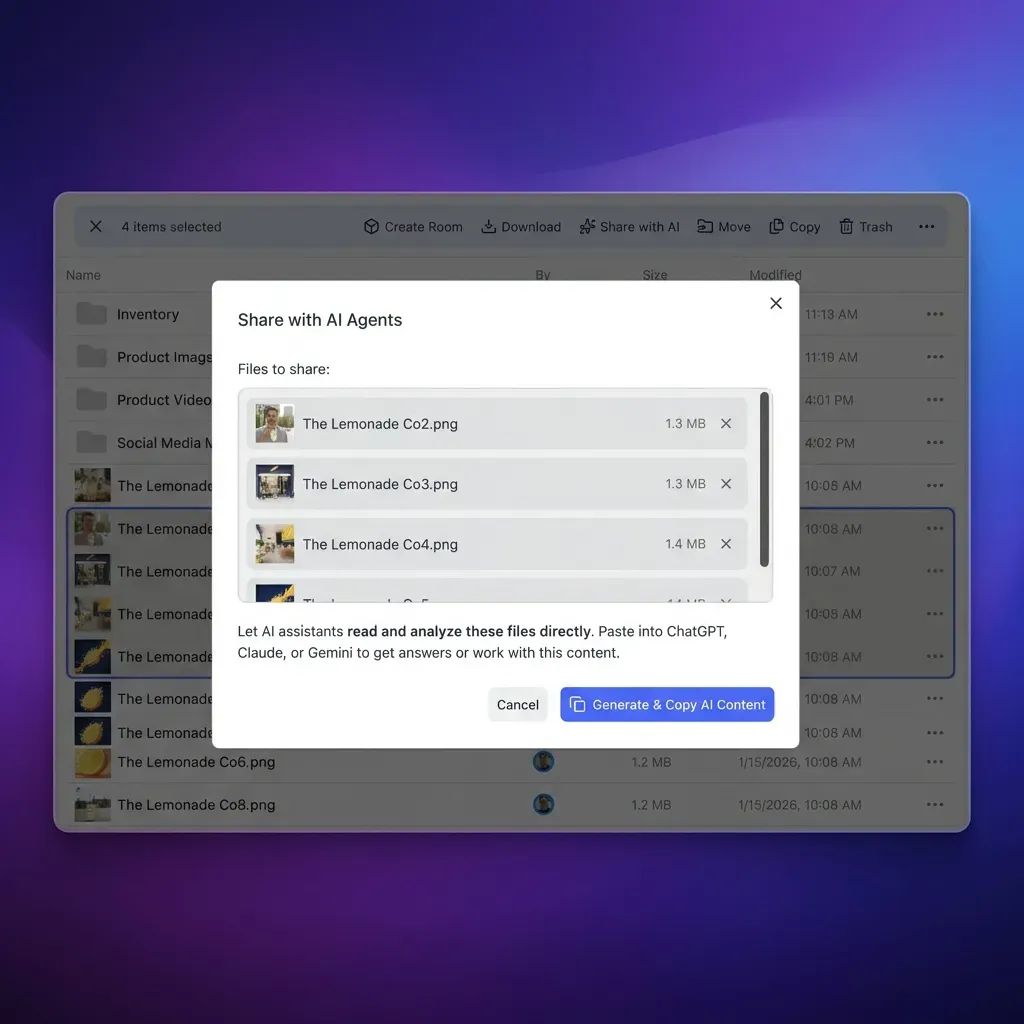
Store and Search Your Course Materials in One Workspace
Upload lesson plans, assessments, and reading guides to a shared workspace with built-in semantic search. generous storage, MCP-ready for your OpenClaw agent.
Assessment and Research Workflows
The next three workflows handle evaluation, research, and student communication, turning lesson content into assessable materials and keeping students informed.
Assessment quality is where most AI-generated courses fall apart. Generic quiz generators produce questions about the broad topic area rather than the specific material taught in each lesson. OpenClaw's pipeline approach avoids this because assessment skills read the same objective files that drove lesson plan generation, so questions test what was actually covered. The reading guide and announcement workflows then round out the student experience by providing supporting materials and timely communication tied to the same curriculum data.
3. Assessment and Quiz Creation
Assessment generation is OpenClaw's most granular education capability. The platform generates "multiple-choice, short-answer, or coding challenge questions tailored to your curriculum" when given subject matter, difficulty level, and question count, according to the Tencent Cloud deployment guide. The OpenClaw Playbook adds that output includes answer keys and point values aligned to standards.
What you can generate:
- Multiple choice questions with conceptual distractors
- Short answer prompts requiring calculation or analysis
- Application problems using real-world scenarios
- Extension questions for advanced students
- Complete answer keys with scoring rubrics
The key differentiator from generic AI quiz generation is that OpenClaw assessments can inherit learning objectives from earlier pipeline stages. When the assessment skill reads the same objectives file that drove lesson plan generation, questions align to what was actually taught rather than to a broad topic area.
Quality control:
AI-generated assessments need human review for two specific failure modes. First, multiple-choice distractors sometimes contain implausible options that give away the answer. Second, difficulty calibration tends to cluster around the middle, under-representing both recall-level and synthesis-level questions. Review each assessment against your rubric before deploying to students.
Best for: Instructors who need question banks for formative assessment throughout a course, not just final exams.
4. Reading Guide and Study Material Compilation
Reading guide compilation is where OpenClaw's research capabilities merge with its education features. The blink.new education guide confirms the platform can produce "a formatted reading list with titles, URLs, abstracts, and citation-ready references" from a research prompt, noting that this task typically takes 2 to 3 hours manually but completes in minutes with the agent.
This workflow extends beyond simple link collection. The agent reads your lesson plan objectives and finds sources that directly support each one, then compiles an annotated guide with abstracts that explain why each reading matters for the specific module. The output is a study companion, not just a bibliography.
OpenClaw also handles content reformatting, converting materials between formats like "slide outlines, study guides, or FAQ documents" according to the Tencent Cloud guide. A single set of lecture notes can become a student-facing study guide, a slide deck outline, and a pre-class reading assignment.
Practical application:
Run this workflow after lesson plan generation but before assessment creation. The reading guide surfaces source material that can inform quiz questions, and students who complete the readings arrive better prepared for assessments. This sequencing creates a coherent study experience rather than disconnected assignments.
Source quality note:
The agent searches broadly and does not distinguish between peer-reviewed journals and blog posts by default. Add explicit source-quality constraints to your prompt ("peer-reviewed sources published after 2022" or "primary sources only") to keep reading lists credible.
5. Course Announcement and Communication Drafting
Course announcements are the most overlooked automation opportunity in online education. The OpenClaw Playbook documents automated workflows that draft newsletters covering "curriculum coverage, assignments, events, and positive highlights" using scheduled tasks. The blink.new guide adds that OpenClaw can monitor email labels and auto-draft replies to common student and parent questions about schedules, deadlines, and grading.
Two announcement patterns:
The first pattern is schedule-driven. Set up a cron job (Friday afternoon is the most common cadence) that reads your course calendar and upcoming assignments, then drafts a weekly summary for students. The agent pulls dates from your schedule file and formats them into a consistent template.
The second pattern is event-triggered. When you publish a new module or post grades, the agent drafts a targeted announcement. This works well with automation hooks-capable platforms. Fastio's WebSocket events feed or activity polling allows agents to detect when new course files are uploaded to a shared workspace, triggering notifications automatically when materials are ready.
Where this fits in the pipeline:
Announcement drafting sits at the end of the workflow chain. After you finalize lesson plans, assessments, and reading guides, the announcement skill reads the published materials and generates student-facing summaries. This avoids the common problem of announcements that describe content differently from how it actually appears in the course.
End-to-End and Adaptation Workflows
The final two workflows handle format conversion and fully integrated pipelines that combine multiple stages into a single automated sequence.
Format adaptation is where file volume grows fastest. A single 10-module course can produce 40 or more derivative files when you account for slide outlines, student handouts, study guides, and multilingual variants. The homeschool digitization pipeline goes further by starting from physical textbook photos and running the entire creation chain from OCR through finished lesson plans. Both workflows benefit from organized storage because updates to source material need to propagate to every derivative without rebuilding from scratch.
6. Multi-Format Content Adaptation
Course content rarely lives in a single format. Lecture notes need to become slide decks, student handouts, and study guides. The Tencent Cloud guide confirms OpenClaw handles this conversion, restructuring materials into "slide outlines, study guides, or FAQ documents" from a single source file. The OpenClaw Playbook adds multilingual adaptation through vocabulary simplification, glossaries, and bilingual reference sheets.
Practical workflow:
Start with your richest content format, usually detailed lesson notes, and generate derivative formats from that single source. This ensures consistency across formats because every version traces back to the same source material.
- Lecture notes become slide outlines (heading structure preserved, content condensed to key points)
- Slide outlines become student handouts (fill-in-the-blank versions for active note-taking)
- Full notes become study guides (restructured around exam topics rather than lecture sequence)
- English materials become simplified versions for ESL students or bilingual reference sheets
Storage and version control:
Multi-format adaptation produces the highest file volume of any workflow. A 10-module course with four format variants per module generates 40+ files. Keeping these organized matters because updates to the source need to propagate to all derivatives. A shared workspace with semantic search, like Fastio's Intelligence Mode, lets you find every derivative of a specific lesson ("find all study guides related to Module 3") without maintaining a manual index. Agents can read and write these files through the Fastio MCP server, and the built-in RAG layer indexes everything automatically.
Limitations:
Format conversion works best for text-heavy content. Diagrams, mathematical notation, and interactive elements do not transfer cleanly between formats and need manual attention.
7. Homeschool Curriculum Digitization Pipeline
The most ambitious OpenClaw education workflow combines computer vision with lesson planning. Documented on ChatPRD's workflow directory, this intermediate-level pipeline uses OpenClaw alongside Gemini to "digitize curriculum books from photos, automatically generate structured lesson plans, and create custom learning materials like watercolor illustrations."
This workflow targets homeschool educators who work from physical textbooks and need digital lesson plans. The pipeline reads photos of textbook pages (using a multimodal model for OCR), extracts the curriculum structure, and generates lesson plans aligned to the extracted content.
Pipeline stages:
- Photograph textbook pages and upload to the agent
- Multimodal model extracts text, headings, and structure from images
- Extracted curriculum feeds into lesson plan generation
- Agent produces daily or weekly lesson schedules with activities
- Optional: generate supplementary visual materials
Why this matters:
Physical-to-digital conversion is a bottleneck that affects millions of homeschool families. The National Center for Education Statistics estimates that 3.3 million U.S. students were homeschooled as of 2023, and many families work from printed curricula that have no digital companion. This workflow eliminates the manual transcription step entirely.
Best for: Homeschool educators working from physical textbooks who want structured digital lesson plans without retyping their curriculum.
Connecting Workflows to Your Course Platform
These seven workflows handle the content creation pipeline, not the content delivery pipeline. The output feeds into whatever LMS or course platform you already use: Canvas, Moodle, Teachable, Thinkific, Google Classroom, or a self-hosted solution.
The handoff point matters. If your workflow output sits in local files on one machine, only one person can access it. For solo course creators, that is fine. For teams building courses collaboratively, the output needs to live somewhere accessible.
Three storage patterns work well with OpenClaw course workflows:
Local filesystem: Simplest option. The agent writes files to a local directory, and you manually upload to your LMS. Works for individual creators building one course at a time.
Google Drive via the steipete/gog skill: The agent reads source materials from Drive and writes output back to shared folders. Good for teams already in the Google Workspace ecosystem.
Fastio workspace: The agent writes all output to a shared workspace through the Fastio MCP server, where files are automatically indexed for semantic search. Team members and other agents access the same workspace through the UI or API. When the course is ready, use branded shares to deliver materials to students or stakeholders. The ownership transfer feature lets an agent build the entire course workspace and hand control to a human instructor, which is useful for agencies building courses on behalf of clients.
Whichever storage layer you choose, the key is keeping workflow output organized so updates to one stage (revised learning objectives, for example) can propagate downstream without rebuilding the entire course from scratch.
Sources
References used to verify factual claims in this guide.
-
AI tools have reduced certain course creation tasks by roughly 50% in time AI-in-education market reached $7.57 billion in 2025 growing at 35% annually
-
OpenClaw generates lesson plans with key topics, suggested activities, and time allocations OpenClaw generates multiple-choice, short-answer, or coding challenge questions tailored to curriculum
-
OpenClaw produces formatted reading lists with titles, URLs, abstracts, and citation-ready references
-
ClawHub hosts over 13,729 published skills
-
Homeschool curriculum digitization workflow uses OpenClaw and Gemini to digitize curriculum books from photos
Frequently Asked Questions
Can OpenClaw build an entire online course?
OpenClaw handles the content creation pipeline, not the hosting or delivery side. It can generate curriculum maps, lesson plans, assessments, reading guides, and announcements through chained workflows. You still need a separate platform like Canvas, Moodle, or Teachable to host and deliver the course to students.
How do you use OpenClaw for curriculum design?
Start by describing your course parameters (subject, audience, duration, standards) in an OpenClaw prompt. The agent generates a structured curriculum map with module breakdowns and learning objectives. That map becomes the input for downstream skills that generate lesson plans, assessments, and reading guides, keeping everything aligned to the same objectives.
What OpenClaw skills help with course creation?
The core education capabilities are built into OpenClaw's base agent and do not require separate skill installation. For extended workflows, the steipete/gog skill connects to Google Workspace for file management, the Brave Search skill finds current source materials, and the Fastio remote MCP server provides shared storage with semantic search. ClawHub hosts over 13,729 skills total, with several relevant to education workflows.
How long does it take to generate a full course outline with OpenClaw?
A curriculum map for a 12-module course typically generates in under five minutes. Lesson plan generation adds another few minutes per lesson. The total time for a complete content package (syllabus, lesson plans, assessments, and reading guides) runs about 30 to 60 minutes of agent processing time, compared to 40 or more hours of manual work for the same output.
Do I need coding skills to use OpenClaw for course creation?
Basic command-line familiarity helps for initial setup, but the actual course creation workflows run through natural language prompts. You describe what you want (subject, audience, format) and the agent generates structured output. ClawHub skills install with a single command, and most education workflows do not require custom code.
Related Resources

Store and Search Your Course Materials in One Workspace
Upload lesson plans, assessments, and reading guides to a shared workspace with built-in semantic search. generous storage, MCP-ready for your OpenClaw agent.