Top 5 OpenClaw Skills for HR Professionals
HR teams use OpenClaw skills to automate screening and onboarding. Giving AI agents the right tools cuts administrative work so you can focus on people. This guide covers the essential skills for a helpful HR agent workforce.

Why HR Needs OpenClaw Agents
HR departments face a high volume of work. One-click applications on job boards flood recruiters with administrative tasks. Small teams struggle to screen hundreds of resumes and coordinate interview schedules. OpenClaw provides a local, private runtime for AI agents to handle these workflows.
OpenClaw skills let these agents interact with the real world. They can read files, send emails, and update calendars. With the right skills, a standard LLM becomes a 24/7 HR assistant.
Automation makes a difference. According to Interwiz, recruiters save over 10 hours per role by using AI for resume screening. That is a full workday regained for every role filled. OpenClaw agents with document processing skills help teams save this time. AI tools can reduce screening time by up to 75%, so HR professionals can focus on interviewing candidates instead of reading PDFs.
The financial impact is also clear. AI-powered recruitment can cut cost-per-hire by 30% to 40%. With over 60% of HR tasks projected to be automated by 2025, these agent workflows are becoming standard for efficient people operations.
Related guides
- How to Use Claude Code Skills in ClineAccording to GitHub's Octoverse 2024 report, the number of developers building with generative AI on the platform...
- How to Install and Manage Cline Agent SkillsAI coding agents boost code volume by 180%, but shipped code rises by only 30%, showing a critical gap in development...
- Best OpenClaw Skills for Web ResearchWeb research skills let OpenClaw agents find and read information on the live web. Without them, your AI is stuck with...
- Top 7 OpenClaw Skills for Growth HackersThese top OpenClaw skills help growth hackers automate experimentation and analytics. They scale campaigns faster. Real...
- How to Automate Infrastructure: Top OpenClaw Skills for Network EngineersNetwork automation used to require writing complex Python scripts or wrestling with Ansible playbooks. Today, OpenClaw...
- Top OpenClaw Skills for Video ProductionOpenClaw skills automate video production tasks like editing, asset management, and reviews with MCP tools. Video teams...
More on this subject: OpenClaw Skills (109 guides)
1. Fastio: File System and Memory
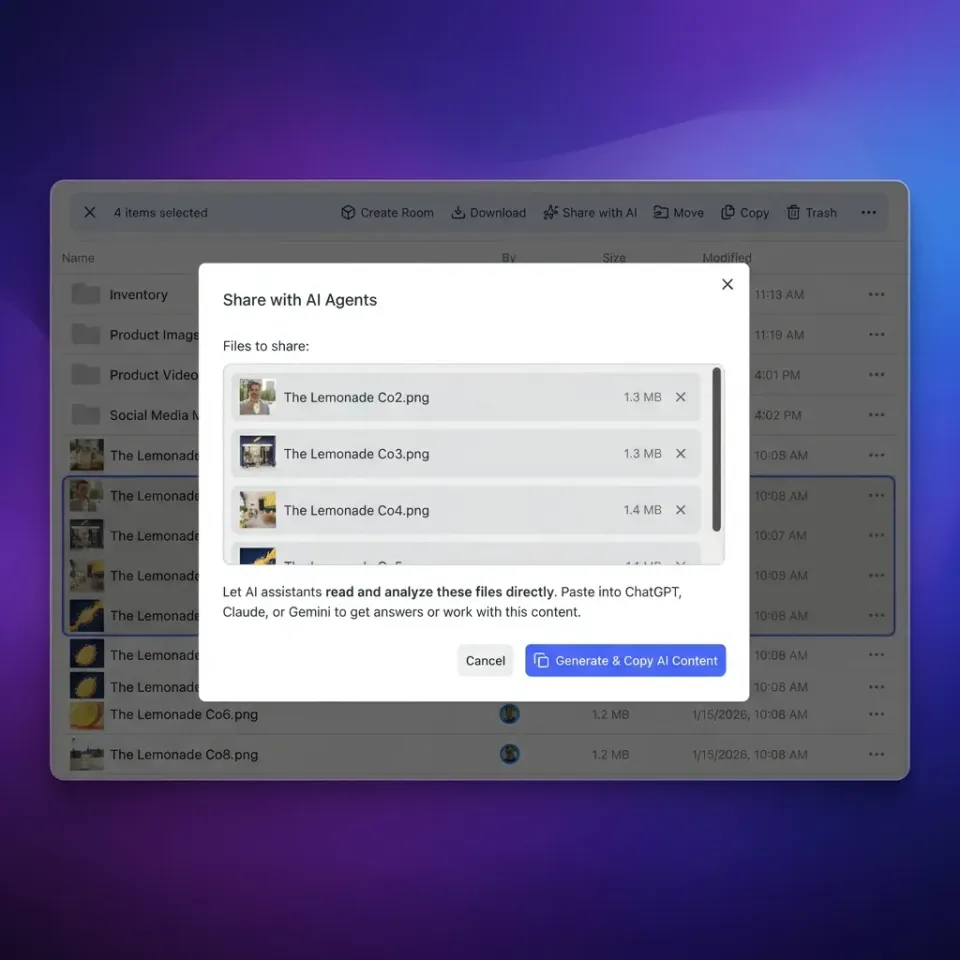
HR agents need to read, write, and organize documents. Resumes, cover letters, contracts, and policies are the core of HR. Without a file system, an agent is a chatbot; with one, it becomes an administrator. Connecting to Fastio via its remote MCP server at https://mcp.fast.io/mcp/tools gives your agent a persistent workspace with a consolidated MCP toolset.
Why it matters: Agents often lose context when the chat closes. Fastio provides persistent storage, so an agent can file a resume today and find it three months later. This turns unstructured data into a searchable knowledge base.
Key Capabilities:
- Resume Parsing: With Intelligence Mode, Fastio indexes uploaded files. Your agent can ask, "Find resumes with Python experience from last week," without opening each file. This replaces expensive ATS tools.
- Contract Generation: Agents read a template, fill in details, and save the offer letter to a shared workspace. This reduces errors and saves copy-pasting time.
- Secure Storage: Fastio workspaces can be shared with your team. An agent organizes files in the background, and hiring managers access them instantly via the web.
- Audit Trails: A detailed activity log records every human and agent file action.
Implementation Tip: Create an "Incoming Applications" workspace where your agent has write access. Use activity polling or the WebSocket events feed to notify the agent when a new file arrives to start screening.
Best For: Managing employee documents, from application to offboarding.
Documentation: Fast.io for Agents



Give Your HR Agent a Brain
Stop building agents with amnesia. Give them persistent storage with Fastio and automate your recruitment pipeline. Built for OpenClaw HR workflows.
2. AgentMail (Candidate Communication)
Communication slows recruitment. Scheduling, follow-ups, and rejections take hours. Candidates complain about "ghosting" because recruiters lack time to reply. AgentMail is an API-first email platform built specifically for AI agents - offering programmatic inbox creation, real-time webhooks, and high-volume sending with no rate limits.
Why it matters:
An agent monitors a dedicated applications@company.com inbox, parses applications, and sends personalized acknowledgments. Real-time webhooks fire when candidates reply, so the agent can act immediately without polling.
Key Capabilities:
- No Rate Limits: Send hundreds of personalized messages without throttling - critical during high-volume hiring surges.
- Webhooks: Real-time notifications when a candidate replies, so the agent books an interview slot immediately.
- AI-Native: Semantic search and automatic labeling keep the inbox organized by candidate stage.
- Dedicated Inboxes: Agents get their own email identity, keeping HR communications separate from personal accounts.
Security Note: Implement webhook allowlists to prevent prompt injection from malicious incoming emails.
Best For: Communicating with hundreds of candidates at once.
ClawHub Page: clawhub.ai/adboio/agentmail
3. Gog (Interview Scheduling & Google Workspace)
Coordinating availability is difficult. "When are you free?" emails delay interviews by days. The Gog skill is a Google Workspace CLI covering Gmail, Calendar, Drive, Contacts, Sheets, and Docs. For HR teams already working in Google Workspace, it gives OpenClaw access to the full suite from a single install.
Why it matters: An agent uses Gog to check Calendar availability across hiring stakeholders, create interview events, and send Gmail confirmations - all in one workflow. Sheets integration means candidate tracking data stays current automatically.
Key Capabilities:
- Calendar Management: Check availability across multiple stakeholders and create interview slots with date-range filtering.
- Gmail Integration: Send and search emails directly, without a separate email skill.
- Sheets Tracking: Read and update candidate pipeline spreadsheets as status changes.
- Meeting Prep: Create calendar events with resume links and scorecards so interviewers arrive prepared.
Limitations:
- Requires installing the
gogbinary via Homebrew and completing OAuth authentication for each Google account.
Best For: Managing interview logistics and Google Workspace-based candidate tracking.
ClawHub Page: clawhub.ai/steipete/gog
4. Slack (Internal Coordination)
HR involves everyone. It requires coordination with department heads. The Slack skill lets OpenClaw agents send notifications, react to messages, pin updates, and read channels where the team works. This keeps the hiring process moving.
Why it matters: Recruiting needs speed. If a candidate accepts an offer, the hiring manager must know immediately. Agents post updates to channels so the team can react. This prevents tasks from getting lost in email threads.
Key Capabilities:
- Interview Reminders: Ping interviewers before a call with the candidate's profile. This reduces no-shows and helps interviewers prepare.
- New Hire Announcements: Post welcome messages to
#generalwhen an offer is signed. This builds excitement for new team members. - Approval Workflows: Request budget approval via direct message. The agent chases approvals so paperwork doesn't slow down hiring.
- Message Management: Edit, delete, pin, and react to messages for organized channel communication.
Security Note: Requires a Slack bot token - configure permissions carefully to limit agent access to relevant channels.
Best For: Keeping the team aligned throughout the hiring pipeline.
ClawHub Page: clawhub.ai/steipete/slack
5. Playwright (Background Research)
Evaluating candidates is more than reading resumes. HR pros need to verify credentials and research previous employers. The Playwright skill combines browser automation with Model Context Protocol (MCP) capabilities, enabling OpenClaw to browse the web safely and extract structured data from any page.
Why it matters: An agent researches candidate profiles and company backgrounds before the first call. Recruiters start conversations with a full picture, asking deeper questions instead of clarifying basic facts.
Key Capabilities:
- Profile Research: Summarize public information from permitted sources. The agent highlights projects or publications that fit the role.
- Company Research: Gather context on previous employers, including industry, size, and recent news.
- Salary Benchmarking: Extract salary data from job boards to inform competitive offer letters.
- Screenshots: Capture evidence of public profiles for the candidate file.
Limitations:
- Heavier than Brave Search for simple lookups - use Brave Search for quick fact-checks.
- Some sites block automated browsers; configure delays for natural browsing patterns.
Best For: Adding context to candidate profiles and employer due diligence.
ClawHub Page: clawhub.ai/ivangdavila/playwright
A Day in the Life of an HR Agent
Here is a practical workflow for a "Recruiter Agent" using these skills.
Morning: Screening At 8:00 AM, the agent checks AgentMail for new applications. It downloads attachments to a Fastio workspace for "Incoming Resumes." Using Fastio's Intelligence Mode, it parses resumes for skills and experience, comparing them against the job description.
Mid-Morning: Scheduling For matching candidates (e.g., "Senior Python Dev"), the agent sends an email via AgentMail to invite them to a screen. When a candidate replies via webhook, the agent checks Gog (Calendar) and books the slot, sending invites to both parties.
Afternoon: Coordination Before an interview, the agent sends a Slack DM to the hiring manager with a background summary (from Playwright) and a resume link from Fastio.
Evening: Reporting At the end of the day, the agent creates a status update in the Fastio "Reports" folder and appends results to the candidate tracking sheet in Gog (Sheets) for the morning review.
This workflow happens automatically. Humans only need to handle the interviews and final decisions.
Comparing the Top OpenClaw HR Skills
Choosing the right skills builds an effective HR agent. Not every team needs every skill immediately. Here is how they compare.
Verdict: Start with Fastio and AgentMail. These two skills let an agent read resumes, store them, and reply to candidates. This automates the busiest parts of recruitment.
Once the basics are running, add Gog and Slack. Playwright is useful but can be added later once the core pipeline is stable.
Pro Tip: Enable Intelligence Mode on your Fastio workspace. This turns storage into a knowledge base, so agents find documents by meaning, not just filename.
Sources
References used to verify factual claims in this guide.
-
Recruiters commonly save over 10 hours per role by using AI for resume screening
-
AI-powered screening tools can reduce resume reviewing time by up to 75%
-
Companies utilizing AI can see a reduction in cost-per-hire by 30% to 40%
-
Over 60% of daily HR tasks are projected to be handled by automated systems by 2025
Frequently Asked Questions
How do OpenClaw agents help with HR compliance?
OpenClaw agents help compliance by following protocols for document handling. With Fastio, agents save every interaction and document version, creating a full audit trail. This ensures all decisions, offer letters, and policy acknowledgments are recorded for audits. Local execution also protects data privacy.
Is it safe to let an AI agent handle sensitive employee data?
Yes, if you use secure tools. OpenClaw runs locally, keeping logic private. Fastio offers enterprise security with permissions and encryption. You can limit the agent to specific workspaces, ensuring it can't access sensitive data unless authorized.
Can an OpenClaw agent conduct interviews?
Agents can handle text screening, but they shouldn't conduct voice or video interviews. Human connection is important for assessing culture. Agents are best for scheduling, preparation, and initial screening.
What is the cost of setting up an HR agent with these skills?
OpenClaw is free to run. Most skills connect to tools you already use, like Google Workspace and Slack. Fastio offers paid cloud storage plans starting at $9.99/mo with a 14-day Business Trial requiring a credit card.
Related Resources

Give Your HR Agent a Brain
Stop building agents with amnesia. Give them persistent storage with Fastio and automate your recruitment pipeline. Built for OpenClaw HR workflows.