OpenClaw vs Google ADK: Which Agent Framework to Choose in 2026
OpenClaw has 346K GitHub stars and runs autonomous agents on user-owned infrastructure. Google ADK has 18K stars and deploys production agents tightly integrated with Google Cloud. This guide compares their architecture, model support, deployment, and data control so you can pick the right foundation for your next agent project.


Why This Comparison Matters Now
Google ADK crossed 3.3 million monthly PyPI downloads in early 2026, while OpenClaw surpassed 346,000 GitHub stars in under five months. Both frameworks build AI agents, but they start from opposite assumptions about where agents should live, which models they should use, and who controls the data.
Most existing comparisons pit OpenClaw against other open-source runtimes (LangChain, CrewAI) or compare Google ADK against OpenAI's Agents SDK. A direct comparison between these two is missing, especially for teams that care about persistent file storage, workspace handoff, and multi-model flexibility. That gap is what this guide fills.
Related guides
- LangGraph vs CrewAI: Which Multi-Agent Framework to Choose in 2026LangGraph and CrewAI are the two most-searched multi-agent frameworks heading into 2026. This comparison goes beyond...
- Hermes Agent vs Google ADK: Turnkey Agent or Build-Your-Own FrameworkGoogle ADK crossed 19,000 GitHub stars as a build-your-own framework while Hermes Agent passed 100,000 as a...
- How to Set Up OpenClaw MCP ServerConnect OpenClaw to Fastio's hosted MCP server for consolidated tools covering files, sharing, and AI. Connect directly...
- Best OpenClaw MCP Integrations: Top Skills for Claude CodeOpenClaw MCP integrations are skills that wrap Model Context Protocol servers into installable, zero-config packages...
- How to Set Up OpenClaw WhatsApp IntegrationOpenClaw WhatsApp integration lets AI agents reply on WhatsApp while handling files through MCP skills. OpenClaw...
- How to Set Up File Storage in OpenClaw WorkspacesOpenClaw agents need files that stick around between sessions in shared workspaces. Developers set up persistent...
More on this subject: OpenClaw Setup and Guides (199 guides)
Architecture and Design Philosophy
OpenClaw treats an agent as a persistent process with a control plane and an execution plane. It runs on your machine (macOS, Linux, Windows, or even a Raspberry Pi) and stays alive between tasks. The agent checks for messages, runs scheduled jobs, and interacts through messaging apps like Slack, Discord, and Telegram without needing a custom UI.
Google ADK takes a software-engineering-first approach. You define agents in code (Python, TypeScript, Go, Java, or Kotlin), compose multi-agent teams, wire up tool integrations, and deploy to containers or Google Cloud. ADK agents are typically request-response services, not always-on daemons.
The core split: OpenClaw is an agent runtime you configure. Google ADK is a toolkit you code against.
Multi-Agent Support
Both support multi-agent workflows, but differently. OpenClaw uses its TaskFlow orchestration layer to route work between specialized agents sharing a common state ledger backed by SQLite. Google ADK uses graph-based workflow agents with deterministic routing, fan-out/fan-in, loops, and human-in-the-loop nodes. ADK's A2A (Agent-to-Agent) protocol also standardizes how agents from different teams communicate.
When Architecture Drives the Decision
If you want agents that feel like background services on your own hardware, always listening and always available, OpenClaw's daemon model fits naturally. If you need structured pipelines that deploy as containers with observability built in, ADK's code-first model gives you more control over execution flow.
Model Support and Provider Flexibility
OpenClaw is model-agnostic by design. It ships with a provider manifest that lets you swap models at runtime without rebuilding. Supported providers include Claude (Anthropic), GPT-4o and GPT-5.5 (OpenAI), Gemini (Google), DeepSeek, Ollama, LM Studio, Open Router, and Gemma. The April 2026 update made hot-swapping even smoother, so a running workflow can switch from a fast local model to a more capable cloud model mid-task.
Google ADK is also technically model-agnostic. It provides native Gemini integration plus adapters for Claude, Ollama, vLLM, and LiteLLM. In practice, ADK is optimized for Gemini. Features like grounding with Google Search, the Gemini Live API for streaming, and native Vertex AI deployment work out of the box only with Gemini models. Using non-Gemini models means giving up some of these built-in capabilities.
Practical Implication
If your team already runs Claude or GPT-4o and wants to keep that flexibility, OpenClaw gives you first-class support for every major provider without workarounds. If you are standardizing on Gemini and want the deepest integration with Google's ecosystem, ADK removes friction.



Give your agents persistent storage that outlasts any framework
Fastio workspaces connect to both OpenClaw and Google ADK through the MCP server. generous storage, workspace handoff built in.
Deployment and Infrastructure Control
OpenClaw runs on user-owned infrastructure. You install it on a VPS, a home server, a laptop, or a cloud VM. The runtime is TypeScript on Node.js 20+. You own the machine, you own the data, you control the network. There is no vendor lock-in to a specific cloud platform.
Google ADK offers more deployment paths. You can run locally during development, containerize for any Docker host, or use one-command deployment to Google Cloud (Agent Runtime, Cloud Run, or GKE). The Google Cloud path adds managed authentication, Cloud Trace observability, and auto-scaling. But it also means your agents depend on Google Cloud services for those features.
Self-Hosted LLM Support
Both frameworks support self-hosted models. OpenClaw connects to Ollama or LM Studio for fully local inference. Google ADK documents a GKE deployment pattern using vLLM to serve open-weight models like Llama 3.1 without sending data to any external API.
Where Files Live
Agent output needs to go somewhere persistent. For teams using either framework, Fastio workspaces provide a neutral storage layer. Agents write files to a shared workspace via the Fastio MCP server, and humans access them through the same interface. This avoids tying file storage to the agent framework itself. The Business Trial runs with Business-plan capabilities for 14 days and requires a credit card; see the pricing page for current details.
Tool Ecosystem and MCP Integration
OpenClaw has the deepest Model Context Protocol integration of any agent framework. It runs MCP servers for built-in capabilities (file access, web browsing, shell commands) and connects to external MCP servers for anything else. The ClawHub skill registry has over 5,400 community-contributed skills covering CRM, email, payments, calendars, and document generation.
Google ADK also supports MCP, but as one tool type among several. ADK's tool ecosystem includes function-based tools (Python/TS functions), OpenAPI tools (auto-generated from specs), MCP tools (connect to any MCP server), and built-in Google connectors (BigQuery, AlloyDB, Google Search, enterprise APIs). The breadth of Google-specific connectors is ADK's strength if you live in Google Cloud.
Integration Count
OpenClaw: 5,400+ skills on ClawHub, plus any MCP server. Google ADK: Native Google ecosystem connectors, plus any MCP server and OpenAPI spec.
The difference is not just count but philosophy. OpenClaw skills are self-contained modules that run inside the agent process. ADK tools are functions that the framework calls during execution, with the framework managing state and error handling around them.
Data Control and Privacy
Data residency matters for agent frameworks because agents read, generate, and store files continuously.
OpenClaw keeps everything local by default. Conversation history, task state, and agent memory live on the machine where you installed it. If you use a local model through Ollama, no data leaves your network at all. This makes OpenClaw attractive for regulated industries or teams with strict data sovereignty requirements.
Google ADK on Google Cloud stores session state, agent memory, and execution traces in Google-managed infrastructure. You get the benefits of managed services (backups, scaling, monitoring) but your data lives in Google's environment. Self-hosted ADK on your own containers gives you the same data control as OpenClaw, but you lose the managed features.
Workspace Handoff
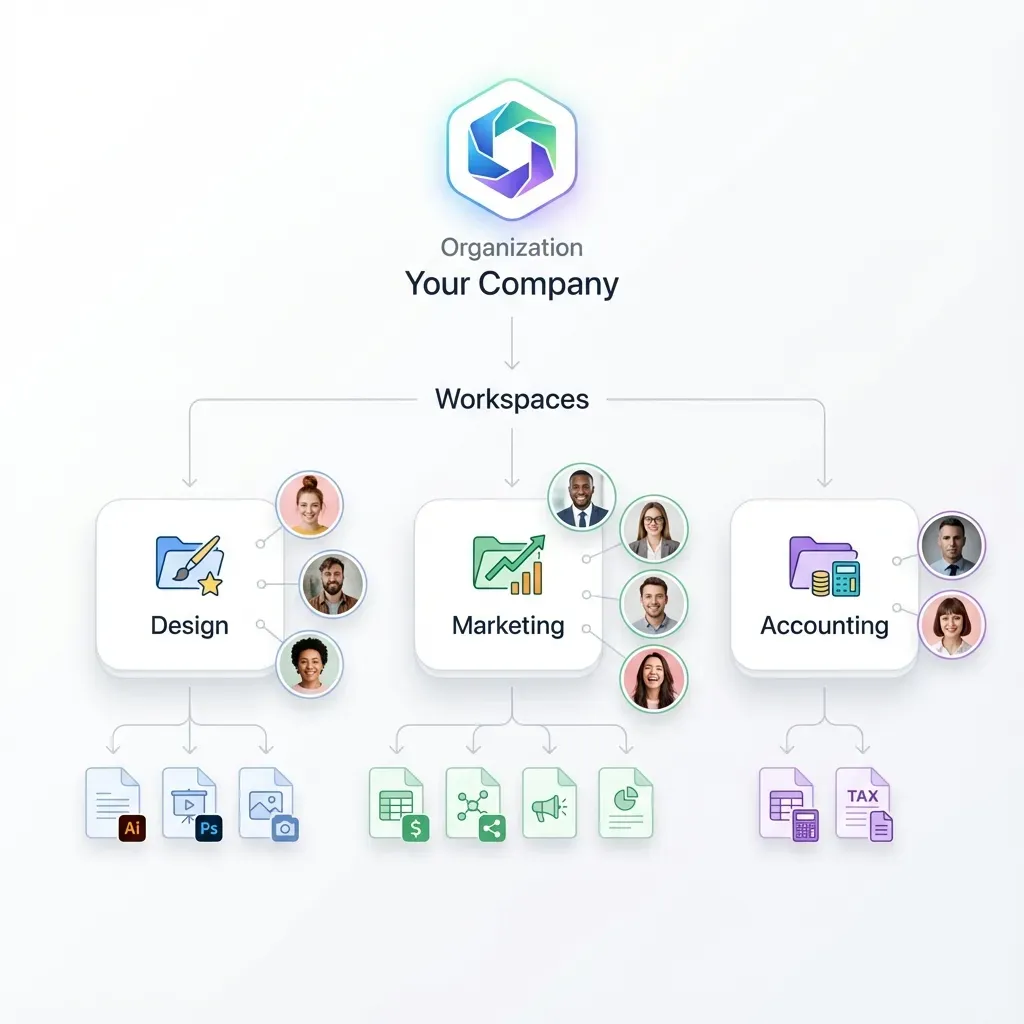
Regardless of which framework runs your agents, the output needs to reach humans. Fastio's ownership transfer lets an agent build workspaces, populate them with deliverables, and transfer ownership to a client or team member. The agent keeps admin access for ongoing maintenance while the human gets full control. This pattern works with both OpenClaw and ADK agents since the handoff happens at the storage layer, not the framework layer.
How to Choose Between OpenClaw and Google ADK
The decision comes down to three questions: where do your agents run, which models do you use, and how much infrastructure do you want to manage?
Choose OpenClaw If
- You want autonomous agents that run on your own hardware
- You need to swap between Claude, GPT, Gemini, and local models freely
- Your team communicates through Slack, Discord, or Telegram and wants agents in those channels
- You prefer configuration over code and want a low learning curve
- Data sovereignty is non-negotiable and you cannot use managed cloud services
Choose Google ADK If
- You are building production multi-agent systems that need graph-based orchestration
- Your stack is already on Google Cloud (Vertex AI, BigQuery, Cloud Run)
- You want built-in evaluation tools, tracing, and deployment automation
- Your team has Python/TypeScript engineers comfortable with code-first frameworks
- You need the A2A protocol for cross-team agent communication
Neither a config-first daemon nor a code-first Google Cloud toolkit is the only path forward. Our OpenClaw alternatives comparison covers seven more agent frameworks.
Feature Comparison
Sources
References used to verify factual claims in this guide.
-
OpenClaw surpassed 346,000 GitHub stars by April 2026
-
Google ADK has 3.3 million monthly PyPI downloads
-
Google ADK is open source under Apache 2.0 with Python, TypeScript, Go, Java, and Kotlin support
Frequently Asked Questions
Is OpenClaw better than Google ADK?
Neither is universally better. OpenClaw excels at local-first, model-agnostic agents that run autonomously on your own hardware. Google ADK excels at production multi-agent systems with enterprise orchestration and tight Google Cloud integration. Your choice depends on whether you prioritize infrastructure control (OpenClaw) or managed deployment with built-in evaluation (ADK).
Can OpenClaw use Gemini models?
Yes. OpenClaw supports Gemini through its model provider system. You can configure Gemini as your default model or use the provider manifest to swap between Gemini and other models at runtime without rebuilding your agent.
What is the difference between OpenClaw and Google ADK?
OpenClaw is a self-hosted agent runtime that you configure and deploy on your own infrastructure, supporting 20+ LLM providers through a model-agnostic architecture. Google ADK is a code-first toolkit optimized for Gemini that deploys to Google Cloud with built-in orchestration, evaluation, and observability. OpenClaw focuses on autonomous always-on agents; ADK focuses on structured multi-agent pipelines.
Can Google ADK run without Google Cloud?
Yes. Google ADK is open source under Apache 2.0 and can run locally or in any container environment. You can self-host ADK agents on your own infrastructure using Docker, Kubernetes, or a simple VM. However, features like managed authentication, Cloud Trace, and one-command deployment are only available on Google Cloud.
Which framework has better MCP support?
OpenClaw has deeper native MCP integration with over 5,400 community skills on ClawHub and built-in MCP servers for file access, web browsing, and shell commands. Google ADK supports MCP as one tool type among several (alongside OpenAPI and native Google connectors). Both can connect to external MCP servers like the Fastio MCP server for workspace and file operations.
Related Resources

Give your agents persistent storage that outlasts any framework
Fastio workspaces connect to both OpenClaw and Google ADK through the MCP server. generous storage, workspace handoff built in.