OpenClaw vs Cline: General AI Agent vs IDE Coding Agent
OpenClaw processes 822 billion tokens per day across messaging, scheduling, and browser automation. Cline handles 97 billion through IDE-native coding sessions. The gap reflects a core architectural split: OpenClaw is a general-purpose agent that happens to write code, while Cline is a coding agent that stays inside your editor. This guide breaks down scope, autonomy, memory, pricing, and what happens to files after each tool finishes.


What OpenClaw and Cline Actually Do
OpenClaw logs 822 billion tokens per day across its user base, while Cline processes 97 billion, according to a DigitalApplied analysis of AI coding tool usage in 2026. That 8x gap is not about quality. It reflects a fundamental split in scope: OpenClaw orchestrates messaging, scheduling, file management, and browser control from a single local process, while Cline lives inside your code editor and focuses on writing, editing, and testing software.
OpenClaw started as Clawdbot in November 2025, built by Austrian developer Peter Steinberger. After renaming to OpenClaw in January 2026, it passed 347,000 GitHub stars by April 2026, making it the most-starred repository on the platform. The tool runs locally on your machine and connects to messaging platforms: Signal, Telegram, Discord, and WhatsApp. You interact with it the way you would message a colleague. Ask it to manage emails, scrape a competitor's pricing page, schedule daily reports, write a Python script, organize downloads, or automate browser workflows. It executes tasks on your computer, not just discusses them.
Cline takes a narrower, deeper approach. Built as an open-source extension for VS Code (and now available for JetBrains, Cursor, Devin Desktop (formerly Windsurf), and as a standalone CLI), Cline reads your project structure, writes code across multiple files, runs terminal commands, and tests UI changes through a built-in browser via Puppeteer. With 8 million installs across platforms and 62,300 GitHub stars, it is one of the most adopted coding agents in the editor ecosystem. Where OpenClaw tries to be your general-purpose assistant, Cline is specifically an autonomous coding partner that understands your codebase at a file-by-file level.
Both tools are open source and model-agnostic. OpenClaw uses the MIT license. Cline uses Apache 2.0. Both let you bring your own API keys for Claude, GPT-4, Gemini, DeepSeek, or local models running on your own hardware. The difference is what they do with those tokens.
OpenClaw extends through a skills system built around directories with SKILL.md metadata files. The ClawHub marketplace offers pre-built agents for lead generation, CRM updates, code review, browser automation, smart home control, and more. With over 100 pre-configured skills and 50+ service integrations, the modular architecture lets OpenClaw cover a wide surface area without a monolithic codebase. Need a new capability? Write a SKILL.md file in a directory and the agent picks it up.
Cline extends through a different path. Its .clinerules files encode project-specific coding standards, architecture decisions, and deployment conventions. When Cline generates code, it follows these rules automatically. MCP server integration adds database queries, API calls, and infrastructure management. A plugin system allows custom tools beyond what ships in the extension. The focus stays on code, but the surface area within coding is substantial: from React components to Terraform configs to database migrations.
The practical distinction: OpenClaw users tend to be automation engineers, small business operators, and power users who want a single agent managing workflows across platforms. Cline users are developers who want a coding partner embedded in their editor that makes coordinated changes across a codebase without breaking other files.
Related guides
- Hermes Agent vs Devin AI: Autonomous Agent or Coding EngineerHermes Agent and Devin AI solve different problems despite both carrying the "autonomous agent" label. Hermes is a...
- Kilo Code vs Cline: Open-Source Coding Agent ComparisonCline is free for individual developers under Apache 2.0, with its public repo past 64,000 GitHub stars, while pairwise...
- OpenClaw vs GitHub Copilot: Agent Platform vs Coding AssistantGitHub transitioned Copilot to usage-based AI Credits on June 1, 2026, turning every subscription into a metered model...
- OpenClaw vs Windsurf (Now Devin Desktop): AI Agent vs AI IDE in 2026Seventy percent of developers now run two to four AI coding tools at once, but most comparisons still frame each option...
- OpenClaw vs OpenCode: What Each Tool Actually Does and When to Use ItOpenClaw and OpenCode are the two most-starred open-source AI agent projects on GitHub, and developers keep asking...
- How to Set Up OpenClaw ACP and Bridge Your IDE to AI AgentsOpenClaw's Agent Client Protocol (ACP) lets you spawn and control external coding tools like Claude Code, Cursor, and...
More on this subject: OpenClaw Setup and Guides (199 guides)
How They Compare
The tools share some DNA (open source, model-agnostic, local-first) but diverge on almost every design choice. Here is how the key dimensions break down.
Scope
- OpenClaw: general-purpose. Messaging, email, scheduling, browser automation, file management, coding, web scraping, API integration. If you can do it from a terminal or browser, OpenClaw likely has a skill for it or you can write one.
- Cline: coding-specific. Multi-file editing, terminal commands, browser testing, project analysis, dependency management. Everything runs through the lens of writing better software inside a project directory.
Primary Interface
- OpenClaw: messaging-first. You interact mainly through Signal, Telegram, Discord, or WhatsApp. A CLI exists for direct invocation, but the messaging interface is the default entry point. You can send OpenClaw a task from your phone while away from your desk.
- Cline: IDE-first. The VS Code sidebar is the primary interface, with JetBrains support and a standalone CLI for headless use. Most users interact through the editor, where Cline shows diffs, terminal output, and plan summaries in real time.
Autonomy Model
- OpenClaw: proactive. The Heartbeat scheduler polls on a defined cadence and runs tasks without new prompts. You configure a checklist, set the schedule, and the agent works on its own timeline. No human needs to be watching.
- Cline: reactive with guardrails. Plan mode lets you discuss strategy before any code is written. Act mode executes step by step, but file writes and terminal commands each require your approval before they happen.
Memory and Context
- OpenClaw: persistent and editable. Context is stored as Markdown files on disk. You can open, read, and modify your agent's memory in any text editor. Cross-session memory is a core feature, so the agent remembers what it did yesterday and builds on it.
- Cline: session-scoped with project awareness. Cline reads your project structure and files at the start of each task. .clinerules provide persistent project guidance across sessions, but conversational memory does not carry between tasks the way OpenClaw's does.
Extensibility
- OpenClaw: ClawHub skills marketplace with 100+ pre-built agents. Custom skills are directories with a SKILL.md file. Over 50 service integrations span chat, AI models, productivity tools, smart home devices, and automation platforms.
- Cline: MCP servers for external integrations.clinerules for project standards, a plugin system for custom tools. Support for 30+ LLM providers means you can switch models without changing your workflow.

How Each Tool Approaches Autonomy
OpenClaw's Heartbeat scheduler is its most distinctive feature. You configure a schedule and a task list, and the agent works through it without human input. A marketing team might set OpenClaw to scrape competitor pricing every morning, compile the changes into a summary, and post it to a Telegram group before the team's standup. A developer might have it check build status hourly, pull fresh logs when error rates spike, and file GitHub issues with the relevant stack traces. The agent does not wait for a prompt. It acts on its own timeline, which makes it useful for monitoring, reporting, and any workflow that benefits from consistent, unattended execution.
This level of autonomy requires trust in the system. OpenClaw runs with whatever permissions your operating system grants it. If you give it shell access, it can execute any command your user account can run. The project's documentation recommends hardening your deployment, especially for server environments where the agent runs headless. The MIT license and fully open-source codebase mean you can audit every line of code, but you need to complete that audit before handing over broad system access to an automated process.
Cline's Plan/Act workflow inverts this model deliberately. Before writing a single line of code, Cline enters Plan mode. You describe what you want built or fixed. Cline reads the relevant files, analyzes dependencies, proposes a strategy, and waits for your input. You can ask follow-up questions, request a different approach, narrow the scope, or reject the plan entirely. Nothing changes on disk during planning. This is a non-destructive reasoning phase.
When you approve the plan, Cline enters Act mode. It writes files, runs terminal commands, and checks for linter and compiler errors. Every action still requires your explicit approval. You see the diff before it is applied. You approve each terminal command before it executes. For a production codebase where one wrong file write can cascade through CI/CD and hit users, this controlled approach prevents compounding errors from building up across a long agent session.
Cline added spending controls in v3.78 (April 2026) to address a practical concern: autonomous coding agents can burn through API credits quickly. You set a daily or monthly cap, and Cline pauses when it hits the limit. This is a direct response to cases where agents caught in error loops drained API budgets in minutes.
OpenClaw handles cost differently. Because it runs locally, you control model routing at the configuration level. The community recommends setting a budget model like DeepSeek as the default and escalating to Claude or GPT-4 only when the cheaper model gets stuck on a task. This routing approach cuts costs significantly, since most OpenClaw requests are simple enough for a smaller model.
The trade-off is direct. OpenClaw optimizes for throughput and hands-free operation. Cline optimizes for precision and developer control. If you need 20 tasks completed overnight while you sleep, OpenClaw is the stronger fit. If you need one complex refactoring done correctly across 50 files, Cline's step-by-step approval catches mistakes before they propagate.
Where Agent Output Goes After the Session
Both OpenClaw and Cline produce artifacts: code files, reports, data exports, configuration changes, log summaries. What happens to those files after the agent finishes is a question most comparison articles skip entirely.
With Cline, output lives in your local project directory. Git handles versioning for code, and that works well for solo developers or small teams already sharing a repository. But when someone outside your repo needs access to generated deliverables, when a client needs a report, or when a second agent needs to pick up where the first left off, the local filesystem becomes a bottleneck. You end up pushing to GitHub, uploading to Google Drive, or attaching files to Slack messages. The agent wrote the code and then you handle the distribution logistics manually.
OpenClaw has more built-in persistence. Its on-disk Markdown memory carries context and files between sessions, and its messaging integrations can share files through chat. But messaging platforms compress images, cap file sizes, strip metadata, and scatter output across thread histories that are hard to search. Finding a specific report OpenClaw generated last Tuesday means scrolling through a Telegram channel or running a search that may or may not surface the right message.
Several patterns address this gap:
- Git repositories work well for code but poorly for reports, images, PDFs, and mixed-media deliverables that do not belong in version control
- S3 or other cloud object storage gives you raw persistence without indexing, search, or fine-grained access controls beyond IAM policies
- Google Drive or Dropbox handles team sharing but does not expose programmatic interfaces designed for agent-to-agent or agent-to-human handoff workflows
- Dedicated agent workspaces combine storage, automatic indexing, access controls, and API-first design in a single layer
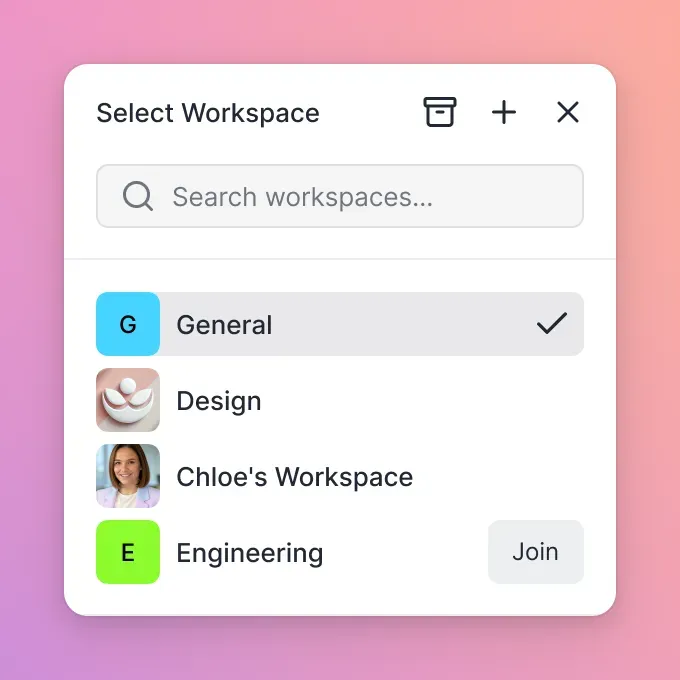
Fastio fits the last category. Its workspaces automatically index files for semantic search when Intelligence Mode is enabled. The MCP server exposes storage, AI, and file and share operations as tool calls, so both OpenClaw and Cline can read from and write to the same workspace programmatically. An OpenClaw research agent uploads a market analysis. A Cline session pushes the code it generated. The entire team then searches, previews, and shares everything from one URL, with audit trails tracking who accessed what and when.
For multi-agent pipelines, a shared workspace prevents the pattern of passing files through chat channels or local directories. Both OpenClaw and Cline support the Model Context Protocol, so they can target the same workspace endpoint without custom integration code. The workspace becomes the coordination layer between agents that otherwise have no direct connection to each other.
Consider a practical content production workflow. OpenClaw runs on a schedule, scraping industry data and writing daily briefings to a shared workspace folder. A developer uses Cline to build a dashboard that visualizes trends from those briefings, reading source data from the same folder. Without a shared layer, the developer downloads OpenClaw's output manually, converts formats, and keeps both in sync by hand. With a shared workspace, both agents access the same directory. Briefings and dashboard code live side by side, versioned and searchable. The ownership transfer feature lets an agent build the entire workspace and hand it to a human client when the project wraps up.
The Business Trial runs with Business-plan capabilities for 14 days and requires a credit card. See the pricing page for current plan details.


Give your agents a workspace that outlasts the session
Fastio stores, indexes, and shares everything OpenClaw and Cline produce. generous storage, MCP-ready.
Pricing and When to Choose Which
Both tools are free as software. The real costs come from API access and infrastructure, and the breakdown looks different for each.
OpenClaw costs
- Self-hosted: free (MIT license). A basic VPS plus a budget AI model runs roughly $6 to $13 per month for personal automation. Small business setups with mixed model routing and multiple skills cost $25 to $50 per month, depending on token volume and provider.
- OpenClaw Cloud: $59 per month after an introductory $29 first month. The cloud plan includes a 24/7 hosted agent, access to Claude, GPT-4, and Gemini, messaging integrations for Signal, Telegram, Discord, and WhatsApp, persistent memory across sessions, and automatic updates without manual deployment.
Cline costs
- Software: free (Apache 2.0 license). You bring your own API keys from any of 30+ supported providers, so there is no subscription fee for the tool itself.
- Typical monthly API spend: $10 to $30 for light usage with a budget model, $50 to $100+ for heavy development with Claude Opus or GPT-4. Costs depend on the model, task complexity, and how many approval cycles each session runs through.
- Spending limits (added in v3.78, April 2026) let you cap daily or monthly spend directly in the extension settings to prevent unexpected bills.
Choose OpenClaw when:
- You need automation beyond coding: email management, messaging bots, scheduled reports, web scraping, browser control
- Hands-free, scheduled operation matters more than step-by-step oversight of each action
- You want a single agent managing workflows across multiple platforms from one local process
- Your team communicates through messaging apps and wants the agent participating in the same channels
Choose Cline when:
- Your primary task is writing, editing, and testing code inside a project with established conventions
- You want explicit approval before every file change and terminal command the agent executes
- You work inside VS Code or JetBrains and want the agent in your editor sidebar with real-time diffs
- You need project-level context awareness through .clinerules for coding standards and architecture patterns
- Budget transparency matters: BYOK pricing means you see every API call on your provider's dashboard
Using both together
These tools are not mutually exclusive. A productive setup uses OpenClaw for non-coding automation (monitoring, research, reporting, scheduled messaging) and Cline for focused coding sessions. OpenClaw investigates a bug report overnight, gathers logs, scrapes relevant documentation, and writes a structured summary to a shared workspace. You open Cline the next morning, read the summary, and fix the code with full project context and diff-based approval. The division of labor matches each tool's design intent, and a shared Fastio workspace gives both agents a common location to read and write files without manual file transfers between them.
Still weighing your options? Our guide to OpenClaw alternatives rounds up seven other agent frameworks beyond the two compared here.
Sources
References used to verify factual claims in this guide.
-
OpenClaw processes 822 billion tokens per day; Cline processes 97 billion
-
OpenClaw passed 347,000 GitHub stars in April 2026
-
Cline has 8 million installs across platforms and 62,300 GitHub stars
-
OpenClaw Cloud costs $59 per month; self-hosted setups run $6 to $50 per month
-
Cline v3.78 added spending limit controls in April 2026
Frequently Asked Questions
Is Cline better than OpenClaw for coding?
For writing, editing, and testing code inside a project, Cline is the stronger choice. It reads your entire project structure, tracks file dependencies, shows diffs before applying changes, and provides human approval at every step. OpenClaw can write code through its shell and file management skills, but it lacks Cline's IDE integration, project-level context awareness, and diff-based approval flow.
Can Cline run outside VS Code?
Yes. Cline is available as JetBrains plugins for IntelliJ, PyCharm, WebStorm, and GoLand, a CLI installable via npm for terminal use, and an embeddable SDK for building custom integrations. The CLI supports headless, zero-interaction mode with JSON output for CI/CD pipelines. VS Code remains the most popular interface, but Cline is no longer limited to a single editor.
Does OpenClaw work in VS Code like Cline?
Not directly. OpenClaw runs as an independent local process and communicates through messaging platforms and its CLI. It can edit files on your filesystem, including project files open in VS Code, but it does not integrate into the IDE sidebar or provide diff-based approvals the way Cline does. OpenClaw's primary interfaces are chat apps and the terminal.
Which is better for autonomous coding, OpenClaw or Cline?
It depends on what autonomous means in your context. OpenClaw's Heartbeat scheduler can run coding tasks unattended on a schedule without any human prompts. Cline requires human approval at each step but produces more controlled, project-aware code changes with fewer compounding errors. For overnight batch processing and scheduled automation, OpenClaw is more autonomous. For complex refactoring where mistakes cascade, Cline's controlled approach is safer.
Can OpenClaw and Cline work together?
Yes. A common pattern uses OpenClaw for non-coding automation like research, monitoring, and messaging, and Cline for coding sessions. Both support the Model Context Protocol, so they can read from and write to the same external workspace or API endpoint. OpenClaw handles the surrounding workflow while Cline handles the code. A shared workspace like Fastio coordinates file handoff between the two tools.
What LLM models do OpenClaw and Cline support?
Both are model-agnostic. OpenClaw supports Claude, GPT-4, Gemini, DeepSeek, and local models through its multi-model routing system. Cline supports 30+ providers including Anthropic, OpenAI, Google, AWS Bedrock, Azure, Ollama, LM Studio, and any OpenAI-compatible API. Both tools let you bring your own API keys and switch models per task.
How much does it cost to run OpenClaw vs Cline?
OpenClaw is free to self-host under the MIT license, with real costs running $6 to $50 per month for infrastructure and API keys depending on usage. OpenClaw Cloud costs $59 per month. Cline is free under Apache 2.0 with bring-your-own-key pricing, where typical API costs range from $10 to $100 per month depending on your chosen model and how many coding sessions you run.
Related Resources

Give your agents a workspace that outlasts the session
Fastio stores, indexes, and shares everything OpenClaw and Cline produce. generous storage, MCP-ready.